Spatial Audio & Immersive Music for Classical, Vocal & Ambient Genres: Baroque, Choral, Opera, Film Scores & Lo-Fi
Spatial9 Team · · 7 min read
Key takeaways
- Classical, vocal and ambient music use spatial audio to create a believable or beautiful space.
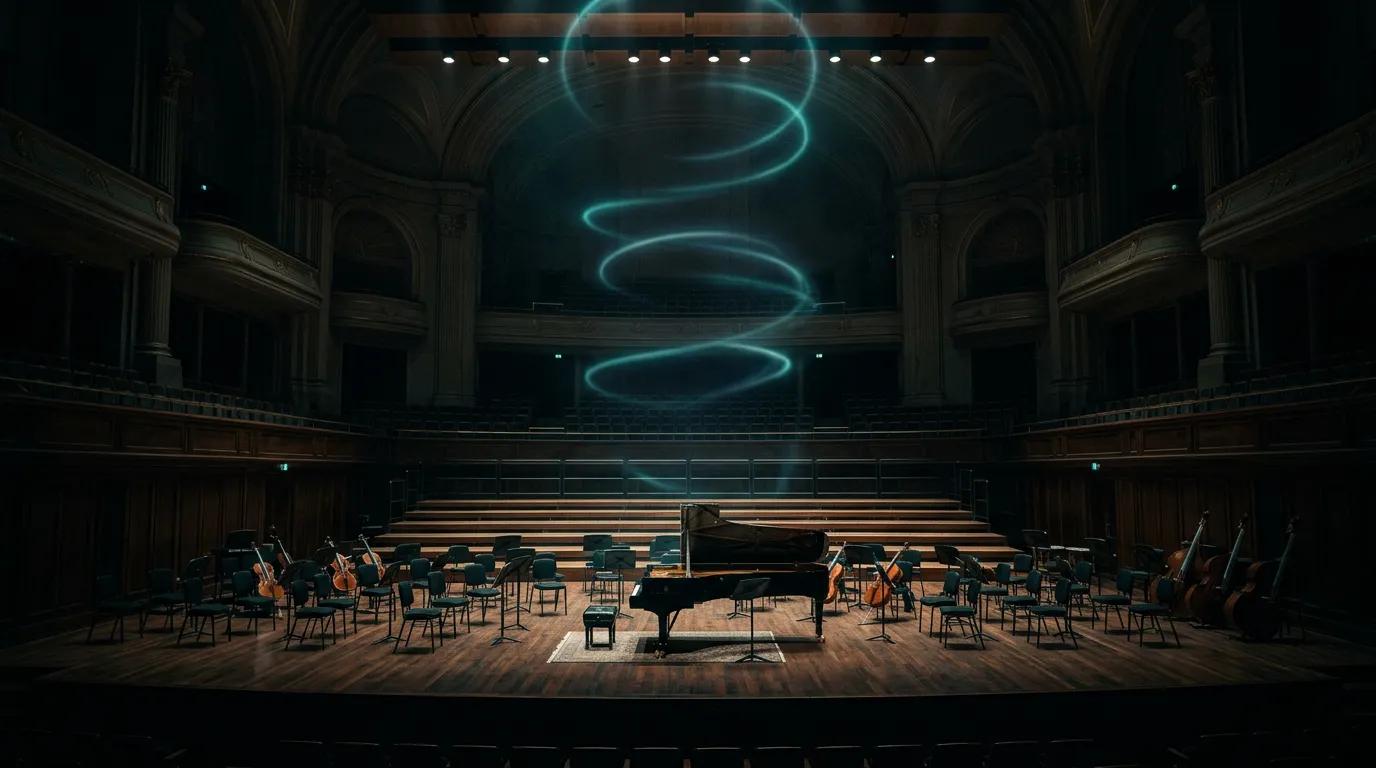
- Orchestras, choirs and stage music recreate a real hall, with the ensemble in front and the room around and above; baroque and chamber music bring a smaller group closer, while choral music fills a tall stone vault.
- Ambient and sleep music can drop the stage and surround the listener completely, while lo-fi stays cosy and still.
- Movement stays slow and gentle, and the low end stays smooth rather than dominant.
This family covers the oldest and the calmest music in the series. Concert music was written for halls that already surround the audience with sound. Ambient and sleep music was written to be a space. Both are natural fits for immersive audio.
This overview covers 17 genre guides. Each one has its own placement map, immersion profile and step-by-step tips. If you are new to 3D sound, start with what spatial audio is, or see how every genre changes a spatial mix.
What these genres have in common in 3D
- Space is the main ingredient. Natural halls, churches and soft, long reverbs matter more here than in any other family.
- Height is used generously. Hall reflections, choirs and pads rise above the listener, which is where these genres feel most immersive.
- Gentle low end. Bass is present but rarely dominant, so the full range stays smooth and balanced.
- Calm movement. Things move slowly, if at all, so the listener can relax into the sound.
Immersion scores for every genre in this family
Every genre guide scores five dimensions from 1 (barely used) to 5 (used to the full): width, height, movement, low-end focus and space or reverb. The table compares them side by side.
| Genre | Styles covered | Width | Height | Movement | Low end | Space |
|---|---|---|---|---|---|---|
| A Cappella | Barbershop, Collegiate, Mbube & Isicathamiya | 4 | 3 | 1 | 3 | 4 |
| Ambient | Ambient House, Ambient Techno & Ambient Dub | 5 | 5 | 4 | 2 | 5 |
| Baroque Music | Renaissance, Early Music & Period Instruments | 4 | 3 | 1 | 1 | 4 |
| Chamber Music | String Quartet, Piano Trio & Art Song | 3 | 2 | 1 | 1 | 4 |
| Children's Music | Lullabies & Sing-Along Songs | 4 | 2 | 2 | 1 | 2 |
| Choral Music | Sacred Choral, Gregorian Chant & Choir | 5 | 4 | 1 | 1 | 5 |
| Classical | Orchestral, Romantic, Impressionist & Ballet | 4 | 4 | 1 | 2 | 5 |
| Film & Game Scores | Movie Soundtracks, TV Themes & Video Game Music | 5 | 5 | 4 | 4 | 5 |
| Gospel | Traditional, Contemporary & Southern Gospel | 5 | 4 | 1 | 3 | 5 |
| Holiday | Christmas, Hanukkah, Halloween & Easter Music | 4 | 4 | 1 | 2 | 4 |
| Lo-fi | Lo-Fi Hip-Hop, Jazzhop & Chillhop | 4 | 3 | 1 | 3 | 4 |
| Meditation & Sleep | New Age, Healing & Relaxation Music | 5 | 4 | 2 | 2 | 5 |
| Minimalist Music | Phase Music, Post-Minimalism & Holy Minimalism | 4 | 3 | 3 | 1 | 3 |
| Musical Theatre | Broadway, West End & Cast Albums | 4 | 3 | 2 | 2 | 4 |
| Neoclassical | Modern Classical, Ambient Piano & Cinematic Strings | 3 | 3 | 2 | 2 | 4 |
| Opera | Bel Canto, Operetta & Classical Crossover | 4 | 4 | 1 | 2 | 5 |
| Worship | Praise & Worship, CCM, Christian Pop & Rock | 4 | 4 | 1 | 3 | 5 |
Average across the family: width 4.2, height 3.5, movement 1.7, low-end focus 2.1, space or reverb 4.3.
Where the genres differ most
- Width: highest (5 out of 5) in 5 genres, including Ambient, Choral Music and Film & Game Scores, lowest in Chamber Music and Neoclassical (3 out of 5).
- Height: highest in Ambient and Film & Game Scores (5 out of 5), lowest in Chamber Music and Children's Music (2 out of 5).
- Movement: highest in Ambient and Film & Game Scores (4 out of 5), lowest (1 out of 5) in 10 genres, including A Cappella, Baroque Music and Chamber Music.
- Low-end focus: highest in Film & Game Scores (4 out of 5), lowest (1 out of 5) in 5 genres, including Baroque Music, Chamber Music and Children's Music.
- Space or reverb: highest (5 out of 5) in 8 genres, including Ambient, Choral Music and Classical, lowest in Children's Music (2 out of 5).
Classical, opera and film scores recreate a concert hall with the orchestra in front, and film scores add the most height and movement. Baroque and chamber music shrink the stage to a small ensemble in a church, palace room or salon, choral music fills a stone vault from floor to ceiling, minimalism splits interlocking patterns across the room, and neoclassical places a close felt piano inside wide cinematic strings. Gospel, a cappella and musical theatre centre the voices on a stage. Ambient and sleep music drop the stage altogether and let the sound surround the listener, while lo-fi stays cosy, wide and still.
The genre guides, section by section
Gospel, vocal and stage
Music led by voices and stage performance, from gospel and worship to a cappella groups, musical theatre, holiday songs and children's music.
- A Cappella: A circle of voices around you.
- Children's Music: A friendly voice with playful sounds all around.
- Gospel: A choir that surrounds the congregation.
- Holiday: A warm voice with bells and choir in a glowing room.
- Musical Theatre: The best seat in the theatre.
- Worship: A band in front, a congregation all around.
Classical and scores
Concert and dramatic music, from Renaissance and baroque ensembles, string quartets and church choirs to orchestral classical, opera, minimalism, modern neoclassical piano and the scores written for films, TV and video games.
- Baroque Music: A period band in a church or palace room.
- Chamber Music: A string quartet and piano in a small hall.
- Choral Music: A choir in sections under a cathedral vault.
- Classical: The orchestra in front, the hall all around.
- Film & Game Scores: An orchestra and sound design all around you.
- Minimalist Music: Interlocking patterns split across the room.
- Neoclassical: A close felt piano inside wide strings.
- Opera: Singers on stage, the orchestra in the pit, the house around you.
Ambient and calm
Music made for focus, relaxation and sleep, from ambient soundscapes to lo-fi study beats and meditation music.
- Ambient: No front, no back: sound as a place.
- Lo-fi: A cosy room you can sit inside.
- Meditation & Sleep: A calm space with no hard edges.
How to make immersive classical, vocal and ambient music from stereo
You do not need an immersive studio or the original multitrack session. Spatial9 uses AI to turn a stereo song into spatial audio. It separates the arrangement, places each element in 3D space following the profile of your genre, and exports a finished mix as Eclipsa Audio, ADM, binaural for headphones or Ambisonics. If you have stems, export them cleanly for even more control.
Frequently asked questions
Does classical music benefit from spatial audio?
Yes, a lot. An immersive mix can recreate the concert hall around the listener, with the orchestra in front and the hall reflections around and above, which is much closer to being there than stereo.
How should a choir or a cappella group be placed in 3D?
Usually in an arc in front of the listener, the way they stand on stage, with sopranos and altos on one side, tenors and basses on the other, and the hall or church reverb around and above. Soloists step slightly forward.
Is spatial audio good for sleep and meditation music?
Yes. Slow, enveloping sound that surrounds the listener can feel calmer and more absorbing than stereo, as long as nothing moves suddenly or jumps out.
How is chamber or baroque music different from an orchestral mix in 3D?
It is smaller and closer. A string quartet, piano trio or baroque ensemble sits in a tight arc a few metres in front of the listener, with the harpsichord, organ or cello continuo in the middle and a warm room around them. The goal is intimacy and clear lines rather than the huge, enveloping hall of a symphony orchestra.
Can I make an immersive version of an orchestral or ambient recording?
Yes. Spatial9 separates the recording with AI, rebuilds the space in 3D and exports Eclipsa Audio, ADM, binaural or Ambisonics.
Hear your genre in 3D
Pick the guide closest to your music above, then upload a track to Spatial9 to hear an immersive version in minutes.
Dolby and Dolby Atmos are trademarks of Dolby Laboratories. Spatial9 is not affiliated with or endorsed by Dolby Laboratories.