Spatial Audio & Immersive Music for Lo-fi: Complete Guide
Spatial9 Team · · Updated
Part of the series Spatial audio and immersive music by genre.
Lo-fi is mood music. Listeners often play it for hours in the background while they study or work, usually on headphones. That makes it a natural fit for spatial audio: a gentle, surrounding sound is more relaxing than everything packed between the ears. This guide shows how spatial audio for lo-fi works. For the basics, see what spatial audio is.
Why lo-fi is perfect for spatial audio
Much of lo-fi's character comes from texture: the crackle of vinyl, the hiss of tape, rain on the window, the hum of a room. In stereo those textures sit on top of the beat. In a spatial mix they move out into the space around you, while the beat stays soft and close in front.
The result is less like listening to a track and more like being somewhere.
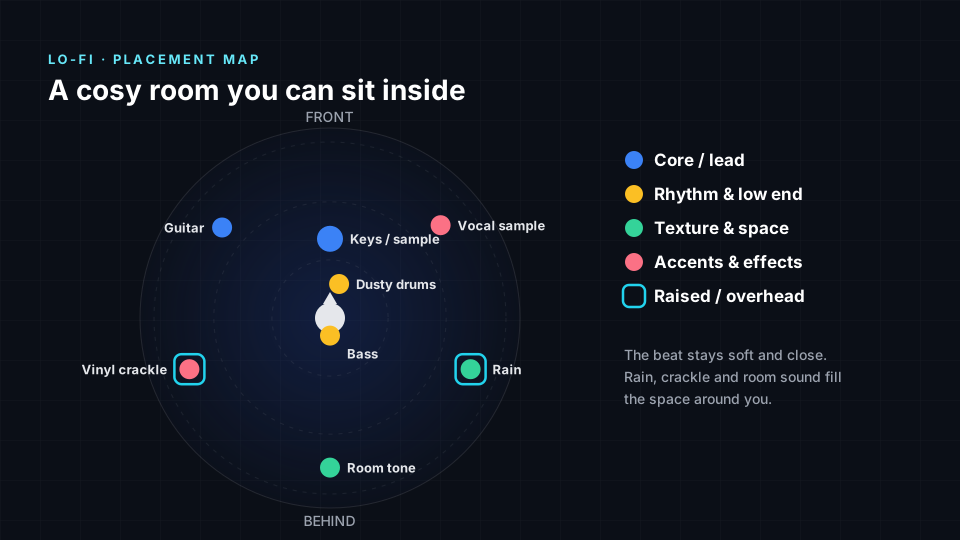
Immersive music for lo-fi: what listeners hear
- A beat that stays gentle. The drums and keys are close but soft, never in your face.
- Rain on the window. Ambient sounds arrive from the sides and above, like a real room.
- Less fatigue over long sessions. Spreading sound around the listener can feel more relaxed on headphones than a mix packed between the ears.
Where to place each element in a lo-fi mix
| Element | Position | Height | Why it works |
|---|---|---|---|
| Keys or main sample | Front centre | Ear level | The musical heart of the track |
| Dusty drums | Close, near centre | Ear level | Keeps the beat soft and intimate |
| Bass | Centre | Ear level | Warm foundation |
| Guitar | Front left | Ear level | Adds colour beside the keys |
| Vocal samples | Front right, wide | Ear level | Gives snippets their own space |
| Vinyl crackle | Left and behind | Raised | Texture without masking the music |
| Rain | Right and behind | Raised | Feels like weather outside the window |
| Room tone | Behind | Ear level | Puts the listener inside the room |
The psychoacoustics behind lo-fi placement
Every position in the table above follows how the ear and brain locate sound. Here is the reason behind the main choices for lo-fi.
- Dusty drums close, near the centre. Distance is heard through level, high-frequency detail and how much room sound surrounds a source, so less reverb brings a part closer and more reverb sets it back. Close, dry drums sound like a small bedroom setup, which is the heart of lo-fi.
- Bass centred. Deep bass is the hardest sound for the ear to locate. Its wavelengths are several metres long, far larger than your head, so both ears receive almost the same level and only a tiny timing difference. A soft but steady bass holds the loop together.
- Vinyl crackle and rain behind. Behind you, the ear relies on subtle treble cues, so placement is vaguer. That vagueness becomes an advantage for ambience and textures that should feel all around. Texture behind the listener feels like the room around you rather than part of the beat.
- Room tone around you. Sound arriving from the sides, slightly different at each ear, creates the feeling of being inside the music. Acousticians call this envelopment. Slightly different crackle and room sound at each ear make the listener feel inside a cosy space.
The immersion profile for lo-fi
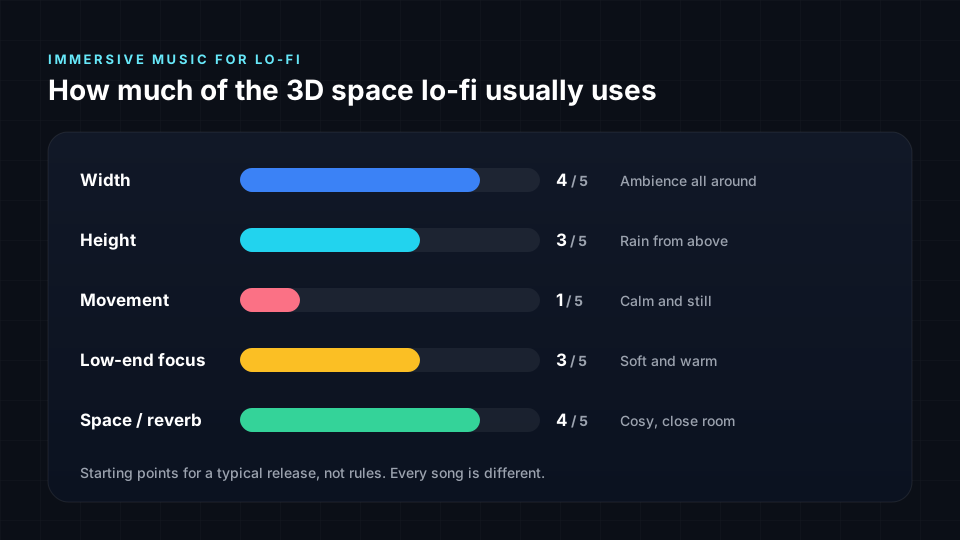
Lo-fi is wide and spacious but calm. Movement scores low, because sounds flying around distract from the mood. Height is useful for rain and textures, so they feel like they are coming from the room rather than the music.
Tips for an immersive lo-fi mix
- Keep the beat close and soft. Do not push drums wide. They belong near the listener.
- Put texture in the space. Crackle, hiss and rain belong around and above the listener, not on the beat.
- Avoid fast movement. It breaks the relaxed mood.
- Mix quietly. Lo-fi is often played at low volume for long periods, so check the mix that way.
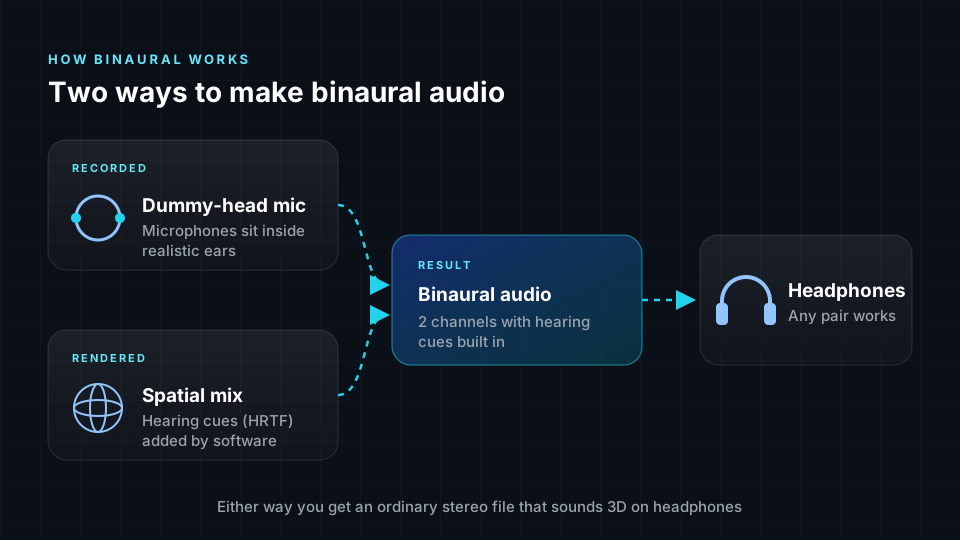
- Mix for headphones first. Most lo-fi listeners use headphones. Learn how binaural rendering works.
Lo-fi streams and videos in 3D
Lo-fi is a big genre on YouTube, with long playlists and live streams. Spatial9 can create a YouTube-ready video with your immersive audio, using your cover art or your own visuals, and publish it directly. Read how to make your YouTube videos sound more cinematic and why Eclipsa Audio matters for YouTube creators.
How to make immersive lo-fi from a stereo beat
Spatial9 can create spatial audio from a stereo beat:
- Upload your stereo beat, or stems with the textures on their own.
- Spatial9's AI separates and places each part in 3D space.
- Listen in binaural on headphones.
- Export Eclipsa Audio, ADM, binaural or Ambisonics.
- Publish your video to YouTube directly.
For more sample-based beats, read spatial audio for hip-hop. For music with no beat at all, see spatial audio for ambient. Every guide is in spatial audio and immersive music by genre.
Frequently asked questions
Can I make a lo-fi mix in Dolby Atmos or Eclipsa Audio?
Yes. The placements in this guide work for both. Spatial9 exports ADM, the standard file used by Dolby Atmos studios, as well as Eclipsa Audio for YouTube, so one immersive lo-fi mix covers both. You may also hear this called a 3D lo-fi mix or lo-fi in spatial audio. It is the same idea.
Is spatial audio good for lo-fi music?
Yes. Lo-fi is all about texture and mood, and spatial audio lets rain, crackle and room sound surround the listener while the beat stays close and soft.
Is immersive lo-fi good for studying?
Many listeners find a gentle, surrounding mix more relaxing over long sessions than a mix packed between the ears. It is a matter of personal taste.
Where should vinyl crackle go in a spatial lo-fi mix?
Around and slightly above the listener, separate from the beat. That way it feels like part of the room rather than noise on top of the music.
Can I make a spatial audio version of my lo-fi beat?
Yes. Spatial9 uses AI to create an immersive mix from a stereo beat and exports it as Eclipsa Audio, ADM, binaural or Ambisonics.
Can I publish immersive lo-fi to YouTube?
Yes. Spatial9 creates a YouTube-ready video with your immersive audio and your cover art or own visuals, and can publish it directly.
Dolby and Dolby Atmos are trademarks of Dolby Laboratories. Spatial9 is not affiliated with or endorsed by Dolby Laboratories.
Sources
- Blauert, J. (1997). Spatial Hearing: The Psychophysics of Human Sound Localization, revised edition. MIT Press. Low-frequency, elevation, distance and motion cues.
- Mills, A. W. (1958). On the minimum audible angle. Journal of the Acoustical Society of America, 30(4), 237-246.
- Hebrank, J. and Wright, D. (1974). Spectral cues used in the localization of sound sources on the median plane. Journal of the Acoustical Society of America, 56(6), 1829-1834.
- Bronkhorst, A. W. (2000). The cocktail party phenomenon: a review of research on speech intelligibility in multiple-talker conditions. Acta Acustica united with Acustica, 86, 117-128.
- Litovsky, R. Y., Colburn, H. S., Yost, W. A. and Guzman, S. J. (1999). The precedence effect. Journal of the Acoustical Society of America, 106(4), 1633-1654.
- Barron, M. and Marshall, A. H. (1981). Spatial impression due to early lateral reflections in concert halls. Journal of Sound and Vibration, 77(2), 211-232.
- Neuhoff, J. G. (1998). Perceptual bias for rising tones. Nature, 395, 123-124.
- Bregman, A. S. (1990). Auditory Scene Analysis: The Perceptual Organization of Sound. MIT Press.
Hear your beat in 3D
Upload a beat to Spatial9 and hear it become a room you can sit inside, in minutes.