Spatial Audio & Immersive Music for Classical: Complete Guide
Spatial9 Team · · Updated
Part of the series Spatial audio and immersive music by genre.
Classical music has always been about the room. Composers wrote for specific halls and churches, and the sound of that space is part of the music. Stereo can only suggest it. Spatial audio for classical music can put the hall all around you. This guide explains how. For background, read what spatial audio is.
Why classical music gains so much from 3D
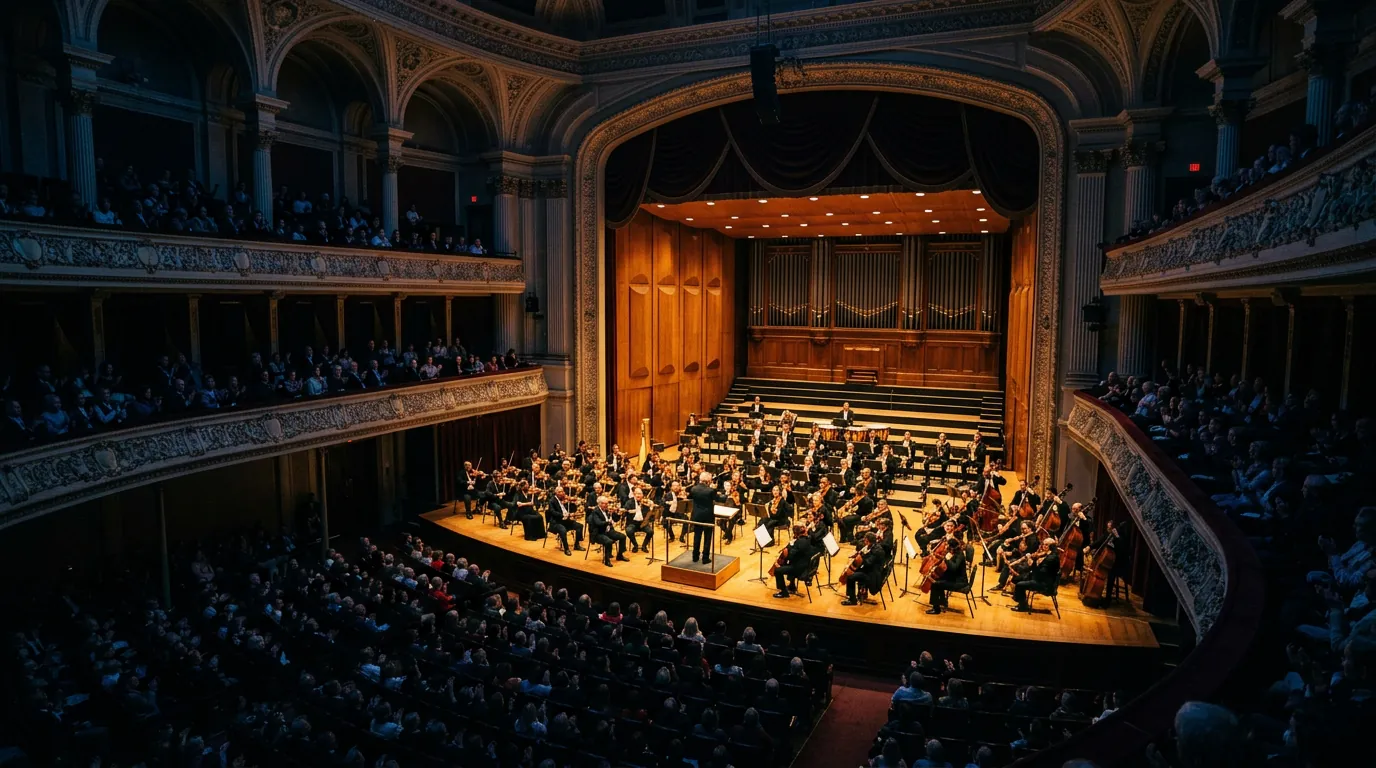
A symphony orchestra spreads across a wide stage, with sections at different depths and heights. The hall adds reflections from the side walls, the back of the room and the ceiling. All of that information is what makes a live concert sound so rich.
A spatial mix keeps both parts: the precise position of each section in front, and the enveloping sound of the hall around you.
Immersive music for classical: what listeners hear
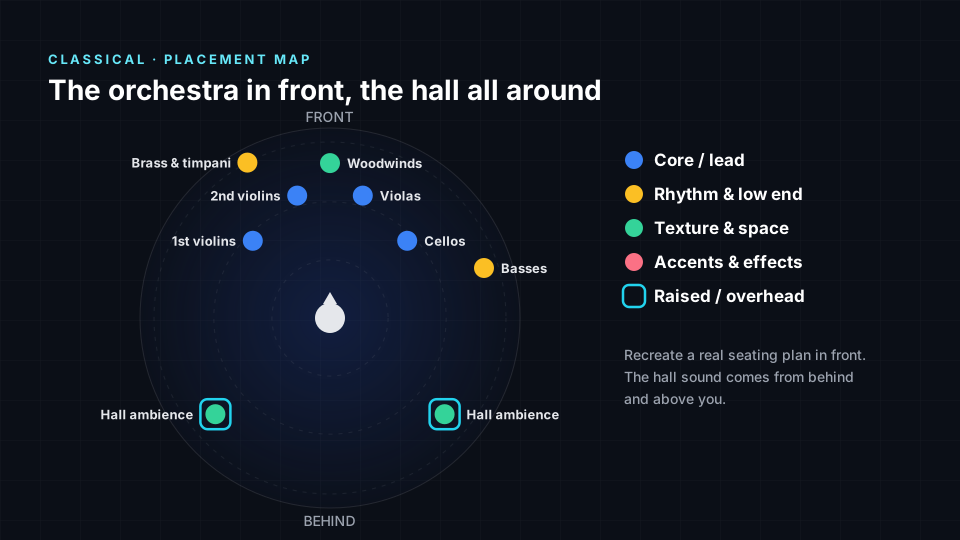
- A stage with depth. Strings sit closer, woodwinds behind them and brass and timpani further back, the way you would hear them from a good seat.
- The hall around you. Reflections arrive from the sides, the back and above, so the music seems to fill the room.
- Clarity in big moments. In loud passages, each section stays in its own place instead of blurring together.
Where to place each section in a classical mix
| Section | Position | Height | Why it works |
|---|---|---|---|
| First violins | Front left | Ear level | Traditional seating, leads the melody |
| Second violins | Front left of centre | Ear level | Sits beside the firsts |
| Violas | Front right of centre | Ear level | Middle voices in the centre of the stage |
| Cellos | Front right | Ear level | Warm bass voices on the right |
| Double basses | Far front right, behind the cellos | Ear level | Foundation of the orchestra |
| Woodwinds | Centre, behind the strings | Slightly raised | Matches their place on risers |
| Brass and timpani | Back of the stage | Raised | Distant but powerful |
| Hall ambience | Behind, sides and above | Raised | Recreates the concert hall |
Seating plans vary between orchestras and pieces, so follow the layout of the actual recording when you know it.
The psychoacoustics behind classical placement
Every position in the table above follows how the ear and brain locate sound. Here is the reason behind the main choices for classical.
- Sections seated across the stage. The brain groups sounds that come from the same place into one stream and splits sounds from different places into separate ones (Bregman, 1990). Placing violins, violas and cellos in different positions helps the brain follow each line, as it does in a hall.
- Brass and timpani at the back. Distance is heard through level, high-frequency detail and how much room sound surrounds a source, so less reverb brings a part closer and more reverb sets it back. More room sound and softer treble make them sound distant but powerful, as they do from the stalls.
- Hall ambience behind, at the sides and above. Sound arriving from the sides, slightly different at each ear, creates the feeling of being inside the music. Acousticians call this envelopment. Lateral reflections are a big part of what makes a great concert hall sound enveloping.
- Direct sound first, hall second. Thanks to the precedence effect, early reflections from a room do not pull a source sideways. They are heard as size and space around it. The orchestra keeps its positions while the hall adds size around it.
The immersion profile for classical
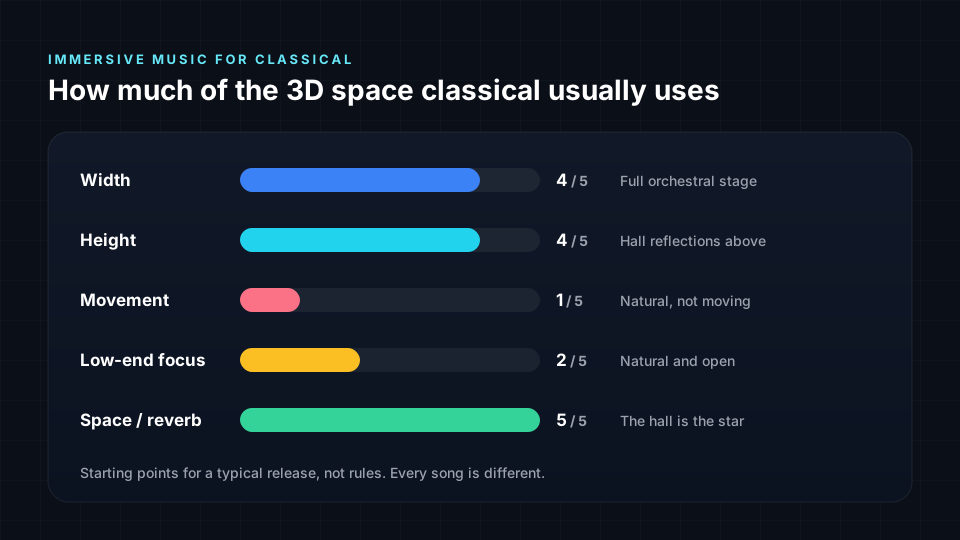
Space scores the maximum because the hall is part of the performance. Movement scores the minimum, because the players do not move during a concert. Height matters more than in most genres, because hall reflections arrive from above.
Recording approaches for immersive classical
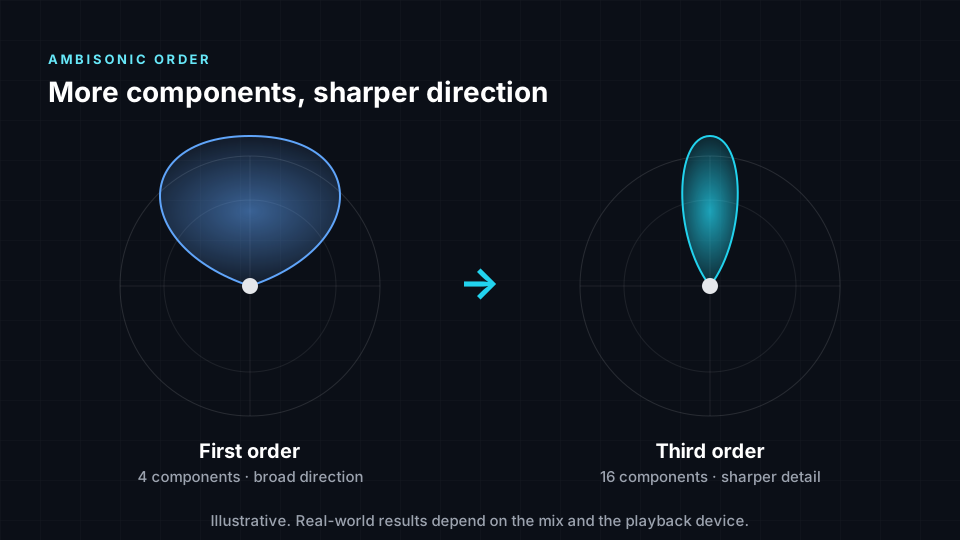
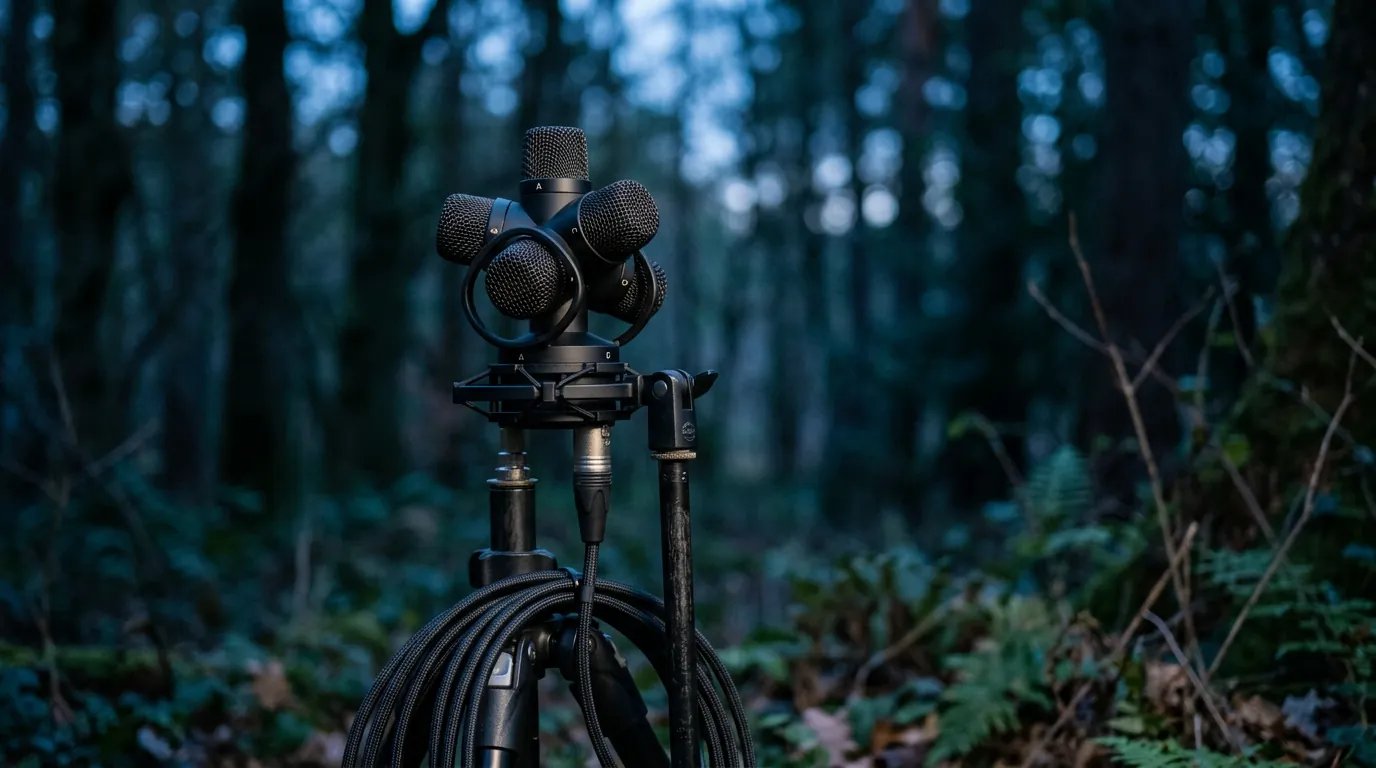
Many classical recordings are made with a main microphone array plus spot microphones on each section. Some are also captured with Ambisonic microphones, which record the whole sound field in every direction.
Tips for an immersive classical mix
- Respect the seating plan. Listeners familiar with orchestras will notice if a section is in the wrong place.
- Let the hall surround you. Put reflections and ambience behind and above, not on top of the orchestra.
- Avoid movement. Nothing should travel unless the piece is written for moving performers.
- Keep the dynamics. Classical music has a huge range from quiet to loud. Do not squash it to make the 3D effect more obvious.
- Check on headphones and speakers. Read how binaural audio delivers the hall on headphones.
How to make immersive classical music from a stereo recording
Spatial9 can create spatial audio from a stereo recording:
- Upload your stereo master or stems for each section.
- Spatial9's AI separates the parts and places them in 3D, with the room around the listener.
- Listen in binaural on headphones.
- Export Eclipsa Audio, ADM, binaural or Ambisonics. Third-order Ambisonics is a natural fit for hall recordings.
- Share a performance video. Create a YouTube-ready video with your immersive audio and your own footage, and publish it directly.
For smaller acoustic ensembles, read spatial audio for jazz. For music made entirely of space and texture, see spatial audio for ambient. Every guide is in spatial audio and immersive music by genre.
Frequently asked questions
Can I make a classical mix in Dolby Atmos or Eclipsa Audio?
Yes. The placements in this guide work for both. Spatial9 exports ADM, the standard file used by Dolby Atmos studios, as well as Eclipsa Audio for YouTube, so one immersive classical mix covers both. You may also hear this called a 3D classical mix or classical in spatial audio. It is the same idea.
Is spatial audio good for classical music?
Yes. Classical music is one of the best genres for spatial audio, because the sound of the hall is part of the music. Spatial audio puts the orchestra in front and the hall all around the listener.
How should an orchestra be placed in spatial audio?
Follow the real seating plan: violins on the left, violas and cellos towards the right, basses on the far right, and woodwinds, brass and percussion further back and slightly raised.
Should anything move in an immersive classical mix?
Usually not. The players sit still during a concert, so a realistic mix keeps every section in place.
What format is best for immersive classical recordings?
It depends on where it will be heard. Ambisonics captures the whole sound field and works well for hall recordings. Eclipsa Audio and ADM are used for delivery and streaming.
Can I convert an existing stereo classical recording to spatial audio?
Yes. Spatial9 uses AI to create an immersive mix from a stereo recording and exports it as Eclipsa Audio, ADM, binaural or Ambisonics.
Dolby and Dolby Atmos are trademarks of Dolby Laboratories. Spatial9 is not affiliated with or endorsed by Dolby Laboratories.
Sources
- Blauert, J. (1997). Spatial Hearing: The Psychophysics of Human Sound Localization, revised edition. MIT Press. Low-frequency, elevation, distance and motion cues.
- Mills, A. W. (1958). On the minimum audible angle. Journal of the Acoustical Society of America, 30(4), 237-246.
- Hebrank, J. and Wright, D. (1974). Spectral cues used in the localization of sound sources on the median plane. Journal of the Acoustical Society of America, 56(6), 1829-1834.
- Bronkhorst, A. W. (2000). The cocktail party phenomenon: a review of research on speech intelligibility in multiple-talker conditions. Acta Acustica united with Acustica, 86, 117-128.
- Litovsky, R. Y., Colburn, H. S., Yost, W. A. and Guzman, S. J. (1999). The precedence effect. Journal of the Acoustical Society of America, 106(4), 1633-1654.
- Barron, M. and Marshall, A. H. (1981). Spatial impression due to early lateral reflections in concert halls. Journal of Sound and Vibration, 77(2), 211-232.
- Neuhoff, J. G. (1998). Perceptual bias for rising tones. Nature, 395, 123-124.
- Bregman, A. S. (1990). Auditory Scene Analysis: The Perceptual Organization of Sound. MIT Press.
Hear the hall in 3D
Upload a recording to Spatial9 and hear the orchestra and the hall around you in an immersive mix in minutes.