Spatial Audio & Immersive Music for Children's Music: Complete Guide
Spatial9 Team · · Updated
Part of the series Spatial audio and immersive music by genre.
Children's music covers songs made for babies, toddlers and young kids: nursery rhymes, sing-along songs, learning songs about letters, numbers and colours, lullabies, and music from kids' shows and videos. The sound is simple and cheerful, with a clear, friendly voice, ukulele, guitar, piano, light percussion, a chorus of kids and plenty of fun sound effects such as animals, vehicles and toys. Many families play it on tablets, TVs and smart speakers, often through YouTube. This guide covers how spatial audio for children's music works, where to place each element and how to make an immersive children's music mix. For the basics, see what spatial audio is.
Why children's music is perfect for spatial audio
Children's songs are full of stories and characters: the cow says moo, the bus goes round and round, the duck swims across the pond. In stereo, all of those characters sit in the same flat space. In spatial audio, the duck can actually be on one side and the cow on the other, which turns a simple song into a little adventure. It can also help young listeners follow what is happening.
At the same time, children need clarity and comfort. The voice and the words must stay easy to understand, and sounds should never be sudden or scary.
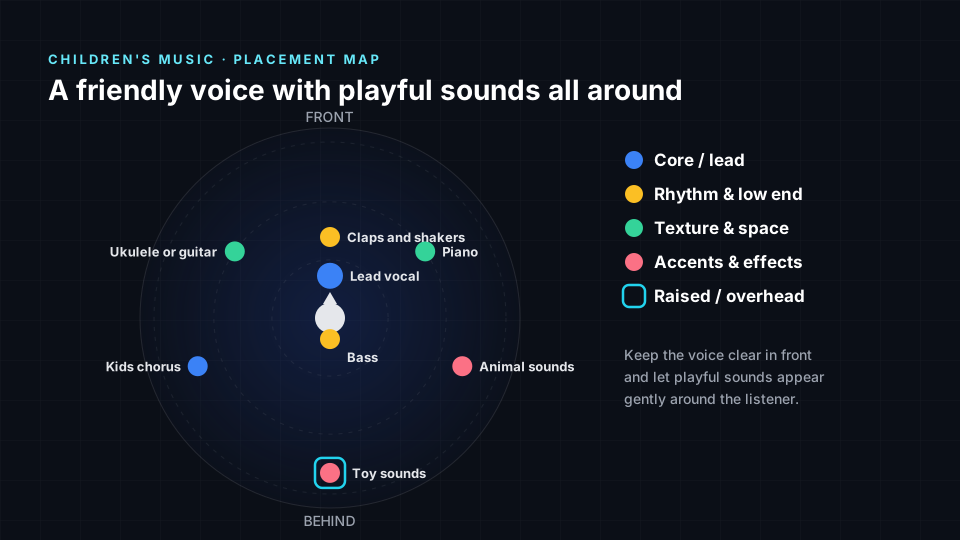
The rule: keep the voice clear in front and let playful sounds appear gently around the listener.
Immersive music for children's music: what listeners hear
- A friendly voice in front. Words stay easy to hear and sing along to.
- Characters with a place. Animals and toys appear where the story puts them.
- Friends singing along. A kids chorus joins from the side.
- Gentle surprises. Little sounds pop up softly, never suddenly.
Where to place each element in a children's music mix
| Element | Position | Height | Why it works |
|---|---|---|---|
| Lead vocal | Front centre | Ear level | Clear words are the most important part |
| Ukulele or guitar | Front left | Ear level | Simple chords sit beside the singer |
| Piano | Front right | Ear level | Balances the ukulele |
| Claps and shakers | Front centre, behind vocal | Ear level | A steady beat that is easy to clap along to |
| Bass | Centre | Ear level | Keeps the song grounded |
| Kids chorus | Left side | Ear level | Feels like friends singing together |
| Animal sounds | Right side, gentle movement | Ear level | Brings the story's characters to life |
| Toy sounds | Behind | Slightly raised | Small sparkles add fun without distraction |
The psychoacoustics behind children's music placement
- Spatial release from masking. Words are easier to understand when other sounds come from different directions (Bronkhorst, 2000).
- Grouping by location. Giving each character its own spot helps listeners tell them apart (Bregman, 1990).
- Minimum audible angle. We hear direction most precisely in front, so the main voice and instruments stay clear there (Mills, 1958).
- Looming sounds grab attention. Fast-approaching sounds can feel alarming, which is why movement in children's music should stay slow and gentle (Neuhoff, 1998).
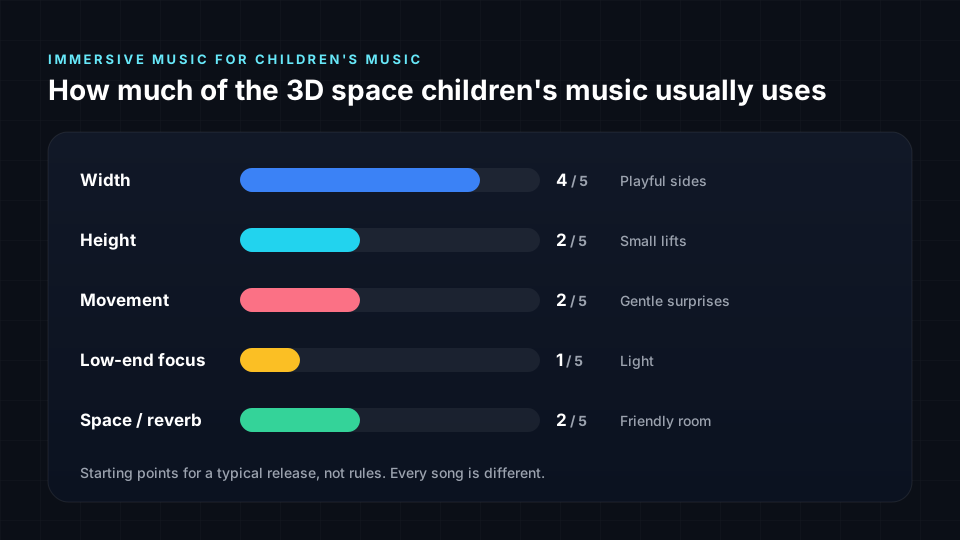
The immersion profile for children's music
Tips for an immersive children's music mix
- Keep the words clear. Nothing should cover the lead voice.
- Place characters where the story puts them. If the bird is in the sky, lift it a little.
- Move slowly and gently. Avoid sudden sounds or anything rushing towards the listener.
- Keep the low end light. Heavy bass is not needed and can be tiring for young ears.
- Keep the volume comfortable. Children often listen on headphones, so a gentle, even level is best.
How to make immersive children's music from stereo
Spatial9 can create spatial audio from a stereo track in a few steps:
- Upload your stereo master or your stems.
- Spatial9's AI separates and places each part, from the vocal and ukulele to the chorus and sound effects.
- Preview it in binaural on headphones.
- Export Eclipsa Audio, ADM, binaural or Ambisonics.
- Publish a video. Create a YouTube-ready video with your immersive audio and publish it directly.
For related guides, read spatial audio for pop, spatial audio for folk pop and spatial audio for musical theatre. Every guide is listed in spatial audio and immersive music by genre.
Frequently asked questions
Can I make a children's music mix in Dolby Atmos or Eclipsa Audio?
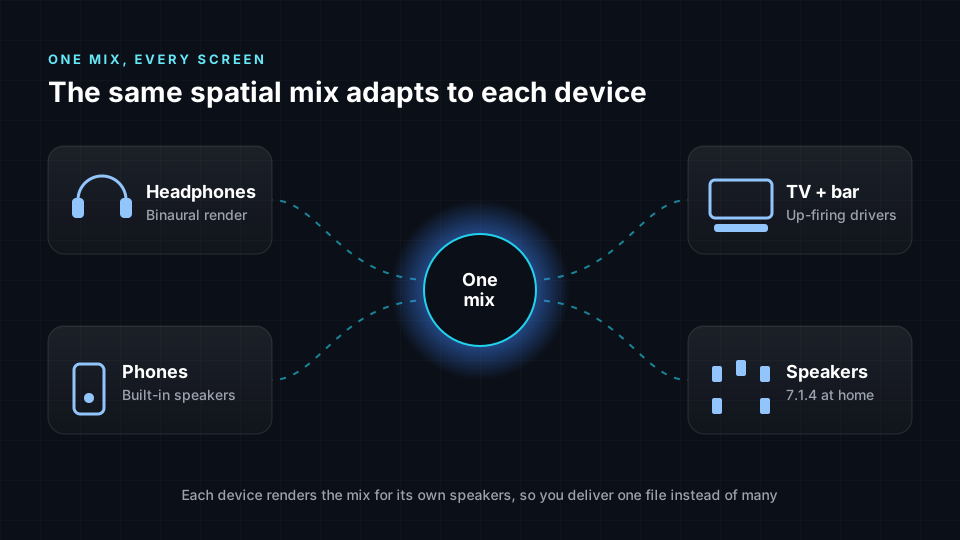
Yes. The placements in this guide work for both. Spatial9 exports ADM, the standard file used by Dolby Atmos studios, as well as Eclipsa Audio for YouTube, so one immersive children's music mix covers both. You may also hear this called a 3D kids song mix or children's music in spatial audio.
Is spatial audio safe for children?
Spatial audio only changes where sounds come from, not how loud they are. As with any headphone listening, keep the volume at a comfortable level and avoid sudden, loud effects.
Where should the animal sounds go?
Wherever the story puts them, usually to the sides. Let them move slowly, never rushing towards the listener.
Should the kids chorus surround the listener?
Not fully. Place it to one side so it feels like friends singing along, while the main voice stays in front.
Can I convert a released children's song to spatial audio?
Yes. Spatial9 uses AI to separate a stereo master into its parts and export an immersive mix as Eclipsa Audio, ADM, binaural or Ambisonics.
Does immersive children's music work on normal headphones and tablets?
Yes. The mix is rendered binaurally for headphones, and the same immersive mix also plays on tablets, TVs and smart speakers.
Dolby and Dolby Atmos are trademarks of Dolby Laboratories. Spatial9 is not affiliated with or endorsed by Dolby Laboratories.
Sources
- Bregman, A. S. (1990). Auditory Scene Analysis: The Perceptual Organization of Sound. MIT Press.
- Bronkhorst, A. W. (2000). The cocktail party phenomenon: a review of research on speech intelligibility in multiple-talker conditions. Acta Acustica united with Acustica, 86, 117-128.
- Mills, A. W. (1958). On the minimum audible angle. Journal of the Acoustical Society of America, 30(4), 237-246.
- Neuhoff, J. G. (1998). Perceptual bias for rising tones. Nature, 395, 123-124.
- Blauert, J. (1997). Spatial Hearing: The Psychophysics of Human Sound Localization, revised edition. MIT Press.
Bring your songs to life for little listeners
Upload a children's song to Spatial9 and hear the characters come alive around you in minutes. Then export it or publish it straight to YouTube.