What Is Spatial Audio? The Complete Guide to 3D Sound
Spatial9 Team · · Updated
Close your eyes in a busy café and you can point to the espresso machine, the conversation behind you and the door opening on your left. Your ears and brain locate every sound in three dimensions, all the time. Spatial audio brings that same sense of space to recorded music, films and videos. This guide explains what it is, how it works, the formats you will hear about, and how you can create it yourself.
Spatial audio, in plain words
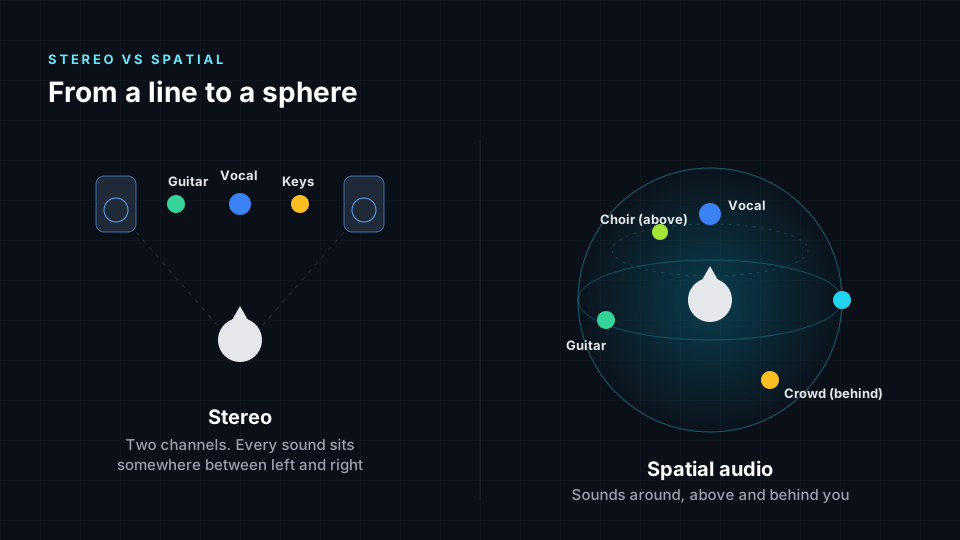
Traditional stereo uses two channels, left and right. A mixing engineer can place a sound anywhere on the line between your two speakers, but never behind you or above you.
Spatial audio removes that limit. Sounds can be placed anywhere in a 3D space around the listener and can move through that space over time. A guitar can sit to your right, backing vocals can wrap around behind you and a synth can rise overhead.
You will hear the same idea described with several names:
- Spatial audio, the most common everyday term, popularised by phone and headphone makers.
- Immersive audio, the term the music and film industries tend to use. See stereo vs immersive sound.
- 3D audio, often used for games and virtual reality.
- Surround sound, an older term for speaker setups such as 5.1, which surround you horizontally but usually not from above.
How spatial audio works: the cues your brain uses
You only have two ears, yet you can tell whether a sound is in front, behind or above you. Your brain does this by reading tiny differences in the sound that reaches each ear.
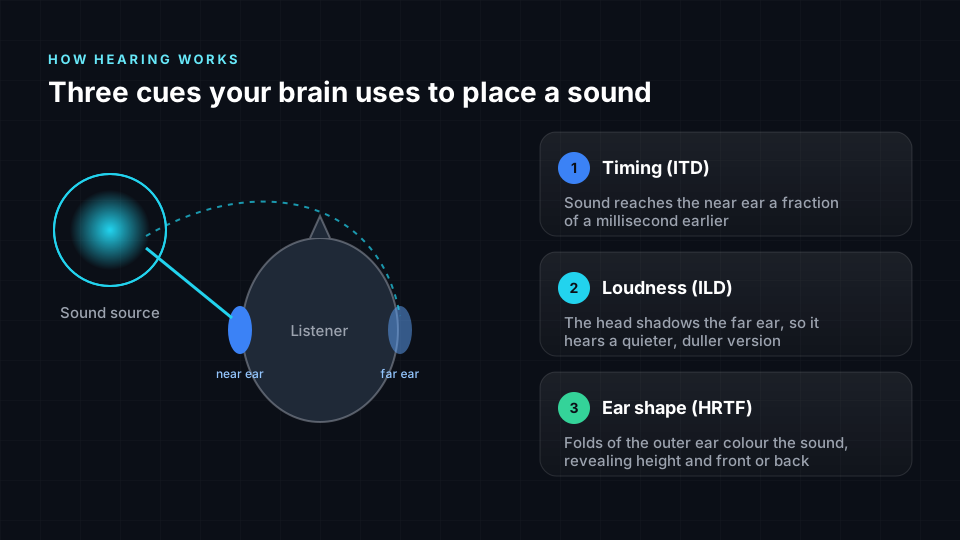
- Time difference. A sound on your left reaches your left ear a fraction of a millisecond before your right ear.
- Level difference. Your head blocks some sound, so the far ear hears it slightly quieter, especially at higher frequencies.
- Outer-ear filtering. The folds of your outer ear change the tone of a sound depending on whether it comes from the front, behind, above or below. This is how you can tell height and front from back.
Spatial audio systems recreate these cues. With speakers, the sound physically comes from different directions. With headphones, a technique called binaural rendering applies the cues digitally so the sound seems to come from outside your head. Learn more in binaural vs spatial audio.
The main ways to create spatial audio
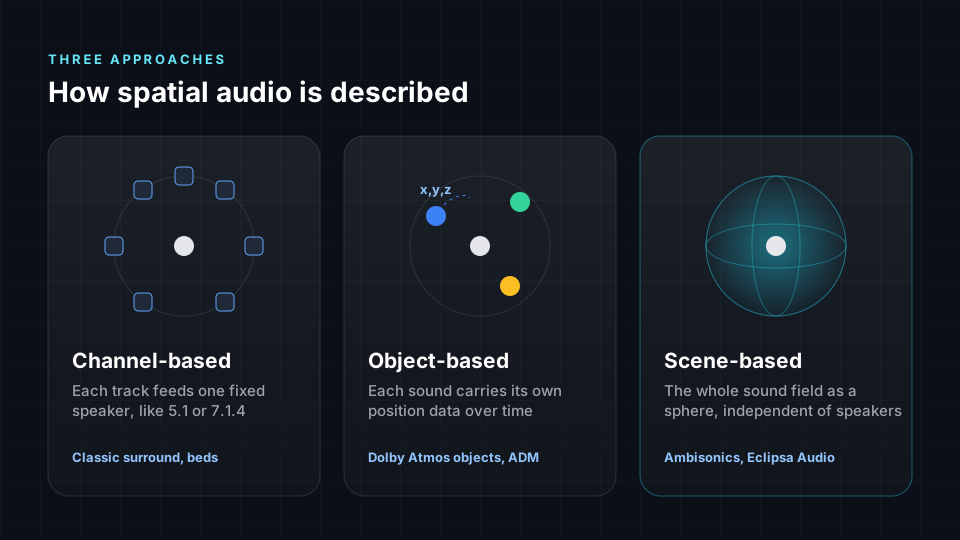
There are three main approaches to describing a 3D mix. Most modern formats use one or a combination of them.
| Approach | How it works | Strength | Example |
|---|---|---|---|
| Channel-based | Each channel feeds a specific speaker | Simple and predictable | 5.1 and 7.1 surround |
| Object-based | Sounds carry position data and are placed at playback | Adapts to different speaker layouts | Dolby Atmos objects, ADM |
| Scene-based | The whole sound field is captured as a sphere | Device-independent, great for headphones and VR | Ambisonics, used in Eclipsa Audio |
Scene-based audio is covered in depth in Ambisonics explained. Object-based mixes are often stored as an ADM BWF file. Our guide What is an ADM BWF file? explains how that works.
Speaker layouts: what do numbers like 7.1.4 mean?
When you see a speaker layout written as three numbers, each number counts a different kind of speaker.
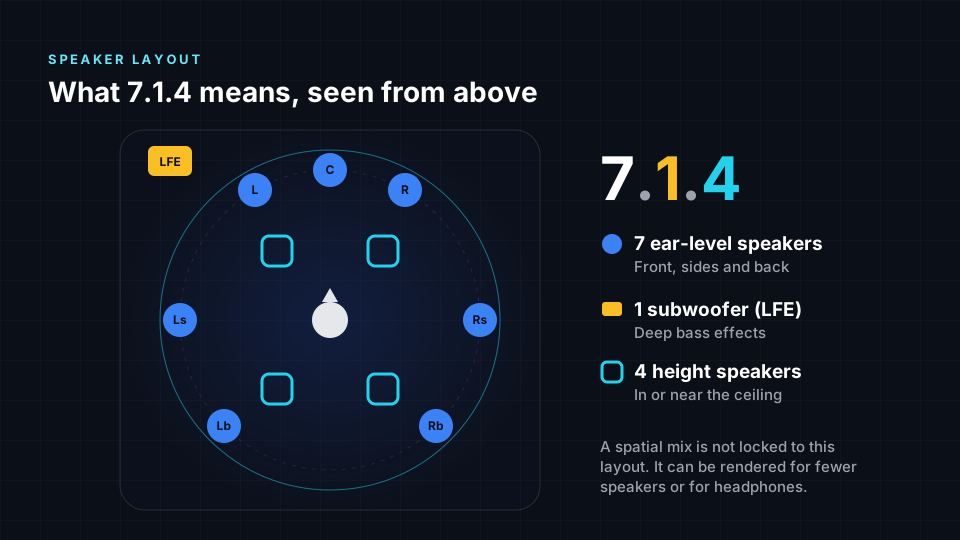
- First number: speakers around you at ear level (7 in a 7.1.4 layout).
- Second number: the subwoofer, which handles the deepest bass (1).
- Third number: speakers above you, on the ceiling or angled up (4).
You do not need a room full of speakers to enjoy spatial audio. Soundbars use angled drivers and processing to create a sense of height, and headphones can render the whole sphere binaurally.
Spatial audio formats you will hear about
| Format | Who is behind it | Licensing | Where you hear it |
|---|---|---|---|
| Dolby Atmos | Dolby Laboratories | Licensed | Cinemas, music streaming, many TVs and phones |
| Eclipsa Audio | Google and Samsung, built on IAMF | Royalty-free, open | YouTube on supported devices, Samsung 2025 TVs and soundbars, Android 16 apps |
| Sony 360 Reality Audio | Sony | Licensed | Selected music services and headphones |
| Ambisonics | Open technique, not a single company | Open | VR, 360 video, and inside formats like Eclipsa Audio |
| Binaural | A rendering method, not a format | Open | Any pair of headphones |
Eclipsa Audio is the newest. It is based on IAMF, an open specification from the Alliance for Open Media, released under a royalty-free license. YouTube has accepted Eclipsa Audio uploads since January 2025, Samsung built playback into its 2025 TVs and soundbars, and Android 16 added IAMF decoding for apps in its QPR2 update. Google has also announced plans for playback in the Chrome browser. Spatial9 is a member of the Alliance for Open Media and debuted the first music rendered in Eclipsa Audio with Google and Music AI at CES 2025. Learn more in Eclipsa Audio on YouTube.
One mix, many devices
A big advantage of modern spatial audio is that you mix once and every device plays it its own way. A scene-based or object-based mix does not need a separate version for headphones, phones, TVs and home theatres.
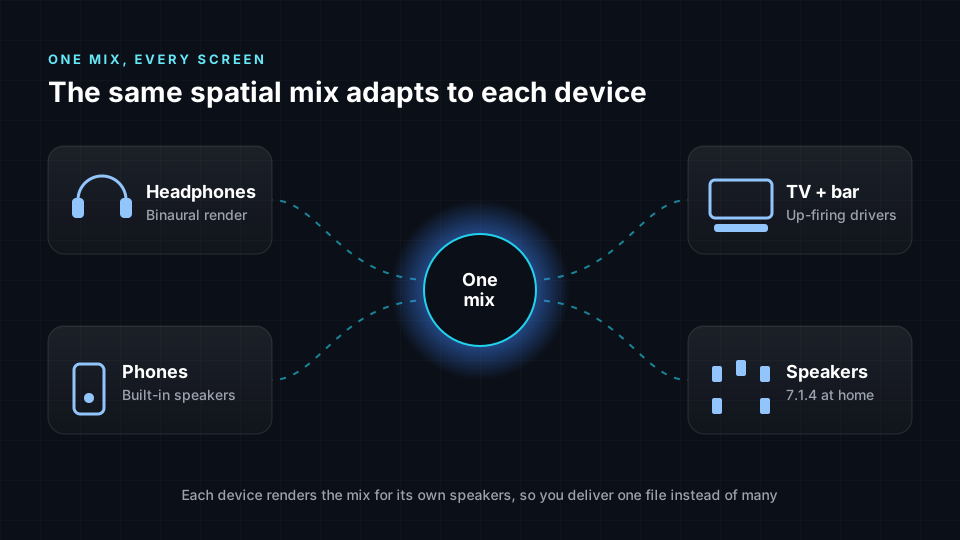
That also means a spatial mix will sound slightly different on each device. A home theatre with ceiling speakers will give the most precise height, while headphones depend on how well the binaural rendering suits your ears.
Spatial audio myths
| Myth | Reality |
|---|---|
| "8D audio is spatial audio" | 8D is a stereo effect that pans the whole song around your head. Spatial audio gives each sound its own place. See 8D vs binaural vs spatial audio. |
| "You need special headphones" | Any headphones can play a binaural rendering. Head tracking is a bonus, not a requirement. |
| "Spatial audio means Dolby Atmos" | Atmos is one format. Eclipsa Audio, Sony 360 Reality Audio and Ambisonics are others. |
| "Wider stereo is 3D sound" | Widening only stretches sound across the front. Nothing moves behind or above you. |
| "It only works in a cinema" | Phones, TVs, soundbars, cars and headphones can all render spatial mixes. |
Why spatial audio matters for artists and creators
- More space in the mix. Instruments that fight for room in stereo can each have their own place in 3D.
- Deeper emotional impact. Listeners often describe immersive mixes as feeling closer to being in the room with the band.
- Better discovery. Some music services give spatial releases their own sections and playlists.
- Future-proof catalog. An immersive master can feed headphones, cars, TVs and whatever device comes next.
We explore this further in Why artists are switching to immersive audio.
How to make your own spatial audio
You have three main options, depending on what you are starting with.
- Mix from multitrack stems in an immersive-ready DAW. This gives you full control but requires an immersive monitoring setup and time.
- Convert an existing Dolby Atmos master. If you already have an Atmos mix, Spatial9 converts the ADM BWF master to Eclipsa Audio for free in your browser. See how to convert Dolby Atmos to Eclipsa Audio.
- Generate an immersive version from stereo with AI. Spatial9's generative engine creates finished immersive versions from a stereo file and exports ADM, Eclipsa Audio, binaural or Ambisonics. Read how to create spatial audio from stereo.
Not sure whether to start from a finished stereo file or from stems? See stereo master vs stems.
Explore the spatial audio guides
This guide is the starting point for everything on the Spatial9 blog. Go deeper on any topic:
| If you want to… | Read |
|---|---|
| Understand headphones, binaural and 8D | 8D vs binaural vs spatial audio |
| Compare stereo with immersive sound | Stereo vs immersive sound |
| Learn how sound fields work | Ambisonics explained |
| Understand professional delivery files | What is an ADM BWF file? |
| Turn a stereo song into spatial audio | Stereo master vs stems |
| Convert an existing Atmos mix | Convert Dolby Atmos to Eclipsa Audio |
| Publish 3D sound on YouTube | Eclipsa Audio on YouTube |
| Make videos sound like a film | Cinematic, immersive sound for YouTube |
| Mix your genre in 3D | Spatial audio by genre |
Frequently asked questions
What is spatial audio in simple terms?
Spatial audio is sound that seems to come from all around you, including behind and above, instead of only from the left and right. It recreates the way you hear sound in real life.
Do I need special headphones for spatial audio?
No. Any pair of headphones can play spatial audio that has been rendered binaurally. Some headphones add head tracking, which keeps sounds fixed in place as you turn your head, but it is not required.
Is spatial audio the same as surround sound?
Not quite. Traditional surround sound, such as 5.1, places sound around you horizontally on fixed speakers. Spatial audio adds height and can describe sound positions independently of the speaker layout.
Is spatial audio the same as Dolby Atmos?
Dolby Atmos is one spatial audio format. Others include Eclipsa Audio, Sony 360 Reality Audio and Ambisonics. Spatial audio is the general idea; Atmos is one brand of it.
Can I turn a stereo song into spatial audio?
Yes. Spatial9 uses AI to generate a finished immersive version from a stereo file and exports it in formats including Eclipsa Audio, ADM, binaural and Ambisonics.
Where can I listen to spatial audio?
On music streaming services that support immersive formats, on YouTube with Eclipsa Audio on supported devices such as Samsung's 2025 TVs, in cinemas, and on many modern phones, TVs, soundbars and headphones.
Sources
- Introducing Eclipsa Audio: immersive audio for everyone, Google Open Source Blog, January 2025. Eclipsa Audio, IAMF, YouTube uploads, Samsung TVs and the Chrome plans.
- Introducing Open Source DAW Plugin for Eclipsa Audio, Google Open Source Blog, June 2025. YouTube support since January 2025 and Samsung's 2025 TV and soundbar lineup.
- Android 16 QPR2 Beta 1 is here, Android Developers Blog, August 2025. IAMF decoding in Android.
- IAMF specification, Alliance for Open Media.
- Recommendation ITU-R BS.2051, International Telecommunication Union. Speaker layouts such as 7.1.4.
Hear the difference for yourself
The best way to understand spatial audio is to hear it. Try Spatial9 free and turn one of your own songs into an immersive mix, or convert an existing Atmos master to Eclipsa Audio in minutes.