Spatial Audio & Immersive Music for Holiday Music: Complete Guide
Spatial9 Team · · Updated
Part of the series Spatial audio and immersive music by genre.
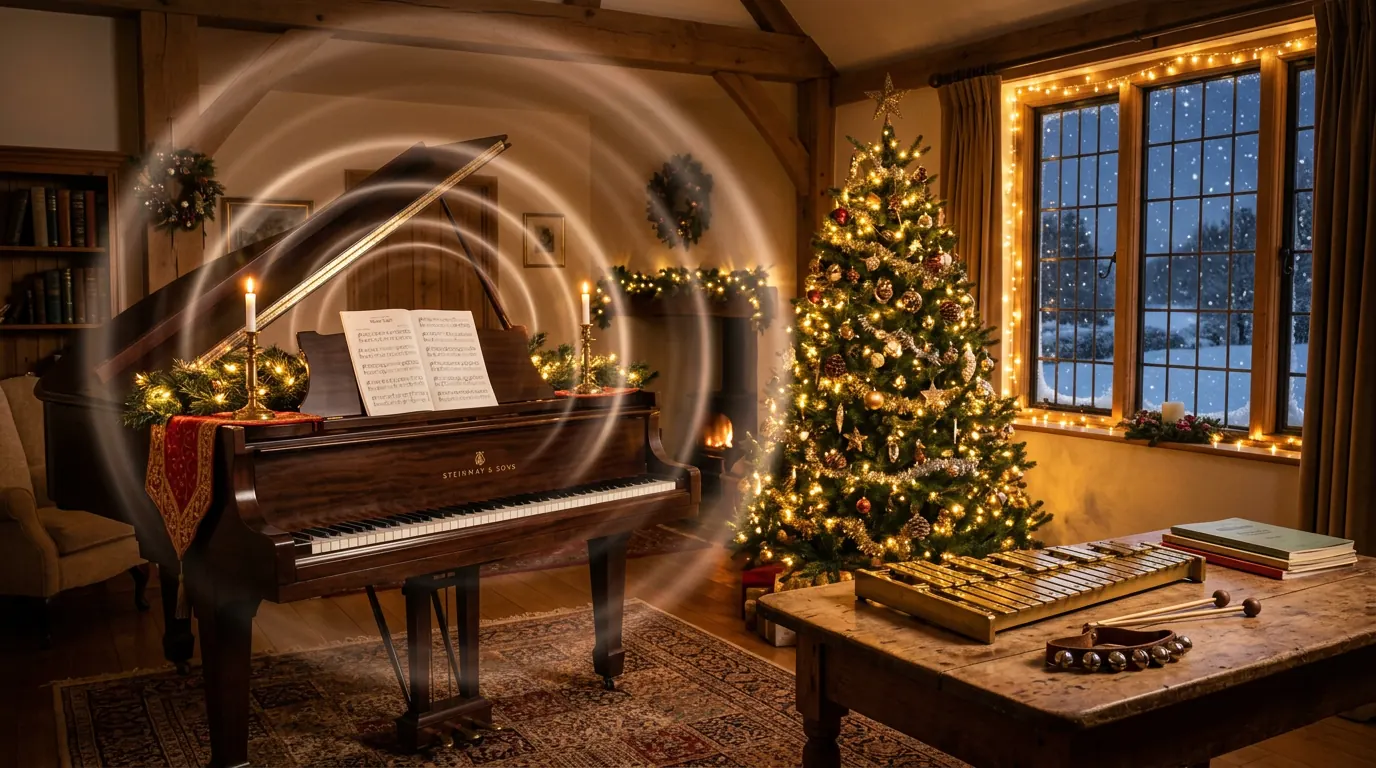
Holiday music covers the seasonal songs played around Christmas, Hanukkah, New Year and other winter celebrations. Think of crooner classics with big band or orchestra, modern pop Christmas hits, carols sung by choirs, cozy jazz trios and children's favourites. The sound is warm and familiar: piano, strings, upright bass, brushed drums, sleigh bells, glockenspiel, celesta and choir. Many of these songs are played every year, so fans already know every detail, which makes an immersive version feel like hearing an old friend in a new way. This guide covers how spatial audio for holiday music works, where to place each element and how to make an immersive holiday mix. For the basics, see what spatial audio is.
Why holiday music is perfect for spatial audio
Holiday songs are built on warmth and sparkle. The voice is close and friendly, while bells, chimes and strings add shimmer around it. In stereo, those bright sounds sit right on top of the vocal and can feel busy. In spatial audio, the sparkle can float above and around the listener, and the choir can surround them, so the song feels bigger and more magical while the singer stays close.
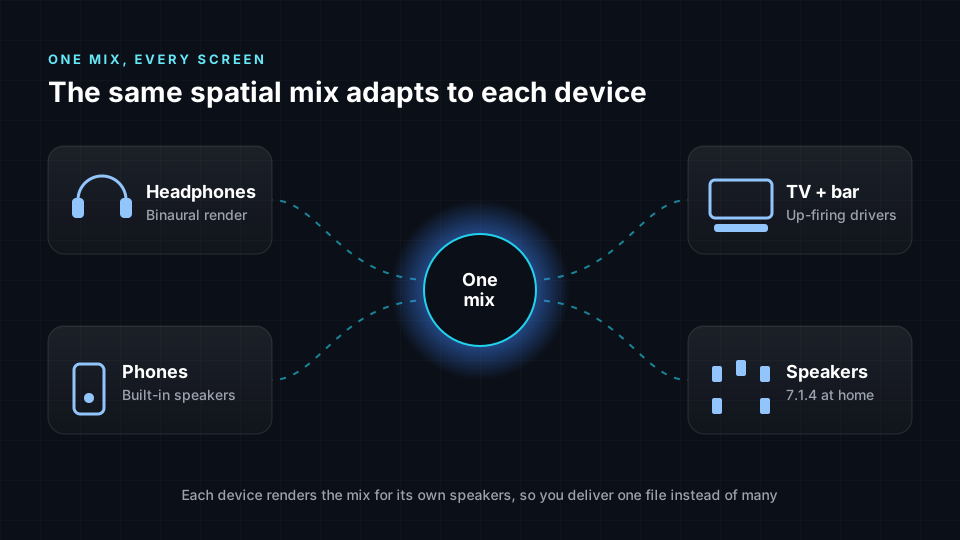
Holiday music is also played in shared spaces, on smart speakers, TVs and soundbars at gatherings. One immersive mix can adapt to all of them.
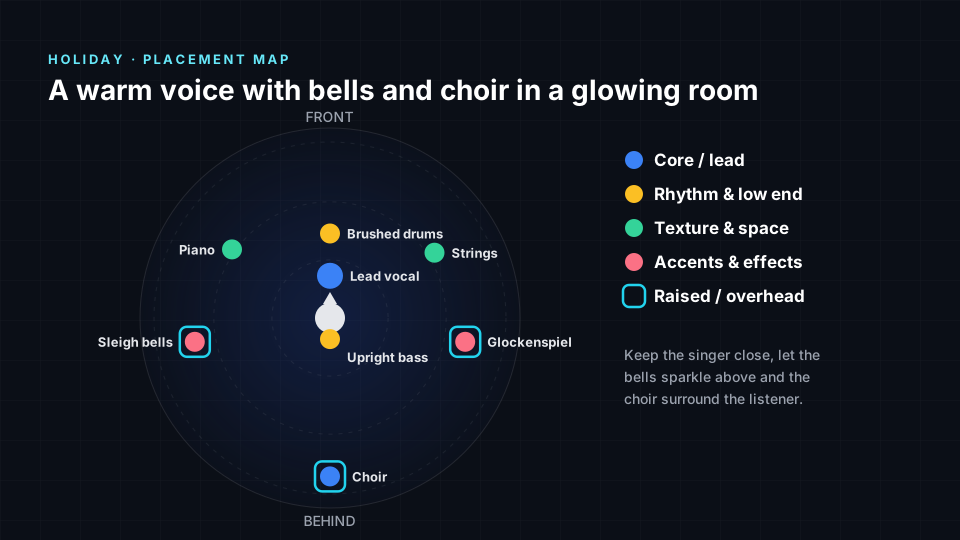
The rule: keep the singer close, let the bells sparkle above and let the choir surround the listener.
Immersive music for holiday music: what listeners hear
- A warm, close voice. The singer feels like they are in the room with you.
- Sparkle above. Bells and chimes float overhead like snowflakes.
- A choir around you. Voices fill the space behind and above.
- A cozy, glowing room. The mix feels warm and inviting, not loud.
Where to place each element in a holiday mix
| Element | Position | Height | Why it works |
|---|---|---|---|
| Lead vocal | Front centre, close | Ear level | The familiar voice leads the song |
| Piano | Front left | Ear level | Warm chords sit beside the singer |
| Strings | Front right | Ear level | Sweeping lines balance the piano |
| Brushed drums | Front centre, behind vocal | Ear level | A gentle swing without crowding |
| Upright bass | Centre | Ear level | Low notes are hard to place, so centre is cleanest |
| Sleigh bells | Left side | Raised | Bright jingles sparkle above the band |
| Glockenspiel | Right side | Raised | Chimes add magic from the other side |
| Choir | Behind | Raised | Wraps the listener in a festive sound |
The psychoacoustics behind holiday placement
- Spatial release from masking. Bright bells are easier to hear alongside the vocal when they come from above and the sides (Bronkhorst, 2000).
- Front and back spectral cues. Our ears shape sound differently from above and behind, which makes the choir and bells sound distinct from the band (Hebrank and Wright, 1974).
- Distance cues. A close, dry voice and a more distant choir create natural depth (Zahorik et al., 2005).
- Envelopment. Sound from the sides and behind makes the listener feel surrounded and included (Barron and Marshall, 1981).
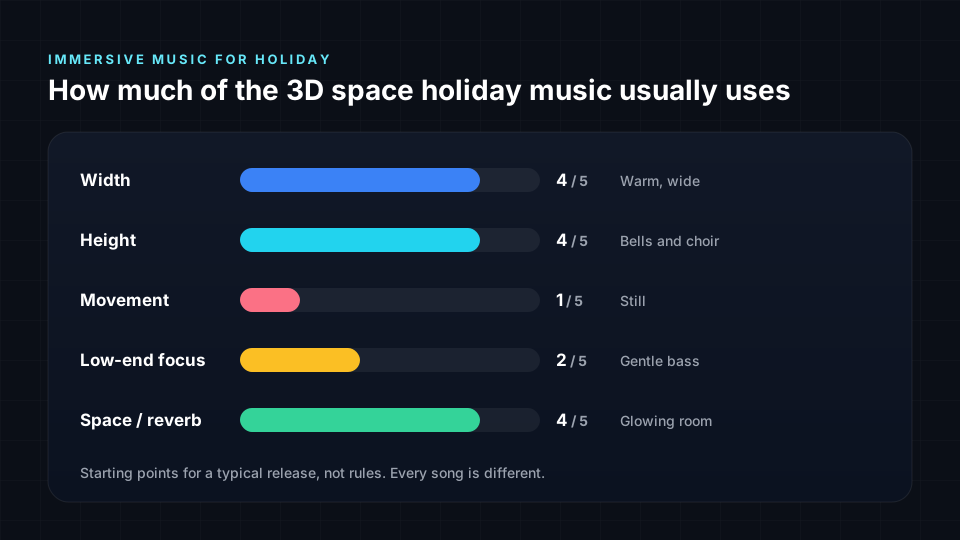
The immersion profile for holiday music
Tips for an immersive holiday mix
- Keep the vocal warm and close. Listeners love these voices. Do not push them away.
- Lift the bells. Sleigh bells and glockenspiel sound magical slightly above ear level.
- Put the choir around, not in front. A choir behind and above feels like carolers gathering.
- Keep it still. Holiday music is about comfort. Avoid flying sounds.
- Check on soundbars and smart speakers. Many people play holiday music on them, so make sure the mix still sounds warm.
How to make immersive holiday music from stereo
Spatial9 can create spatial audio from a stereo track in a few steps:
- Upload your stereo master or your stems.
- Spatial9's AI separates and places each part, from the vocal and piano to the bells and choir.
- Preview it in binaural on headphones.
- Export Eclipsa Audio, ADM, binaural or Ambisonics.
- Publish a video. Create a YouTube-ready video with your immersive audio and publish it directly.
For related guides, read spatial audio for a cappella, spatial audio for gospel and spatial audio for jazz. Every guide is listed in spatial audio and immersive music by genre.
Frequently asked questions
Can I make a holiday mix in Dolby Atmos or Eclipsa Audio?
Yes. The placements in this guide work for both. Spatial9 exports ADM, the standard file used by Dolby Atmos studios, as well as Eclipsa Audio for YouTube, so one immersive holiday mix covers both. You may also hear this called a 3D Christmas mix or holiday music in spatial audio.
Can I turn a classic Christmas song into spatial audio?
Yes, if you own or have the rights to the recording. Spatial9 uses AI to separate even older stereo or mono-sounding masters into parts and place them around the listener.
Where should the sleigh bells go?
To one side, slightly raised. They sparkle above the band without covering the voice.
Should the choir surround the listener?
Yes. Placing the choir behind and above creates a warm, gathered feeling while the lead singer stays in front.
How early should I prepare an immersive holiday release?
Give yourself time before the season starts, so the mix, the video and the upload are ready when listeners begin searching for holiday music.
Does immersive holiday music work on normal headphones?
Yes. The mix is rendered binaurally, so the singer sounds close and the bells and choir surround you on any regular headphones.
Dolby and Dolby Atmos are trademarks of Dolby Laboratories. Spatial9 is not affiliated with or endorsed by Dolby Laboratories.
Sources
- Barron, M. and Marshall, A. H. (1981). Spatial impression due to early lateral reflections in concert halls. Journal of Sound and Vibration, 77(2), 211-232.
- Bronkhorst, A. W. (2000). The cocktail party phenomenon: a review of research on speech intelligibility in multiple-talker conditions. Acta Acustica united with Acustica, 86, 117-128.
- Hebrank, J. and Wright, D. (1974). Spectral cues used in the localization of sound sources on the median plane. Journal of the Acoustical Society of America, 56(6), 1829-1834.
- Zahorik, P., Brungart, D. S. and Bronkhorst, A. W. (2005). Auditory distance perception in humans: a summary of past and present research. Acta Acustica united with Acustica, 91, 409-420.
- Blauert, J. (1997). Spatial Hearing: The Psychophysics of Human Sound Localization, revised edition. MIT Press.
Wrap your listeners in the season
Upload a holiday song to Spatial9 and hear the bells and choir glow around you in minutes. Then export it or publish it straight to YouTube.