Ambisonics Explained: How a Whole Sphere of Sound Fits in One File
Spatial9 Team ·
Ambisonics has been around since the 1970s, but it has never been more relevant. It powers spatial audio in 360 video and virtual reality, and it is at the heart of Eclipsa Audio, the open 3D audio format on YouTube. This guide explains how it works without the maths, using diagrams for each idea.
What is Ambisonics?
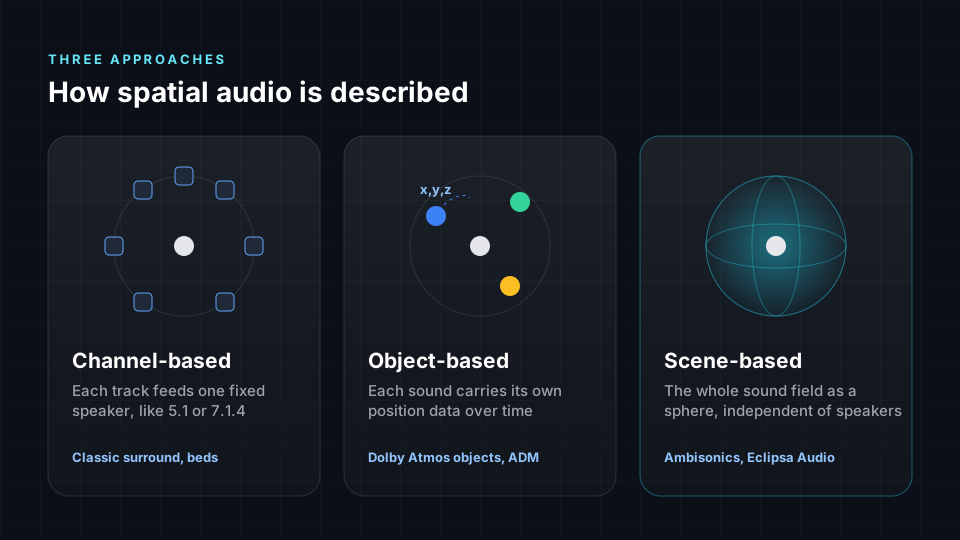
Most audio formats describe sound per speaker: this is the left channel, this is the right channel, this is the rear-left channel. Ambisonics describes sound per direction. It stores a picture of the entire sound field around a single listening point, from every angle, including above and below.
Think of the difference between a set of photos taken through several windows and a single 360-degree photo. The window photos only make sense if you stand in the same room. The 360 photo can be viewed on any screen, and you can look around inside it.
Ambisonics was developed in the United Kingdom in the 1970s, largely through the work of Michael Gerzon and Peter Craven. It was ahead of its time. It took virtual reality, 360 video and headphone spatial audio to make it mainstream.
How Ambisonics works: four signals for a whole sphere
The simplest form, first-order Ambisonics, uses just four signals. Together they are often called B-format.
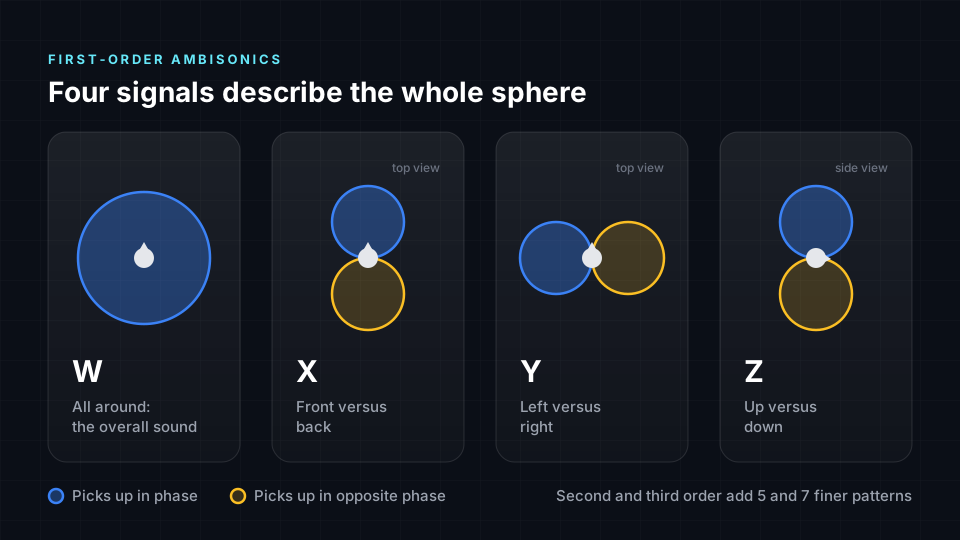
- W listens in every direction equally. It is the overall sound of the space.
- X compares front and back.
- Y compares left and right.
- Z compares up and down.
By combining these four signals in different amounts, a decoder can work out how loud the sound field is in any direction at all. That is why four signals are enough to describe a full sphere, at least roughly.
A-format and B-format
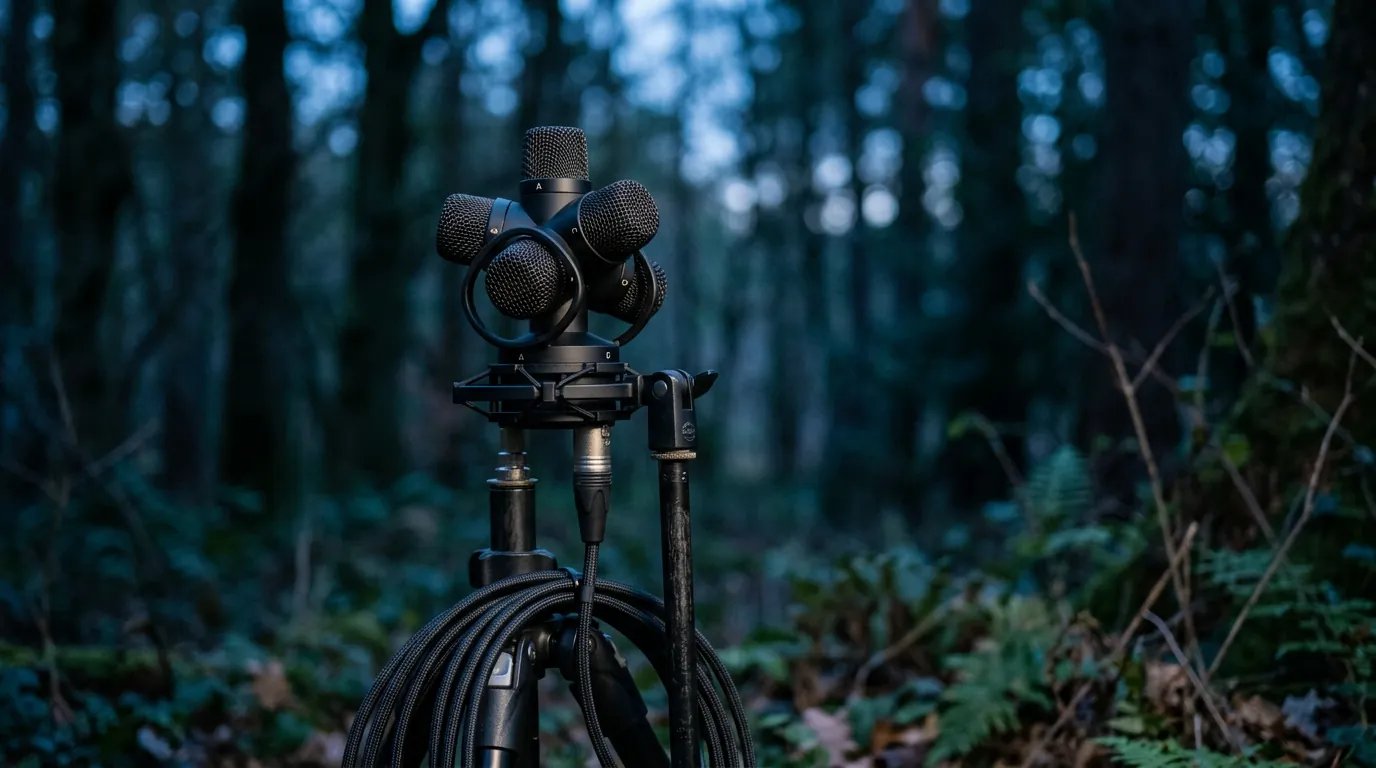
An ambisonic microphone has four capsules pointing in different directions. Their raw signals are called A-format. Software converts them into the W, X, Y and Z signals of B-format, which is what you edit, store and play back.
Ambisonic orders: more signals, more detail
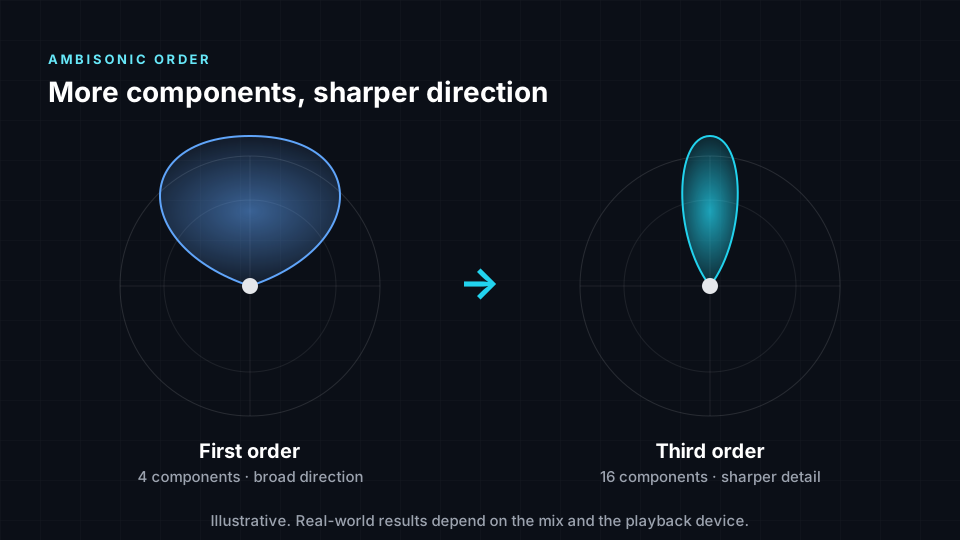
First order gives a good sense of space, but directions are a little blurry. Adding more signals, called higher orders, sharpens the picture.
The number of signals grows quickly with each order. The rule is simple: channels = (order + 1) squared.
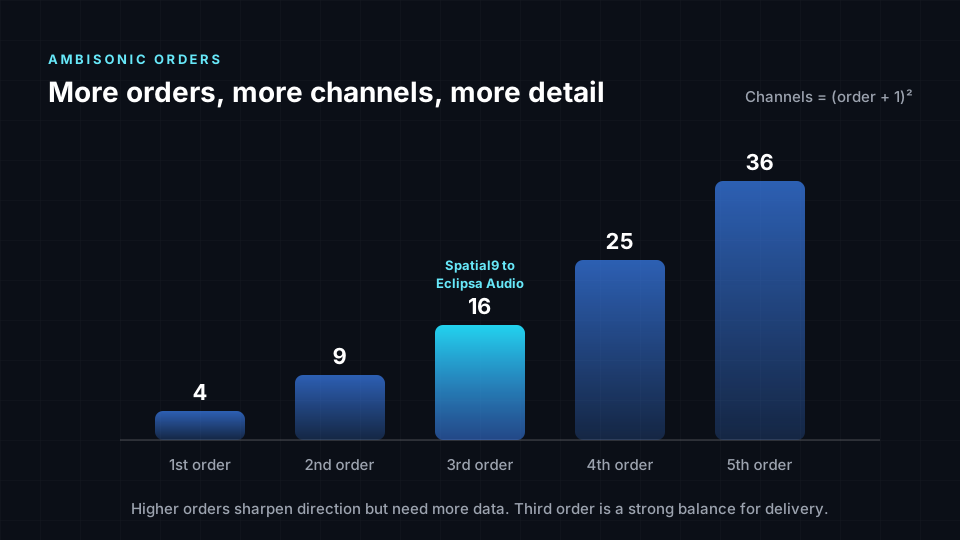
| Order | Channels | What it sounds like | Common uses |
|---|---|---|---|
| 1st | 4 | Clear sense of space, soft directions | 360 video, field recordings, VR |
| 2nd | 9 | Noticeably sharper placement | Games, VR experiences |
| 3rd | 16 | Precise placement, very immersive | Music and film delivery, Eclipsa Audio from Spatial9 |
| 4th and above | 25+ | Extremely detailed | Research, large speaker arrays, installations |
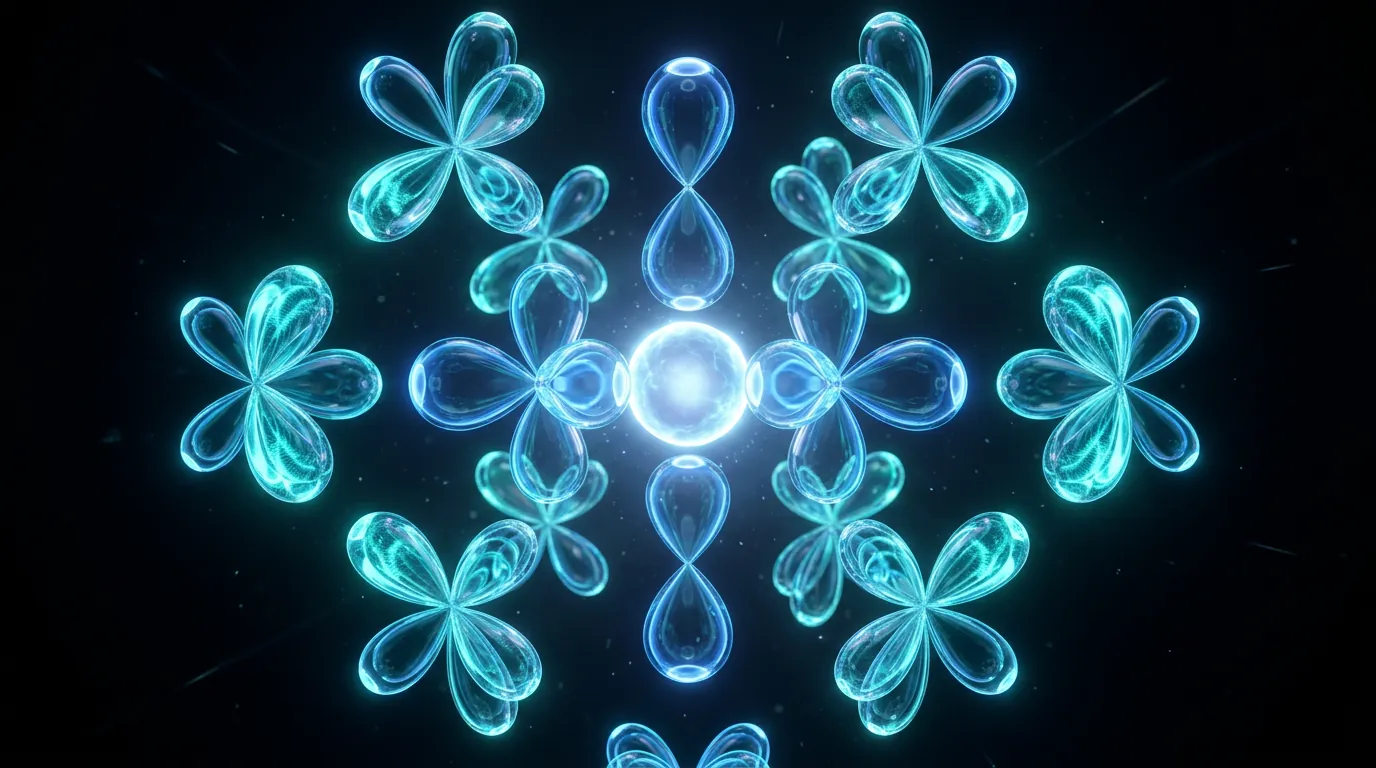
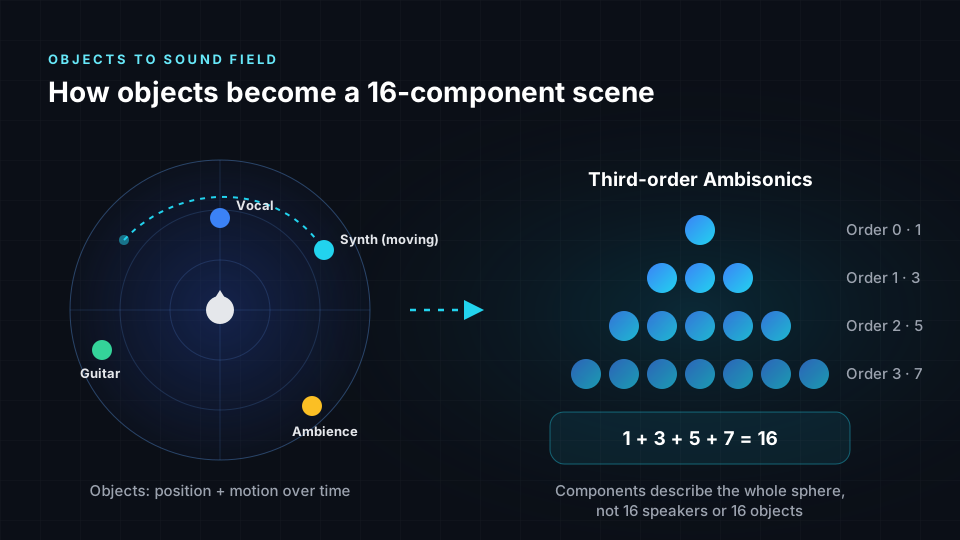
The patterns used at third order look a bit like flowers and clover leaves when drawn in 3D: 1 + 3 + 5 + 7 = 16 shapes, each picking up a different slice of the sphere.
Encode once, decode anywhere
Ambisonics separates making the sound field from playing it. That separation is its superpower.
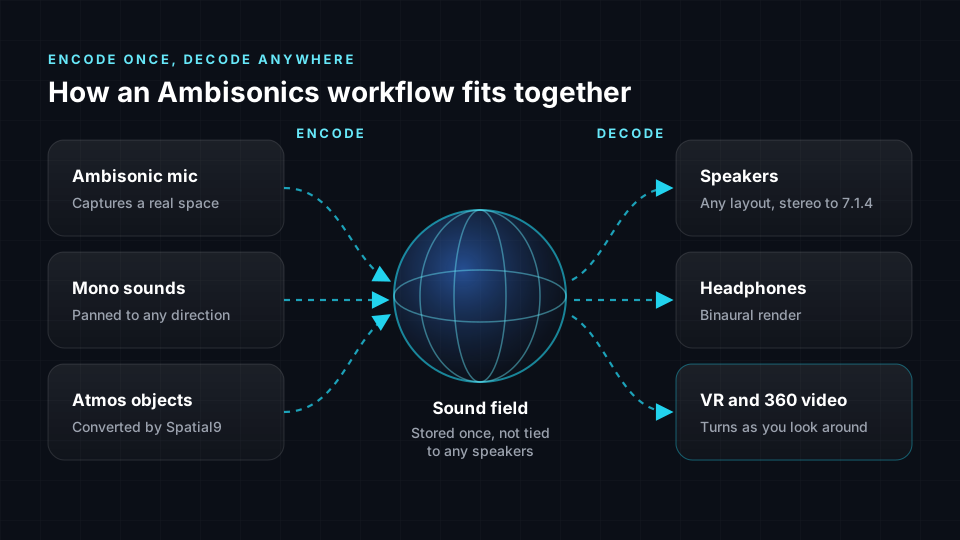
- Encoding places sounds into the sphere. A microphone does it naturally. A mono sound can be panned to any direction. Spatial9 encodes Dolby Atmos beds and objects into a third-order scene, following each object's movement over time.
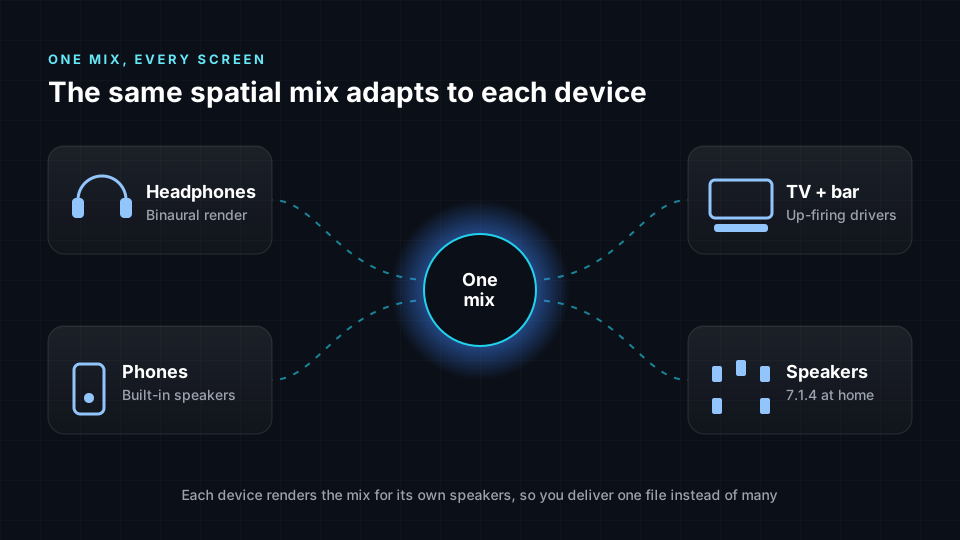
- Decoding turns the sphere into signals for real speakers, or into a binaural mix for headphones. The decoder adapts to the speakers it has, so the same file works from stereo to large 3D layouts.
- Rotating the whole sphere is simple. That is why 360 videos can turn the sound with your view, and why head-tracked headphones work so well with Ambisonics.
For the headphone side of this, see binaural vs spatial audio.
Ambisonics vs channels vs objects
| Channel-based | Object-based | Ambisonics | |
|---|---|---|---|
| Describes | Signals for specific speakers | Individual sounds with positions | The full sphere around a listener |
| Tied to a speaker layout | Yes | No | No |
| Easy to rotate | No | Yes, object by object | Yes, the whole scene at once |
| Great for | Fixed home theatre setups | Studio mixing, Dolby Atmos | VR, 360 video, headphones, open delivery |
| Example | 5.1, 7.1 | ADM, Dolby Atmos objects | B-format, Eclipsa Audio scenes |
To learn how objects are stored in a studio master, read What is an ADM BWF file?.
Ambisonics in Eclipsa Audio
Eclipsa Audio is built on IAMF, an open, royalty-free standard from the Alliance for Open Media. IAMF supports scene-based audio, so an Eclipsa Audio file can carry an Ambisonics sound field that each device renders for its own speakers or headphones.
That makes Ambisonics a natural fit for open delivery. One file can reach phones, headphones, TVs and soundbars, and every device does the right thing.
When Spatial9 converts a Dolby Atmos master to Eclipsa Audio, it uses third-order Ambisonics with motion-aware translation, so moving objects keep moving. You also get an Intent Fidelity Score showing how faithfully the spatial intent survived. Follow the step-by-step Atmos to Eclipsa Audio guide.
Two file conventions to know: AmbiX and FuMa
If you work with Ambisonics files, you will meet two naming conventions for how the signals are ordered and scaled.
- AmbiX is the modern standard and the one most tools, 360 video platforms and plugins expect.
- FuMa is an older convention found in many classic recordings and libraries.
Both describe the same idea, but the signals are arranged differently. Mixing them up makes sounds appear in the wrong place. If something sounds flipped or strangely wide, check the convention first.
Frequently asked questions
What is Ambisonics in simple terms?
Ambisonics is a way of recording and storing sound from every direction as one complete sphere, so it can be played back on any speakers or headphones and rotated as the listener turns.
How many channels does Ambisonics use?
First order uses 4 channels, second order 9, third order 16 and fourth order 25. The rule is the order plus one, squared.
Is Ambisonics better than Dolby Atmos?
They solve different problems. Dolby Atmos is excellent for mixing with individual objects in a studio. Ambisonics is excellent for describing a whole scene that any device can play. Spatial9 converts Atmos mixes into third-order Ambisonics for Eclipsa Audio, so you can use both.
Do I need a special microphone for Ambisonics?
Only to capture a real space. You can also create Ambisonics in software by panning ordinary recordings into the sphere, or by converting an existing immersive mix.
Can I listen to Ambisonics on headphones?
Yes. A decoder turns the sound field into a binaural mix for headphones, and head tracking can keep sounds fixed in place as you move.
What is B-format?
B-format is the standard form of first-order Ambisonics, made up of the four signals W, X, Y and Z.
Put your mix in a sphere
Ambisonics is how one file can play beautifully everywhere. Convert your Atmos master to a third-order Eclipsa Audio scene with Spatial9 for free, or turn a stereo song into an immersive mix.