
8D vs Binaural vs Spatial Audio: What Is the Difference?
Spatial9 Team · · Updated
People often use "8D", "binaural" and "spatial audio" as if they meant the same thing. They are related, but mixing them up leads to confusing decisions about how to record, mix and release your music. This guide explains the difference in plain language, with diagrams for each idea.
The difference in one sentence
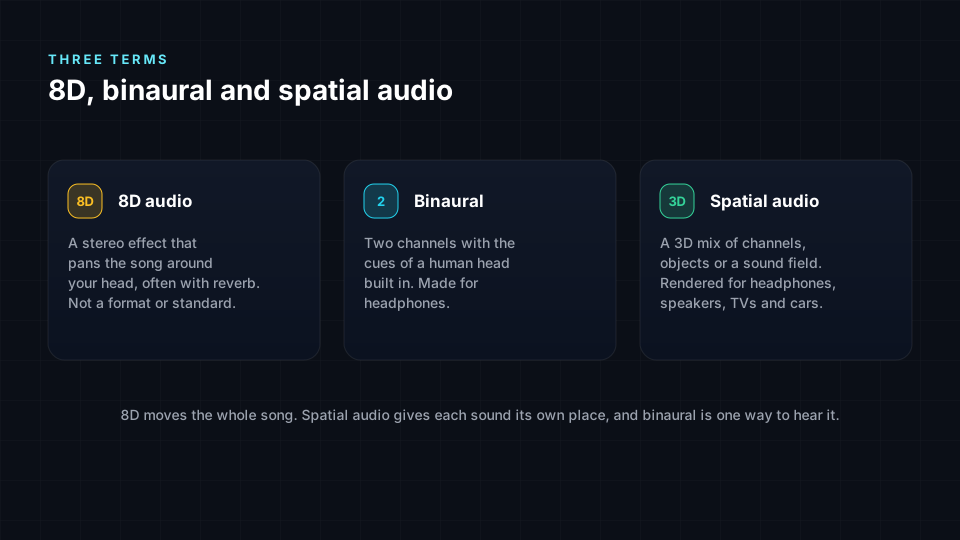
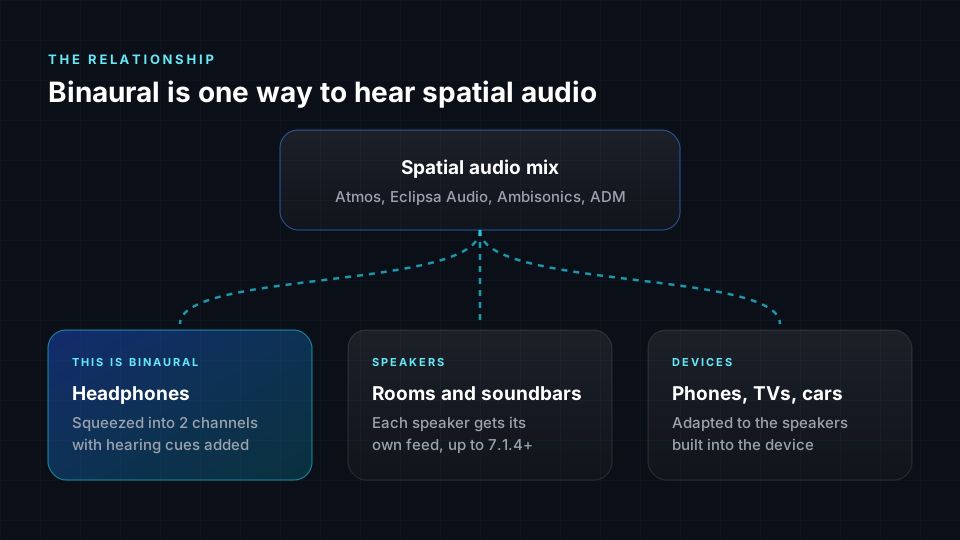
Spatial audio is what you are hearing; binaural is how you are hearing it on headphones; 8D is an effect applied to a stereo song. Spatial audio describes a mix in three dimensions. Binaural is a two-channel result designed to trick your brain into hearing those three dimensions through two small speakers next to your ears.
If you are new to the topic, start with our complete guide to spatial audio, then come back here.
What is binaural audio?
Binaural simply means "two ears". A binaural recording or render contains a left and a right channel, just like stereo. The difference is what is inside those two channels.
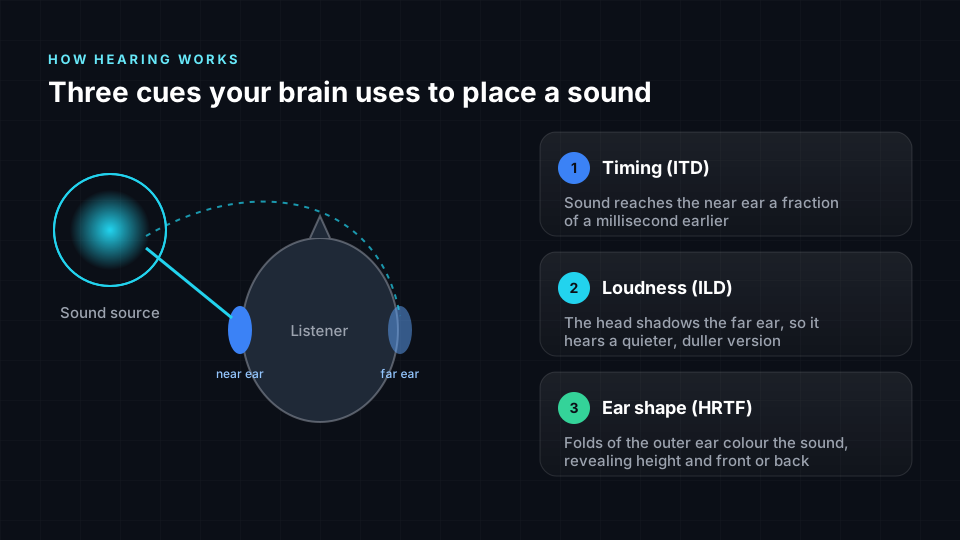
In normal stereo, a sound panned left is just louder in the left speaker. In binaural audio, each sound carries the tiny timing, level and tone differences it would have if it had really travelled around your head and into your ears. Your brain reads those cues and places the sound outside your head: in front, behind or above.
Two ways to make binaural audio
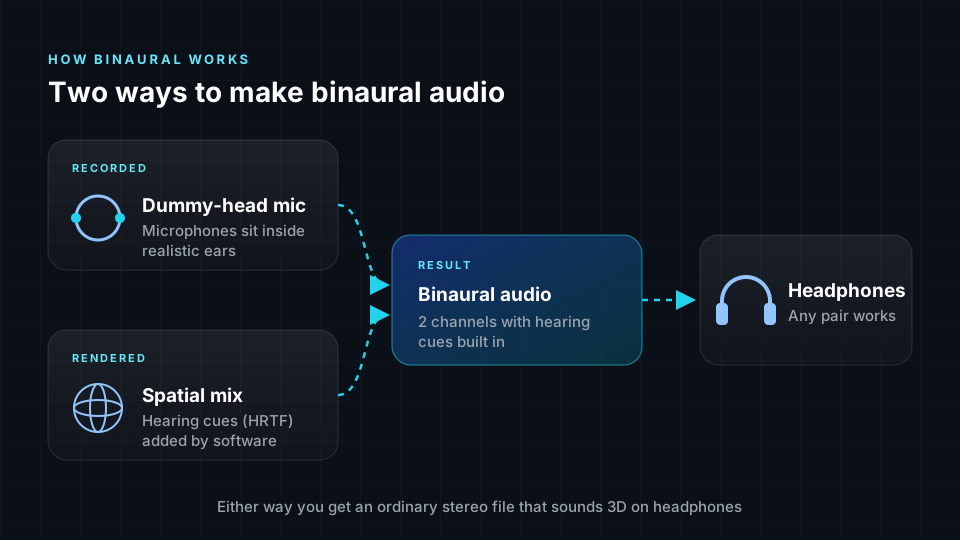
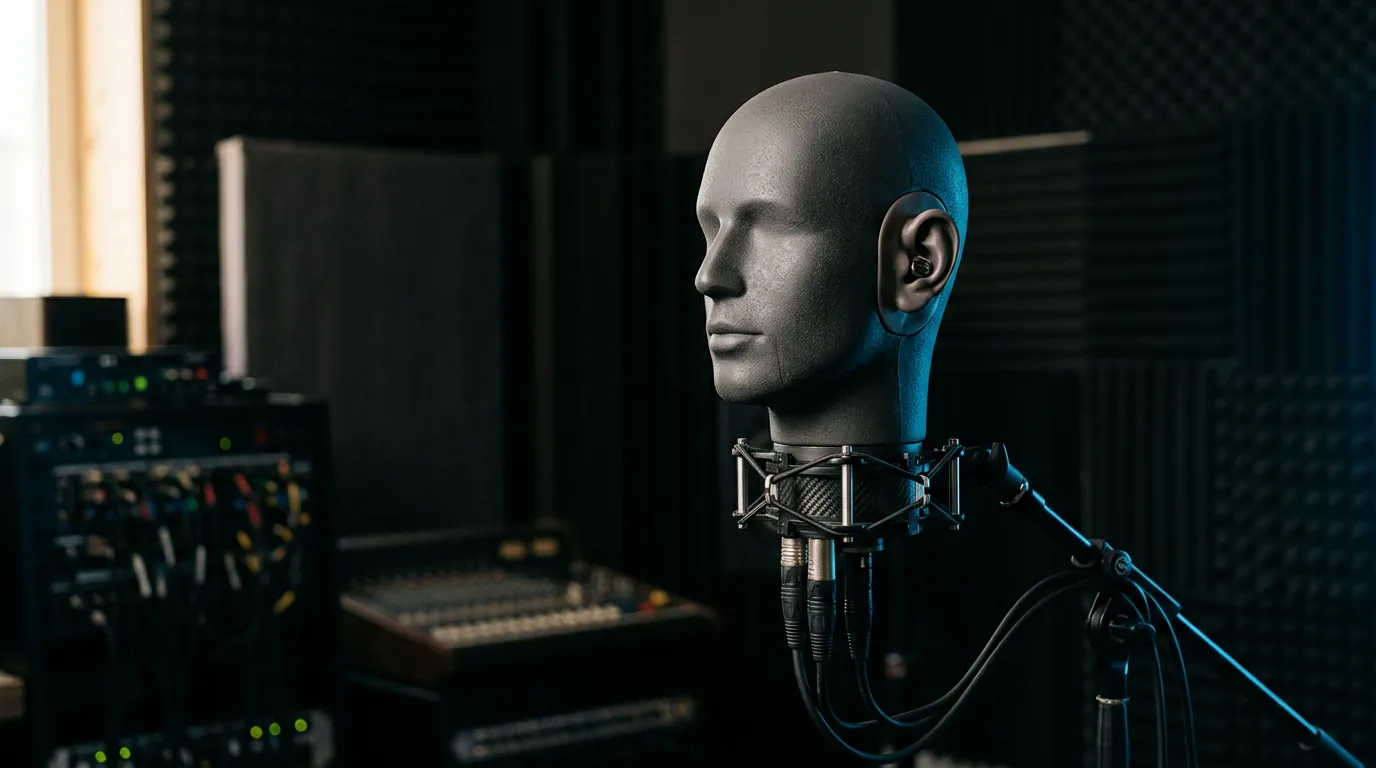
- Recorded binaural. A dummy-head microphone is a model of a human head with microphones placed inside realistic ears. Whatever happens around the head is captured exactly as a listener in that seat would hear it. The idea is surprisingly old: experiments with two-ear listening go back to the 1880s.
- Rendered binaural. Software takes a spatial mix, such as Dolby Atmos, Eclipsa Audio or Ambisonics, and applies a set of hearing filters called an HRTF to every sound. This is how phones, headphones and streaming apps play spatial audio on headphones today.
What is an HRTF?
HRTF stands for head-related transfer function. It is a description of how your head, shoulders and outer ears change a sound depending on the direction it comes from. A sound arriving from above is coloured differently from the same sound arriving from behind.
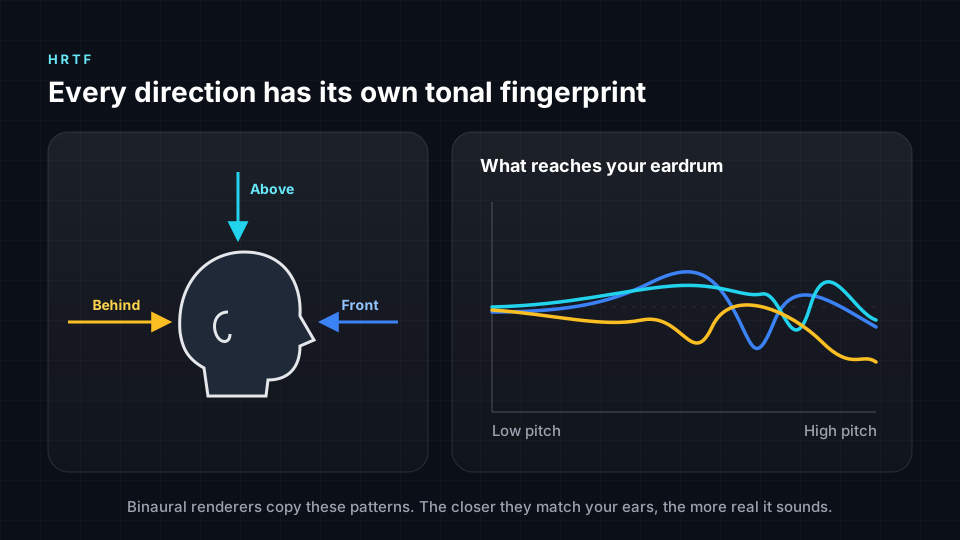
Everyone's ears are a slightly different shape, so everyone's HRTF is slightly different. That is why binaural audio can sound astonishingly real to one person and a little vague to another. Some devices now offer personalised HRTFs, built from a scan or photo of your ears, to close that gap.
What is 8D audio?
"8D audio" is an internet name, not a technical standard. There is no eighth dimension and no 8D file format. The term became popular on YouTube for remixes of existing songs where the whole track appears to circle slowly around your head on headphones.
How 8D audio is made
- Automated panning. The full stereo mix is swept from left to right and back again in a steady loop.
- Extra reverb. A large reverb makes the song sound like it is in a big room.
- Sometimes binaural panning. Some creators use a binaural panner so the sweep seems to pass behind your head, not only from ear to ear.
Why 8D is not spatial audio
The key difference is that 8D moves the whole song as one block. The vocal, drums and bass all travel together, because they are still mixed into the same stereo file. In a spatial mix, each sound has its own position: the vocal can stay in front while the ambience wraps around you and a synth rises overhead.
8D can be fun on headphones, but it has limits:
- It tends to sound like plain stereo, or simply odd, on speakers.
- Constant motion can be tiring, and the lead vocal keeps moving away from you.
- It cannot adapt to different devices, because there is no 3D information in the file.
What is spatial audio?
Spatial audio is a mix that describes where every sound is in 3D space. It is not tied to two channels. It can be stored as channels for a speaker layout, as objects with position data, or as an Ambisonics sound field. Read Ambisonics explained for more on that last approach.
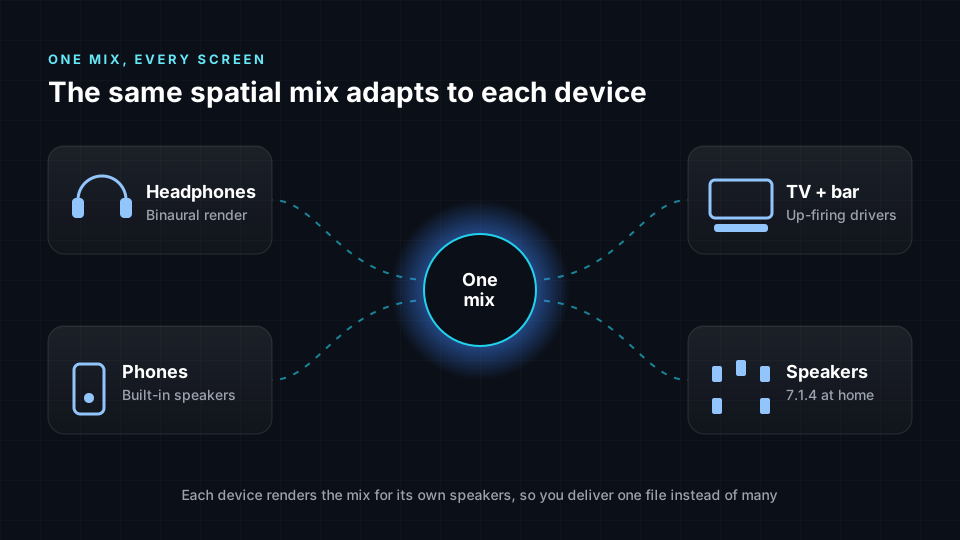
The key point is that a spatial mix is flexible. At playback, the device decides how to present it: as a binaural render on headphones, as separate feeds to each speaker in a home theatre, or as an adapted version for a soundbar or phone.
8D vs binaural vs spatial audio, side by side
| 8D audio | Binaural audio | Spatial audio | |
|---|---|---|---|
| What it is | A stereo effect that pans the whole song around you | A 2-channel result with hearing cues built in | A 3D mix that can be played many ways |
| Is it a format? | No, an informal name | No, a recording or rendering method | Yes, through formats such as Eclipsa Audio, Dolby Atmos and Ambisonics |
| Channels | 2 | Always 2 | Many: channels, objects or a sound field |
| Separate sounds placed individually? | No, the whole mix moves together | Yes, when rendered from a spatial mix | Yes |
| Best played on | Headphones | Headphones | Headphones, speakers, soundbars, TVs, cars |
| On normal speakers | Sounds like moving stereo | Sounds odd or narrow; the cues get mixed up | Rendered properly for the speakers |
| Head tracking | Not possible | Not possible from a fixed file | Possible, because the renderer knows where sounds are |
| Typical uses | Novelty remixes on YouTube | ASMR, podcasts, field recordings, headphone releases | Music releases, film, YouTube in Eclipsa Audio, games |
Head tracking: the biggest practical difference
When you listen to a binaural file and turn your head, the whole sound scene turns with you. Turn to the left and the singer who was in front of you is still right in front of your nose, instead of staying where they were in the room. That is not how real sound behaves.
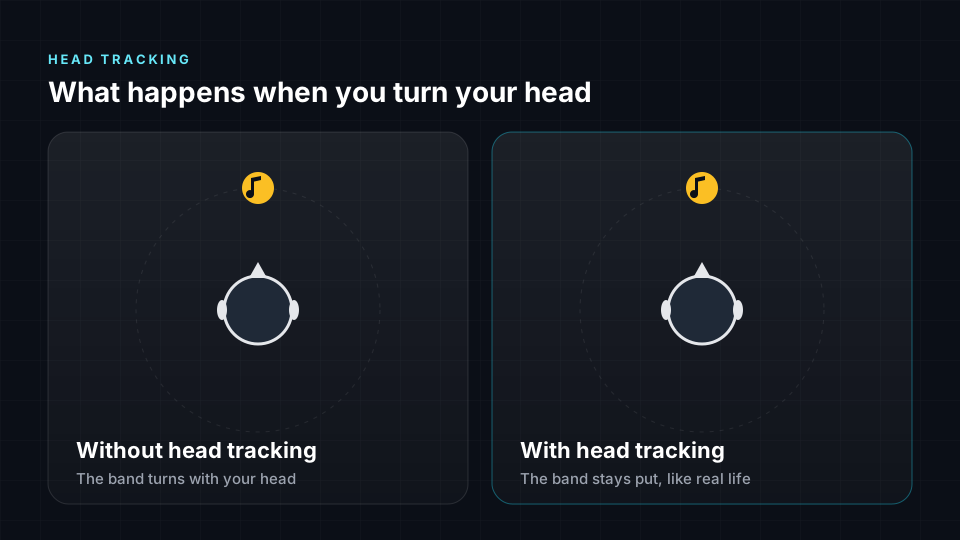
With a spatial mix, the player knows where each sound belongs, so headphones with motion sensors can re-render the binaural version in real time as you move. The band stays put. This is only possible because the spatial information was kept, rather than baked into two channels.
When should you use binaural, and when spatial?
Choose a binaural release when
- Your audience listens almost entirely on headphones, such as ASMR, meditation or audio drama.
- You are capturing a real place, like a forest or a concert seat, with a dummy-head microphone.
- You need a single file that works anywhere, with no special player.
Choose a spatial master when
- You are releasing music that will be heard on speakers, cars and TVs as well as headphones.
- You want head tracking and personalised rendering to work.
- You want to deliver to formats like Eclipsa Audio on YouTube, or immersive music streaming.
- You may want to change the mix later.
How Spatial9 handles both
Spatial9 works with spatial masters first and gives you binaural when you need it.
- From stereo or stems: Spatial9's generative engine creates a finished immersive version of a stereo song and exports it as ADM, Eclipsa Audio, binaural or Ambisonics. See stereo master vs stems.
- From Dolby Atmos: convert an ADM BWF master to Eclipsa Audio for free in your browser. See how to convert Dolby Atmos to Eclipsa Audio.
- For YouTube: Eclipsa Audio lets supported devices render your mix for headphones, TVs or soundbars automatically. See Eclipsa Audio on YouTube.
Frequently asked questions
Is 8D audio the same as spatial audio?
No. 8D audio is a stereo effect that moves the whole song around your head. Spatial audio places each sound separately in 3D and can be rendered for headphones, speakers and TVs.
Is 8D audio bad for your ears?
Not at normal volume. It is ordinary stereo with panning and reverb. As with any headphone listening, keep the volume moderate.
Is binaural audio the same as spatial audio?
No. Spatial audio is a 3D mix that can be played on many systems. Binaural audio is a two-channel version made for headphones. Spatial audio is often played binaurally on headphones, which is why the two get confused.
Do I need special headphones for binaural audio?
No. Any ordinary pair of headphones or earbuds will play binaural audio. Headphones with head tracking improve the effect for spatial mixes, but they are not required.
Does binaural audio work on speakers?
Not well. On speakers, both ears hear both channels, so the carefully built hearing cues get mixed together. The result usually sounds like slightly odd stereo.
Why does binaural audio sound different to different people?
Everyone's head and ears are shaped differently, so everyone hears direction through slightly different cues. A binaural render built on an average head will suit some listeners better than others.
Can I convert a binaural recording into spatial audio?
Only in a limited way. The positions of the sounds are baked into two channels, so they cannot be cleanly separated again. It is always better to keep a spatial master and create binaural from it.
Is Dolby Atmos binaural?
Dolby Atmos is a spatial format. When you listen to an Atmos mix on headphones, your device renders it binaurally. The same is true for Eclipsa Audio.
Sources
- Introducing Eclipsa Audio: immersive audio for everyone, Google Open Source Blog, January 2025. Binaural rendering of Eclipsa Audio for headphones.
- Introducing Open Source DAW Plugin for Eclipsa Audio, Google Open Source Blog, June 2025. IAMF rendering to loudspeakers and binaurally for headphones.
- IAMF specification, Alliance for Open Media.
Hear your music in 3D
Start with a spatial master and you get binaural, speaker and TV versions from one file. Try Spatial9 free and turn a stereo song into an immersive mix, then listen on your favourite headphones.