Stereo vs Immersive Sound: What Is the Difference and Which Should You Use?
Spatial9 Team ·
Stereo has been the standard way to hear recorded music for more than sixty years. Immersive sound, sometimes called spatial or 3D audio, is the biggest change since. This guide compares the two in plain language, so you can decide what your next release needs.
What is stereo sound?
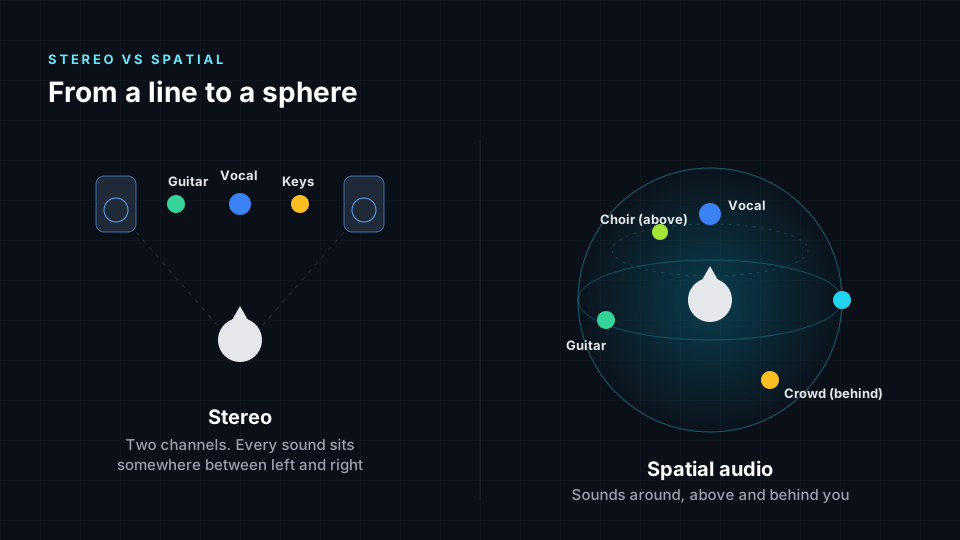
Stereo uses two channels, left and right. When a sound is louder in the left channel, you hear it towards the left. When it is equal in both, it seems to come from the middle, even though there is no speaker there. That in-between position is called the phantom centre.
Everything in a stereo mix, from the vocal to the drums to a string section, has to live somewhere on that one line. Engineers create a sense of depth with reverb, volume and tone, but they cannot put a sound behind you or above you.
What is immersive sound?
Immersive sound removes the line. Sounds can be placed anywhere around the listener and can move through the space. A choir can sit above you, strings can wrap behind you, and a guitar can sit just off your left shoulder.
An immersive mix is stored in a format such as Dolby Atmos, Eclipsa Audio or Ambisonics, and each device plays it its own way: through many speakers in a home theatre, through a soundbar, or as a binaural mix on headphones. For the full picture, read our complete guide to spatial audio.
A short history: from one speaker to a sphere
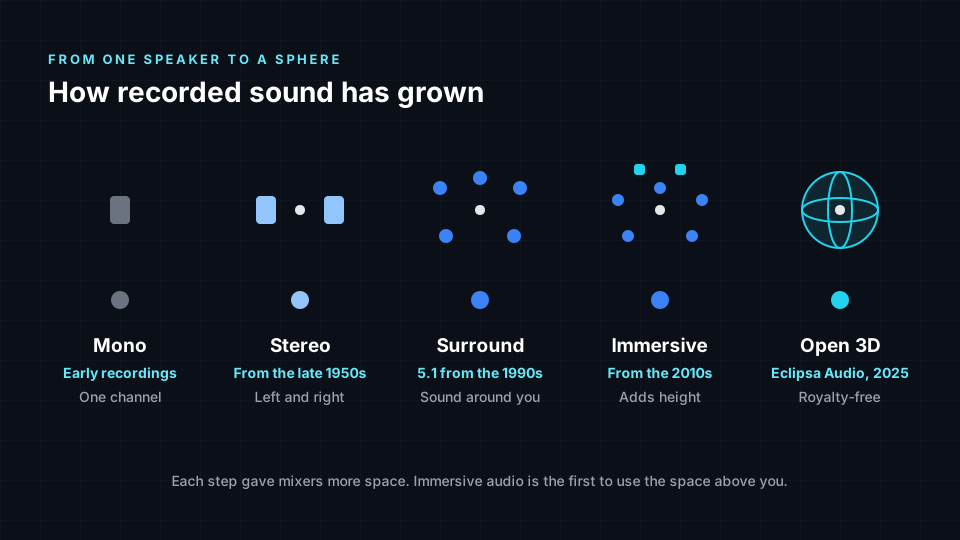
- Mono: one channel. Every sound comes from the same place.
- Stereo: two channels, popular for music from the late 1950s. Sound can be placed left to right.
- Surround: formats such as 5.1 spread sound around the listener, mostly for films and home theatres.
- Immersive: adds height and flexible positioning, so sound can come from anywhere in 3D.
- Open immersive: Eclipsa Audio, launched in 2025, brings royalty-free immersive sound to YouTube, TVs and soundbars.
The biggest difference: room in the mix
In a busy stereo mix, many instruments compete for the same narrow space, especially the centre. Engineers spend a lot of time carving out frequencies just so parts do not mask each other.
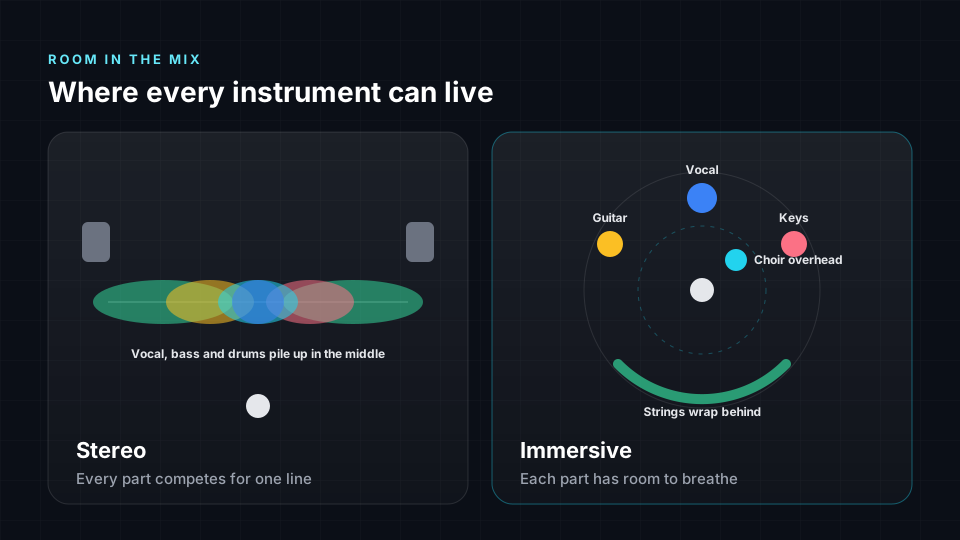
In an immersive mix, parts can be separated by direction instead. The result is often described as clearer, more open and more emotional, even at lower volumes. Listeners say it feels less like hearing a recording and more like being in the room.
The sweet spot
Stereo on speakers sounds best in one seat, centred between the two speakers. Move to the side and the image collapses towards the nearer speaker.
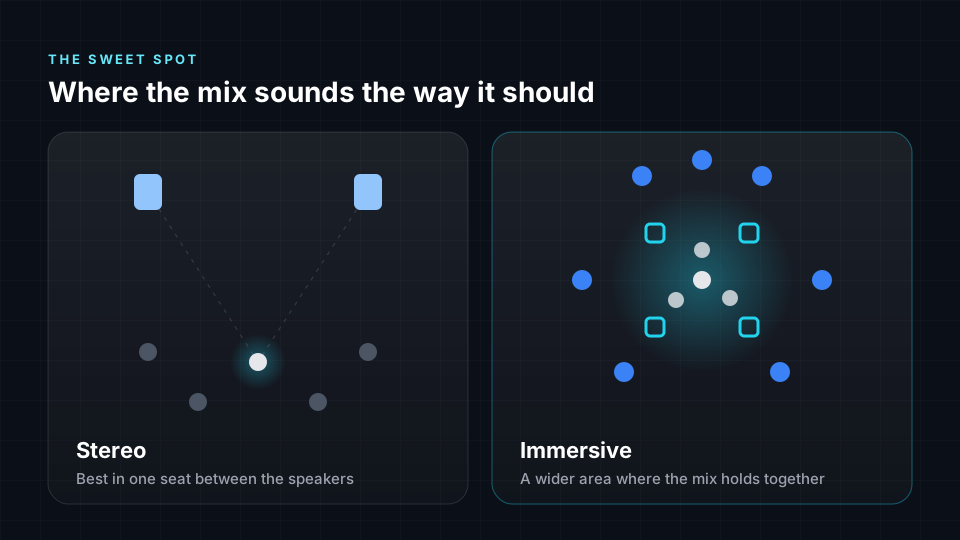
With more speakers around and above the room, immersive playback generally holds together across a wider area. That makes it ideal for living rooms, cars and anywhere people do not sit in one perfect seat.
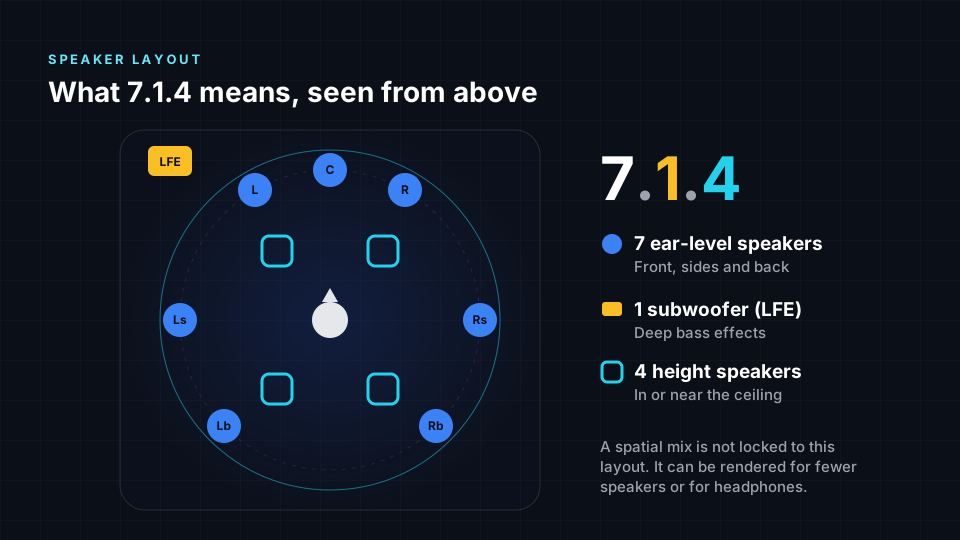
Stereo vs immersive sound, side by side
| Stereo | Immersive | |
|---|---|---|
| Channels | 2 | Many, or a full sound field |
| Where sound can be | On a line between left and right | Anywhere around and above you |
| Headphones | Sound feels inside your head | Sound feels outside and around you |
| Speakers | Best in one seat | Wider listening area with more speakers |
| Room for instruments | Limited, especially in the centre | Lots, using direction |
| Adapts to the device | No; same two channels everywhere | Yes; each device renders it its own way |
| Compatibility | Plays everywhere | Growing fast: streaming, YouTube, TVs, phones |
| Effort to create | Standard | Traditionally more, much less with AI tools |
Is immersive sound always better?
Not automatically. A great stereo mix will always beat a careless immersive one. Immersive sound is a tool, and it shines when it serves the song.
- Immersive works brilliantly for dense arrangements, orchestral and ambient music, live recordings, electronic music, film and video, and anything meant to feel big.
- Stereo can be enough for sparse, intimate recordings, or audiences who mostly listen on small speakers.
- Both together is the most common choice today. You keep a stereo master for everywhere and an immersive version where it is supported.
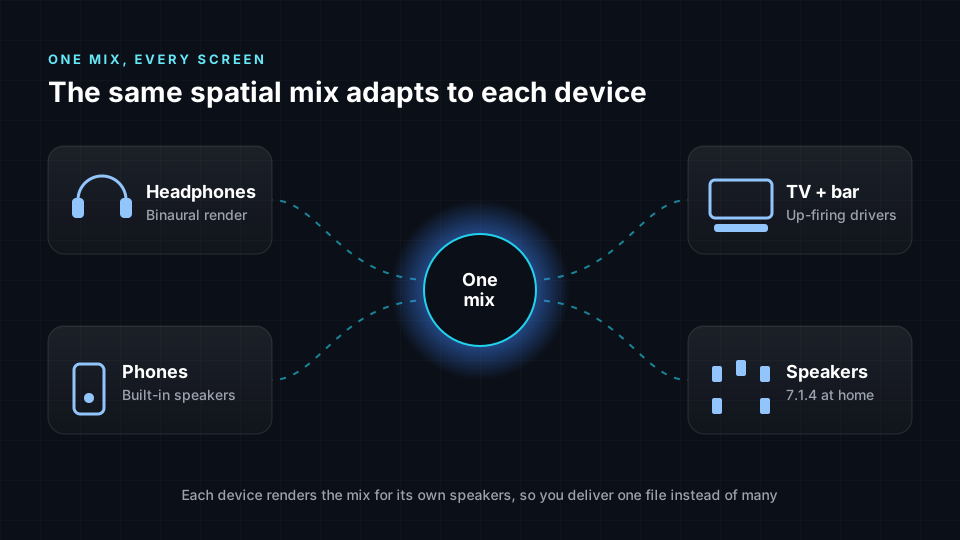
Headphones: stereo vs immersive
Most people hear music on headphones. With stereo on headphones, sound seems to sit inside your head, between your ears. With an immersive mix played binaurally, sound moves outside your head and around you. Learn how in binaural vs spatial audio.
How to go from stereo to immersive
- Mix from stems. Load your multitracks into an immersive-ready DAW and place each part in 3D. You get full control, but it takes time and an immersive monitoring setup. Clean exports help a lot; see our best practices on exporting audio stems.
- Generate it with AI. Spatial9's generative engine creates a finished immersive version from a stereo file and exports it as ADM, Eclipsa Audio, binaural or Ambisonics. Read how to create spatial audio from stereo.
- Convert an existing Atmos master. If you already have an Atmos mix, convert the ADM BWF master to Eclipsa Audio for free. See how to convert Dolby Atmos to Eclipsa Audio.
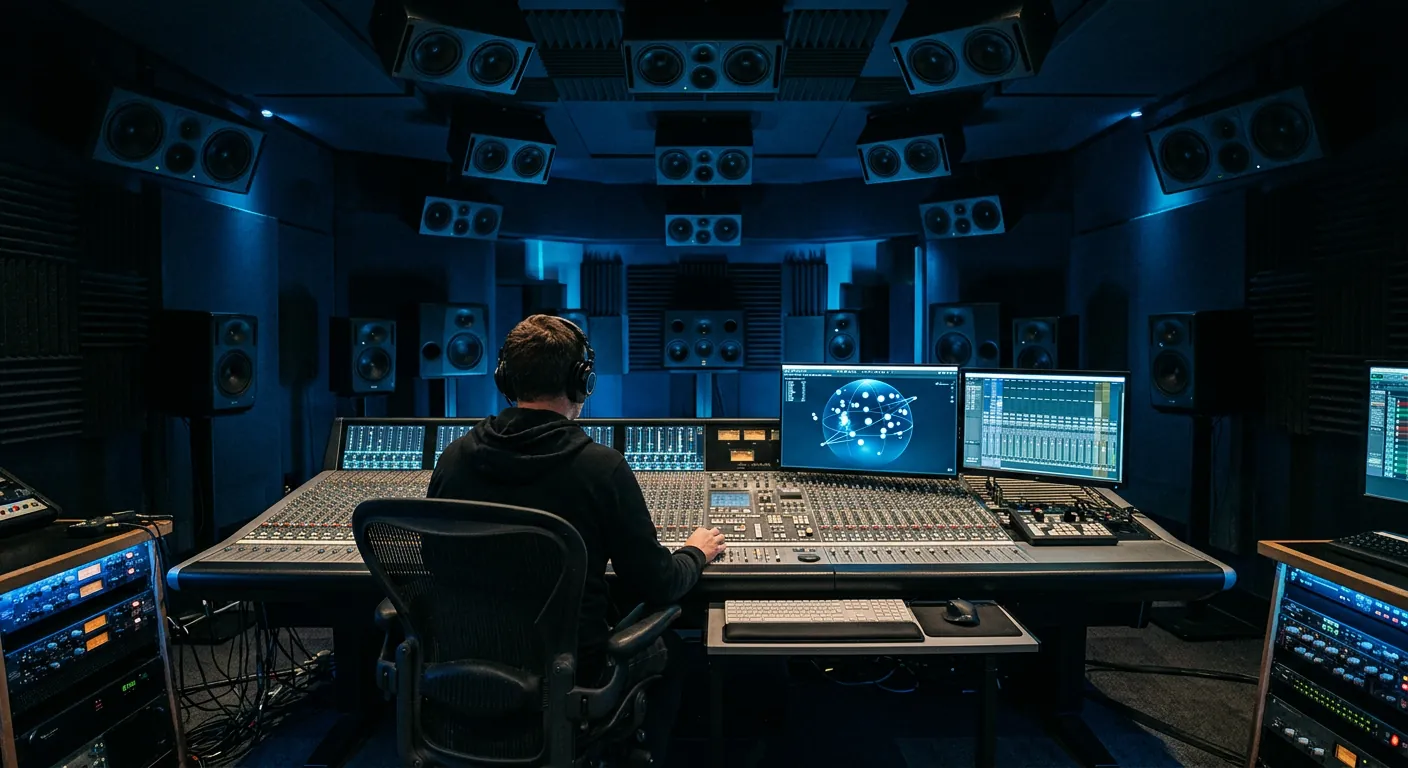
For the bigger picture on why so many artists are making the move, read why artists are switching to immersive audio.
Frequently asked questions
What is the difference between stereo and immersive sound?
Stereo places sound on a line between two speakers. Immersive sound places sound anywhere around and above the listener and adapts to the device it is played on.
Is immersive sound the same as surround sound?
Not quite. Surround formats such as 5.1 place sound around you on fixed speakers, mostly at ear level. Immersive sound adds height and flexible positioning that is not tied to one speaker layout.
Do I need special equipment to hear immersive sound?
No. Ordinary headphones work, because devices can render immersive mixes binaurally. Soundbars, compatible TVs and home theatre speakers add an even stronger effect.
Will an immersive mix still play on normal stereo devices?
Usually, yes. Immersive formats are designed to be rendered for whatever the listener has, and platforms generally also provide a stereo version.
Can I convert stereo music to immersive sound?
Yes. Spatial9 uses AI to generate a finished immersive version from a stereo file and exports it in formats including Eclipsa Audio, ADM, binaural and Ambisonics.
Is immersive sound worth it for independent artists?
Increasingly, yes. It helps a release stand out, gives an older catalog new life, and with AI tools it no longer requires an expensive immersive studio.
Hear your song in 3D
The fastest way to understand the difference is to hear your own music both ways. Try Spatial9 free and turn a stereo song into an immersive mix in minutes.