Spatial Audio & Immersive Music for Neo-Soul: Complete Guide
Spatial9 Team · · Updated
Part of the series Spatial audio and immersive music by genre.
Neo-soul blends classic soul with jazz harmony, hip-hop grooves and R&B production. Think of silky, expressive vocals, warm Rhodes and Wurlitzer keys, jazzy guitar chords, deep round bass and a laid-back, slightly behind-the-beat drum feel. Rich layered harmonies and loose ad-libs are a big part of the sound. A soul mix often sounds like a live band from the past. An R&B mix is modern and polished. A neo-soul mix sits in between, warm and organic but with a deep, modern low end. This guide covers how spatial audio for neo-soul works, where to place each element and how to make an immersive neo-soul mix. For the basics, see what spatial audio is.
Why neo-soul is perfect for spatial audio
Neo-soul is all about texture and feel. Lush keys, layered harmonies and small vocal details make up much of the music, and in stereo they tend to blur together in the middle. In spatial audio, the harmonies can open up around the listener, the keys and guitar can take their own sides, and every small ad-lib becomes a detail you can hear.
The lead vocal in neo-soul is also very personal, often sung softly and close to the microphone. Spatial audio lets that voice stay intimate while the arrangement grows around it.
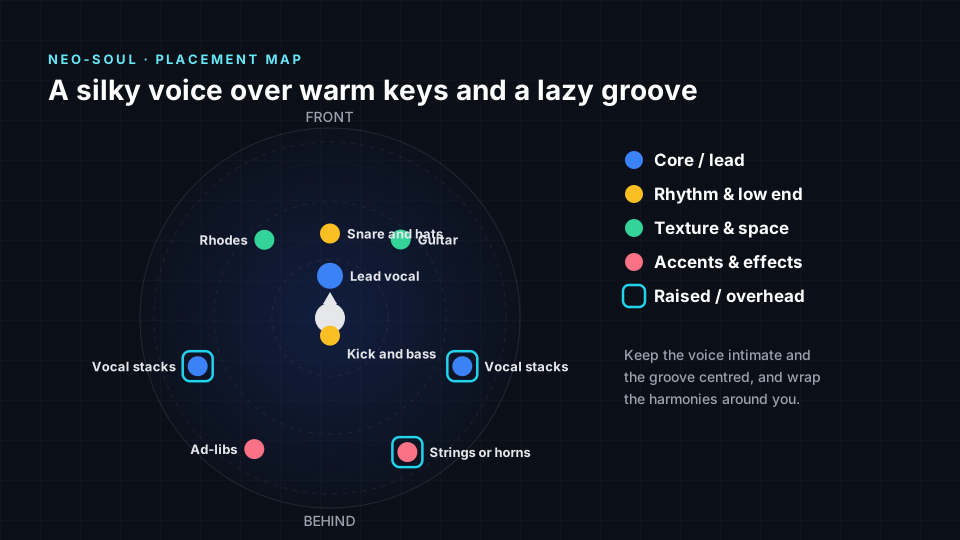
The rule: keep the voice intimate and the groove centred, and wrap the harmonies around the listener.
Immersive music for neo-soul: what listeners hear
- A voice right beside you. The singer feels close and personal.
- Warm keys and guitar. The Rhodes and guitar chords each have their own space.
- Harmonies around you. Vocal stacks gently surround the listener.
- A deep, steady groove. The bass and drums stay solid in the centre.
Where to place each element in a neo-soul mix
| Element | Position | Height | Why it works |
|---|---|---|---|
| Lead vocal | Front centre, close | Ear level | The intimacy of the voice leads the song |
| Rhodes | Front left | Ear level | Warm chords sit beside the singer |
| Guitar | Front right | Ear level | Balances the keys on the other side |
| Snare and hats | Front centre, behind vocal | Ear level | Keeps the laid-back groove in front |
| Kick and bass | Centre | Ear level | Deep low end is hard to place, so centre is cleanest |
| Vocal stacks | Left and right sides | Slightly raised | Harmonies wrap the listener without masking the lead |
| Strings or horns | Behind right | Raised | Adds lush colour above the groove |
| Ad-libs | Behind left, drifting | Ear level | Small movement adds life without distraction |
The psychoacoustics behind neo-soul placement
- Spatial release from masking. Harmonies placed away from the lead are easier to hear at the same time, so the singer stays clear (Bronkhorst, 2000).
- Sub-bass is non-directional. Below roughly 80 to 100 Hz we cannot tell where sound comes from, so the kick and bass belong in the centre (Blauert, 1997).
- Distance cues. A close, dry vocal feels near, while slightly wetter stacks feel further away, creating depth (Zahorik et al., 2005).
- Motion perception. We notice moving sounds easily, so slow, small movements on ad-libs add life without pulling focus (Neuhoff, 1998).
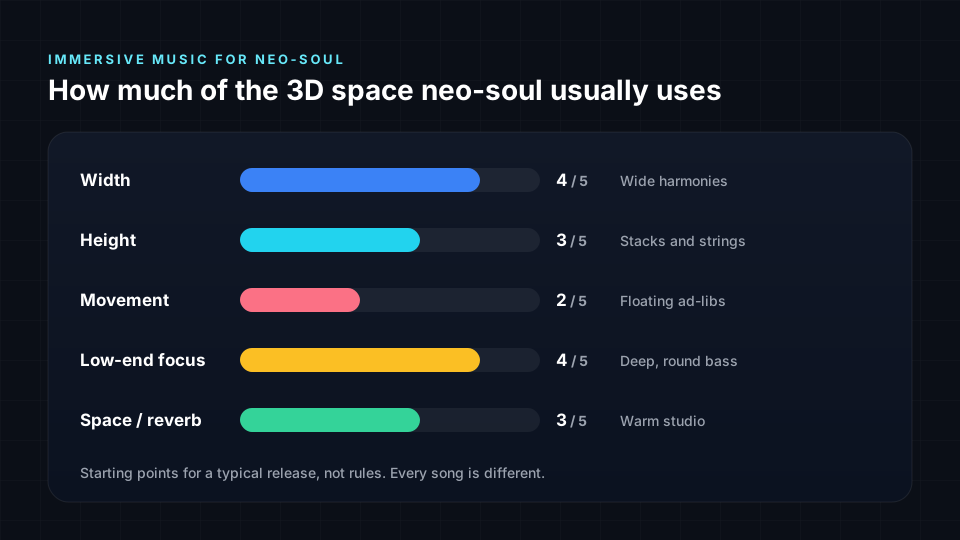
The immersion profile for neo-soul
Tips for an immersive neo-soul mix
- Keep the lead close. Neo-soul vocals are intimate. Do not push them back with reverb.
- Spread the stacks. Put harmony layers on both sides, slightly raised, so they surround without crowding.
- Let the ad-libs drift. A slow, small move on an ad-lib makes the mix feel alive.
- Centre the low end. The bass and kick are the backbone. Keep them solid in the middle.
- Use space for warmth. A soft room or studio sound around the listener adds the late-night feel.
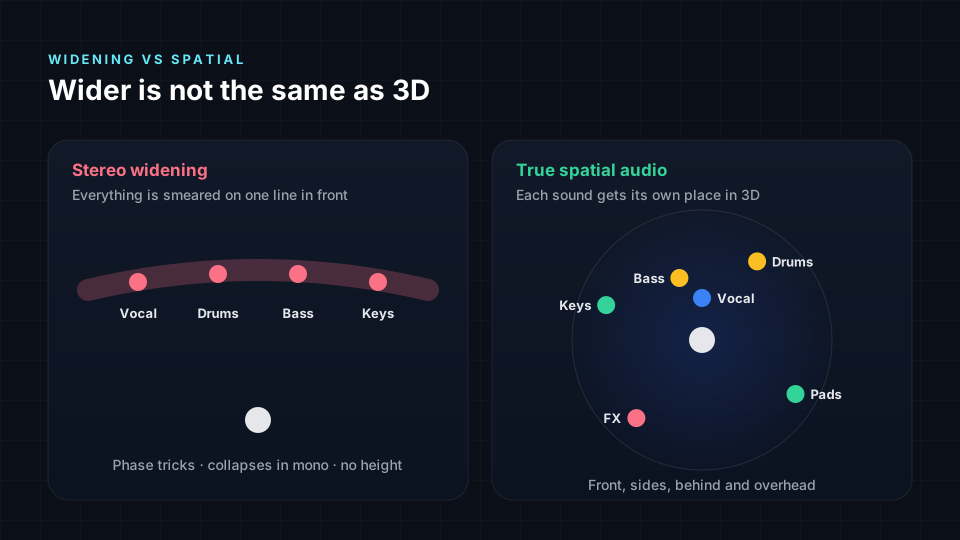
How to make immersive neo-soul from stereo
Spatial9 can create spatial audio from a stereo track in a few steps:
- Upload your stereo master or your stems.
- Spatial9's AI separates and places each part, from the vocal and keys to the bass and harmonies.
- Preview it in binaural on headphones.
- Export Eclipsa Audio, ADM, binaural or Ambisonics.
- Publish a video. Create a YouTube-ready video with your immersive audio and publish it directly.
For related guides, read spatial audio for soul, spatial audio for R&B and spatial audio for jazz. Every guide is listed in spatial audio and immersive music by genre.
Frequently asked questions
Can I make a neo-soul mix in Dolby Atmos or Eclipsa Audio?
Yes. The placements in this guide work for both. Spatial9 exports ADM, the standard file used by Dolby Atmos studios, as well as Eclipsa Audio for YouTube, so one immersive neo-soul mix covers both. You may also hear this called a 3D neo-soul mix or neo-soul in spatial audio.
How is a neo-soul mix different from an R&B mix in spatial audio?
A modern R&B mix is often polished and electronic. A neo-soul mix is warmer and more organic, with live keys, jazzy guitar and loose harmonies that wrap around the listener.
Where should the Rhodes go?
To the front left, at ear level, close to the singer. It is the warm centre of many neo-soul songs and should feel near.
Should the vocal harmonies surround the listener?
Yes, gently. Place them on both sides and slightly raised so they wrap around you while the lead stays in front.
Can I convert a released neo-soul song to spatial audio?
Yes. Spatial9 uses AI to separate a stereo master into its parts and export an immersive mix as Eclipsa Audio, ADM, binaural or Ambisonics.
Does immersive neo-soul work on normal headphones?
Yes. The mix is rendered binaurally, so the singer sounds close and the harmonies wrap around you on any regular headphones.
Dolby and Dolby Atmos are trademarks of Dolby Laboratories. Spatial9 is not affiliated with or endorsed by Dolby Laboratories.
Sources
- Blauert, J. (1997). Spatial Hearing: The Psychophysics of Human Sound Localization, revised edition. MIT Press.
- Bronkhorst, A. W. (2000). The cocktail party phenomenon: a review of research on speech intelligibility in multiple-talker conditions. Acta Acustica united with Acustica, 86, 117-128.
- Neuhoff, J. G. (1998). Perceptual bias for rising tones. Nature, 395, 123-124.
- Zahorik, P., Brungart, D. S. and Bronkhorst, A. W. (2005). Auditory distance perception in humans: a summary of past and present research. Acta Acustica united with Acustica, 91, 409-420.
- Bregman, A. S. (1990). Auditory Scene Analysis: The Perceptual Organization of Sound. MIT Press.
Wrap your groove around the listener
Upload a neo-soul track to Spatial9 and hear the voice, keys and harmonies settle around you in minutes. Then export it or publish it straight to YouTube.