Spatial Audio & Immersive Music for Taiko: Kumi-Daiko, Matsuri Bayashi & Eisa
Spatial9 Team · · 12 min read
Part of the series Spatial audio and immersive music by genre.
Key takeaways
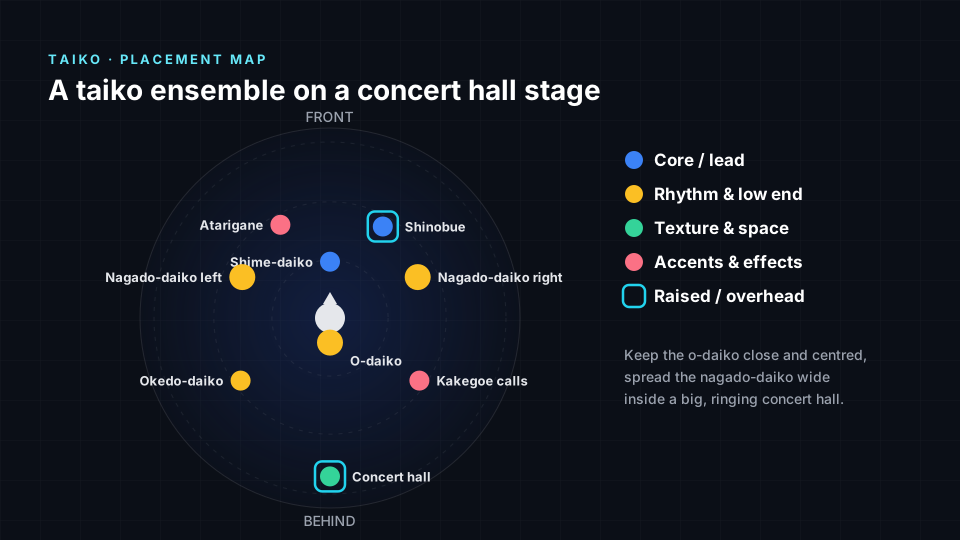
- Spatial audio for taiko places the o-daiko close and centred, the shime-daiko at front centre and the nagado-daiko spread wide to the left and right, with the shinobue raised above and a large hall around the ensemble.
- The ear finds almost no direction below about 80 to 100 Hz, so the deepest strikes of the o-daiko should stay centred, while auditory stream segregation lets the listener follow the bright shime-daiko apart from the big drum.
- Keep the large drums still as they are on a real stage and let only carried okedo-daiko, eisa dancers or festival floats drift, inside a natural hall whose low-end reverb stays short.
- The taiko immersion profile scores width 5, height 3, movement 3, low-end focus 5 and space 4 out of 5.
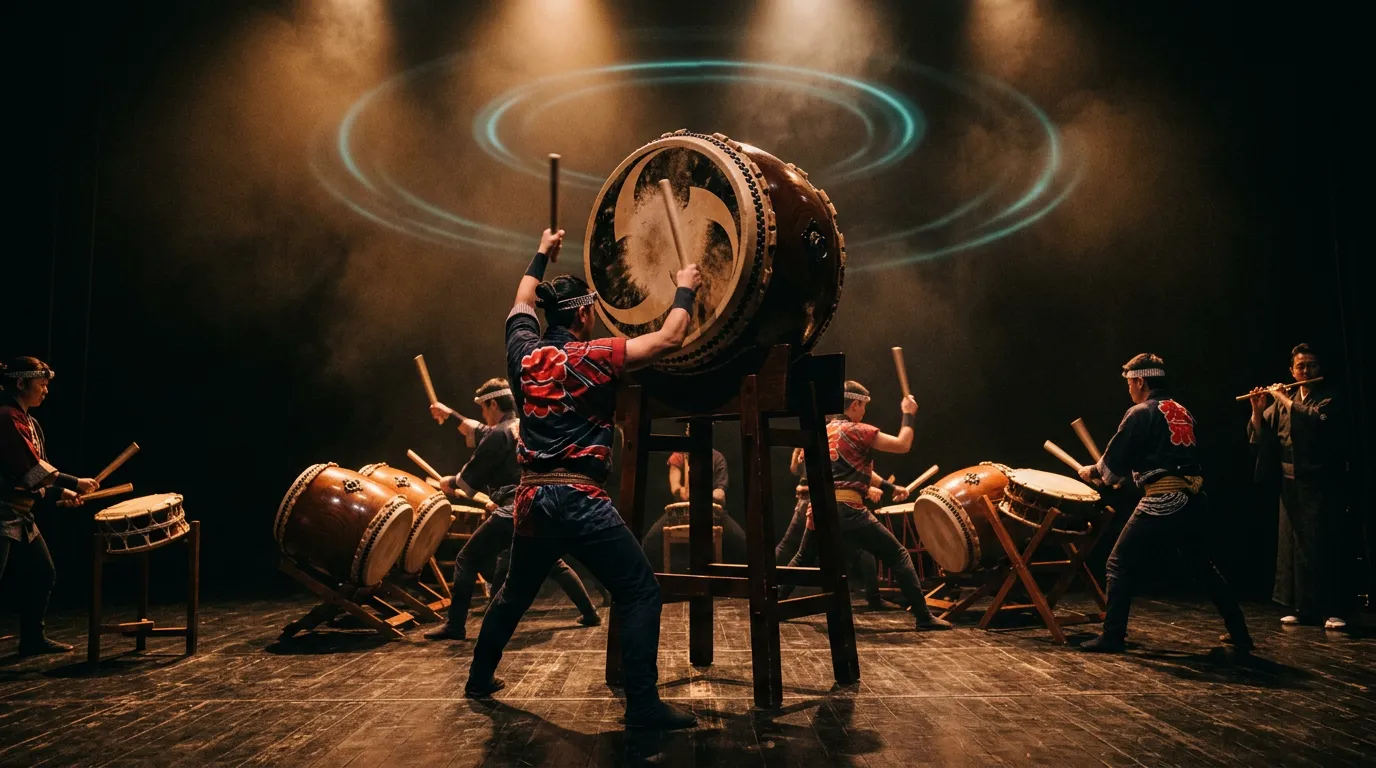
Taiko means "big drum" in Japanese, and the word now also names the ensemble drumming that grew from it. Drums have sounded in Japan for many centuries, at Shinto shrines and Buddhist temples, in gagaku court music, in noh and kabuki theatre, on battlefields and at village festivals. Ensemble taiko as most people hear it today, called kumi-daiko, is much younger. In 1951 Daihachi Oguchi, a jazz drummer from Okaya in Nagano, arranged an old shrine piece for a group of drums of different sizes, and his ensemble Osuwa Daiko set the pattern for the modern style. In 1968 Seiichi Tanaka founded the San Francisco Taiko Dojo, one of the first groups in North America, and in 1969 Den Tagayasu founded Ondekoza on Sado Island. Members of Ondekoza went on to form Kodo in 1981, which toured the world and made taiko a concert art. The main instruments are the barrel-shaped nagado-daiko, also called miya-daiko, the huge o-daiko, the tightly roped shime-daiko, the lighter okedo-daiko that can be carried on a strap, the atarigane hand gong and the shinobue bamboo flute. Players also shout kakegoe, short calls that drive the rhythm and the energy of the group. Taiko suits spatial audio because the drums are physical, the players are spread across a stage and the room is part of the sound. This guide covers how spatial audio for taiko works, where to place each element and how to make an immersive taiko mix. For the basics, see what spatial audio is.
Why taiko works in spatial audio
Taiko is built on drums of different sizes playing interlocking parts. The shime-daiko plays a fast, high, steady pattern called the ji, which works like a heartbeat for the group. The nagado-daiko carry the main rhythms with a full, round tone. The o-daiko adds huge, slow strikes that you feel in your chest. The shinobue floats a melody above it all, and the atarigane gives a bright metal click. The players also move: they swing their arms in wide arcs, change drums and sometimes walk across the stage with okedo-daiko on their shoulders. In stereo the big drums pile up in the middle and the low end turns to mud. In an immersive mix each drum gets its own place, the o-daiko holds a solid centre and the hall gives every strike room to bloom and decay.
The rule: the big drum in the centre, the ensemble in a wide arc. Anchor the o-daiko close and low, spread the nagado-daiko wide on both sides and set the whole group inside a large, natural hall.
Immersive music for taiko: what listeners hear
- A drum you feel in your body. The o-daiko sits close and centred, so its deep strikes feel like they come from the floor and the air around you.
- A wall of drums from side to side. The nagado-daiko play from far left and far right, so the main rhythms stretch across the whole stage instead of crowding the middle.
- Players on the move. Okedo-daiko and kakegoe shouts can travel and answer from behind, so the ensemble feels alive and close rather than fixed on a flat stage.
- A hall that rings. Each strike blooms into a large room and fades slowly, so the silence between phrases becomes part of the music.
Where to place each element in a taiko mix
| Element | Position | Height | Why it works |
|---|---|---|---|
| Shime-daiko | Front centre | Ear level | The high, steady ji that keeps the group in time |
| O-daiko | Centre | Low | Huge, slow strikes that anchor the low end |
| Nagado-daiko left | Left | Ear level | One side of the main drum rhythms |
| Nagado-daiko right | Right | Ear level | The other side of the main drum rhythms |
| Shinobue | Front right | Raised | A bamboo flute melody floating over the drums |
| Atarigane | Front left | Ear level | A bright metal click that marks the pulse |
| Okedo-daiko | Behind left, moving | Ear level | Carried drums that travel with the players |
| Kakegoe calls | Behind right | Ear level | Shouts that drive and answer the rhythm |
| Concert hall | Behind | Raised | A large natural room for each strike to bloom |
The psychoacoustics behind taiko placement
Every position in the table above follows how the ear and brain locate sound. Here is the reason behind the main choices for taiko.
- O-daiko stays centred. The ear finds almost no direction in frequencies below roughly 80 to 100 Hz, so the deepest part of the o-daiko gains nothing from being spread. Keeping it centred makes each strike feel solid and stops the low end from smearing (Blauert).
- Shime-daiko and o-daiko in different places. The brain groups sounds into streams by pitch, timing and direction. This is auditory stream segregation (Bregman). Setting the bright, fast shime apart from the deep, slow o-daiko lets the ear follow the timekeeper and the big drum at once.
- Drums that seem to approach. Listeners hear sounds that grow louder as moving closer, and they overestimate how near a rising sound has come. This is the looming effect for rising intensity (Neuhoff). The long crescendos in taiko pieces, and the okedo players walking forward, use this to make the ensemble feel like it is coming toward you.
- A hall with side reflections. Early reflections arriving from the sides make a sound feel wider and more enveloping. This is spatial impression from early lateral reflections (Barron and Marshall). Strong side reflections give taiko the sense of a big concert hall or temple yard while keeping each strike clear.
The immersion profile for taiko
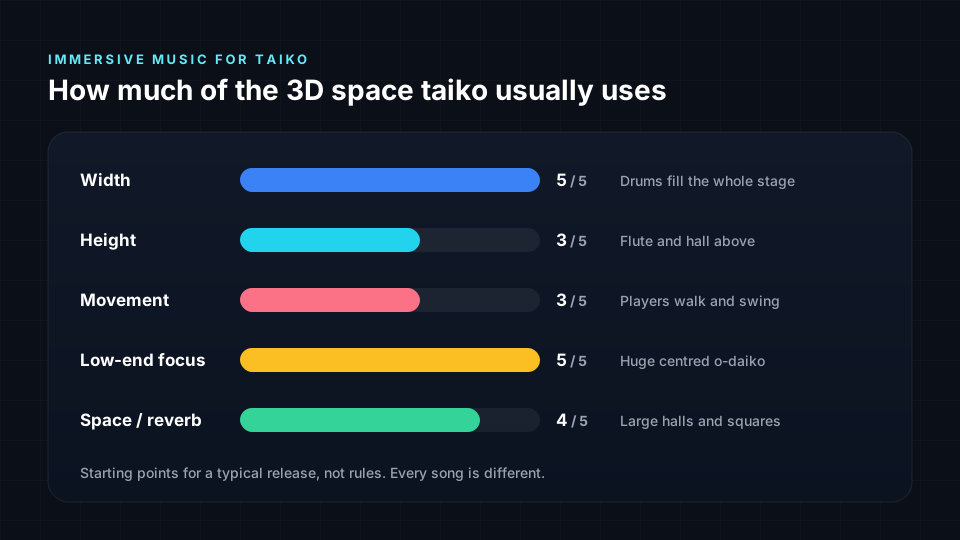
Width scores 5 because a taiko ensemble fills the whole stage, with nagado-daiko and other drums set out from far left to far right. Low-end focus also scores 5: the o-daiko and the lower nagado-daiko produce some of the deepest acoustic sounds in any music, and that weight should sit firmly in the centre. Space is 4, since taiko is played in large halls, temple grounds and open festival squares, and the long decay of each strike is part of the sound. Height is 3, from the shinobue and the bright metal of the atarigane, along with the hall reflections rising above the stage. Movement is 3, because players swing, change drums and sometimes walk with okedo-daiko, so a few elements can travel while the main drums stay in place.
Tips for an immersive taiko mix
- Anchor the o-daiko. Keep it centred, close and low, with the attack of the bachi on the skin clear, so every strike lands with weight.
- Spread the nagado-daiko wide. Place them far left and far right so the main rhythms fill the stage and leave the centre for the o-daiko.
- Keep the shime-daiko in front. The ji is the timekeeper, so give it a clear spot at front centre where the ear can always find it.
- Move only what moves on stage. Let the okedo-daiko and kakegoe travel a little, but keep the large drums still, as they are on a real stage.
- Use a big, natural hall. A long reverb suits taiko, but keep the low end of the reverb shorter than the high end so the o-daiko stays tight and the strikes do not blur.
Taiko styles: Kumi-Daiko, Matsuri Bayashi and Eisa
The core placement holds for every style here: the deepest drum at the centre, the ensemble spread around it and the room around the listener. What changes is the size of the group, the role of the flute and singers, and whether the music is heard in a hall, a street or a square.
Kumi-Daiko
Kumi-daiko is ensemble taiko, the concert style that Daihachi Oguchi shaped with Osuwa Daiko in 1951 and that groups such as Ondekoza and Kodo carried to stages around the world. Each player has a role: the shime-daiko keeps the ji, the nagado-daiko play the main patterns, the o-daiko adds the deepest strikes and the shinobue gives a melody. Since the 1960s and 1970s the style has spread across North America, Europe and beyond, from San Francisco Taiko Dojo to many community and university groups. Seat the o-daiko close and centred, the shime-daiko at front centre and the nagado-daiko in a wide arc from left to right, with the shinobue raised above them. A large concert hall with clear side reflections suits the style.
Matsuri Bayashi
Matsuri bayashi is the festival music played at Shinto shrine festivals across Japan, often on wheeled floats or stages that move through the streets. A typical ensemble uses one or two shime-daiko, a larger drum, a shinobue flute and a small gong, with each town keeping its own pieces. Edo bayashi in Tokyo, Gion bayashi on the floats of the Gion Matsuri in Kyoto and the music of the Chichibu Night Festival in Saitama are well-known examples, and Kodo's famous piece Yatai-bayashi draws on the Chichibu tradition. Here the flute leads more than in concert taiko. Place the shinobue at front centre or slightly raised, the shime-daiko on both front sides, the larger drum close and centred and the gong to one side. Because the music often moves with a float, a slow drift across the front can suggest a procession. An open street ambience with crowd sound behind suits the style better than a concert hall.
Eisa
Eisa is the Bon dance of Okinawa, performed in summer by young people of each community to honour the spirits of their ancestors. Its core songs trace back to Buddhist nembutsu chants, which tradition says the monk Taichū brought to Okinawa in the early 1600s. Dancers play the large barrel-shaped odaiko, the smaller shimedaiko and the flat paarankuu hand drum while they dance, and singers with the three-stringed sanshin lead the songs. Calls and whistles add energy. Since 1956 the Okinawa Zento Eisa Matsuri in Okinawa City has drawn large crowds, and many groups now perform a creative, stage-ready form of eisa. Put the sanshin and singers at front centre, the large drums close and centred, and the dancing drummers in a wide arc that can move slowly from side to side. An open-air square with a crowd around the listener suits the style.
Related traditions such as the drumming of Japanese folk festivals elsewhere and the many taiko groups in the Japanese diaspora follow the same idea: keep the deepest drum in the centre, the ensemble spread around it and the room around the listener.
How to make immersive taiko from stereo
Spatial9 can create spatial audio from a stereo track in a few steps:
- Upload your stereo master or your stems.
- Spatial9's AI separates and places each part, pulling the o-daiko, nagado-daiko, shime-daiko, shinobue and kakegoe apart even from live hall recordings, and setting the drums in a wide arc around a centred o-daiko.
- Preview it in binaural on headphones.
- Export Eclipsa Audio, ADM, binaural or Ambisonics.
- Publish a video. Create a YouTube-ready video with your immersive audio and publish it directly.
For related guides, read spatial audio for Japanese traditional music and spatial audio for gamelan. Every guide is listed in spatial audio and immersive music by genre.
Frequently asked questions
Does this guide cover Kumi-Daiko, Matsuri Bayashi and Eisa?
Yes. Kumi-daiko seats the o-daiko in the centre with the nagado-daiko in a wide arc inside a concert hall. Matsuri bayashi brings the shinobue forward with shime-daiko on both sides and an open street around the listener. Eisa puts the sanshin and singers in front, with dancing drummers in a wide, slowly moving arc in an open-air square.
Can I make a taiko mix in Dolby Atmos or Eclipsa Audio?
Yes. The placements in this guide work for both. Spatial9 exports ADM, the standard file used by Dolby Atmos studios, as well as Eclipsa Audio for YouTube, so one immersive taiko mix covers both. If you plan to release the Atmos version on Apple Music, build it from your original stems or multitracks, because Apple does not accept Atmos made from a finished stereo master. See where to publish spatial audio. You may also hear this called a 3D taiko mix or taiko in spatial audio.
Is spatial audio good for taiko?
Yes. Taiko is played by many drummers spread across a stage, with drums of very different sizes and a room that rings after every strike. Spatial audio lets each drum keep its own place and puts the listener in front of the ensemble rather than behind a flat wall of sound.
Where should the o-daiko go in an immersive taiko mix?
Put the o-daiko in the centre, close to the listener and low. Its deepest energy carries little direction, and the whole piece depends on its strikes feeling solid and steady.
How do I stop the low end from getting muddy?
Taiko has a lot of low energy from many drums at once. Keep the o-daiko centred, spread the nagado-daiko to the sides, shorten the low end of the reverb and trim a little low end from drums that are not the main bass voice.
Should the drums move around the listener?
Only a little. Most taiko drums stay on their stands, so they should stay still in the mix. Okedo-daiko players, eisa dancers and festival floats do move, and a slow drift of those parts adds life without making the ensemble feel unstable.
How is taiko different from gamelan in spatial audio?
Taiko is built on drums of different sizes, with a heavy low end and sharp attacks in a large hall, so it suits a wide arc around a solid low centre. Gamelan is built on tuned bronze gongs and metallophones with long, shimmering decay, so it suits a gentler circle with more room for the overlapping metal tones.
Can I convert an old taiko recording to spatial audio?
Yes. Spatial9 uses AI to separate the drums, flute and voices from a stereo or mono recording. Separation is never perfect when many drums of similar size play together, so keep the layout simple and the hall moderate.
Dolby and Dolby Atmos are trademarks of Dolby Laboratories. Spatial9 is not affiliated with or endorsed by Dolby Laboratories.
Sources
- Blauert, J. (1997). Spatial Hearing: The Psychophysics of Human Sound Localization, revised edition. MIT Press. Low-frequency, elevation, distance and motion cues.
- Mills, A. W. (1958). On the minimum audible angle. Journal of the Acoustical Society of America, 30(4), 237-246.
- Hebrank, J. and Wright, D. (1974). Spectral cues used in the localization of sound sources on the median plane. Journal of the Acoustical Society of America, 56(6), 1829-1834.
- Bronkhorst, A. W. (2000). The cocktail party phenomenon: a review of research on speech intelligibility in multiple-talker conditions. Acta Acustica united with Acustica, 86, 117-128.
- Barron, M. and Marshall, A. H. (1981). Spatial impression due to early lateral reflections in concert halls. Journal of Sound and Vibration, 77(2), 211-232.
- Neuhoff, J. G. (1998). Perceptual bias for rising tones. Nature, 395, 123-124.
- Bregman, A. S. (1990). Auditory Scene Analysis: The Perceptual Organization of Sound. MIT Press.
- Bender, S. (2012). Taiko Boom: Japanese Drumming in Place and Motion. University of California Press.
Feel the strike
Upload a track to Spatial9 and hear the o-daiko at the centre with the drums spread across the stage around you in minutes. Then export it or publish it straight to YouTube.