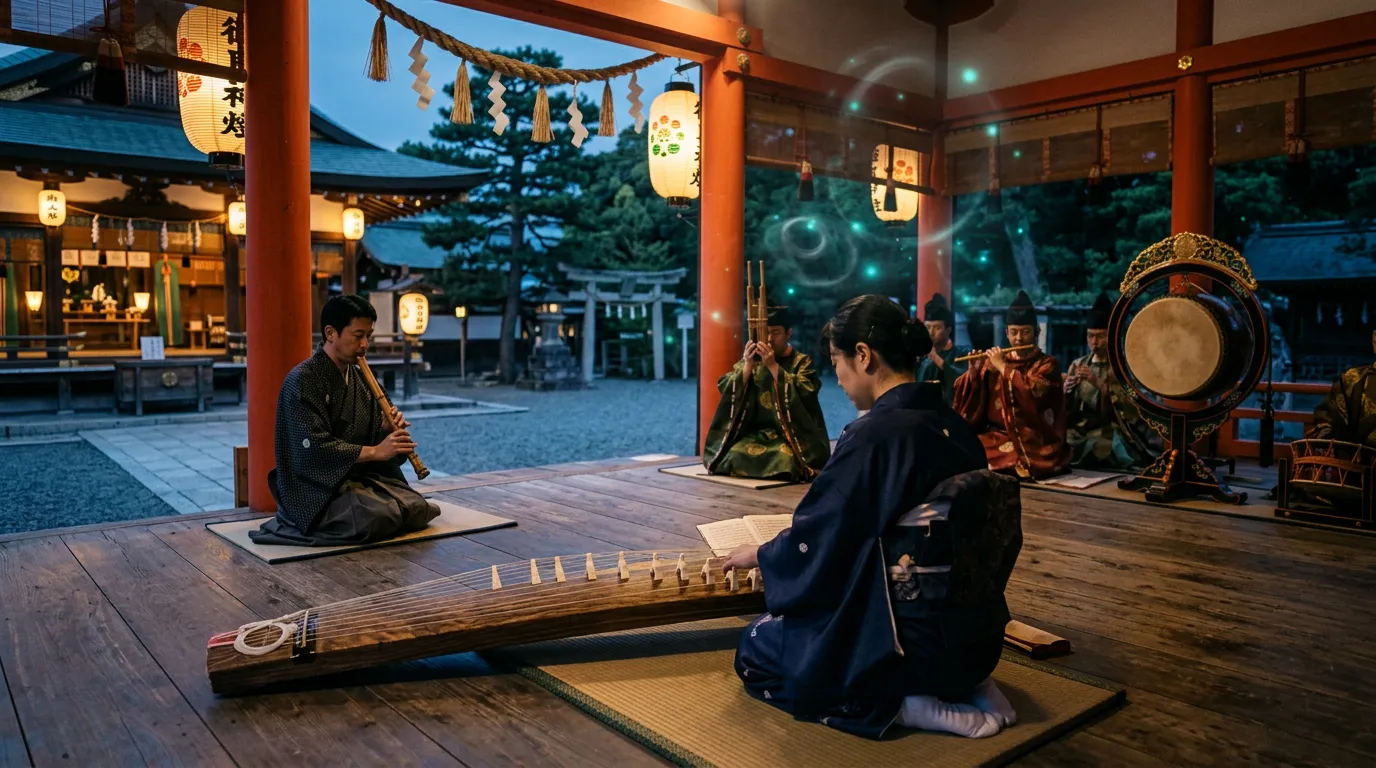
Spatial Audio & Immersive Music for Japanese Traditional Music: Gagaku, Koto Music & Shakuhachi Honkyoku
Spatial9 Team · · 12 min read
Part of the series Spatial audio and immersive music by genre.
Key takeaways
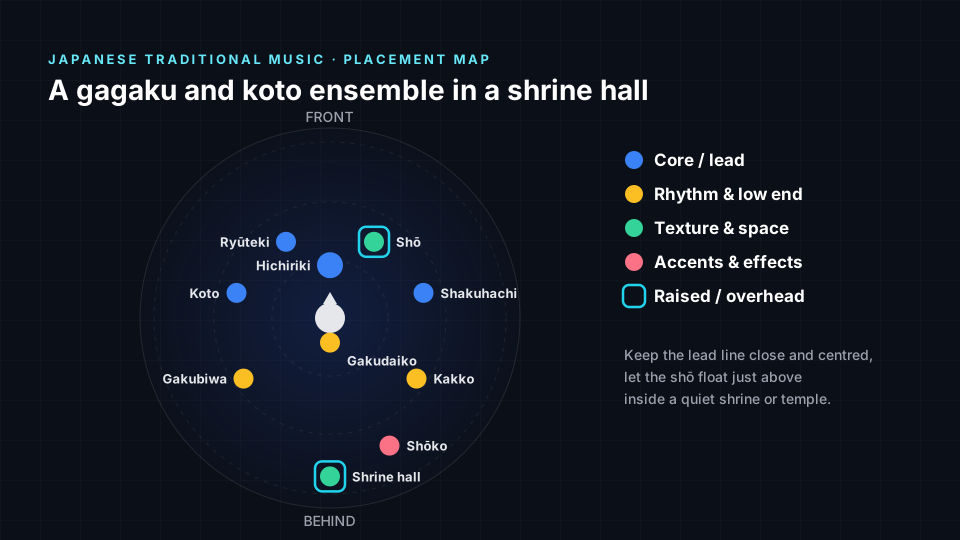
- Spatial audio for Japanese traditional music places the hichiriki, koto or shakuhachi close at the front centre, the ryūteki and a slightly raised shō on either side and the strings and percussion behind in a narrow, still arc.
- The ear can separate sounds only about one degree apart straight ahead, so the minimum audible angle means a small ensemble stays clear in a narrow arc without being spread wide.
- Keep every player in a fixed position, leave the silences between phrases untouched and let a quiet shrine, temple or wooden hall carry the natural decays.
- The Japanese traditional music immersion profile scores width 3, height 3, movement 1, low-end focus 1 and space 4 out of 5.
Japanese traditional music, often called hōgaku, covers many old forms that grew up over more than a thousand years. Gagaku, the court music, arrived from China, Korea and other parts of mainland Asia between about the 5th and 9th centuries and took its settled form at the Heian court. It is still played today by the Music Department of the Imperial Household Agency in Tokyo, and UNESCO added it to its intangible heritage list in 2009. Buddhist temples kept shōmyō chant, blind monks sang the Tale of the Heike to the biwa lute, and the nō theatre joined voices with the nōkan flute and small drums. In the Edo period, from 1603, music for the koto, shamisen and shakuhachi flourished in the cities. Blind masters such as Yatsuhashi Kengyō shaped the solo koto repertoire, and wandering komusō monks of the Fuke sect of Zen Buddhism played the shakuhachi as a spiritual practice. After the Meiji government abolished the Fuke sect in 1871 and Western music arrived in Japanese schools, musicians such as Michio Miyagi began to blend the two worlds in the 1920s. In 1967 Tōru Takemitsu's November Steps, for biwa, shakuhachi and orchestra, carried these sounds onto the world's concert stages. Japanese traditional music suits spatial audio because it is built on clear single lines, careful silence and the sound of the room. This guide covers how spatial audio for Japanese traditional music works, where to place each element and how to make an immersive Japanese traditional music mix. For the basics, see what spatial audio is.
Why Japanese traditional music works in spatial audio
Japanese traditional music uses few players and a great deal of space. A gagaku ensemble holds long, slow phrases over the shimmering chords of the shō. A koto player plucks a line, bends a note by pressing the string behind the bridge and lets it fade. A shakuhachi player breathes one long tone, colours it with noise and pitch bends, then stops. The gap between sounds, often called ma, is part of the music. In stereo the soft details and the room sit flat between two speakers and the silences feel empty. In an immersive mix each instrument keeps a clear, fixed place, the shō rises slightly above, and the room fills every pause with a natural, fading space.
The rule: one clear line in front, silence and room all around it. Keep the lead instrument close and centred, set the other players in a narrow, still arc and let a quiet shrine or temple room carry the decays.
Immersive music for Japanese traditional music: what listeners hear
- A single voice close in front. The hichiriki, koto or shakuhachi sits near and centred, so every breath, bend and pluck is clear.
- Chords that float above. The shō's soft clusters rise slightly over the ensemble, like light in the roof of a shrine.
- A still, quiet circle. The few other instruments stay in fixed places to the sides, so nothing pulls attention away from the line.
- Silence you can hear. Long decays fade into a real room, so the pauses between phrases feel full rather than empty.
Where to place each element in a Japanese traditional music mix
| Element | Position | Height | Why it works |
|---|---|---|---|
| Hichiriki | Front centre | Ear level | The leading double-reed melody of gagaku |
| Ryūteki | Front left | Ear level | Dragon flute that weaves around the melody |
| Shō | Front right | Raised | Mouth organ chords that hover above |
| Koto | Left | Ear level | Plucked zither line and patterns |
| Shakuhachi | Right | Ear level | Breathy bamboo flute and long tones |
| Gakubiwa | Behind left | Ear level | Lute strokes that mark the phrase |
| Kakko | Behind right | Ear level | Small drum that leads the tempo |
| Shōko | Far behind right | Ear level | Bronze gong accents in the cycle |
| Gakudaiko | Centre | Low | A soft, deep stroke that marks each phrase |
| Shrine hall | Behind | Raised | A quiet wooden room around the music |
The psychoacoustics behind Japanese traditional music placement
Every position in the table above follows how the ear and brain locate sound. Here is the reason behind the main choices for Japanese traditional music.
- Small angles are enough. The ear can tell two sounds apart when they are only about one degree apart straight ahead. This is the minimum audible angle (Mills). A narrow arc of instruments is still easy to hear clearly, so a small ensemble does not need to be spread wide.
- Hichiriki and shō in different places. The brain groups sounds into streams by pitch, timbre and direction. This is auditory stream segregation (Bregman). Setting the nasal reed melody apart from the sustained shō chords lets the ear follow both without one blurring into the other.
- The shō just above. The outer ear shapes high frequencies differently for sounds above and below, and the brain reads these spectral cues as height. This is spectral cues for elevation (Hebrank and Wright). The bright, steady partials of the shō carry these cues well, so a slight lift makes it hover without drawing focus.
- A room with side reflections. Early reflections arriving from the sides make a sound feel wider and more enveloping. This is spatial impression from early lateral reflections (Barron and Marshall). Clear side reflections give the shakuhachi's long tones and the koto's fading notes a real place to live.
The immersion profile for Japanese traditional music
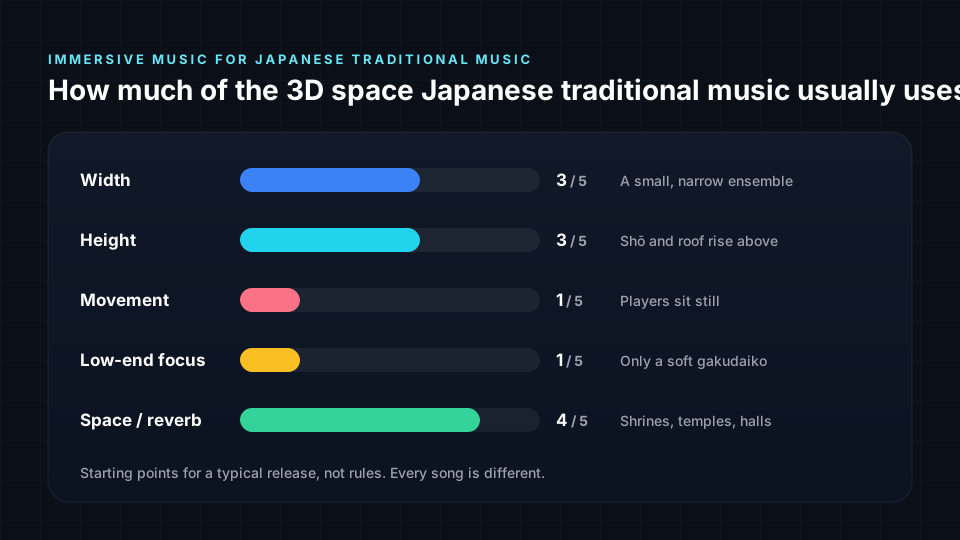
Width scores 3 because the ensembles are small and sit in a narrow arc, from a full gagaku group to a koto and shakuhachi duo. Space scores 4: shrines, temples and wooden halls are part of this music, and long natural decays shape every silence. Height is 3, from the shō's sustained chords and the reflections of a high wooden roof. Low-end focus is 1, since there is no bass instrument and only the soft strokes of the gakudaiko and the lowest koto strings reach down. Movement is 1, because the players sit still and the music moves through slow changes of breath, pitch and tempo rather than through sounds travelling around the listener.
Tips for an immersive Japanese traditional music mix
- Keep the lead close. Place the hichiriki, koto or shakuhachi at the front centre and keep breath noise, string buzz and finger sounds audible.
- Use a narrow, still arc. Set the other players a little to each side and leave them in place for the whole piece.
- Lift the shō gently. Raise it slightly so its chords float above the melody instead of covering it.
- Respect the silence. Do not fill the gaps with extra reverb or effects, and let the natural decay of the room finish each phrase.
- Keep the low end clean. Centre the gakudaiko and roll off rumble below the instruments, so the quiet passages stay clear.
Japanese traditional music styles: Gagaku, koto music and shakuhachi honkyoku
The core placement holds for every style here: the lead line close in front, a few still players around it and the room above. What changes is the number of players, the instruments and how intimate the room is.
Gagaku
Gagaku, meaning elegant music, is the oldest continuous orchestral tradition in Japan. Its main branches are tōgaku, which came from Tang China, and komagaku, which came from the Korean peninsula, with native songs and dances kept beside them. Kangen is the purely instrumental form and bugaku is music for dance. A kangen ensemble uses three winds, the hichiriki, ryūteki and shō, two strings, the gakubiwa and gakusō, and three percussion instruments, the kakko, shōko and gakudaiko. The best known piece is Etenraku. Place the hichiriki at the front centre, the ryūteki to one side and the shō slightly raised on the other, with the strings and percussion behind in a still arc. Keep the gakudaiko centred and soft, and use a large, calm shrine or hall room.
Koto Music
The koto is a long zither with thirteen strings, each raised on a movable bridge, played with picks on three fingers. It came from China as part of gagaku, and in the 17th century Yatsuhashi Kengyō developed a solo and song repertoire for it, including the famous Rokudan no Shirabe. Later the Ikuta school in Kyoto and the Yamada school in Edo shaped how it was played, often in sankyoku trios with the shamisen and the shakuhachi or kokyū. In 1921 Michio Miyagi invented a 17-string bass koto, and his Haru no Umi of 1929 for koto and shakuhachi is still widely played. Place a solo koto close and centred, with its low strings full and the bent notes clear. In a trio, set the koto in the centre, the shamisen to one side and the shakuhachi to the other, inside a small wooden room.
Shakuhachi Honkyoku
Honkyoku means original pieces: the solo repertoire of the shakuhachi, an end-blown bamboo flute with five finger holes. It was played by komusō, monks of the Fuke sect who wore woven basket hats and used the flute as a form of meditation called suizen, or blowing Zen. In the 18th century Kurosawa Kinko collected pieces from temples around Japan and founded the Kinko school, and well-known pieces include Shika no Tōne, Kokū and Tsuru no Sugomori. Shika no Tōne, the distant cry of the deer, is often played by two flutes that call and answer. Place a solo shakuhachi close and centred, with its breath and pitch bends in clear detail. For a duet, set the two flutes front left and front right with space between them. Use a temple or wooden room with a long, soft decay.
Related traditions such as nō, biwa narrative song, shōmyō chant and the music of the Ryūkyū Islands follow the same idea: keep the lead line close in front, a few still players around it and the room around the listener.
How to make immersive Japanese traditional music from stereo
Spatial9 can create spatial audio from a stereo track in a few steps:
- Upload your stereo master or your stems.
- Spatial9's AI separates and places each part, pulling the hichiriki, shō, koto, shakuhachi and percussion apart even from older recordings, and setting them in a still, narrow arc with the shō floating above.
- Preview it in binaural on headphones.
- Export Eclipsa Audio, ADM, binaural or Ambisonics.
- Publish a video. Create a YouTube-ready video with your immersive audio and publish it directly.
For related guides, read spatial audio for taiko and spatial audio for Chinese traditional music. Every guide is listed in spatial audio and immersive music by genre.
Frequently asked questions
Does this guide cover Gagaku, Koto Music and Shakuhachi Honkyoku?
Yes. Gagaku seats the hichiriki in the centre with the shō floating above and the strings and percussion in a still arc inside a large shrine room. Koto music places the zither close and centred, alone or in a trio. Shakuhachi honkyoku puts one or two flutes close in front inside a temple room.
Can I make a Japanese traditional music mix in Dolby Atmos or Eclipsa Audio?
Yes. The placements in this guide work for both. Spatial9 exports ADM, the standard file used by Dolby Atmos studios, as well as Eclipsa Audio for YouTube, so one immersive Japanese traditional music mix covers both. If you plan to release the Atmos version on Apple Music, build it from your original stems or multitracks, because Apple does not accept Atmos made from a finished stereo master. See where to publish spatial audio. You may also hear this called a 3D Japanese traditional music mix or hōgaku in spatial audio.
Is spatial audio good for Japanese traditional music?
Yes. Japanese traditional music is built on clear single lines, careful silence and the sound of the room. Spatial audio keeps each instrument in its own place and lets the pauses fill with a natural decay, so the listener feels inside the space.
Where should the shō go in an immersive mix?
Put the shō slightly raised and a little to one side of the hichiriki. Its sustained chords work best as a soft layer above the melody, not as a wall in front of it.
How much reverb does a shakuhachi need?
Less than you might think. A real temple or wooden room adds a long, soft decay, but too much reverb blurs the breath and pitch bends that carry the music. Keep the flute close and let the room sit behind it.
How is Japanese traditional music different from taiko in spatial audio?
Japanese traditional music uses few, quiet players and almost no low end, so it suits a narrow arc and a calm room. Taiko is built on large drums with heavy low end and big physical gestures, so it suits a wide stage with a strong centred bass.
Can I convert an old Japanese traditional music recording to spatial audio?
Yes. Spatial9 uses AI to separate the winds, strings and percussion from a stereo or mono recording. Separation is never perfect with older recordings, so keep the layout simple and the room moderate.
Dolby and Dolby Atmos are trademarks of Dolby Laboratories. Spatial9 is not affiliated with or endorsed by Dolby Laboratories.
Sources
- Blauert, J. (1997). Spatial Hearing: The Psychophysics of Human Sound Localization, revised edition. MIT Press. Low-frequency, elevation, distance and motion cues.
- Mills, A. W. (1958). On the minimum audible angle. Journal of the Acoustical Society of America, 30(4), 237-246.
- Hebrank, J. and Wright, D. (1974). Spectral cues used in the localization of sound sources on the median plane. Journal of the Acoustical Society of America, 56(6), 1829-1834.
- Bronkhorst, A. W. (2000). The cocktail party phenomenon: a review of research on speech intelligibility in multiple-talker conditions. Acta Acustica united with Acustica, 86, 117-128.
- Barron, M. and Marshall, A. H. (1981). Spatial impression due to early lateral reflections in concert halls. Journal of Sound and Vibration, 77(2), 211-232.
- Neuhoff, J. G. (1998). Perceptual bias for rising tones. Nature, 395, 123-124.
- Bregman, A. S. (1990). Auditory Scene Analysis: The Perceptual Organization of Sound. MIT Press.
- Malm, W. P. (2000). Traditional Japanese Music and Musical Instruments. Kodansha International.
- Garfias, R. (1975). Music of a Thousand Autumns: The Tōgaku Style of Japanese Court Music. University of California Press.
Listen in the silence
Upload a track to Spatial9 and hear the lead line close in front of you with the shō floating above and the room around you in minutes. Then export it or publish it straight to YouTube.