Spatial Audio & Immersive Music for Jùjú & Fújì: Jùjú, Fújì & Apala
Spatial9 Team · · 11 min read
Part of the series Spatial audio and immersive music by genre.
Key takeaways
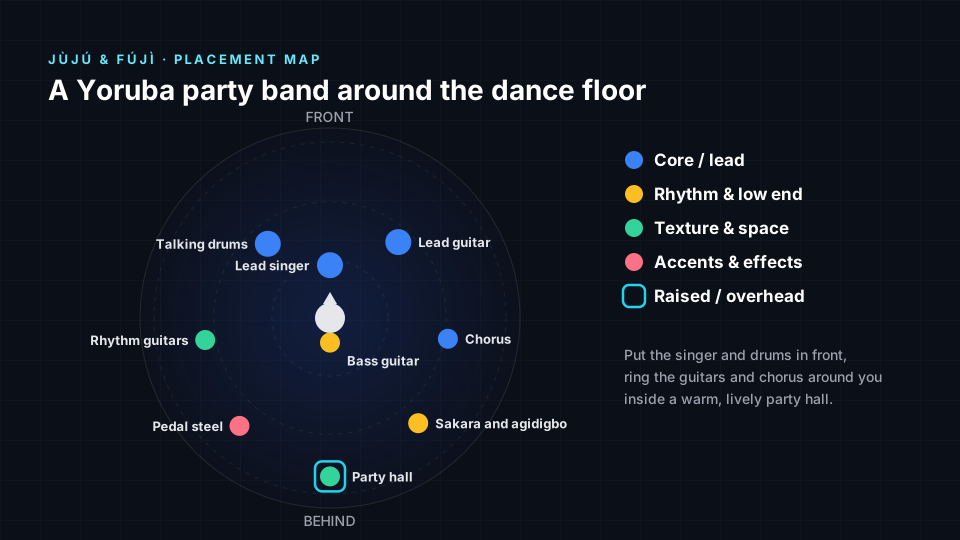
- In a spatial jùjú and fújì mix the lead singer sits front centre with the talking drums front left and the lead guitar front right, while rhythm guitars, chorus and hand percussion form a wide ring around the listener.
- Because the brain sorts sounds into separate streams by pitch, timing and direction, spreading the many interlocking guitars and drums around the room lets each pattern be heard instead of blurring into one dense groove.
- Jùjú, fújì and apala are party music played for long nights of dancing and praise singing, so the space should feel like a lively hall or open-air party, warm but not washy.
- The jùjú and fújì immersion profile scores width 4, height 2, movement 3, low-end focus 3 and space 3 out of 5.
Jùjú and fújì are the great party musics of the Yoruba people of south western Nigeria. Jùjú took shape in Lagos in the 1920s and 1930s, when small groups of singers played guitar or banjo, sekere rattle and a tambourine that may have given the music its name. Tunde King is usually named as its first star, recording in the 1930s. In the 1950s and 1960s I. K. Dairo and his Blue Spots added the accordion and made the dùndún talking drum central, and in the 1970s Ebenezer Obey and King Sunny Adé built large bands with several electric guitars, talking drums, percussion and a chorus. Adé's album Juju Music, released internationally in 1982, brought the pedal steel guitar and the swirling layered sound to listeners far beyond Nigeria. Fújì grew in the late 1960s and 1970s from were, the songs sung to wake Muslims for the pre dawn meal during Ramadan. Sikiru Ayinde Barrister is credited with naming and shaping it, and it is driven by talking drums, sakara drums, bells and a powerful lead voice. Apala, an older Yoruba Muslim style built on voice and percussion, fed into both. All three rest on call and response, praise singing and talking drums that speak the tones of the Yoruba language. Jùjú and fújì suit spatial audio because the music is a web of interlocking parts played for people dancing all around the band. This guide covers how spatial audio for jùjú and fújì works, where to place each element and how to make an immersive jùjú and fújì mix. For the basics, see what spatial audio is.
Why jùjú and fújì works in spatial audio
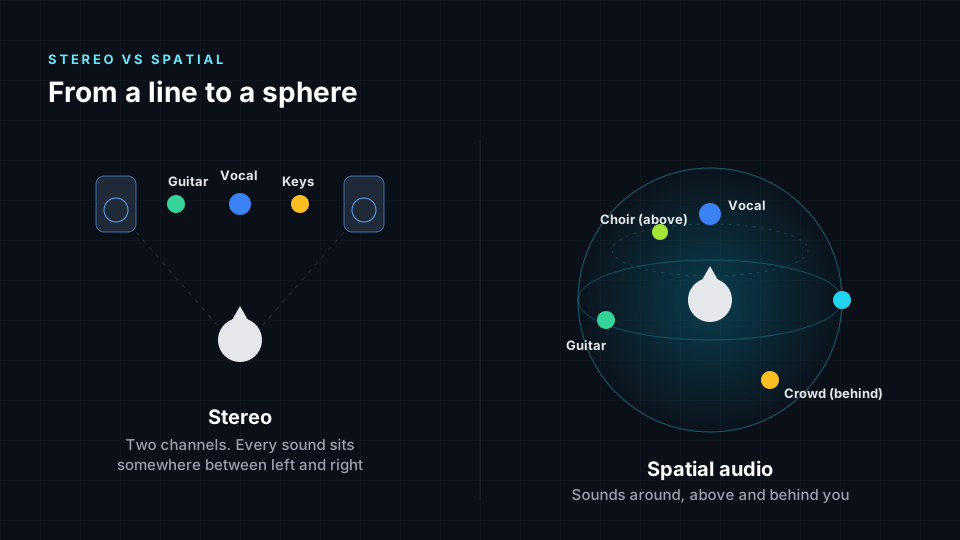
Jùjú and fújì are built from layers. Several guitars each play a short, repeating pattern, and the patterns lock together into one rolling groove. The talking drums answer the singer, praise guests and call out phrases that dancers understand. A chorus replies to every line, and bells, sekere and sakara drums keep the pulse moving for hours. In stereo all of these parts squeeze between two speakers and turn into a dense blur. In an immersive mix the singer and the talking drums lead from the front, the guitars and chorus spread into a ring and the party fills the space around you.
The rule: the singer and talking drums in front, the groove all around you. Keep the voice and the lead drum clear at the front, hold the bass in the centre and let the interlocking guitars and percussion surround the listener in a warm, lively hall.
Immersive music for jùjú and fújì: what listeners hear
- A singer leading the party. The lead voice sits close and clear in front, so every praise line and proverb is easy to follow.
- Drums that talk back. The talking drums answer from the front left, bending their pitch like speech and pushing the dancers on.
- A ring of guitars. Each guitar pattern has its own place around you, so the interlocking parts sound like a single turning wheel.
- A crowd and a chorus around you. The chorus replies from the side and the hall wraps around the band like a party in full swing.
Where to place each element in a jùjú and fújì mix
| Element | Position | Height | Why it works |
|---|---|---|---|
| Lead singer | Front centre | Ear level | Praise lines and proverbs, always clear |
| Bass guitar | Centre | Ear level | A steady, rounded pulse for dancing |
| Talking drums | Front left | Ear level | Speech tones answering the singer |
| Lead guitar | Front right | Ear level | Bright melodic lines and short solos |
| Rhythm guitars | Left | Ear level | Interlocking patterns that drive the groove |
| Chorus | Right | Ear level | Replies to every call from the singer |
| Sakara and agidigbo | Behind right | Ear level | Frame drum and thumb piano under the groove |
| Pedal steel | Behind left | Ear level | Gliding Hawaiian guitar colour in jùjú |
| Party hall | Behind | Raised | A warm, lively room around the band |
The psychoacoustics behind jùjú and fújì placement
Every position in the table above follows how the ear and brain locate sound. Here is the reason behind the main choices for jùjú and fújì.
- Bass guitar stays centred. The ear finds almost no direction in frequencies below roughly 80 to 100 Hz, so the bass gains nothing from being spread and keeps the dance pulse steady (Blauert).
- Guitars spread into a ring. The brain groups sounds into streams by pitch, timing and direction. This is auditory stream segregation (Bregman). Giving each guitar pattern its own direction lets the ear follow the interlocking parts instead of hearing one thick mass.
- Singer and talking drum kept apart. Listeners can follow one voice among many when it comes from a different direction to the others. This is the cocktail party effect (Bronkhorst). Setting the talking drum a little to the left of the singer keeps the call and the drummed answer clear.
- A lively hall with side reflections. Early reflections arriving from the sides make a sound feel wider and more enveloping. This is spatial impression from early lateral reflections (Barron and Marshall). Moderate side reflections give the band the feel of a busy party hall while keeping the drum strokes crisp.
The immersion profile for jùjú and fújì
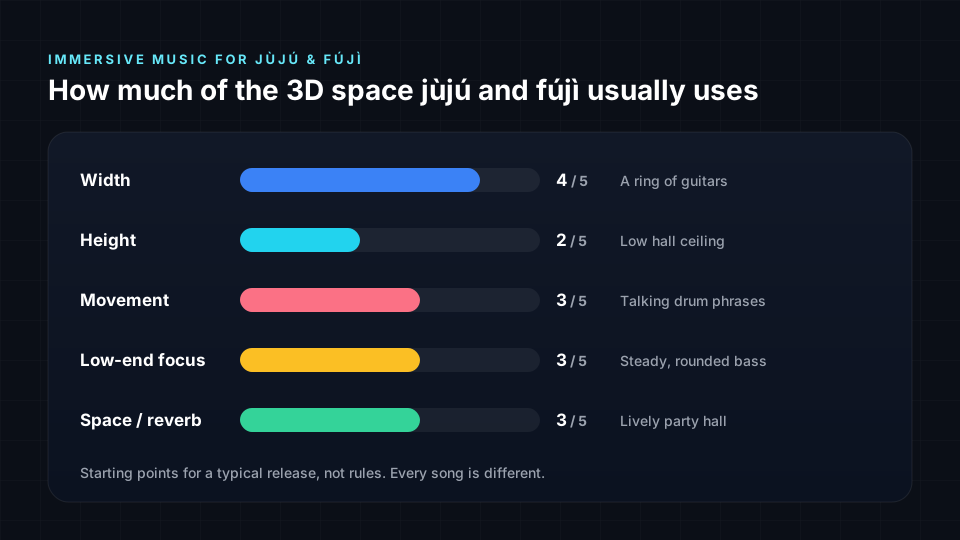
Width scores 4 because a big jùjú band has several guitars, drums and a chorus that can circle the listener. Movement is 3, coming from the talking drums, the call and response and the rolling guitar patterns rather than sounds flying overhead. Low-end focus is 3, since the bass guitar and sakara drums carry a steady, rounded pulse without heavy sub bass. Space also scores 3: the music lives at parties and in clubs, so a warm, lively room suits it better than a vast concert hall. Height is 2, from the reflections of a hall ceiling or an awning over an outdoor party.
Tips for an immersive jùjú and fújì mix
- Keep the singer close and clear. Praise singing carries the meaning of the music, so the lead voice should sit just in front and above the band.
- Give the talking drum its own place. Put it front left at ear level so its pitch bends read like speech answering the singer.
- Spread the guitars around the room. Give each guitar pattern a different direction so the interlocking parts stay distinct.
- Hold the bass in the centre. The bass and the lowest drum strokes should stay anchored so dancers always find the pulse.
- Use a warm, lively room. A moderate reverb with clean side reflections suits party music, but keep it short enough that the drum strokes stay sharp.
Jùjú and fújì styles: jùjú, fújì and apala
The core placement holds for every style here: the lead voice and talking drum at the front, the bass in the centre and the groove around the listener. What changes is the balance between guitars and percussion, the size of the band and how much room the style needs.
Jùjú
Jùjú is the guitar band music of Yoruba social life, played at weddings, birthdays and naming ceremonies. From the 1950s I. K. Dairo made the talking drum and accordion central, and in the 1970s Ebenezer Obey and King Sunny Adé led large bands with several guitars, a battery of percussion and a chorus. Adé added pedal steel guitar and synthesiser colours that became part of the classic sound. Seat the lead singer front centre, the talking drums front left, the lead guitar front right and the rhythm guitars around the sides, with the pedal steel behind and the bass in the centre.
Fújì
Fújì grew from were, the Ramadan songs sung before dawn, and took its name from Sikiru Ayinde Barrister in the 1970s. It is a percussion music: talking drums, sakara drums, bells and sekere drive long, flowing sets led by a commanding voice, with keyboards and sometimes a Hawaiian guitar added in later decades. Place the singer front centre, the talking drums front left and front right as a pair, the sakara and bells around the sides and the chorus to one side. Keep the low drums close to the centre and use a lively room.
Apala
Apala is an older Yoruba style rooted in Muslim communities and made famous on record from the 1950s by Haruna Ishola. It is built on voice, talking drums, the agidigbo thumb piano, sekere and bells, with a slow, deep groove. The smaller group suits a close, intimate layout: the singer front centre, the talking drums front left, the agidigbo front right and the sekere and bells to the sides. A small, warm room fits the style best.
Related styles such as sakara, were and Yoruba highlife follow the same idea: keep the voice and lead drum in front, the pulse anchored in the middle and the party around the listener.
How to make immersive jùjú and fújì from stereo
Spatial9 can create spatial audio from a stereo track in a few steps:
- Upload your stereo master or your stems.
- Spatial9's AI separates and places each part, pulling the singer, talking drums, guitars, chorus and bass apart even from older recordings, and setting the guitars and percussion in a ring with the voice at the front.
- Preview it in binaural on headphones.
- Export Eclipsa Audio, ADM, binaural or Ambisonics.
- Publish a video. Create a YouTube-ready video with your immersive audio and publish it directly.
For related guides, read spatial audio for highlife and spatial audio for Afrobeat. Every guide is listed in spatial audio and immersive music by genre.
Frequently asked questions
Does this guide cover jùjú, fújì and apala?
Yes. Jùjú spreads a large guitar band around the listener with the singer and talking drums in front. Fújì centres on talking drums, sakara and a strong lead voice. Apala uses a smaller, close layout of voice, talking drums and agidigbo.
Can I make a jùjú and fújì mix in Dolby Atmos or Eclipsa Audio?
Yes. The placements in this guide work for both. Spatial9 exports ADM, the standard file used by Dolby Atmos studios, as well as Eclipsa Audio for YouTube, so one immersive jùjú and fújì mix covers both. If you plan to release the Atmos version on Apple Music, build it from your original stems or multitracks, because Apple does not accept Atmos made from a finished stereo master. See where to publish spatial audio. You may also hear this called a 3D jùjú mix, a 3D fújì mix or Yoruba music in spatial audio.
Is spatial audio good for jùjú and fújì?
Yes. Both styles are built from many interlocking parts played for dancers on every side. Spatial audio gives each guitar and drum its own place, so the groove becomes clearer and the listener feels inside the party.
Where should the talking drum go in an immersive jùjú mix?
Put the lead talking drum front left at ear level, close to the singer but not on top of the voice. If a second talking drum plays, set it front right so the two can answer each other.
What is the difference between jùjú and fújì?
Jùjú is a guitar band music, with several electric guitars, often a pedal steel, and talking drums. Fújì is mainly a percussion and voice music that grew from Ramadan were songs. In spatial audio jùjú needs a wide ring of guitars, while fújì puts the drums and voice at the heart of the mix.
How is jùjú different from highlife in spatial audio?
Highlife is a Ghanaian and Nigerian dance band music built on horns and guitars, so it suits a front stage with a horn section to one side. Jùjú leans more on talking drums, percussion and layered guitars, so it suits a wider ring around the listener.
Can I convert an old jùjú or apala record to spatial audio?
Yes. Spatial9 uses AI to separate the voice, drums, guitars and bass from a stereo or mono master. Separation is never perfect with older recordings, so keep the layout simple and the room moderate.
Dolby and Dolby Atmos are trademarks of Dolby Laboratories. Spatial9 is not affiliated with or endorsed by Dolby Laboratories.
Sources
- Blauert, J. (1997). Spatial Hearing: The Psychophysics of Human Sound Localization, revised edition. MIT Press. Low-frequency, elevation, distance and motion cues.
- Bregman, A. S. (1990). Auditory Scene Analysis: The Perceptual Organization of Sound. MIT Press.
- Bronkhorst, A. W. (2000). The cocktail party phenomenon: a review of research on speech intelligibility in multiple-talker conditions. Acta Acustica united with Acustica, 86, 117-128.
- Barron, M. and Marshall, A. H. (1981). Spatial impression due to early lateral reflections in concert halls. Journal of Sound and Vibration, 77(2), 211-232.
- Mills, A. W. (1958). On the minimum audible angle. Journal of the Acoustical Society of America, 30(4), 237-246.
- Litovsky, R. Y., Colburn, H. S., Yost, W. A. and Guzman, S. J. (1999). The precedence effect. Journal of the Acoustical Society of America, 106(4), 1633-1654.
- Waterman, C. A. (1990). Jùjú: A Social History and Ethnography of an African Popular Music. University of Chicago Press.
Join the party
Upload a track to Spatial9 and hear the talking drums and guitars circle around you in minutes. Then export it or publish it straight to YouTube.