Spatial Audio & Immersive Music for Mbalax: Sabar, Senegalese Pop & Gambian Mbalax
Spatial9 Team · · 11 min read
Part of the series Spatial audio and immersive music by genre.
Key takeaways
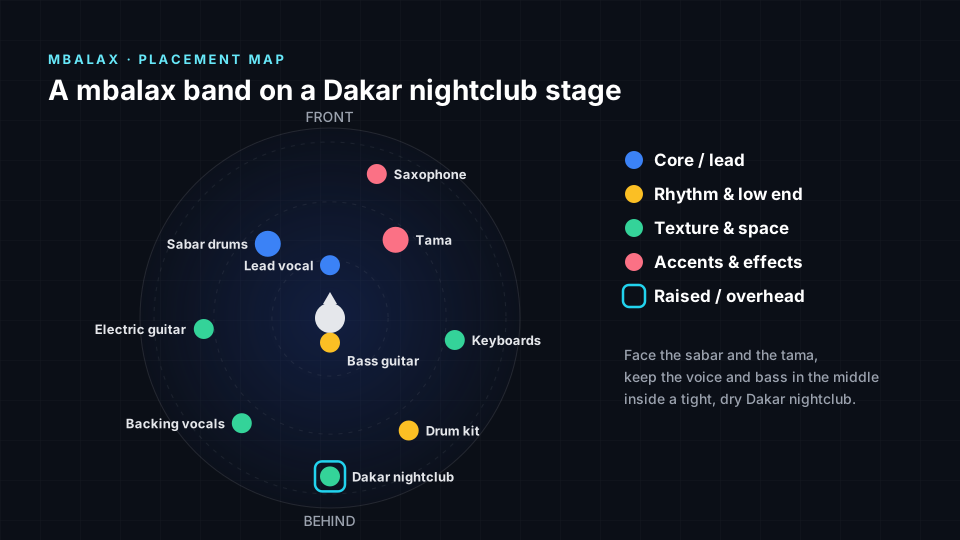
- In a spatial mbalax mix the sabar drums sit front left and the tama talking drum front right, with the lead singer centred, the bass guitar anchored underneath and the guitar, keyboards and drum kit spread around the sides.
- Because the brain separates sounds that come from different directions, an effect known as auditory stream segregation, the dense cross rhythms of the sabar and tama stay readable instead of turning into a wall of percussion.
- Mbalax is hard, fast dance music from Dakar nightclubs, so the space should be a tight, fairly dry room that keeps every drum stroke sharp and the voice close.
- The mbalax immersion profile scores width 4, height 2, movement 3, low-end focus 3 and space 2 out of 5.
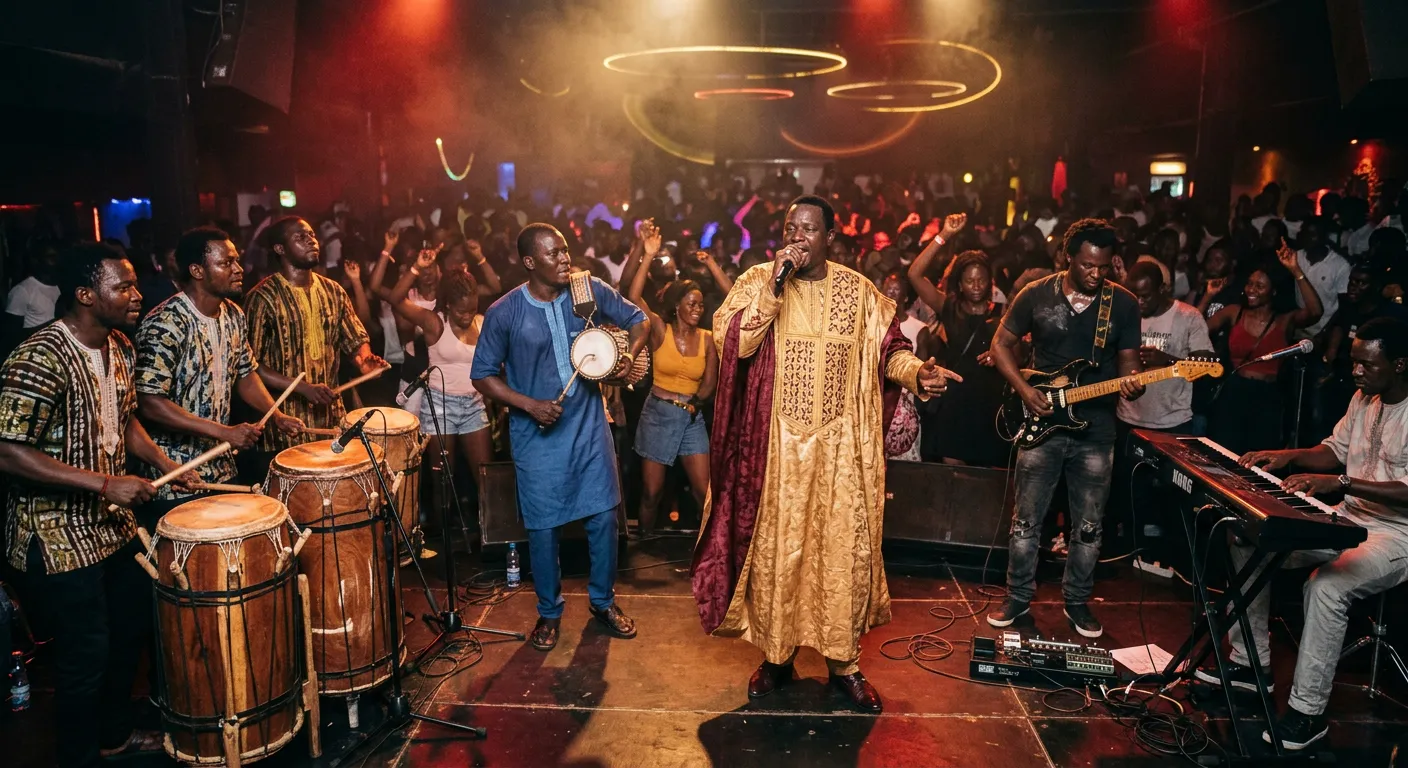
Mbalax is the popular dance music of Senegal and the Gambia, sung mostly in Wolof. Its roots lie in sabar, the drumming of Wolof griots, known as gewel, who play tall wooden drums with one hand and a stick at weddings, naming ceremonies, wrestling matches and street dances. The word mbalax itself names one of the accompanying rhythms in a sabar ensemble. From the 1950s to the 1970s, the dance bands of Dakar played mostly Cuban music, learned from records that were hugely popular across West Africa. Bands such as the Star Band de Dakar and Orchestra Baobab sang Cuban style son and pachanga, then began to add Wolof lyrics, griot singing and local rhythms. In the 1970s a young singer from a griot family, Youssou N'Dour, sang with the Star Band and then, in 1979, formed Étoile de Dakar, which put the sabar and the tama talking drum right at the front of an electric band. Through the 1980s mbalax became the national sound of Senegal, carried by Youssou N'Dour's Super Étoile de Dakar, Omar Pene's Super Diamono and Thione Seck's Raam Daan. Its sound is fast and busy: sabar drums and tama trading sharp cross rhythms, choppy electric guitar, bright keyboards, a punchy bass and a soaring vocal that can turn to rhythmic spoken poetry, called taasu. Mbalax suits spatial audio because so much happens at once, and every drum has its own voice. This guide covers how spatial audio for mbalax works, where to place each element and how to make an immersive mbalax mix. For the basics, see what spatial audio is.
Why mbalax works in spatial audio
Mbalax is a music of many interlocking parts. The sabar ensemble lays down several rhythms at once, with a lead drum breaking in with sudden phrases. The tama, a small hourglass talking drum squeezed under the arm, answers with bending, speech-like calls. The guitar chops short patterns, the keyboards add bright stabs and the bass punches the off beats. On top of all this, the singer soars in long, high lines. In stereo these parts crowd into one dense block, and the drums lose their shape. In an immersive mix the sabar and the tama face each other across the front, the voice and bass hold the middle and every stroke has room to land.
The rule: sabar and tama facing off, the voice and the bass in the middle. Spread the drums across a wide front stage, keep the singer and bass anchored and set the band in a tight, dry club where every hit stays sharp.
Immersive music for mbalax: what listeners hear
- Drums in conversation. The sabar calls from the left and the tama answers from the right, so every drum break becomes a dialogue.
- A voice that soars. The lead singer sits just in front and rises clear above the band, with the backing vocals answering from behind.
- Breaks that hit hard. When the drummers break into a sudden unison phrase, the whole stage seems to jump toward you.
- A packed club. A tight, dry room puts you close to the stage, where the drums are loud and the dancers are right beside you.
Where to place each element in a mbalax mix
| Element | Position | Height | Why it works |
|---|---|---|---|
| Lead vocal | Front centre | Ear level | The soaring griot melody and taasu |
| Bass guitar | Centre | Ear level | Punchy off beats that drive the dance |
| Sabar drums | Front left | Ear level | Interlocking rhythms and lead drum breaks |
| Tama | Front right | Ear level | Speech-like calls answering the sabar |
| Saxophone | Front right, further out | Ear level | Short riffs and solo lines |
| Electric guitar | Left | Ear level | Choppy patterns that lock with the drums |
| Keyboards | Right | Ear level | Bright stabs and synth lines |
| Backing vocals | Behind left | Ear level | Answers to the lead singer's calls |
| Drum kit | Behind right | Ear level | A steady kick and snare under the sabar |
| Dakar nightclub | Behind | Raised | A tight, dry room around the band |
The psychoacoustics behind mbalax placement
Every position in the table above follows how the ear and brain locate sound. Here is the reason behind the main choices for mbalax.
- Bass guitar stays centred. The ear finds almost no direction in frequencies below roughly 80 to 100 Hz (Blauert), so the bass gains nothing from being spread and keeps the off beats solid for dancers.
- Sabar and tama on opposite sides. The brain groups sounds into streams by pitch, timing and direction. This is auditory stream segregation (Bregman). Setting the two drum voices apart lets the ear hear call and answer instead of one block of percussion.
- Drum strokes that stay precise. Listeners can tell apart two sources only a degree or two apart at the front, but need far more separation at the sides. This is the minimum audible angle (Mills). Keeping the drums in the front half lets the ear place each stroke sharply.
- A dry room that stays tight. The ear takes the direction of a sound from the first arrival and folds the early echoes into it. This is the precedence effect (Litovsky and colleagues). Short, clean reflections give the club some life without blurring the fast drumming.
The immersion profile for mbalax
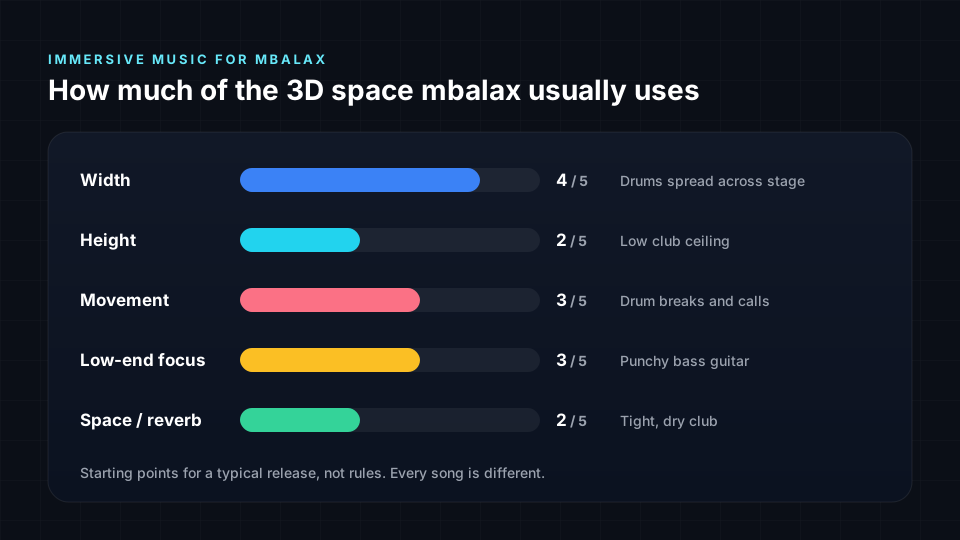
Width scores 4 because a mbalax band spreads several drummers, guitar, keyboards and singers across a stage. Movement is 3, coming from sudden drum breaks, the tama's calls and the back and forth between singer and chorus, rather than sounds flying around. Low-end focus is 3, since the bass guitar and kick are punchy and clear without heavy sub bass. Space is 2: mbalax is loud, close music for packed clubs and street parties, and long reverb would blur the drumming. Height is 2, from the low ceiling of a club or the open night sky over a street dance.
Tips for an immersive mbalax mix
- Face the sabar and the tama. Put them on opposite front sides so every drum call has an answer.
- Keep the bass centred. Hold the bass guitar and kick in the middle, so dancers always find the beat under the cross rhythms.
- Let the voice soar in front. The lead singer should sit just in front, clear of the drums, with the backing vocals behind.
- Let the drum breaks move the music. Keep the drummers in place and let their sudden unison phrases create motion.
- Use a tight, dry room. A short club reverb suits mbalax, so keep the reflections clean and close and the drum strokes crisp.
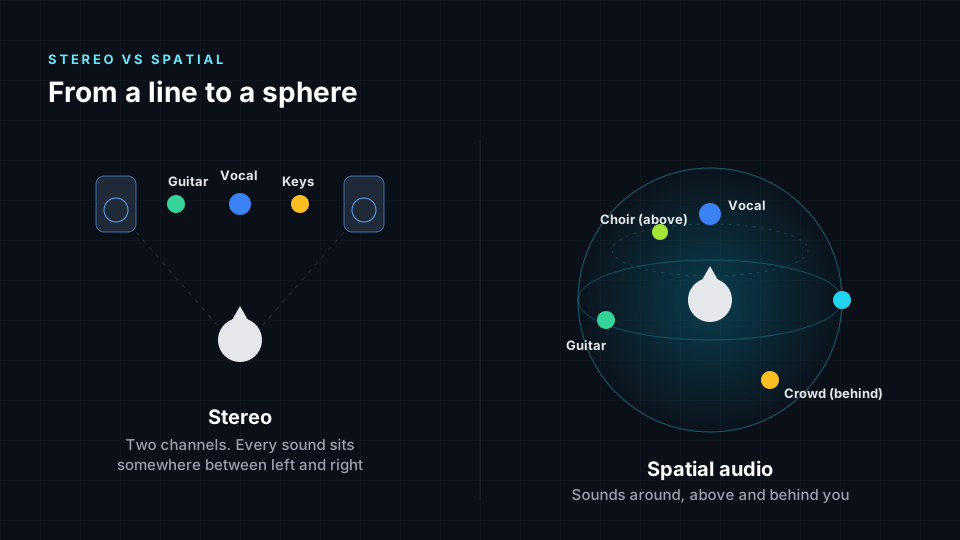
Mbalax styles: Sabar, Senegalese pop and Gambian mbalax
The core placement holds for every style here: drums and lead voice at the front, the bass anchored in the middle. What changes is the size of the band, the amount of electric and electronic sound and how much room the style needs.
Sabar
Sabar is both the drum and the event: a Wolof drum ensemble that plays for street dances, weddings, naming ceremonies and wrestling matches. Each drum has its own role, from the lead drum that calls out phrases to the supporting drums that hold the patterns underneath, and the drummers and dancers trade sudden, precise breaks. Doudou N'Diaye Rose, a celebrated master drummer, led large sabar ensembles in Dakar for decades. Spread the drums in an arc across the front, with the lead drum front left and the supporting drums around it, singers in the centre and the open street or courtyard around the listener. A slightly more open, outdoor space suits pure sabar.
Senegalese Pop
Senegalese pop here means the electric mbalax heard on Senegalese radio, in clubs and on international releases, from Youssou N'Dour and Super Étoile de Dakar to younger singers. From the 1980s some albums reached audiences worldwide, blending mbalax with pop, soul and reggae, and later generations brought in drum machines and synths. Seat the sabar front left, the tama front right, the guitar left, the keyboards right and the bass centred, with the singer just in front. A tight club or studio room suits the style.
Gambian Mbalax
The Gambia, a narrow country almost surrounded by Senegal, shares much of its music, and Wolof is widely spoken in Banjul. In the 1960s and 1970s bands such as the Super Eagles played a mix of Cuban, soul and local music before turning toward Senegambian roots. Gambian mbalax often draws on Mandinka traditions alongside Wolof ones, and some groups bring in the kora or Mandinka melodies. Keep the drums in front and the bass centred, and if a kora is present, set it front right near the tama so its bright plucked lines stay clear. A warm but short room suits it.
Related styles such as Wolof rap, Senegalese Afro-Cuban salsa and the kora music of the Mandinka griots follow the same idea: keep the drums and voice at the front, the bass anchored in the middle and the dance floor around the listener.
How to make immersive mbalax from stereo
Spatial9 can create spatial audio from a stereo track in a few steps:
- Upload your stereo master or your stems.
- Spatial9's AI separates and places each part, pulling the sabar, tama, guitar, keyboards, bass and voices apart even from older cassette era recordings, and setting the drums across a wide stage with the singer and bass in the centre.
- Preview it in binaural on headphones.
- Export Eclipsa Audio, ADM, binaural or Ambisonics.
- Publish a video. Create a YouTube-ready video with your immersive audio and publish it directly.
For related guides, read spatial audio for soukous and Congolese rumba and spatial audio for desert blues. Every guide is listed in spatial audio and immersive music by genre.
Frequently asked questions
Does this guide cover Sabar, Senegalese Pop and Gambian Mbalax?
Yes. Sabar spreads a Wolof drum ensemble in an arc across the front, in a more open space. Senegalese pop seats the sabar, tama and electric band on a tight club stage. Gambian mbalax uses the same layout and gives a kora, if present, its own place at front right.
Can I make a mbalax mix in Dolby Atmos or Eclipsa Audio?
Yes. The placements in this guide work for both. Spatial9 exports ADM, the standard file used by Dolby Atmos studios, as well as Eclipsa Audio for YouTube, so one immersive mbalax mix covers both. If you plan to release the Atmos version on Apple Music, build it from your original stems or multitracks, because Apple does not accept Atmos made from a finished stereo master. See where to publish spatial audio. You may also hear this called a 3D mbalax mix or mbalax in spatial audio.
Is spatial audio good for mbalax?
Yes. Mbalax layers several drums, a talking drum, guitar, keyboards and voices, all moving fast. Spatial audio lets each drum keep its own place, so the cross rhythms stay clear and the singer rises above them.
Where should the tama go in an immersive mbalax mix?
Put the tama front right at ear level, opposite the sabar drums. Its high, bending calls cut through easily, so it does not need to be loud, only clearly placed.
Should the mix sound dry or roomy?
Mostly dry. Mbalax is close, loud club and street music, and long reverb blurs the drum strokes. Use a short room with clean early reflections, and only open the space for pure sabar recordings made outdoors.
How is mbalax different from salsa in spatial audio?
The two are linked: Dakar dance bands played Cuban music for decades before mbalax, and Senegalese salsa is still loved today. Salsa builds its groove on clave, congas, timbales and a horn section, so it suits a wide band layout with horns across the front. Mbalax puts the sabar and tama at the front instead, with faster cross rhythms and a drier room. See our guide to salsa for the horn layout.
Can I convert a 1980s mbalax cassette to spatial audio?
Yes. Spatial9 uses AI to separate the drums, guitar, keyboards, bass and voices from a stereo master, even a worn cassette transfer. Separation is never perfect with older recordings, so keep the layout simple and the room short.
Dolby and Dolby Atmos are trademarks of Dolby Laboratories. Spatial9 is not affiliated with or endorsed by Dolby Laboratories.
Sources
- Blauert, J. (1997). Spatial Hearing: The Psychophysics of Human Sound Localization, revised edition. MIT Press. Low-frequency, elevation, distance and motion cues.
- Mills, A. W. (1958). On the minimum audible angle. Journal of the Acoustical Society of America, 30(4), 237-246.
- Litovsky, R. Y., Colburn, H. S., Yost, W. A. and Guzman, S. J. (1999). The precedence effect. Journal of the Acoustical Society of America, 106(4), 1633-1654.
- Barron, M. and Marshall, A. H. (1981). Spatial impression due to early lateral reflections in concert halls. Journal of Sound and Vibration, 77(2), 211-232.
- Bregman, A. S. (1990). Auditory Scene Analysis: The Perceptual Organization of Sound. MIT Press.
- Tang, P. (2007). Masters of the Sabar: Wolof Griot Percussionists of Senegal. Temple University Press.
- Hale, T. A. (1998). Griots and Griottes: Masters of Words and Music. Indiana University Press.
Feel the drums
Upload a track to Spatial9 and hear the sabar and tama trade rhythms around you in minutes. Then export it or publish it straight to YouTube.