Spatial Audio & Immersive Music for Afrobeat: Fela Afrobeat, Afro-Funk & Afro-Jazz
Spatial9 Team · · 11 min read
Part of the series Spatial audio and immersive music by genre.
Key takeaways
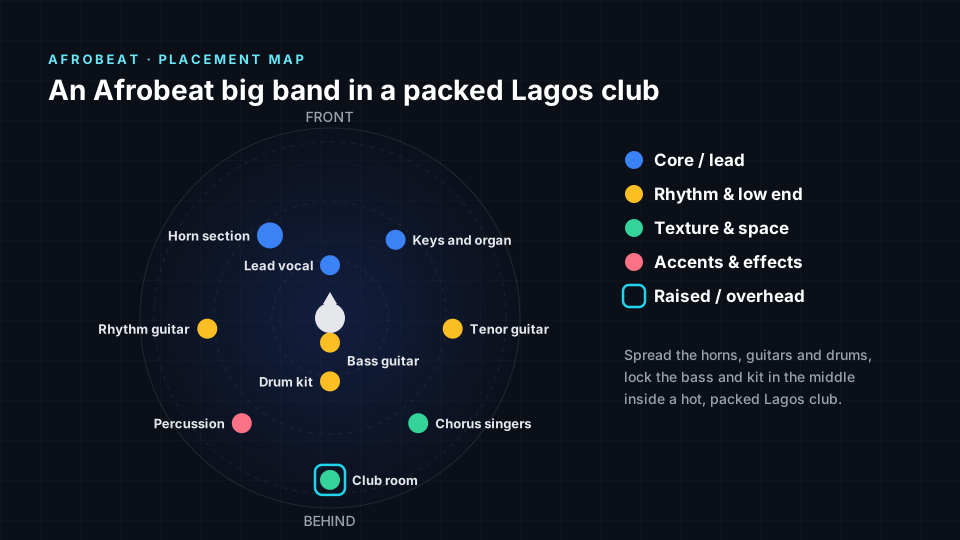
- In a spatial Afrobeat mix the horn section sits front left and the keys front right, with the singer centred, the two guitars on opposite sides and the bass and drum kit locking the groove in the middle of a packed club.
- Because the brain sorts sounds into separate streams by pitch, timing and direction, an effect known as auditory stream segregation, spreading the interlocking guitars, percussion and horns apart lets every layer of the groove be heard.
- Afrobeat is long, hypnotic dance music built in layers, so the space should be a warm, lively club with strong side reflections and a solid low end.
- The Afrobeat immersion profile scores width 5, height 2, movement 3, low-end focus 4 and space 3 out of 5.
Afrobeat, without an s, is the 1970s style created in Lagos, Nigeria, by Fela Anikulapo Kuti. It is not the same as Afrobeats, the West African pop of the 2000s and 2010s. Fela studied at Trinity College of Music in London from 1958, and in the 1960s he led Koola Lobitos, a band that mixed highlife and jazz. A stay in the United States in 1969 brought him into contact with Black Power politics and the funk of James Brown. Back in Lagos he renamed his band Africa 70 and, with the drummer Tony Allen, built a new sound. Songs ran for ten, fifteen or twenty minutes. A drum kit pattern blended funk with West African rhythm, two guitars interlocked in short repeating figures, the bass played a hypnotic ostinato, and a big horn section of trumpets and saxophones stabbed and soloed above. Shekere, congas and clips kept time, and a female chorus answered Fela's vocals in Yoruba and Pidgin English. He played saxophone and keyboards and sang against corruption and military rule on records such as Zombie from 1976, performing at his own club, the Afrika Shrine. After Allen left at the end of the 1970s, Fela led Egypt 80 until his death in 1997. Afrobeat suits spatial audio because it is a big band built in layers, and the club is part of the music. This guide covers how spatial audio for Afrobeat works, where to place each element and how to make an immersive Afrobeat mix. For the basics, see what spatial audio is.
Why Afrobeat works in spatial audio
Afrobeat is built in layers. The drum kit and bass lock into a pattern that never stops. A rhythm guitar chops short chords while a second guitar, often called the tenor guitar, plays a single-line figure that weaves around it. Shekere and clips add a fast, bright pulse. Over this the horns play long unison riffs, then a saxophone or organ takes a long solo before the singer and chorus trade lines. In stereo these layers stack into one dense, heavy wall. In an immersive mix each layer gets its own place around the listener, and the groove opens up like a room full of musicians.
The rule: every layer in its own place, the bass and drums locked in the middle. Spread the horns, guitars, percussion and chorus all the way around, keep the bass guitar and drum kit anchored and set it all in a hot, packed club.
Immersive music for Afrobeat: what listeners hear
- A groove you can walk around in. The bass, drums, guitars and percussion each sit in their own place, so the interlocking patterns become easy to follow.
- A horn line with weight. The trumpets and saxophones punch from the front left in tight unison, then open up for long solos.
- Call and response around you. The singer leads from the centre and the chorus answers from behind, so every refrain feels like a crowd joining in.
- A night at the club. A warm, lively room with strong reflections places you in a packed venue, close to the band and surrounded by dancers.
Where to place each element in an Afrobeat mix
| Element | Position | Height | Why it works |
|---|---|---|---|
| Lead vocal | Front centre | Ear level | The bandleader singing and preaching |
| Bass guitar | Centre | Ear level | The hypnotic ostinato at the heart of the groove |
| Drum kit | Centre | Ear level | The kick and hi-hat pattern locked to the bass |
| Horn section | Front left | Ear level | Unison riffs, stabs and solos |
| Keys and organ | Front right | Ear level | Organ vamps and solos opposite the horns |
| Rhythm guitar | Left | Ear level | Short chopped chords on the off-beat |
| Tenor guitar | Right | Ear level | Single-line patterns weaving around the rhythm |
| Percussion | Behind left | Ear level | Shekere, congas and clips keeping a fast pulse |
| Chorus singers | Behind right | Ear level | Answers to the lead vocal in every refrain |
| Club room | Behind | Raised | A hot, lively room around the band |
The psychoacoustics behind Afrobeat placement
Every position in the table above follows how the ear and brain locate sound. Here is the reason behind the main choices for Afrobeat.
- Bass and kick stay centred. The ear finds almost no direction in frequencies below roughly 80 to 100 Hz, as Blauert's work on spatial hearing shows. Spreading the bass adds nothing, and a centred low end keeps the long grooves solid and powerful.
- Guitars and percussion on opposite sides. The brain groups sounds into streams by pitch, timing and direction. This is auditory stream segregation (Bregman). Setting the two guitars apart, and the percussion behind them, lets the ear hear each pattern instead of one thick blur.
- A singer heard over a big band. Listeners pick out one voice among many more easily when the competing sounds come from other directions. This is the cocktail party effect (Bronkhorst). Moving the horns and chorus away from the centre keeps the lyrics clear, which matters in a style built on its message.
- A club with strong side reflections. Early reflections arriving from the sides make a sound feel wider and more enveloping. This is spatial impression from early lateral reflections (Barron and Marshall). Lively side reflections give the band the energy of a packed room while keeping the guitar chops tight.
The immersion profile for Afrobeat
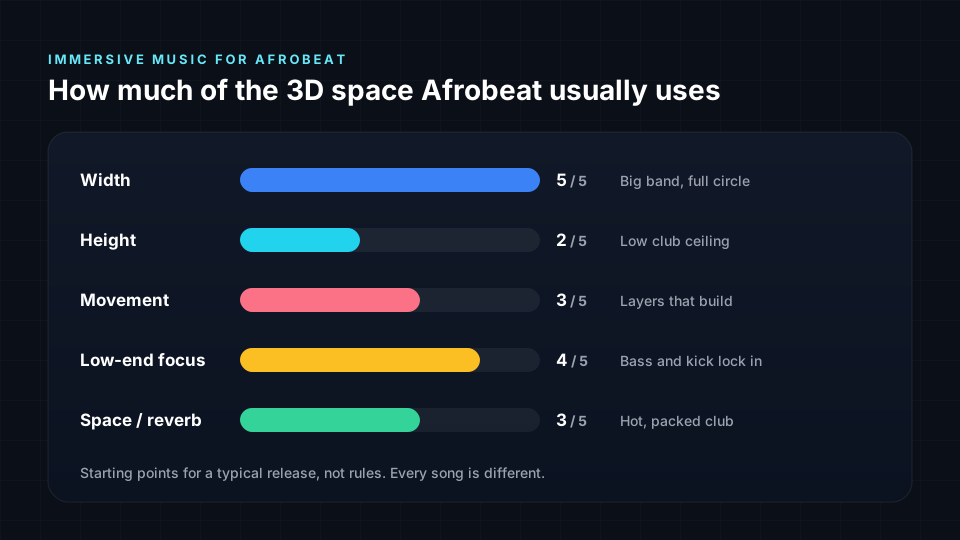
Width scores 5 because an Afrobeat band is large, with horns, two guitars, keys, percussion and a chorus that can fill the whole circle around the listener. Low-end focus is 4: the bass ostinato and the kick drum are the engine of every song. Movement is 3, coming from layers that enter, drop out and build over a long track, plus solos that rise out of the band, rather than sounds flying around. Space is 3, since the music was made for hot, crowded clubs rather than large halls. Height is 2, from the reflections of a low club ceiling.
Tips for an immersive Afrobeat mix
- Lock the bass and drums. Keep the bass guitar and drum kit in the centre, tight and punchy, so the groove never wavers.
- Split the guitars. Put the rhythm guitar on the left and the tenor guitar on the right, so the two patterns interlock across the room.
- Give the horns a home. Set the horn section front left as one wide block, and bring a soloist slightly forward when they step out.
- Put the chorus behind. Let the chorus singers answer from behind right, so the call and response surrounds the listener.
- Use a lively club room. A warm room with strong side reflections suits Afrobeat, but keep the reverb short so the chopped guitars and shekere stay sharp.
Afrobeat styles: Fela Afrobeat, Afro-funk and Afro-jazz
The core placement holds for every style here: lead voices at the front, the groove anchored in the middle. What changes is the size of the band, how much funk or jazz is in the mix and how much room the soloists need.
Fela Afrobeat
Fela Afrobeat means the classic sound of Fela Kuti with Africa 70 and later Egypt 80, along with the bands that followed it closely, including his sons Femi and Seun Kuti and revival groups such as Antibalas in New York. Songs open with a long instrumental section that builds layer by layer before the vocals arrive. Place the horn section front left, keys front right, rhythm and tenor guitars on opposite sides, bass and drum kit centred and percussion and chorus behind, in a warm, lively club.
Afro-Funk
Afro-funk is the wider West African funk of the 1970s, when bands across Nigeria, Ghana and Benin mixed local rhythms with the sound of James Brown and American soul. Ghanaian guitarist and bandleader Ebo Taylor and Beninese group Orchestre Poly-Rythmo de Cotonou are well-known examples. Songs are often shorter than Fela's, with tighter arrangements and more emphasis on the drum break and the bass. Keep the bass and kick strong in the centre, set the guitars wide and let organ and horn stabs punch from the front.
Afro-Jazz
Afro-jazz blends African rhythm and melody with jazz harmony and improvisation. It covers Fela's own jazz roots, the South African jazz of Hugh Masekela and Abdullah Ibrahim, and later work by Tony Allen with jazz musicians. Solos and interplay matter more than a fixed riff. Use a smaller, more open layout: horns and piano or keys at the front, bass and drums centred, percussion to the sides, and a slightly larger room so the solos can breathe.
Related styles such as highlife, Ethio-jazz and Afro-rock follow the same idea: keep the lead instruments at the front, the groove anchored in the middle and the club around the listener.
How to make immersive Afrobeat from stereo
Spatial9 can create spatial audio from a stereo track in a few steps:
- Upload your stereo master or your stems.
- Spatial9's AI separates and places each part, pulling the horns, guitars, keys, bass, drums, percussion and voices apart even from dense 1970s recordings, and spreading the layers around the listener with the groove in the centre.
- Preview it in binaural on headphones.
- Export Eclipsa Audio, ADM, binaural or Ambisonics.
- Publish a video. Create a YouTube-ready video with your immersive audio and publish it directly.
For related guides, read spatial audio for highlife and spatial audio for Afrobeats. Every guide is listed in spatial audio and immersive music by genre.
Frequently asked questions
Does this guide cover Fela Afrobeat, Afro-funk and Afro-jazz?
Yes. Fela Afrobeat spreads a large band all around the listener in a lively club. Afro-funk tightens the layout around a strong bass and drum break. Afro-jazz uses a smaller, more open layout so the soloists have room.
Can I make an Afrobeat mix in Dolby Atmos or Eclipsa Audio?
Yes. The placements in this guide work for both. Spatial9 exports ADM, the standard file used by Dolby Atmos studios, as well as Eclipsa Audio for YouTube, so one immersive Afrobeat mix covers both. If you plan to release the Atmos version on Apple Music, build it from your original stems or multitracks, because Apple does not accept Atmos made from a finished stereo master. See where to publish spatial audio. You may also hear this called a 3D Afrobeat mix or Afrobeat in spatial audio.
Is Afrobeat the same as Afrobeats?
No. Afrobeat, singular, is the 1970s big band style created by Fela Kuti, with live horns, interlocking guitars and long, political songs. Afrobeats, with an s, is a much newer umbrella term for West African pop from the 2000s and 2010s, built on programmed beats, synths and shorter songs. In spatial audio, Afrobeat suits a wide, live band layout in a club, while Afrobeats suits a modern pop layout with a centred vocal, punchy drums and moving effects. For the newer style, see the Afrobeats guide.
How is Afrobeat different from highlife in spatial audio?
Afrobeat grew partly out of highlife, but it is heavier and longer. Highlife suits a warm, medium room with sweet guitars and a lighter groove. Afrobeat needs a wider layout, a stronger centred low end and space for long solos and layers that build over many minutes.
Is spatial audio good for Afrobeat?
Yes. Afrobeat is built from many interlocking parts that often blur together in stereo. Spatial audio gives each guitar, horn and percussion part its own place, so the groove sounds clearer, bigger and closer to hearing the band live.
Where should the horns go in an immersive Afrobeat mix?
Put the horn section front left at ear level as one wide block, opposite the keys and organ. When a saxophone or trumpet takes a solo, bring it slightly forward and towards the centre, then let it return to the section.
Can I convert a 1970s Afrobeat record to spatial audio?
Yes. Spatial9 uses AI to separate the horns, guitars, bass, drums, percussion and voices from a stereo or mono master. Dense live recordings never separate perfectly, so keep the layout simple and the room moderate.
Dolby and Dolby Atmos are trademarks of Dolby Laboratories. Spatial9 is not affiliated with or endorsed by Dolby Laboratories.
Sources
- Blauert, J. (1997). Spatial Hearing: The Psychophysics of Human Sound Localization, revised edition. MIT Press. Low-frequency, elevation, distance and motion cues.
- Mills, A. W. (1958). On the minimum audible angle. Journal of the Acoustical Society of America, 30(4), 237-246.
- Bronkhorst, A. W. (2000). The cocktail party phenomenon: a review of research on speech intelligibility in multiple-talker conditions. Acta Acustica united with Acustica, 86, 117-128.
- Litovsky, R. Y., Colburn, H. S., Yost, W. A. and Guzman, S. J. (1999). The precedence effect. Journal of the Acoustical Society of America, 106(4), 1633-1654.
- Barron, M. and Marshall, A. H. (1981). Spatial impression due to early lateral reflections in concert halls. Journal of Sound and Vibration, 77(2), 211-232.
- Bregman, A. S. (1990). Auditory Scene Analysis: The Perceptual Organization of Sound. MIT Press.
- Veal, M. E. (2000). Fela: The Life and Times of an African Musical Icon. Temple University Press.
Feel the groove
Upload a track to Spatial9 and hear the horns, guitars and drums fill the club around you in minutes. Then export it or publish it straight to YouTube.