Spatial Audio & Immersive Music for Flamenco: Complete Guide
Spatial9 Team · · Updated
Part of the series Spatial audio and immersive music by genre.
Flamenco comes from Andalusia in southern Spain and was listed by UNESCO as Intangible Cultural Heritage in 2010. It is built on three pillars: cante, the song, toque, the guitar, and baile, the dance. Around them sit the palmas, the jaleo of the performers and audience, and since the late 1970s the cajón, a box drum brought from Peru. Every part locks into the compás, the rhythmic cycle that gives each style, or palo, its character. This guide covers how spatial audio for flamenco works, where to place each element and how to make an immersive flamenco mix. For the basics, see what spatial audio is.
Why flamenco is perfect for spatial audio
Flamenco is performed in a circle. Musicians, dancer and audience all answer each other, and the excitement comes from those exchanges: the guitar's falseta answering the singer, the palmas answering the footwork, the jaleo answering a brilliant phrase. In stereo, those voices fall onto one line. In spatial audio, each one can come from its own place in the circle.
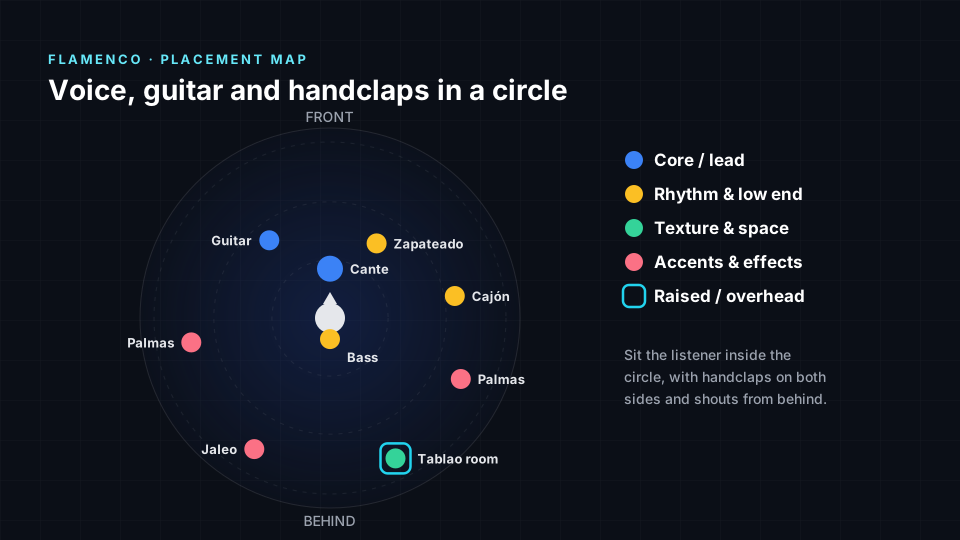
The rule: put the artists in front and the circle around you. The cante, toque and baile stay together in front. The palmas and jaleo surround the listener.
Immersive music for flamenco: what listeners hear
- A voice that cuts through. The cante stays front and centre, raw and close.
- A guitar beside it. The toque answers from the front left, every rasgueado clear.
- Footwork on a real floor. The zapateado sounds from the stage in front, with the cajón close by.
- A circle of hands. Palmas and jaleo come from the sides and behind, as if the listener sits inside the juerga.
Where to place each element in a flamenco mix
| Element | Position | Height | Why it works |
|---|---|---|---|
| Cante (singer) | Front centre | Ear level | The emotional core |
| Guitar | Front left | Ear level | Accompanies and answers the voice |
| Zapateado (footwork) | Front right | Slightly low | Comes from the stage floor |
| Cajón | Right | Ear level | Drives the compás next to the dancer |
| Bass (if used) | Centre | Ear level | Modern flamenco foundation |
| Palmas | Left and right | Ear level | Handclaps from the circle |
| Jaleo | Behind | Ear level | Shouts of encouragement from the group |
| Tablao room | Behind and above | Raised | The sound of a small wooden venue |
The psychoacoustics behind flamenco placement
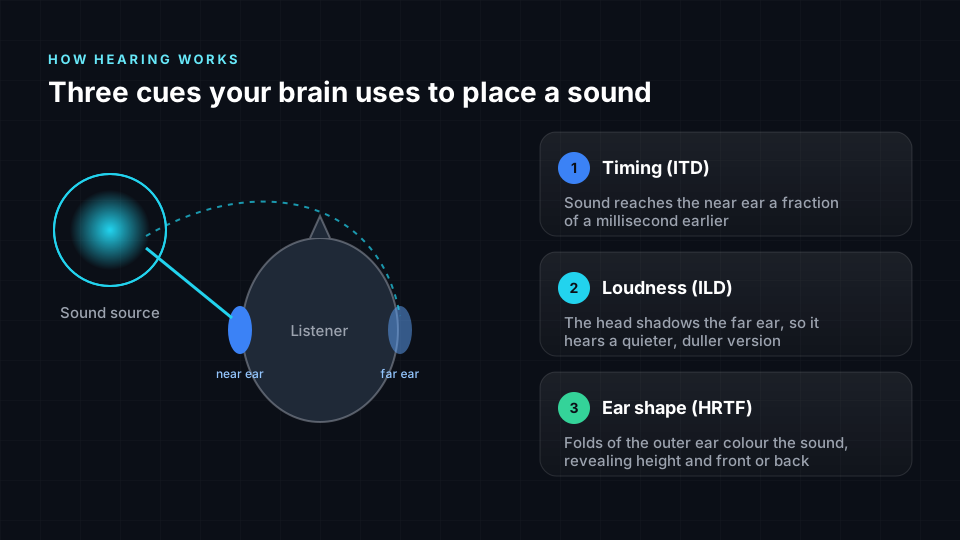
Every position in the table above follows how the ear and brain locate sound. Here is the reason behind the main choices for flamenco.
- Cante in front, guitar front left. Our sense of direction is sharpest straight ahead. Putting the singer there gives the voice a precise, stable image, and offsetting the guitar slightly keeps the two clearly separate.
- Palmas split left and right. When two sounds share a frequency range, separating them in direction makes each easier to hear. Researchers call this spatial release from masking. Two groups of handclaps on opposite sides stay readable, and their interlocking patterns become easy to follow.
- Jaleo behind. Sound arriving from the sides and behind, slightly different at each ear, creates the feeling of being surrounded. Acousticians call this envelopment. Shouts from behind place the listener inside the circle.
- Room above, kept natural. The brain judges direction mainly from the first sound to arrive and treats later reflections as part of the space. That is why a natural tablao ambience can sit above and behind without dragging the singer away from the front.
The immersion profile for flamenco
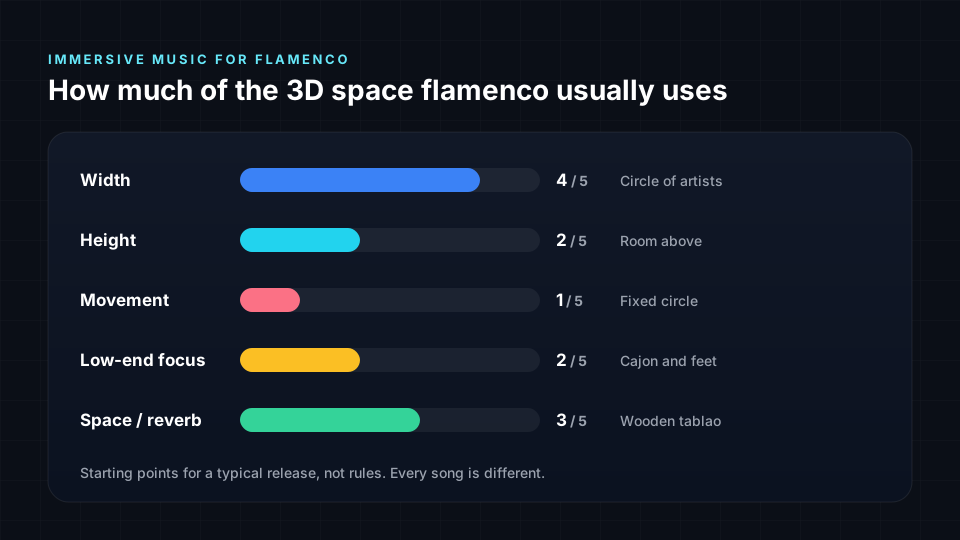
Flamenco scores high on width because the circle of musicians and audience is part of the music. Movement stays at the minimum. Every performer has a fixed place, and the energy comes from the rhythm, not from sounds flying around.
Tips for an immersive flamenco mix
- Keep the compás easy to feel. Palmas and cajón must stay tight and clear, especially in fast palos like bulerías.
- Do not hide the footwork. Zapateado is percussion. Give it its own place in front instead of burying it under the guitar.
- Let the jaleo breathe. Shouts of "olé" sound natural from behind, but keep them lower than the singer.
- Avoid big reverbs. A tablao is small and wooden. A short, warm room is more convincing.
- Keep everyone still. Fixed positions make the recording feel like a real performance.
How to make immersive flamenco from stereo
Spatial9 can create spatial audio from a stereo track in a few steps:
- Upload your stereo master or your stems.
- Spatial9's AI separates and places each part, from the cante and guitar to the palmas.
- Preview it in binaural on headphones.
- Export Eclipsa Audio, ADM, binaural or Ambisonics.
- Publish a video. Create a YouTube-ready video with your immersive audio and publish it directly.
For related guides, read spatial audio for fado and spatial audio for Latin pop. Every guide is listed in spatial audio and immersive music by genre.
Frequently asked questions
Can I make a flamenco mix in Dolby Atmos or Eclipsa Audio?
Yes. The placements in this guide work for both. Spatial9 exports ADM, the standard file used by Dolby Atmos studios, as well as Eclipsa Audio for YouTube, so one immersive flamenco mix covers both. You may also hear this called a 3D flamenco mix or flamenco in spatial audio.
Where should the palmas go in an immersive flamenco mix?
On both sides of the listener at ear level. Splitting them makes the interlocking clap patterns clear.
Should the dancer's footwork be in the mix?
Yes, if it was recorded. Zapateado is a percussion part. Place it in front, slightly low, as if it comes from the stage floor.
Does spatial audio work for flamenco fusion and nuevo flamenco?
Yes. Add bass, keys or strings around the core trio, but keep the cante and guitar in front.
Can I convert a classic flamenco recording to spatial audio?
Yes. Spatial9 uses AI to separate a stereo master into voice, guitar and percussion and exports an immersive mix as Eclipsa Audio, ADM, binaural or Ambisonics.
Does immersive flamenco work on normal headphones?
Yes. The mix is rendered binaurally, so the circle of palmas surrounds you on any regular headphones.
Dolby and Dolby Atmos are trademarks of Dolby Laboratories. Spatial9 is not affiliated with or endorsed by Dolby Laboratories.
Sources
- UNESCO (2010). Flamenco. Representative List of the Intangible Cultural Heritage of Humanity.
- Blauert, J. (1997). Spatial Hearing: The Psychophysics of Human Sound Localization, revised edition. MIT Press. Low-frequency, elevation, distance and motion cues.
- Mills, A. W. (1958). On the minimum audible angle. Journal of the Acoustical Society of America, 30(4), 237-246.
- Bronkhorst, A. W. (2000). The cocktail party phenomenon: a review of research on speech intelligibility in multiple-talker conditions. Acta Acustica united with Acustica, 86, 117-128.
- Litovsky, R. Y., Colburn, H. S., Yost, W. A. and Guzman, S. J. (1999). The precedence effect. Journal of the Acoustical Society of America, 106(4), 1633-1654.
- Barron, M. and Marshall, A. H. (1981). Spatial impression due to early lateral reflections in concert halls. Journal of Sound and Vibration, 77(2), 211-232.
- Bregman, A. S. (1990). Auditory Scene Analysis: The Perceptual Organization of Sound. MIT Press.
Sit your listeners inside the circle
Upload a flamenco track to Spatial9 and hear the palmas and jaleo surround you in minutes. Then export it or publish it straight to YouTube.