Spatial Audio & Immersive Music for Fado: Complete Guide
Spatial9 Team · · Updated
Part of the series Spatial audio and immersive music by genre.
Fado is the urban song of Portugal, born in the old neighbourhoods of Lisbon and Coimbra and listed by UNESCO as Intangible Cultural Heritage in 2011. It is built on very few elements: a singer, called the fadista, the twelve-string guitarra portuguesa, the classical guitar known as the viola, and often a bass guitar called the viola baixo. Everything depends on the voice and the feeling of saudade it carries. That makes fado a very different challenge from big, busy genres. This guide covers how spatial audio for fado works, where to place each element and how to make an immersive fado mix without losing its intimacy. For the basics, see what spatial audio is.
Why fado works so well in spatial audio
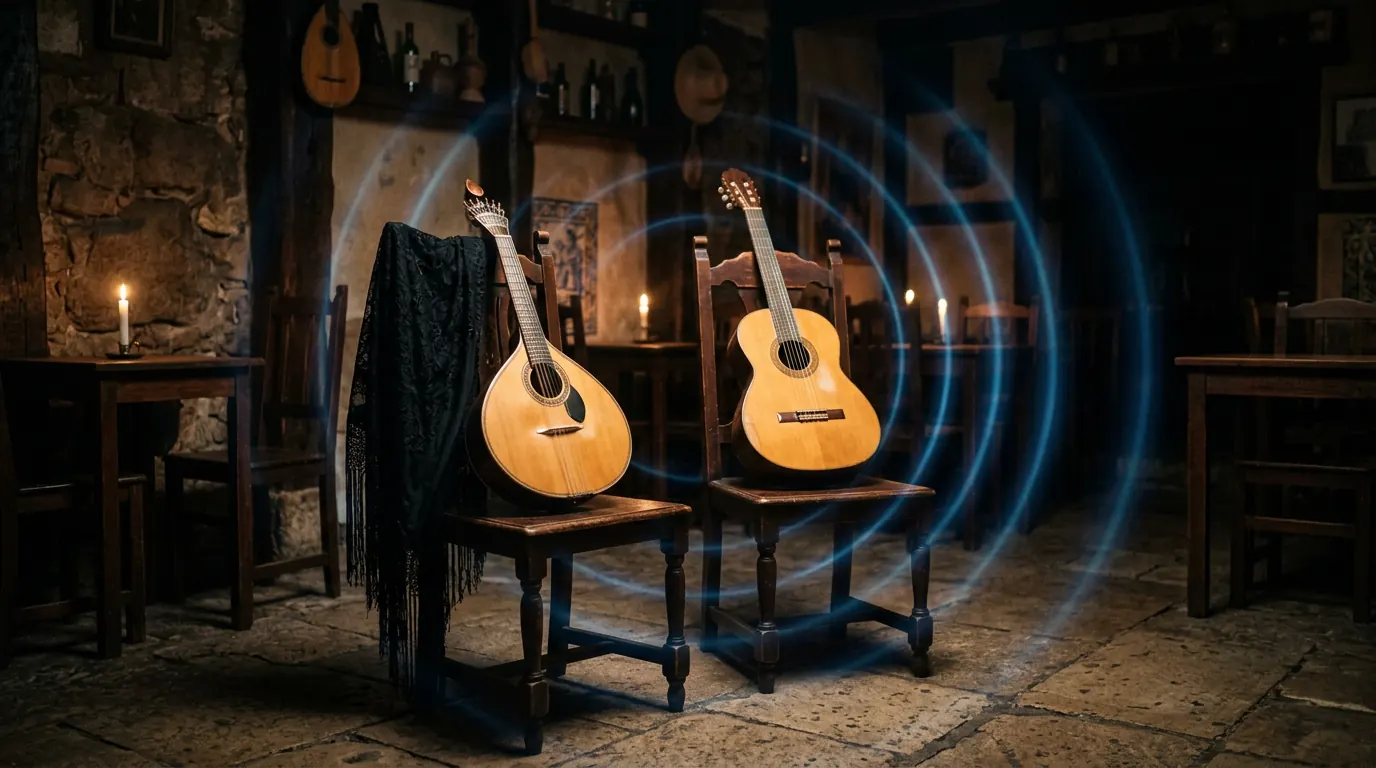
Fado is traditionally sung in small rooms where the audience falls silent and the lights go down. Listeners hear the voice almost at arm's length, the guitars answering beside it and the room itself holding the silence between phrases. Stereo can capture the voice and guitars, but it struggles with the feeling of being in that room.
Spatial audio can give back the space without making it bigger than it should be. The rule: bring the listener closer, not further away. Keep the trio tight and in front, and use the rest of the 3D field only for the room.
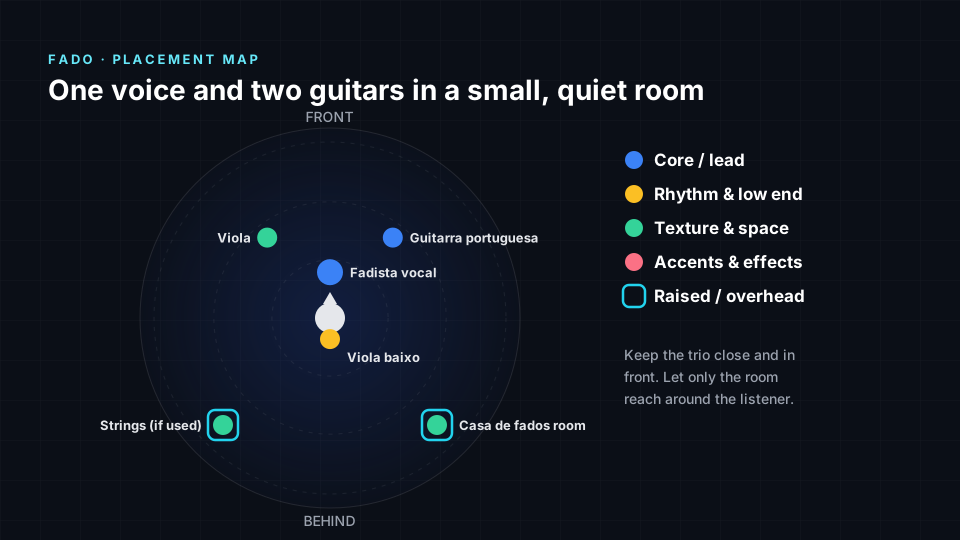
Immersive music for fado: what listeners hear
- A voice at arm's length. The fadista sits close and centred, with every breath and tremble audible.
- Two guitars in conversation. The guitarra portuguesa answers the singer from one side while the viola keeps time from the other.
- A quiet, warm floor. The viola baixo stays low and steady in the middle.
- The room as an instrument. Soft reflections behind and above recreate the hush of a casa de fados.
Where to place each element in a fado mix
| Element | Position | Height | Why it works |
|---|---|---|---|
| Fadista vocal | Front centre, close | Ear level | The voice carries the whole song |
| Guitarra portuguesa | Front right | Ear level | Answers the singer with melody |
| Viola | Front left | Ear level | Holds the rhythm and harmony |
| Viola baixo | Centre | Ear level | A gentle bass foundation |
| Strings (if used) | Behind left | Slightly raised | Modern arrangements add soft colour |
| Room ambience | Behind and above | Raised | The feeling of a small, silent room |
The psychoacoustics behind fado placement
Every position in the table above follows how the ear and brain locate sound. Here is the reason behind the main choices for fado.
- Vocal close and in front. Our sense of direction is sharpest straight ahead, where the ear can tell apart sources only a degree or two apart. Putting the fadista there gives the most important sound the most precise, stable image.
- Guitars on either side of the voice. Location is one of the cues the brain uses to decide which sounds belong together. A small separation lets the guitarra's melodic replies stay distinct from the voice instead of blurring into it, while still sounding like one trio.
- Room behind and above, kept soft. The brain judges direction mainly from the sound that arrives first and treats later reflections as part of the space. Researchers call this the precedence effect. Gentle room sound from behind adds atmosphere without pulling the voice away from the front.
- Viola baixo centred. Low frequencies give the brain very little usable direction, so the bass guitar sits naturally in the middle and simply supports the trio.
The immersion profile for fado
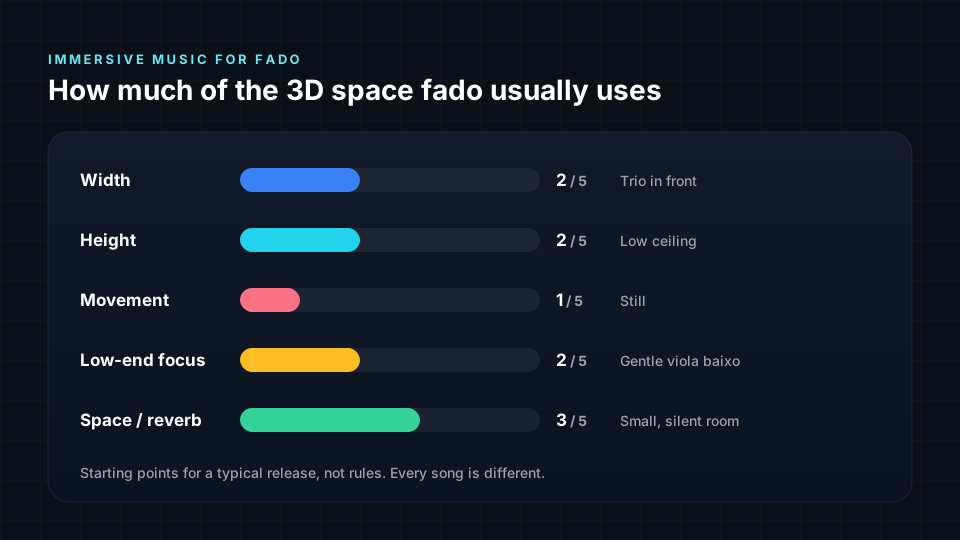
Fado scores low on width, height and movement on purpose. Its power is closeness. The only dimension that rises is space, because the room is part of the experience.
Tips for an immersive fado mix
- Do not push the singer back. Distance kills emotion in fado. Keep the voice close and dry enough to feel personal.
- Keep the trio together. The guitars should stay within the front half of the field, like players seated beside the singer.
- Use the room, not effects. A natural, small-room ambience works far better than long artificial reverbs.
- Never move anything. Fado is still. Movement would break the spell.
- Respect the silence. Let the room decay naturally between phrases rather than filling every gap.
How to make immersive fado from stereo
Spatial9 can create spatial audio from a stereo track in a few steps:
- Upload your stereo master or your stems.
- Spatial9's AI separates and places each part, keeping the voice close and the guitars beside it.
- Preview it in binaural on headphones.
- Export Eclipsa Audio, ADM, binaural or Ambisonics.
- Publish a video. Create a YouTube-ready video with your immersive audio and publish it directly.
For related guides, read spatial audio for flamenco and spatial audio for singer-songwriters. Every guide is listed in spatial audio and immersive music by genre.
Frequently asked questions
Can I make a fado mix in Dolby Atmos or Eclipsa Audio?
Yes. The placements in this guide work for both. Spatial9 exports ADM, the standard file used by Dolby Atmos studios, as well as Eclipsa Audio for YouTube, so one immersive fado mix covers both. You may also hear this called a 3D fado mix or fado in spatial audio.
Is spatial audio good for such a quiet genre?
Yes, as long as it is used to bring the listener closer. Immersive fado is about intimacy and room sound, not about filling every direction.
Where should the guitarra portuguesa go?
Just to the front right of the singer, at ear level. It should feel like the player is seated next to her.
Should I add reverb to make fado sound bigger?
Usually no. A short, natural room is more faithful to a casa de fados than a large hall.
Can I convert a classic fado recording to spatial audio?
Yes. Spatial9 uses AI to separate a stereo master into voice, guitars and bass, then exports an immersive mix as Eclipsa Audio, ADM, binaural or Ambisonics.
Does immersive fado work on normal headphones?
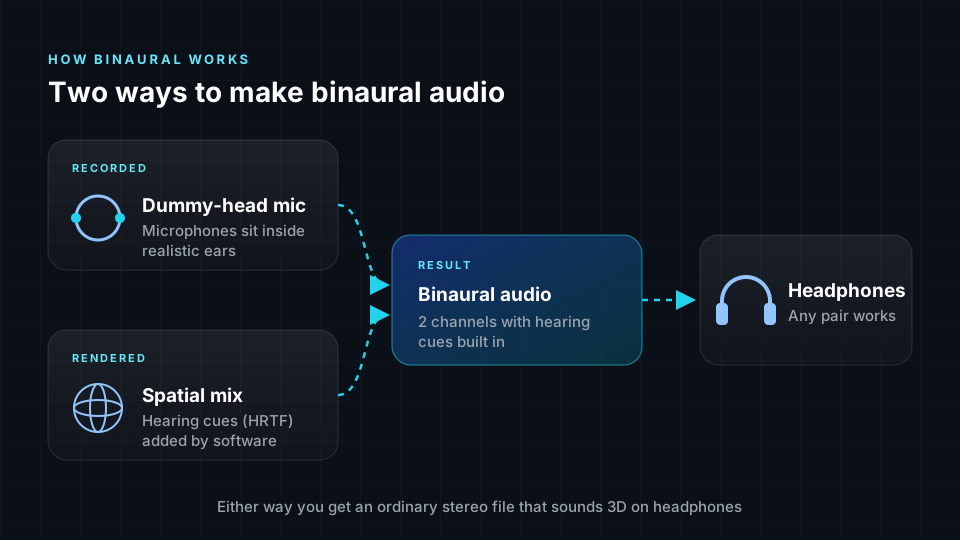
Yes. The mix is rendered binaurally, so the singer sounds in front of you on any regular headphones.
Dolby and Dolby Atmos are trademarks of Dolby Laboratories. Spatial9 is not affiliated with or endorsed by Dolby Laboratories.
Sources
- UNESCO (2011). Fado, urban popular song of Portugal. Representative List of the Intangible Cultural Heritage of Humanity.
- Blauert, J. (1997). Spatial Hearing: The Psychophysics of Human Sound Localization, revised edition. MIT Press. Low-frequency, elevation, distance and motion cues.
- Mills, A. W. (1958). On the minimum audible angle. Journal of the Acoustical Society of America, 30(4), 237-246.
- Litovsky, R. Y., Colburn, H. S., Yost, W. A. and Guzman, S. J. (1999). The precedence effect. Journal of the Acoustical Society of America, 106(4), 1633-1654.
- Bregman, A. S. (1990). Auditory Scene Analysis: The Perceptual Organization of Sound. MIT Press.
- Barron, M. and Marshall, A. H. (1981). Spatial impression due to early lateral reflections in concert halls. Journal of Sound and Vibration, 77(2), 211-232.
Bring your listeners to the table nearest the singer
Upload a fado track to Spatial9 and hear the voice and guitars close around you in minutes. Then export it or publish it straight to YouTube.