Spatial Audio & Immersive Music for Dangdut: Classic Dangdut, Dangdut Koplo & Dangdut Remix
Spatial9 Team · · 12 min read
Part of the series Spatial audio and immersive music by genre.
Key takeaways
- In an immersive dangdut mix the singer sits at the front centre, the kendang and bass hold the middle and the suling, mandolin and guitar answer from both sides.
- Because the brain separates sounds into streams by direction as well as pitch, a process called auditory stream segregation, moving the bright fills away from the voice keeps every vocal ornament clear.
- Keep the voice, drum and bass fixed and let fills, tambourine, crowd calls and remix effects bring the motion, inside a short, dry stage room that keeps the kendang tight.
- The dangdut immersion profile scores width 4, height 2, movement 3, low-end focus 4 and space 2 out of 5.
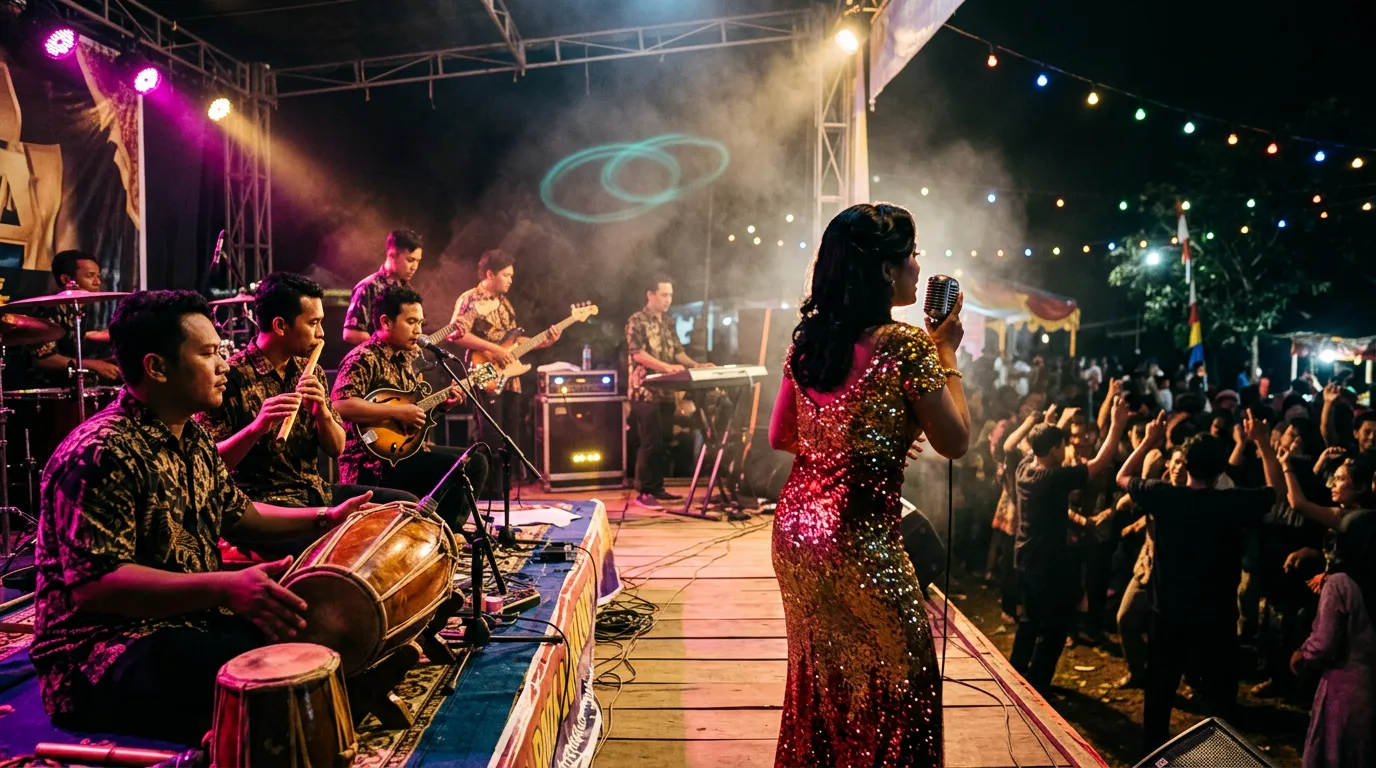
Dangdut is the most popular music of Indonesia, and it is loved across Malaysia, Brunei and the wider Malay world. Its roots lie in the orkes Melayu, the Malay orchestras that grew from bangsawan theatre and spread to Medan, Jakarta and Surabaya from the 1930s. In the 1950s and 1960s these bands took in a strong influence from Hindi film songs, along with Arabic melodies and local Malay, Minangkabau and Javanese styles. The singer Ellya Khadam was one of the first stars of this sound, with songs such as Boneka dari India. In the early 1970s Rhoma Irama, later called the King of Dangdut, formed his band Soneta and added electric guitars, rock drums and big stage shows. Elvy Sukaesih, often called the Queen of Dangdut, became his most famous duet partner. The name copies the sound of the gendang or kendang, a pair of hand drums whose low and high strokes go "dang" and "dut". Alongside the drums, a classic band uses the suling bamboo flute, the mandolin, electric guitar, bass, keyboards and a tambourine. By the mid 1970s dangdut filled most of the Indonesian record market. From the 1990s faster regional styles such as dangdut koplo grew up in East Java, and club remixes took the music onto the dance floor. Dangdut suits spatial audio because it is a dance music built on call and answer between a voice, a drum and a few bright melody instruments. This guide covers how spatial audio for dangdut works, where to place each element and how to make an immersive dangdut mix. For the basics, see what spatial audio is.
Why dangdut works in spatial audio
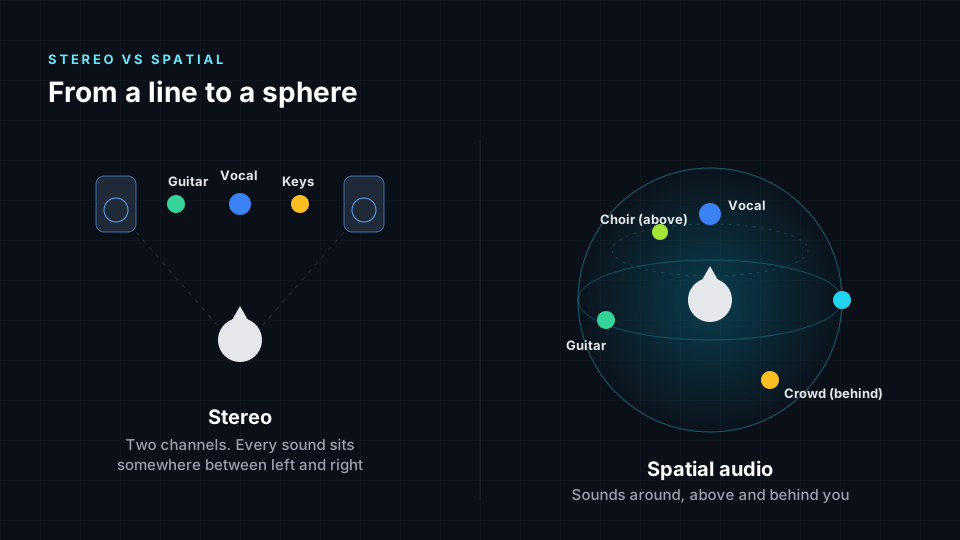
Dangdut is built on a clear set of roles. The kendang plays the famous dang and dut pattern, a deep open stroke and a high slap that drive the dance. The bass guitar follows the drum closely. The singer carries a long, ornamented melody with bends and trills. Between the vocal lines the suling, the mandolin or the electric guitar play short answering phrases, and keyboards and strings fill the gaps. In stereo all of these share the same narrow space, so the bright mandolin and suling often sit on top of the voice and the kendang loses its punch. In an immersive mix the voice and the drum hold the centre, the melody instruments answer from the sides and the band feels like it is playing around you.
The rule: the voice and the kendang in the middle, the answers on the sides. Keep the singer, kendang and bass centred and close, spread the suling, mandolin and guitar wide, and set the band inside a fairly dry stage room so the groove stays tight.
Immersive music for dangdut: what listeners hear
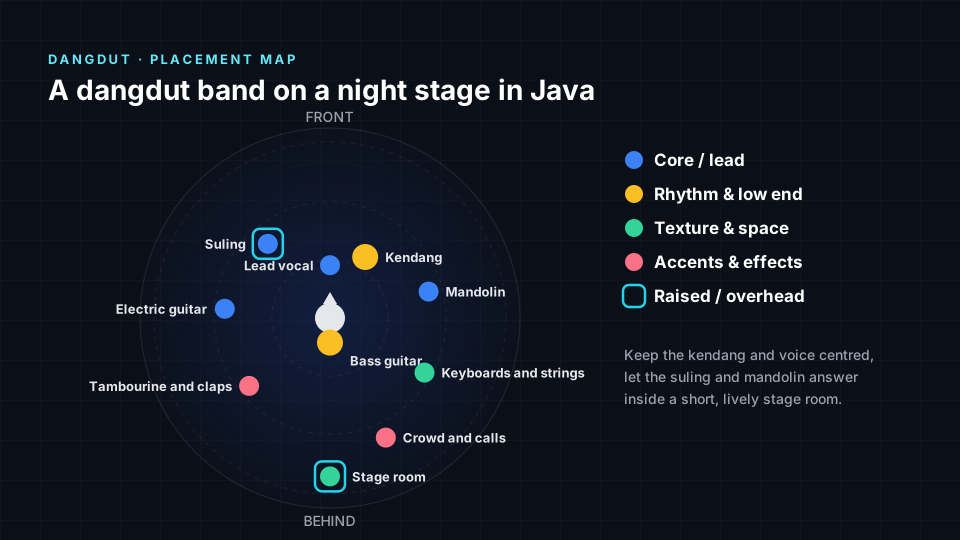
- A drum you can feel up close. The kendang sits just right of centre and near, so the deep dang and the sharp dut land with full weight instead of hiding behind the band.
- A voice with room to bend. The singer stays at the front centre with clear space around the voice, so every ornament, slide and trill is easy to follow.
- Answers from both sides. The suling replies from the front left and the mandolin from the right, so each fill feels like a new voice joining the song.
- A dance floor that moves. Short fills, tambourine accents and crowd calls shift around the listener, giving the steady beat a sense of motion without losing the centre.
Where to place each element in a dangdut mix
| Element | Position | Height | Why it works |
|---|---|---|---|
| Lead vocal | Front centre | Ear level | The ornamented melody that leads every song |
| Bass guitar | Centre | Low | Locks with the kendang and carries the low end |
| Kendang | Front right, close | Ear level | The dang and dut strokes that drive the dance |
| Suling | Front left | Slightly raised | Bamboo flute answers between vocal lines |
| Mandolin | Right | Ear level | Bright tremolo fills that answer the singer |
| Electric guitar | Left | Ear level | Riffs and solos that balance the mandolin |
| Keyboards and strings | Behind right | Ear level | Pads and string lines that fill the gaps |
| Tambourine and claps | Behind left | Ear level | Accents that lift the off beats |
| Crowd and calls | Behind right, far | Ear level | Shouts and backing calls from the dance floor |
| Stage room | Behind | Raised | A short, lively room around the band |
The psychoacoustics behind dangdut placement
Every position in the table above follows how the ear and brain locate sound. Here is the reason behind the main choices for dangdut.
- Bass stays centred. The ear finds almost no direction in frequencies below roughly 80 to 100 Hz, so the bass guitar and the deep dang stroke gain nothing from being spread. Keeping them centred holds the dance steady (Blauert).
- Suling and mandolin apart from the voice. The brain groups sounds into streams by pitch, timing and direction. This is auditory stream segregation (Bregman). Moving the flute and mandolin away from the singer lets the ear follow the vocal ornaments and the answering fills at the same time.
- Fills that sound like separate players. The ear is most precise at the front, where it can tell apart sources only a degree or two apart. This is the minimum audible angle (Mills). Setting the suling, kendang and mandolin at clearly different front angles makes each answer easy to place.
- A clear voice in a busy band. Listeners understand one voice among many sounds far better when the sources come from different directions. This is the cocktail party effect (Bronkhorst). Spreading the band around a centred singer keeps the lyrics clear even in the busiest koplo chorus.
The immersion profile for dangdut
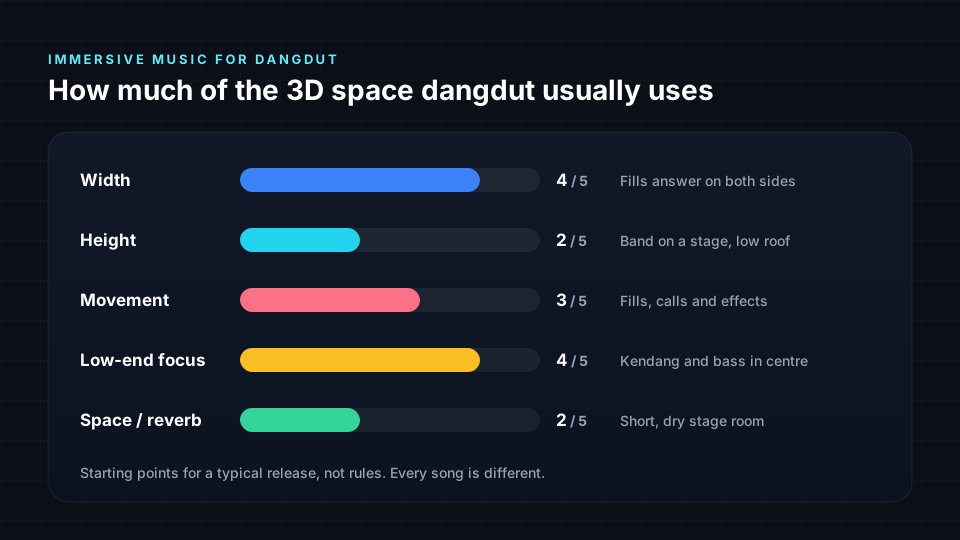
Width scores 4 because the suling, mandolin, guitar and keyboards answer the singer from both sides of a wide stage. Low-end focus also scores 4: the bass guitar and the deep dang of the kendang carry the dance, and they work best centred and solid. Movement is 3, since the players stay in place but short fills, tambourine accents, crowd calls and remix effects move around the listener. Height is 2, because dangdut is a band on a stage, with only the suling and the top of the room rising a little above ear level. Space is 2, as the music sounds best in a fairly dry, close room that keeps the drum strokes tight and the fast koplo patterns clear.
Tips for an immersive dangdut mix
- Lock the kendang and bass. Keep the bass centred and the kendang just right of centre and close, so the dang and dut strokes and the bass line hit as one groove.
- Give the voice the centre. Keep the lead vocal at the front, a little in front of the band, and clear other melody parts away from it during each verse.
- Split the answers. Put the suling and mandolin on opposite sides, so each fill between vocal lines comes from its own place.
- Move the small things. Let tambourine hits, crowd calls and remix effects drift a little around the listener, while the voice, drum and bass stay still.
- Keep the room short. A short, lively reverb suits dangdut. Long tails blur the kendang and the fast koplo patterns, so keep the low end of the reverb especially tight.
Dangdut styles: Classic dangdut, dangdut koplo and dangdut remix
The core placement holds for every style here: the voice, kendang and bass at the centre, the answers spread around them. What changes is the tempo, the amount of electronic sound and how much the small parts move.
Classic Dangdut
Classic dangdut is the sound that took shape from the orkes Melayu in the 1960s and 1970s. Ellya Khadam brought Hindi film melodies into Malay songs, and Rhoma Irama and Soneta added electric guitars, rock drums and songs about faith, love and daily life, with Elvy Sukaesih among the best loved singers of the era. The band is usually a singer, kendang, suling, mandolin, electric guitar, bass, keyboards and tambourine, often with strings on record. Keep the singer and bass in the centre with the kendang just right and close. Set the suling front left and a little raised, the mandolin right and the guitar left, with keyboards and strings behind. A short, warm studio room suits the older recordings.
Dangdut Koplo
Dangdut koplo grew up in East Java and along the north coast of Java, known as Pantura, from the mid 1990s. Local bands sped up the beat and gave the kendang player fast, busy patterns, often borrowing from Javanese music. The singer Inul Daratista, from East Java, made the style famous across Indonesia in the early 2000s, and VCDs of live koplo shows spread it from town to town. In the 2010s singers such as Via Vallen and Nella Kharisma brought koplo to huge online audiences. The kendang is the star, so keep it close and clear, just right of centre, with the bass locked underneath. Keep the singer at the front and the fills wide, and let crowd calls and shouts come from behind. The room should stay dry, because the fast drum patterns blur in a long reverb.
Dangdut Remix
Dangdut remix takes the voice and melody of dangdut onto the dance floor with house and electronic beats. In the 1990s Jakarta clubs played fast house mixes of dangdut songs, a sound later known as funkot, short for funky kota, and many producers still remake dangdut hits with electronic drums and synths. Keep the vocal centred and the kick and bass solid in the middle, with the kendang or its sampled strokes just off centre. Synth leads, suling samples and effects can sit wide or behind, and sweeps and risers can move around the listener. This is the style where movement can grow, but keep the beat itself fixed.
Related styles such as Malaysian irama Melayu and the regional dangdut of Sumatra, Sunda and Bali follow the same idea: keep the voice and drum in the centre, the melody answers on the sides and the dance floor around the listener.
How to make immersive dangdut from stereo
Spatial9 can create spatial audio from a stereo track in a few steps:
- Upload your stereo master or your stems.
- Spatial9's AI separates and places each part, pulling the voice, kendang, bass, suling and mandolin apart even from old cassette or live koplo recordings, and setting the answering fills around a centred voice and drum.
- Preview it in binaural on headphones.
- Export Eclipsa Audio, ADM, binaural or Ambisonics.
- Publish a video. Create a YouTube-ready video with your immersive audio and publish it directly.
For related guides, read spatial audio for Bollywood and spatial audio for luk thung and mor lam. Every guide is listed in spatial audio and immersive music by genre.
Frequently asked questions
Does this guide cover Classic Dangdut, Dangdut Koplo and Dangdut Remix?
Yes. Classic dangdut sets the singer, kendang and bass in the centre with suling, mandolin and guitar on the sides in a warm studio room. Dangdut koplo pushes the kendang forward with fast patterns in a dry room. Dangdut remix adds electronic beats and effects that can move around a centred voice.
Can I make a dangdut mix in Dolby Atmos or Eclipsa Audio?
Yes. The placements in this guide work for both. Spatial9 exports ADM, the standard file used by Dolby Atmos studios, as well as Eclipsa Audio for YouTube, so one immersive dangdut mix covers both. If you plan to release the Atmos version on Apple Music, build it from your original stems or multitracks, because Apple does not accept Atmos made from a finished stereo master. See where to publish spatial audio. You may also hear this called a 3D dangdut mix or dangdut in spatial audio.
Is spatial audio good for dangdut?
Yes. Dangdut is dance music built on a voice, a drum and short answering fills. Spatial audio gives the kendang and bass a solid centre, lets the suling and mandolin answer from their own places and puts the listener on the dance floor.
Where should the kendang go in an immersive dangdut mix?
Put the kendang just right of centre and close to the listener. Its deep dang stroke should stay solid and its high dut stroke clear, so keep it near the bass and away from the bright mandolin.
Should the mandolin and suling play at the same time as the voice?
They mostly play between vocal lines, so they can sit fairly loud on the sides. When they do play under the voice, keep them wide and a little lower so the singer stays clear.
How is dangdut different from Bollywood in spatial audio?
Dangdut grew partly from Hindi film songs, so the two share ornamented vocals and strong drums. Dangdut is a smaller dance band with a centred kendang and bass in a dry room. Bollywood soundtracks often use a large orchestra, chorus and wide strings, so they suit a bigger room and more height.
Can I convert an old dangdut cassette recording to spatial audio?
Yes. Spatial9 uses AI to separate the voice, kendang, bass and melody instruments from a stereo or mono recording. Separation is never perfect with worn tapes or crowded live recordings, so keep the layout simple and the room dry.
Dolby and Dolby Atmos are trademarks of Dolby Laboratories. Spatial9 is not affiliated with or endorsed by Dolby Laboratories.
Sources
- Blauert, J. (1997). Spatial Hearing: The Psychophysics of Human Sound Localization, revised edition. MIT Press. Low-frequency, elevation, distance and motion cues.
- Mills, A. W. (1958). On the minimum audible angle. Journal of the Acoustical Society of America, 30(4), 237-246.
- Hebrank, J. and Wright, D. (1974). Spectral cues used in the localization of sound sources on the median plane. Journal of the Acoustical Society of America, 56(6), 1829-1834.
- Bronkhorst, A. W. (2000). The cocktail party phenomenon: a review of research on speech intelligibility in multiple-talker conditions. Acta Acustica united with Acustica, 86, 117-128.
- Barron, M. and Marshall, A. H. (1981). Spatial impression due to early lateral reflections in concert halls. Journal of Sound and Vibration, 77(2), 211-232.
- Neuhoff, J. G. (1998). Perceptual bias for rising tones. Nature, 395, 123-124.
- Bregman, A. S. (1990). Auditory Scene Analysis: The Perceptual Organization of Sound. MIT Press.
- Weintraub, A. N. (2010). Dangdut Stories: A Social and Musical History of Indonesia's Most Popular Music. Oxford University Press.
Get on the dance floor
Upload a track to Spatial9 and hear the kendang and voice at the centre with the suling and mandolin answering all around you in minutes. Then export it or publish it straight to YouTube.