Spatial Audio & Immersive Music for Luk Thung & Mor Lam: Classic Luk Thung, Mor Lam Sing & Isan Pop
Spatial9 Team · · 12 min read
Part of the series Spatial audio and immersive music by genre.
Key takeaways
- In an immersive luk thung and mor lam mix the singer sits at the front centre, the bass and drums hold the middle and the khaen and phin answer from opposite front sides.
- Because listeners follow one voice among many far better when sounds come from different directions, known as the cocktail party effect, spreading the band keeps the fast mor lam verses clear.
- Keep the players still and let the swing and the call and answer between voice, khaen and phin create the motion, inside a moderate open-air fair stage.
- The luk thung and mor lam immersion profile scores width 4, height 2, movement 2, low-end focus 3 and space 3 out of 5.
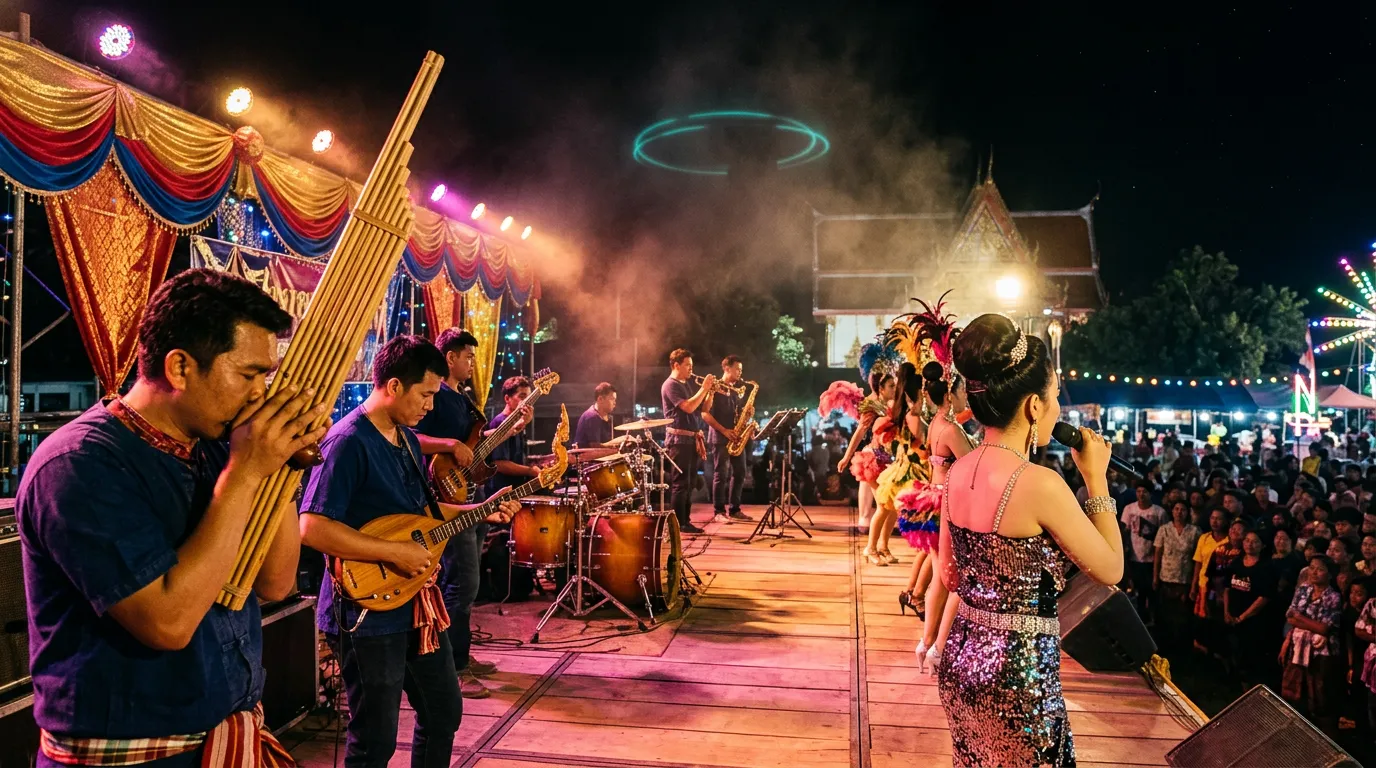
Luk thung and mor lam are the two great popular song traditions of rural Thailand. Luk thung, meaning "child of the fields", grew up in central Thailand after the Second World War from earlier Thai popular song. The 1938 song Mae Sao Chao Rai, written by Hem Vejakorn and sung by Kamron Samboonnanon, is often named as its first recording, and the term luk thung spread after a television show of that name began on Channel 4 in 1964. Suphan Buri became a centre of the music, home to stars such as Suraphon Sombatcharoen, the "king of luk thung", who died in 1968, and Pumpuang Duangjan, the "queen of luk thung", who died in 1992. Mor lam is older. It is the sung poetry of the Lao people, at home in Laos and in Isan, the Lao-speaking northeast of Thailand. A mor lam, an expert singer, performs long verses to the khaen, a bamboo mouth organ with a free-reed drone, often with the phin, a plucked lute. From the late 1970s workers moving from Isan to Bangkok carried mor lam with them, and singers such as Banyen Rakkaen brought it to television. The two styles then mixed, with electric guitars, bass, drum kit, keyboards and brass, and today many artists sing both. These styles suit spatial audio because they are big, wide stage shows built around one strong voice and a few signature instruments. This guide covers how spatial audio for luk thung and mor lam works, where to place each element and how to make an immersive luk thung and mor lam mix. For the basics, see what spatial audio is.
Why luk thung and mor lam works in spatial audio
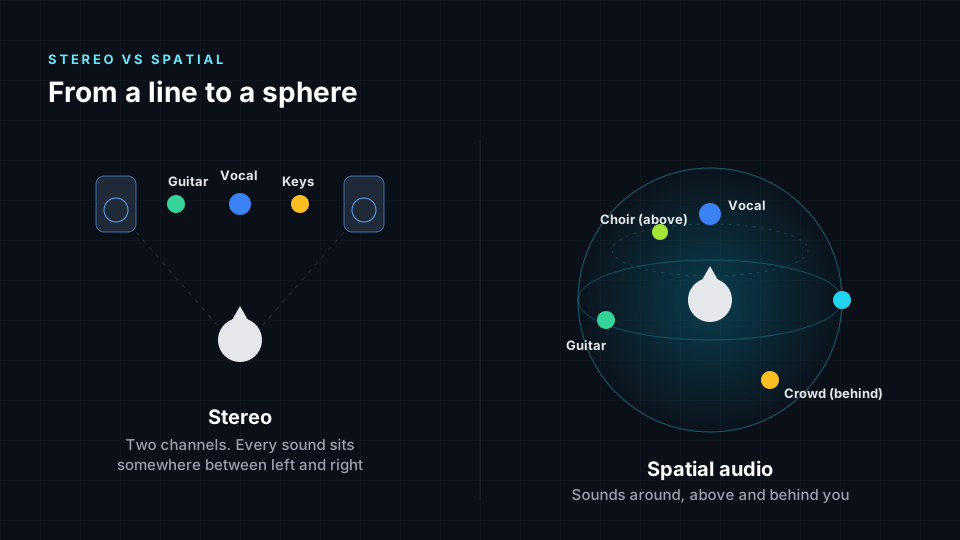
Both styles rest on a clear set of roles. The singer carries the story with a rich vibrato and long, curling ornaments, and in mor lam the lines can come in fast, rhythmic bursts of verse. The khaen holds a reedy drone with chords and runs on top. The phin plays short, looping riffs. Underneath, the bass and drum kit keep a steady, swinging beat, often with the small ching cymbals marking the pulse. Brass and keyboards add hooks between the verses. In stereo the khaen drone and the brass crowd the middle and cover the voice. In an immersive mix the voice holds the centre, the khaen and phin answer from opposite sides and the band spreads across a wide stage.
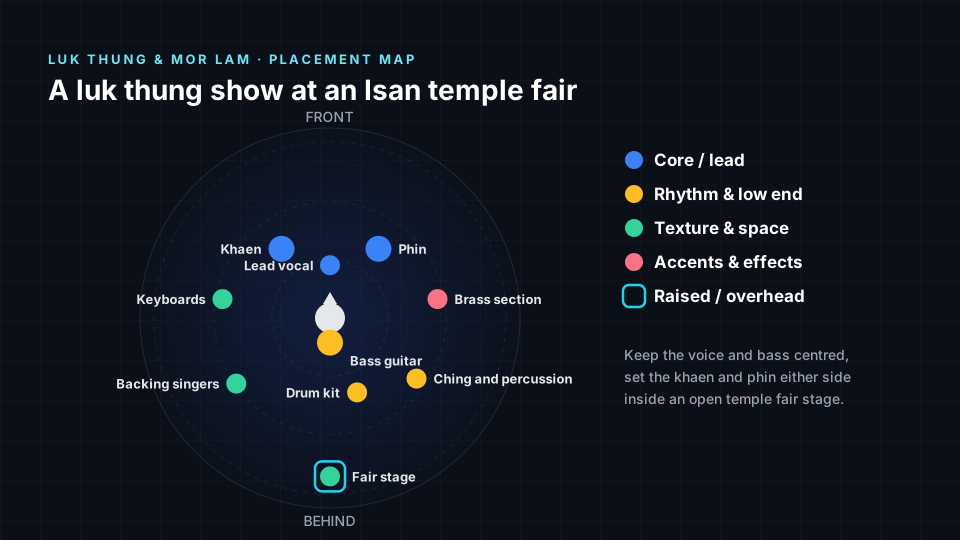
The rule: the voice in the middle, the khaen and phin on either side. Keep the singer, bass and drums centred, split the two signature instruments of Isan to the left and right, and set the band inside an open fair stage with a moderate, natural room.
Immersive music for luk thung and mor lam: what listeners hear
- A voice that tells the story. The singer stays close and centred, so every bend of the vibrato and every fast line of mor lam verse is clear.
- The sound of Isan on both sides. The khaen breathes its drone from the front left while the phin answers with bright riffs from the front right.
- A big stage band around you. Brass hooks, keyboards and backing singers spread across a wide arc, like the full show band at a temple fair.
- A steady, swinging beat. The bass and drums stay solid in the middle and the ching marks the pulse, so the music moves you without sounds having to travel.
Where to place each element in a luk thung and mor lam mix
| Element | Position | Height | Why it works |
|---|---|---|---|
| Lead vocal | Front centre | Ear level | The voice that carries the story and ornaments |
| Bass guitar | Centre | Low | A steady, centred low end under the swing |
| Khaen | Front left | Ear level | The reed drone and runs of Isan |
| Phin | Front right | Ear level | Looping lute riffs that answer the khaen |
| Brass section | Right | Ear level | Hooks and fanfares from the classic show band |
| Keyboards | Left | Ear level | Chords and lines that balance the brass |
| Ching and percussion | Behind right | Ear level | Small cymbals and hand percussion on the pulse |
| Backing singers | Behind left | Ear level | Answering voices and chorus lines |
| Drum kit | Behind centre | Ear level | A swinging beat just behind the singer |
| Fair stage | Behind | Raised | An open-air room around the whole show |
The psychoacoustics behind luk thung and mor lam placement
Every position in the table above follows how the ear and brain locate sound. Here is the reason behind the main choices for luk thung and mor lam.
- Bass stays centred. The ear finds almost no direction in frequencies below roughly 80 to 100 Hz, so the bass guitar and kick drum gain nothing from being spread. Keeping them centred holds the beat steady (Blauert).
- Khaen and voice in different places. The brain groups sounds into streams by pitch, timing and direction. This is auditory stream segregation (Bregman). Moving the constant khaen drone away from the singer lets the ear hear both, rather than one dense blend.
- Clear words in a busy band. Listeners follow one voice among many sounds far better when the sources come from different directions. This is the cocktail party effect (Bronkhorst). The fast verse of mor lam depends on every word being heard, so spreading the band around a centred voice keeps the lyrics clear.
- A wide open-air stage. Early reflections arriving from the sides make a sound feel wider and more enveloping. This is spatial impression from early lateral reflections (Barron and Marshall). A few side reflections give the feel of a fair stage without the long tail of a hall.
The immersion profile for luk thung and mor lam
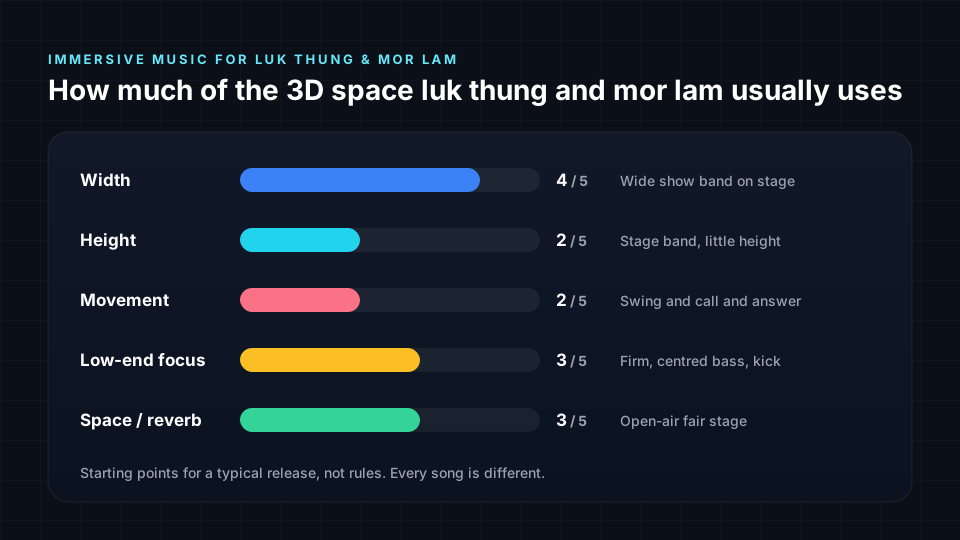
Width scores 4 because the khaen, phin, brass, keyboards and backing singers form a wide stage band around the singer. Height is 2, since this is a band on a stage, with only the top of the khaen and the open sky above the fair rising a little above ear level. Movement is 2: the players stay in place, and the motion comes from the swing of the beat and the call and answer between voice, khaen and phin. Low-end focus is 3, as the bass and drums give a firm, centred floor without the heavy weight of club music. Space scores 3 because the music lives at temple fairs, festivals and outdoor concerts, where a moderate natural room surrounds the band.
Tips for an immersive luk thung and mor lam mix
- Put the voice first. Keep the lead vocal centred and a little in front of the band, so the vibrato and fast verses always come through.
- Split the khaen and phin. Set them on opposite front sides, so the drone and the riffs answer each other instead of blending into one sound.
- Spread the show band. Place the brass on one side and the keyboards on the other, with backing singers behind, so the hooks fill the stage without covering the singer.
- Keep the band still. Let the swing, the ching and the call and answer carry the motion, and avoid moving sources around the listener.
- Use an open, moderate room. A short to medium reverb with clear side reflections suits a fair stage. Keep the low end of the reverb tight so the bass stays clean.
Luk thung and mor lam styles: Classic luk thung, mor lam sing and Isan pop
The core placement holds for every style here: the voice, bass and drums at the centre, the khaen, phin and band spread around them. What changes is the tempo, the size of the band and how much of the Isan sound comes through.
Classic Luk Thung
Classic luk thung is the sound of the 1950s to the 1980s, led by singers such as Suraphon Sombatcharoen and Pumpuang Duangjan. Songs tell stories of village life, migration to the city, love and hardship, sung with deep vibrato over a show band of brass, electric guitar, bass and drums, sometimes with Thai instruments and later with keyboards and electronic sounds. Live shows often feature hang khrueang dancers. Keep the singer and bass in the centre with the drum kit just behind. Set the brass to the right, guitar or keyboards to the left and backing singers behind. A moderate stage room suits the style, with a little more space for older recordings.
Mor Lam Sing
Mor lam sing is the fast, electric form of mor lam that grew up in Isan from the 1980s and 1990s. The word sing comes from the English "racing", a nod to its speed and energy. Performances are often medleys of mor lam and luk thung songs, with the electric phin, khaen, bass, drum kit and keyboards driving a quick beat, and with comic talk between the songs. Singers such as Jintara Poonlarp and Siriporn Ampaipong became famous across both mor lam and luk thung. Keep the singer centred and close, the khaen front left and the electric phin front right, with the bass and drums locked in the middle. The room should stay moderate, so the fast verses stay clear.
Isan Pop
Isan pop is the modern sound of the northeast, mixing luk thung, mor lam and Thai pop, often sung in the Isan language. From the 1990s singers such as Mike Piromporn sang about Isan workers in the city, and in the 2010s artists such as Takkatan Chollada and Lamyai Haithongkham reached huge audiences online. Production is cleaner, with programmed drums, synths and guitars, while the khaen and phin still mark the sound as Isan. Keep the vocal centred, the kick and bass solid in the middle and the khaen and phin on either side. Synths and pads can sit wider and a little behind, in a tighter modern room.
How to make immersive luk thung and mor lam from stereo
Spatial9 can create spatial audio from a stereo track in a few steps:
- Upload your stereo master or your stems.
- Spatial9's AI separates and places each part, pulling the voice, khaen, phin, brass and rhythm section apart even from old cassette or live fair recordings, and setting the khaen and phin on either side of a centred voice.
- Preview it in binaural on headphones.
- Export Eclipsa Audio, ADM, binaural or Ambisonics.
- Publish a video. Create a YouTube-ready video with your immersive audio and publish it directly.
For related guides, read spatial audio for dangdut and spatial audio for enka. Every guide is listed in spatial audio and immersive music by genre.
Frequently asked questions
Does this guide cover Classic Luk Thung, Mor Lam Sing and Isan Pop?
Yes. Classic luk thung sets the singer in the centre with a brass and guitar show band around the singer in a moderate stage room. Mor lam sing puts the khaen and electric phin on either side of a centred voice with a fast, locked rhythm section. Isan pop keeps the khaen and phin on the sides with cleaner modern production in a tighter room.
Can I make a luk thung and mor lam mix in Dolby Atmos or Eclipsa Audio?
Yes. The placements in this guide work for both. Spatial9 exports ADM, the standard file used by Dolby Atmos studios, as well as Eclipsa Audio for YouTube, so one immersive luk thung and mor lam mix covers both. If you plan to release the Atmos version on Apple Music, build it from your original stems or multitracks, because Apple does not accept Atmos made from a finished stereo master. See where to publish spatial audio. You may also hear this called a 3D luk thung mix or mor lam in spatial audio.
Is spatial audio good for luk thung and mor lam?
Yes. Both styles are built around one strong voice, two signature instruments and a wide show band. Spatial audio keeps the voice clear, lets the khaen and phin answer from their own sides and puts the listener in the field in front of the stage.
Where should the khaen go in an immersive mix?
Put the khaen front left, at ear level and a little closer than the band. Its drone is constant, so keeping it away from the centre stops it covering the voice while it still frames the song.
What is the difference between luk thung and mor lam?
Luk thung grew up in central Thailand as a song style with a show band and story lyrics. Mor lam is the older sung poetry of the Lao people of Laos and Isan, played on the khaen and phin. Today they often share the same singers, bands and stages.
How is luk thung and mor lam different from dangdut in spatial audio?
Both are rural popular music played at night shows. Dangdut centres on the kendang drums and bass in a dry room, with the suling and mandolin on the sides. Luk thung and mor lam centre on the voice with the khaen and phin on the sides, a lighter low end and a more open fair stage.
Can I convert an old luk thung cassette recording to spatial audio?
Yes. Spatial9 uses AI to separate the voice, khaen, phin, brass and rhythm section from a stereo or mono recording. Separation is never perfect with worn tapes or noisy live shows, so keep the layout simple and the room moderate.
Dolby and Dolby Atmos are trademarks of Dolby Laboratories. Spatial9 is not affiliated with or endorsed by Dolby Laboratories.
Sources
- Blauert, J. (1997). Spatial Hearing: The Psychophysics of Human Sound Localization, revised edition. MIT Press. Low-frequency, elevation, distance and motion cues.
- Mills, A. W. (1958). On the minimum audible angle. Journal of the Acoustical Society of America, 30(4), 237-246.
- Hebrank, J. and Wright, D. (1974). Spectral cues used in the localization of sound sources on the median plane. Journal of the Acoustical Society of America, 56(6), 1829-1834.
- Bronkhorst, A. W. (2000). The cocktail party phenomenon: a review of research on speech intelligibility in multiple-talker conditions. Acta Acustica united with Acustica, 86, 117-128.
- Barron, M. and Marshall, A. H. (1981). Spatial impression due to early lateral reflections in concert halls. Journal of Sound and Vibration, 77(2), 211-232.
- Neuhoff, J. G. (1998). Perceptual bias for rising tones. Nature, 395, 123-124.
- Bregman, A. S. (1990). Auditory Scene Analysis: The Perceptual Organization of Sound. MIT Press.
- Mitchell, J. L. (2015). Luk Thung: The Culture and Politics of Thailand's Most Popular Music. Silkworm Books.
- Miller, T. E. (1985). Traditional Music of the Lao: Kaen Playing and Mawlum Singing in Northeast Thailand. Greenwood Press.
Join the temple fair
Upload a track to Spatial9 and hear the singer at the centre with the khaen and phin answering on either side in minutes. Then export it or publish it straight to YouTube.