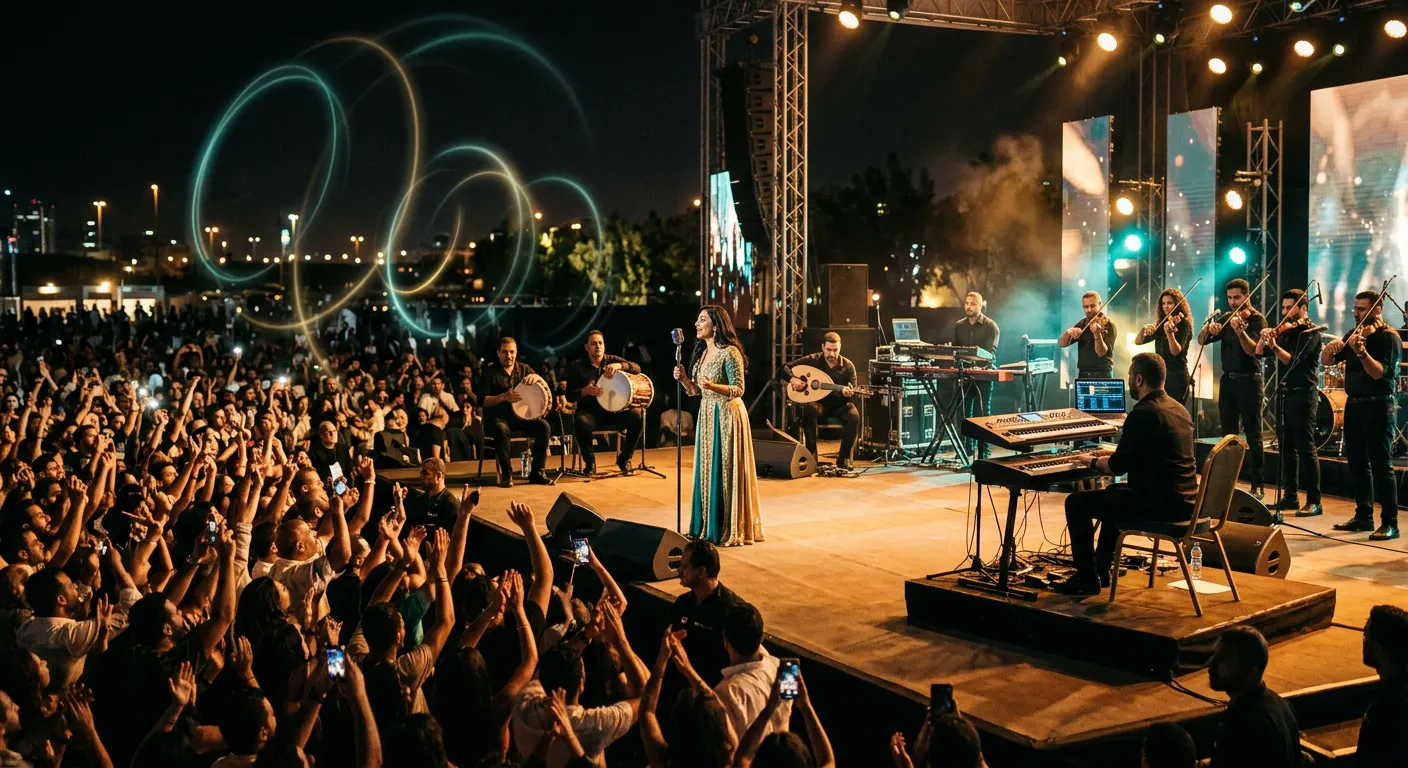
Spatial Audio & Immersive Music for Arabic Pop: Khaleeji, Egyptian Pop & Levantine Pop
Spatial9 Team · · 11 min read
Part of the series Spatial audio and immersive music by genre.
Key takeaways
- In a spatial Arabic pop mix the lead vocal sits front centre with the kick and bass under it, the darbuka front left, the string section front right, the oud and qanun to the left and the handclaps to the right, with pads and echoes raised behind.
- Because the brain can follow one voice among many when it comes from its own direction, an effect known as the cocktail party effect, the lead singer stays clear even when backing vocals, strings and percussion fill the arrangement.
- Arabic pop is polished dance and love song music, so the space should be a bright, controlled studio room with a few raised layers rather than a huge hall.
- The Arabic pop immersion profile scores width 4, height 3, movement 2, low-end focus 3 and space 3 out of 5.
Arabic pop grew out of the film songs and radio hits of mid 20th century Cairo, when singers such as Abdel Halim Hafez and composers such as Mohammed Abdel Wahab brought shorter songs, Western harmony and electric instruments into music built on the maqam. In the 1970s Ahmed Adaweyah made the street style of shaabi a best seller on cassette, and in the 1980s the Libyan born producer Hamid El Shaeri helped create al jeel, the generation music of Cairo, mixing drum machines, synthesisers and electric bass with the darbuka and Egyptian rhythms. Amr Diab became its biggest star, and his 1996 hit Habibi Ya Nour El Ein carried the sound across the region. In Lebanon, after the civil war ended in 1990, a new pop industry grew around Beirut, with glossy video clips and singers such as Ragheb Alama, Nancy Ajram and Elissa. In the Gulf, a tradition of sung poetry with oud, mirwas drums and handclaps, shaped by singers such as Mohammed Abdu of Saudi Arabia and Abdullah Al Ruwaished of Kuwait, became the khaleeji pop sound. The Rotana label, founded in 1987, and the satellite channels of the 1990s linked these scenes into one market. The rhythms are Arabic dance cycles such as the maqsum, played on darbuka and riq under a modern beat, and many keyboards are tuned to play the maqam intervals. Arabic pop suits spatial audio because it layers a lead voice, a lush string section, live percussion and electronic sound in one dense arrangement. This guide covers how spatial audio for Arabic pop works, where to place each element and how to make an immersive Arabic pop mix. For the basics, see what spatial audio is.
Why Arabic pop works in spatial audio
Arabic pop stacks many layers at once. A string section plays the hook in unison, often bending into the maqam intervals, while the darbuka and riq drive a dance rhythm over a kick and electric bass. The oud or qanun answers the singer with short fills, a chorus repeats the refrain and handclaps lift the chorus. Synth pads, vocal delays and reverb throws fill the gaps. In stereo these parts fight for the same narrow space, and the strings and percussion often bury the details of the singer's ornaments. In an immersive mix the voice stays clear in front, the percussion and strings take opposite sides and the electronic layers float behind and above.
The rule: the voice and the beat in the centre, strings and percussion either side. Anchor the lead vocal and the low end in the middle, set the darbuka and the string section across the front, and use the rear and the height for chorus, pads and echoes.
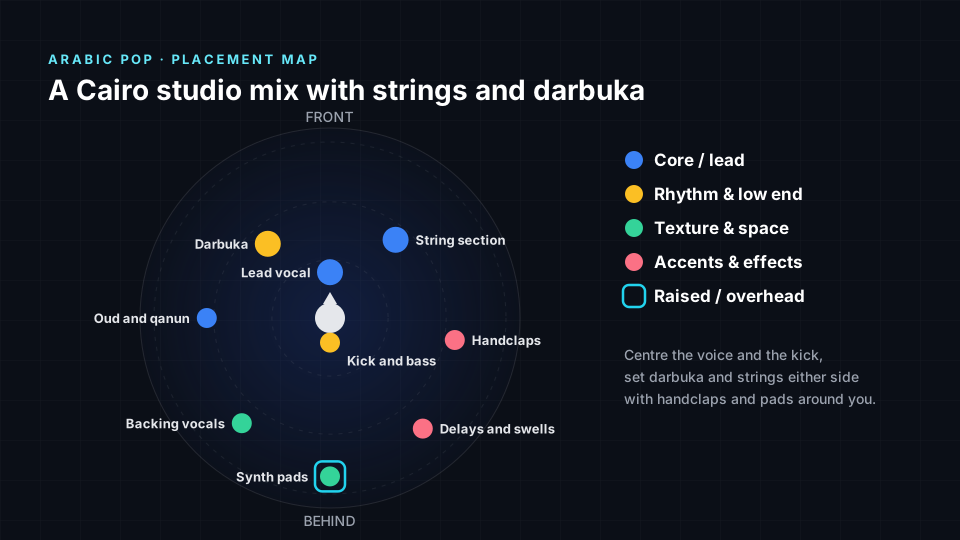
Immersive music for Arabic pop: what listeners hear
- A voice that cuts through. The lead singer sits clearly in front, so every melisma and quarter tone stays audible above the arrangement.
- Strings that sweep across the front. The unison string hook spreads on the right and swells toward the listener at the end of each phrase.
- A rhythm you can dance to. The darbuka cracks from the front left over a solid kick and bass in the centre, with handclaps answering from the right.
- A glossy space around you. Backing vocals, pads and delays wrap the listener from behind and above, like a modern pop production.
Where to place each element in an Arabic pop mix
| Element | Position | Height | Why it works |
|---|---|---|---|
| Lead vocal | Front centre | Ear level | The singer and the melodic ornaments |
| Kick and bass | Centre | Ear level | The low end that drives the dance |
| Darbuka | Front left | Ear level | The crisp doum and tek of the rhythm |
| String section | Front right | Ear level | Unison hooks and sweeping fills |
| Oud and qanun | Left | Ear level | Short answers to the vocal line |
| Handclaps | Right | Ear level | The lift of a khaleeji or dabke chorus |
| Backing vocals | Behind left | Ear level | The chorus repeating the refrain |
| Delays and swells | Behind right | Ear level | Echo throws and risers between lines |
| Synth pads | Behind | Raised | A wide modern layer above the band |
The psychoacoustics behind Arabic pop placement
Every position in the table above follows how the ear and brain locate sound. Here is the reason behind the main choices for Arabic pop.
- The lead vocal stays clear in a crowded mix. Listeners can follow one voice among many when it comes from a different direction from the others. This is the cocktail party effect (Bronkhorst). Keeping the backing vocals behind and the strings to the side lets the lead stay intelligible without simply turning it up.
- Darbuka and strings on opposite sides. The brain groups sounds into streams by pitch, timbre, timing and direction. This is auditory stream segregation (Bregman). Separating the percussion from the string hook lets the ear follow both the rhythm and the melody at once.
- Pads that seem to float above. The outer ear shapes the high frequencies of a sound depending on its height, and the brain reads these spectral changes as elevation. These are spectral cues for the median plane (Hebrank and Wright). Bright, airy pads placed high are easy to hear as coming from above.
- String swells that come toward you. Listeners hear sounds that grow louder as moving closer, and they overestimate how near a rising sound has come. This is the looming effect for rising intensity (Neuhoff). The crescendos at the end of a string phrase already carry this sense of approach, so they need only a small movement.
The immersion profile for Arabic pop
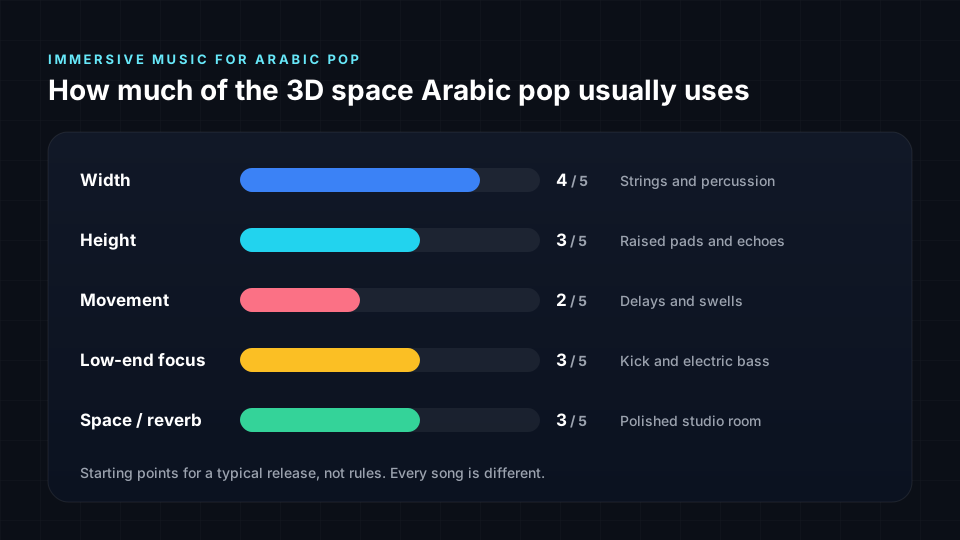
Width scores 4 because the arrangement spreads strings, percussion, oud and chorus across the front and sides. Height is 3, since pads, echoes and some chorus parts can be raised above the band. Low-end focus is 3: modern Arabic pop has a firm kick and electric bass, but the darbuka's deep doum and the strings share the weight, and it rarely uses heavy sub bass. Space is 3, coming from a polished studio reverb rather than a real hall. Movement is 2, limited to string swells, delay throws and risers while the main parts stay fixed.
Tips for an immersive Arabic pop mix
- Lock the voice and the beat in the centre. Keep the lead vocal in front and the kick and bass directly under it, so the song never loses its focus.
- Split the darbuka and the strings. Set them on opposite front sides so the rhythm and the hook both stay clear.
- Protect the quarter tones. Avoid heavy pitch correction or chorus on the vocal and strings, which can flatten the maqam intervals.
- Use the back and the height for gloss. Put backing vocals, pads and echo throws behind and above, leaving the front for the band.
- Keep the room bright and controlled. A short, polished reverb suits pop, with longer tails only on the vocal and string swells.
Arabic pop styles: khaleeji, Egyptian pop and Levantine pop
The core placement holds for every style here: the voice and the beat in the centre, strings and percussion either side. What changes is the rhythm, the traditional instruments in the band and how much electronic sound the style uses.
Khaleeji
Khaleeji is the pop music of the Arabian Gulf, from Saudi Arabia, Kuwait, the United Arab Emirates, Bahrain, Qatar and Oman. It grows from a tradition of sung poetry accompanied by the oud, the small mirwas drums and group handclaps, with a lilting rhythm in six that is easy to recognise. Modern khaleeji adds strings, keyboards and a programmed beat but keeps the clapping and the oud at its core. Place the singer front centre, the oud front left, the handclaps in a wide arc to the right and behind, and the mirwas and other drums close to the centre. A medium, warm room suits the style.
Egyptian Pop
Egyptian pop runs from the film songs of the 1950s and 1960s through the al jeel sound of the 1980s to the polished hits of today. Cairo producers combine large string sections, the darbuka and riq, accordion or keyboards and the maqsum rhythm with drum machines, guitars and synths, and the style often borrows from Latin and Western pop. Seat the strings front right, the darbuka front left, the kick and bass in the centre and the oud, qanun or accordion to the left. Spread the chorus behind and keep the reverb polished and moderate.
Levantine Pop
Levantine pop comes from Lebanon, Syria, Jordan and Palestine, with Beirut as its main centre since the 1990s. It draws on the dabke, the line dance of the region, with its driving rhythms, the tabl drum and the mijwiz double reed pipe, as well as on the song tradition of Fairuz and the Rahbani brothers. Modern productions mix these sounds with electronic beats, guitars and big string arrangements. Place the singer front centre, the tabl and darbuka front left, the mijwiz or nay front right and the strings in a wider arc. Handclaps and chorus shouts can sit behind for a wedding party feel.
Related styles such as Algerian rai, Egyptian mahraganat and Moroccan chaabi follow the same idea: keep the voice and the beat in the centre, set the traditional instruments across the front and let the electronic layers fill the space behind.
How to make immersive Arabic pop from stereo
Spatial9 can create spatial audio from a stereo track in a few steps:
- Upload your stereo master or your stems.
- Spatial9's AI separates and places each part, pulling the lead vocal, strings, darbuka, oud, bass and synths apart, and setting the voice and beat in the centre with the strings and percussion either side.
- Preview it in binaural on headphones.
- Export Eclipsa Audio, ADM, binaural or Ambisonics.
- Publish a video. Create a YouTube-ready video with your immersive audio and publish it directly.
For related guides, read spatial audio for Arabic classical music and spatial audio for mahraganat. Every guide is listed in spatial audio and immersive music by genre.
Frequently asked questions
Does this guide cover khaleeji, Egyptian pop and Levantine pop?
Yes. Khaleeji centres the voice and the oud with handclaps in a wide arc around the listener. Egyptian pop sets a large string section against the darbuka over a modern beat. Levantine pop adds dabke drums, the mijwiz and chorus shouts for a party feel.
Can I make an Arabic pop mix in Dolby Atmos or Eclipsa Audio?
Yes. The placements in this guide work for both. Spatial9 exports ADM, the standard file used by Dolby Atmos studios, as well as Eclipsa Audio for YouTube, so one immersive Arabic pop mix covers both. If you plan to release the Atmos version on Apple Music, build it from your original stems or multitracks, because Apple does not accept Atmos made from a finished stereo master. See where to publish spatial audio. You may also hear this called a 3D Arabic pop mix or Arabic music in spatial audio.
Is spatial audio good for Arabic pop?
Yes. Arabic pop arrangements are dense, with strings, percussion, chorus and synths all playing at once. Spatial audio gives each layer its own direction, so the singer stays clear and the rhythm and strings both shine.
Where should the string section go in an immersive Arabic pop mix?
Put the strings front right at ear level, opposite the darbuka. For a big Egyptian arrangement you can widen them into an arc from the front to the right side, and let the final swell of a phrase move slightly toward the listener.
How do I keep the quarter tones clear in spatial audio?
Keep the voice, strings, oud and qanun at stable positions and avoid heavy modulation, chorus or pitch correction on them. Spatial placement itself does not change pitch, so a clean layout lets the maqam intervals come through exactly as recorded.
How is Arabic pop different from Arabic classical music in spatial audio?
Arabic classical music is a small acoustic ensemble around a singer in a resonant hall, so it suits a close, still arc with a large reverb. Arabic pop adds a beat, electric bass, synths and big string arrangements, so it suits a wider layout with a firmer centre, raised pads and a tighter studio space.
Should the handclaps be spread around the listener?
In khaleeji and dabke songs, yes. Group clapping comes from many people, so a wide arc to the right and behind feels like a circle of dancers. Keep the claps a little lower than the voice so they lift the chorus without crowding it.
Dolby and Dolby Atmos are trademarks of Dolby Laboratories. Spatial9 is not affiliated with or endorsed by Dolby Laboratories.
Sources
- Blauert, J. (1997). Spatial Hearing: The Psychophysics of Human Sound Localization, revised edition. MIT Press. Low-frequency, elevation, distance and motion cues.
- Bronkhorst, A. W. (2000). The cocktail party phenomenon: a review of research on speech intelligibility in multiple-talker conditions. Acta Acustica united with Acustica, 86, 117-128.
- Bregman, A. S. (1990). Auditory Scene Analysis: The Perceptual Organization of Sound. MIT Press.
- Hebrank, J. and Wright, D. (1974). Spectral cues used in the localization of sound sources on the median plane. Journal of the Acoustical Society of America, 56(6), 1829-1834.
- Neuhoff, J. G. (1998). Perceptual bias for rising tones. Nature, 395, 123-124.
- Racy, A. J. (2003). Making Music in the Arab World: The Culture and Artistry of Tarab. Cambridge University Press.
- Frishkopf, M. (ed.) (2010). Music and Media in the Arab World. American University in Cairo Press.
Turn up the chorus
Upload a track to Spatial9 and hear the voice, strings and darbuka spread around you in minutes. Then export it or publish it straight to YouTube.