Spatial Audio & Immersive Music for Indie: Complete Guide
Spatial9 Team · · Updated
Part of the series Spatial audio and immersive music by genre.
Indie covers a lot of ground: indie rock, indie pop, bedroom pop, dream pop and folk-influenced songs. What they share is character and closeness. A big, cinematic 3D mix can work against that. The best immersive indie mixes use space to make the song feel more personal, not more produced. This guide covers how spatial audio for indie works, where to place each part and how to make immersive indie music from a stereo track. For the basics, see what spatial audio is.
Why indie music works in spatial audio
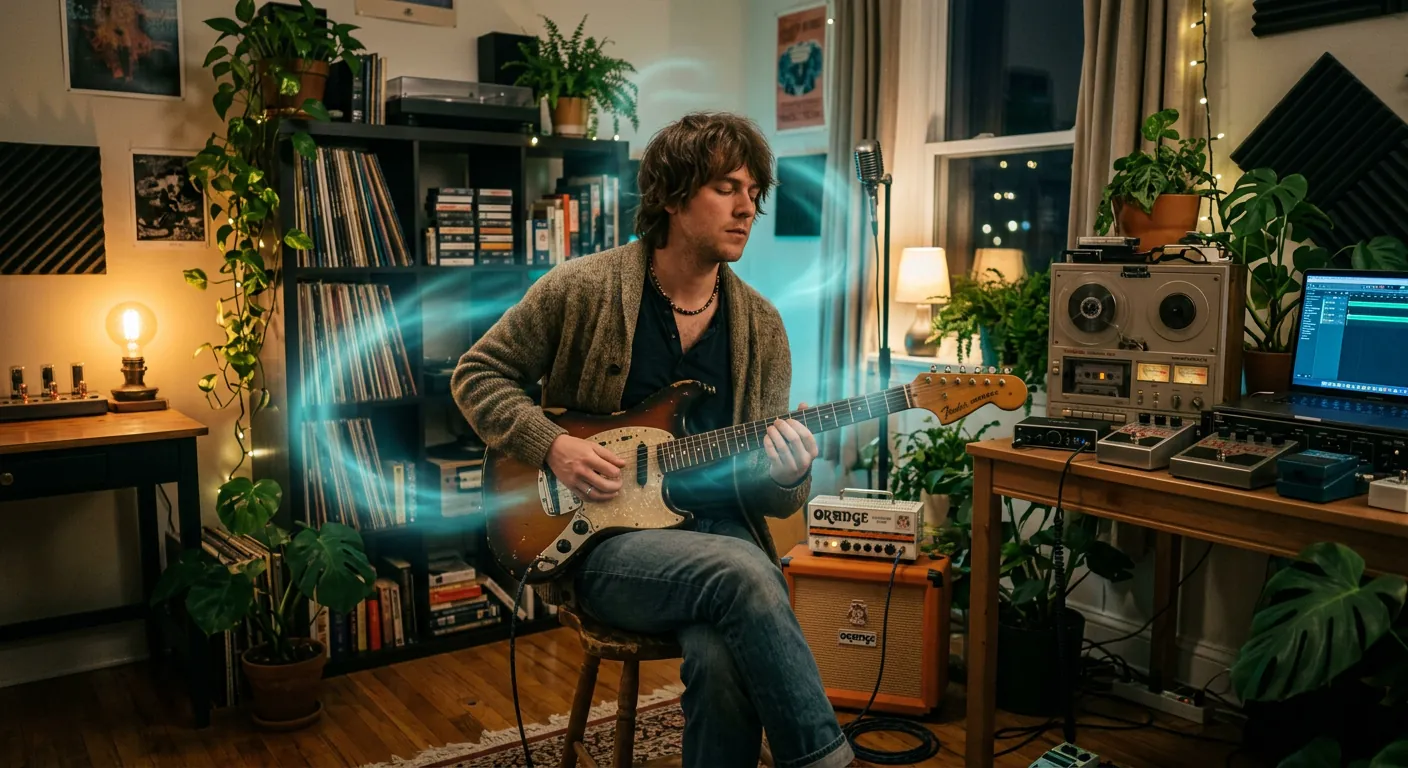
Indie songs often have a strong sense of place: a bedroom, a garage, a small venue. Spatial audio can recreate that place. Natural room sound, a guitar slightly to one side and harmonies just behind the listener all make the recording feel real.
The rule is to keep it close. The vocal should feel like it is a few feet away, and the texture around it should be subtle.
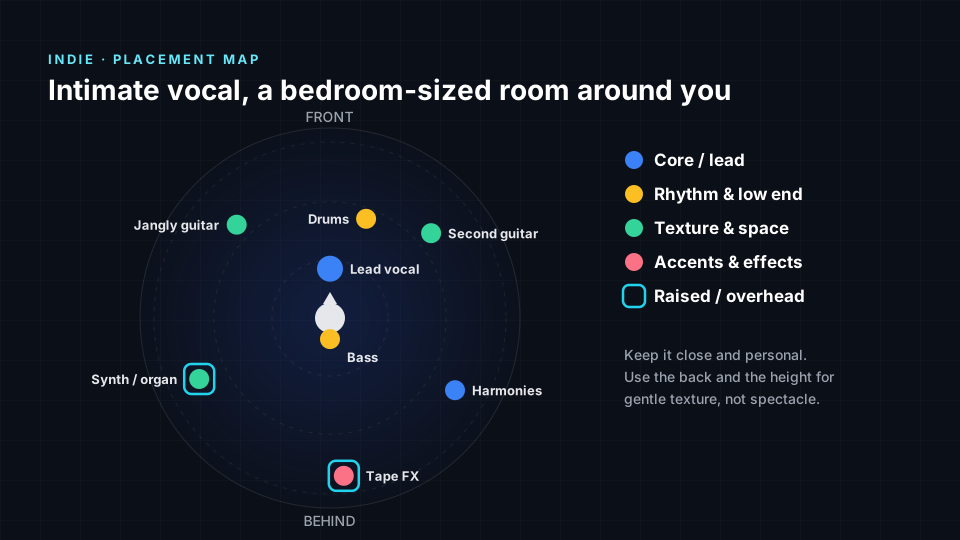
Immersive music for indie: what listeners hear
- A voice that feels close. The lead vocal is near and dry enough to feel personal.
- A band in a real room. Guitars, bass and drums sit where a small band would stand.
- Texture you notice later. Organs, synths and tape effects drift behind and above, rewarding repeat listens.
- Space without spectacle. Nothing flies past your head; the space supports the song.
Where to place each element in an indie mix
| Element | Position | Height | Why it works |
|---|---|---|---|
| Lead vocal | Front centre, close | Ear level | Intimate and personal |
| Main guitar | Front left | Ear level | Natural band layout |
| Second guitar | Front right | Ear level | Balances the first guitar |
| Drums | Front centre | Ear level | Small-room feel |
| Bass | Centre | Ear level | Warm foundation |
| Synth or organ | Behind left | Raised | Gentle texture |
| Harmonies | Behind right | Ear level | Feels like a friend singing along |
| Tape effects, noise | Behind | Raised | Character and nostalgia |
The psychoacoustics behind indie placement
Every position in the table above follows how the ear and brain locate sound. Here is the reason behind the main choices for indie.
- Lead vocal close and in front. Hearing is sharpest straight ahead: listeners can tell apart sources about 1 degree apart in front of them, but need far larger gaps at the sides (Mills, 1958). Indie vocals are personal, so they get the sharpest spot.
- Main guitar left, second guitar right. Sounds that overlap in pitch mask each other less when they arrive from different directions, so spreading them keeps every part clear without extra EQ. Two guitars in the same range stay distinct when they are split.
- Harmonies behind right. The brain groups sounds that come from the same place into one stream and splits sounds from different places into separate ones (Bregman, 1990). A separate position keeps harmonies supporting rather than blending into the lead.
- Tape effects and noise behind. Behind you, the ear relies on subtle treble cues, so placement is vaguer. That vagueness becomes an advantage for ambience and textures that should feel all around. Texture behind the band adds character without stealing focus.
The immersion profile for indie
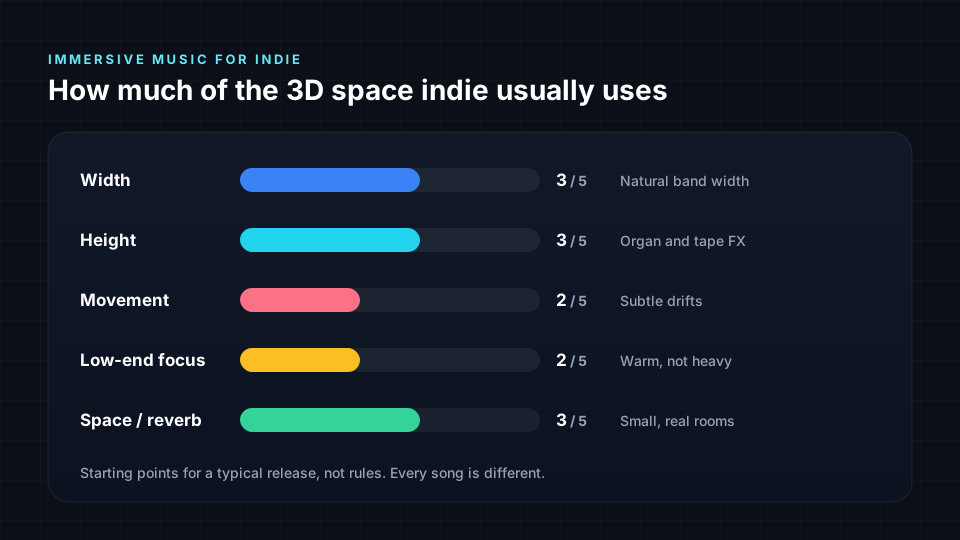
Indie scores in the middle on most dimensions. That is the point: the mix should feel natural. Rooms should sound small and real, and the low end warm rather than heavy.
Tips for an immersive indie mix
- Start with the room. Decide what kind of space the song lives in before placing anything.
- Keep the vocal close and steady. Never move the lead vocal around the listener.
- Use the back for texture. Pads, organ and tape noise behind the listener add depth without distraction.
- Use subtle drifts, not big moves. A slow movement on a synth can be beautiful; a fast sweep can feel out of place.
- Keep the character. Do not polish away the imperfections that make the song indie.
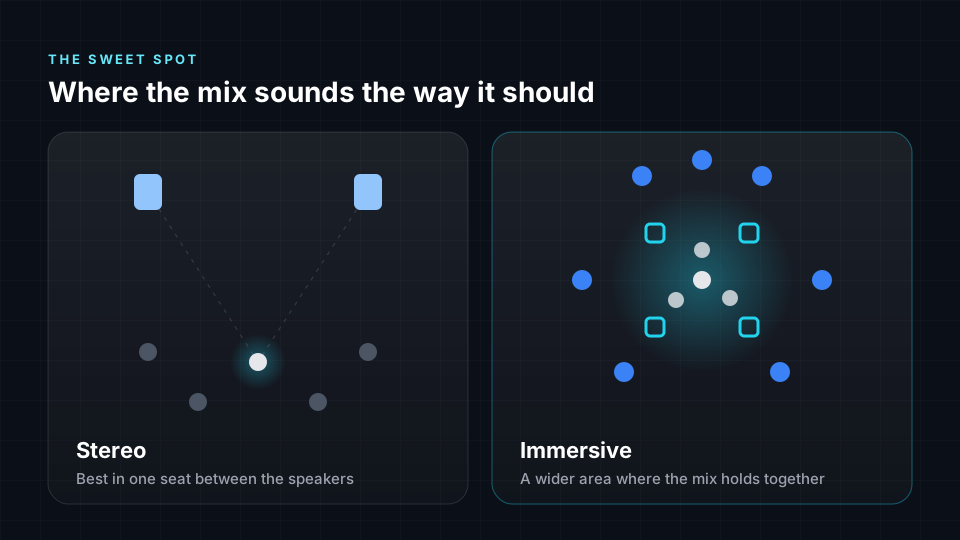
How to make immersive indie music from stereo
Spatial9 can create spatial audio from a stereo track in a few steps:
- Upload your stereo master or your stems.
- Spatial9's AI separates and places each part, keeping the intimate feel of the original.
- Preview it in binaural on headphones.
- Export Eclipsa Audio, ADM, binaural or Ambisonics.
- Publish a video. Create a YouTube-ready video with your immersive audio and publish it directly.
For related guides, read spatial audio for rock and spatial audio for lo-fi. Every guide is listed in spatial audio and immersive music by genre.
Frequently asked questions
Can I make an indie mix in Dolby Atmos or Eclipsa Audio?
Yes. The placements in this guide work for both. Spatial9 exports ADM, the standard file used by Dolby Atmos studios, as well as Eclipsa Audio for YouTube, so one immersive indie mix covers both. You may also hear this called a 3D indie mix or indie in spatial audio. It is the same idea.
Is spatial audio good for indie music?
Yes, when it is used subtly. Spatial audio can make indie songs feel more intimate by recreating the room and placing texture gently around the listener.
Will spatial audio make my indie song sound too polished?
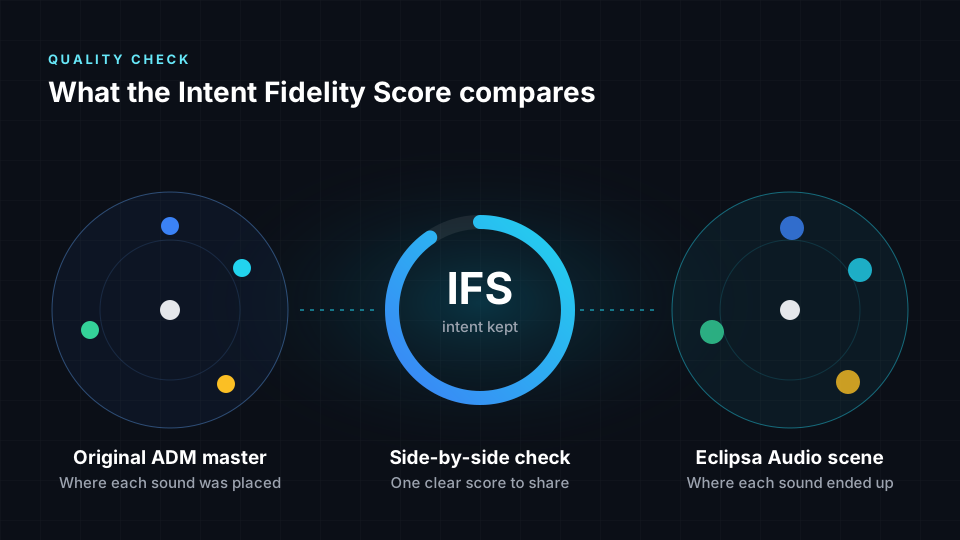
It does not have to. Keep the vocal close, the band natural and the effects subtle. Spatial9 also checks each conversion against the original so the character stays intact.
Where should harmonies go in an immersive indie mix?
Slightly behind or to the side of the listener works well. It feels like someone singing along in the same room.
Can I convert a finished indie track to spatial audio?
Yes. Spatial9 uses AI to generate an immersive mix from a stereo master and exports it as Eclipsa Audio, ADM, binaural or Ambisonics.
Does immersive indie music work on regular headphones?
Yes. Devices render the mix binaurally, so the effect works on any regular headphones.
Dolby and Dolby Atmos are trademarks of Dolby Laboratories. Spatial9 is not affiliated with or endorsed by Dolby Laboratories.
Sources
- Blauert, J. (1997). Spatial Hearing: The Psychophysics of Human Sound Localization, revised edition. MIT Press. Low-frequency, elevation, distance and motion cues.
- Mills, A. W. (1958). On the minimum audible angle. Journal of the Acoustical Society of America, 30(4), 237-246.
- Hebrank, J. and Wright, D. (1974). Spectral cues used in the localization of sound sources on the median plane. Journal of the Acoustical Society of America, 56(6), 1829-1834.
- Bronkhorst, A. W. (2000). The cocktail party phenomenon: a review of research on speech intelligibility in multiple-talker conditions. Acta Acustica united with Acustica, 86, 117-128.
- Litovsky, R. Y., Colburn, H. S., Yost, W. A. and Guzman, S. J. (1999). The precedence effect. Journal of the Acoustical Society of America, 106(4), 1633-1654.
- Barron, M. and Marshall, A. H. (1981). Spatial impression due to early lateral reflections in concert halls. Journal of Sound and Vibration, 77(2), 211-232.
- Neuhoff, J. G. (1998). Perceptual bias for rising tones. Nature, 395, 123-124.
- Bregman, A. S. (1990). Auditory Scene Analysis: The Perceptual Organization of Sound. MIT Press.
Bring listeners into the room
Upload a track to Spatial9 and hear your song in 3D in minutes. Then export it or publish it straight to YouTube.