Spatial Audio & Immersive Music for Alternative: Complete Guide
Spatial9 Team · · Updated
Part of the series Spatial audio and immersive music by genre.
Alternative music covers a lot of ground, from guitar-driven alt-rock to moody electronic textures. What ties it together is a love of atmosphere and surprise. In stereo, layered textures often blur into each other. In spatial audio, each layer can have its own place, and a reverse effect or vocal double can appear from somewhere unexpected. This guide covers how spatial audio for alternative works, where to place each element and how to make immersive alternative music from a stereo track. For the basics, see what spatial audio is.
Why alternative music benefits from spatial audio
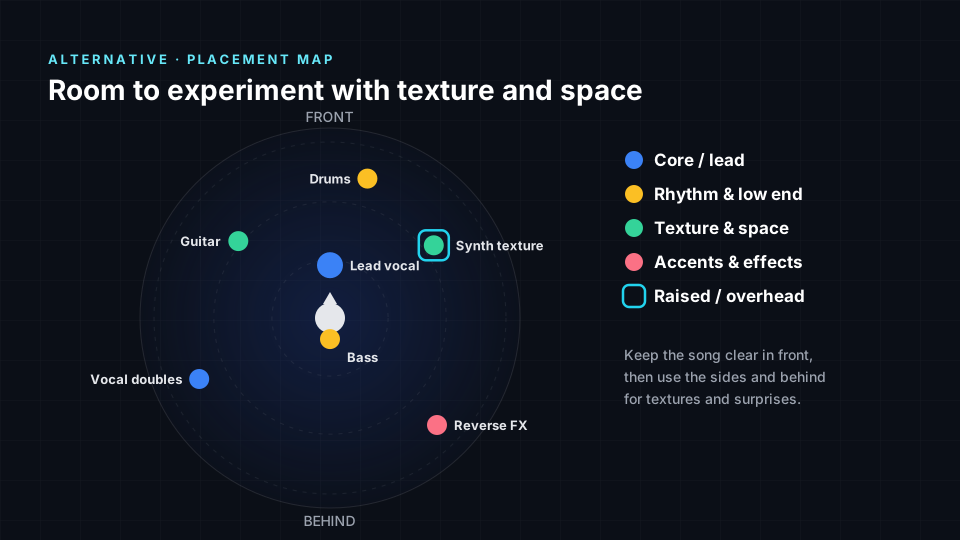
Alternative artists love to experiment, and spatial audio is a new creative tool. It opens up a whole sphere of space for textures, doubles and effects, while the core of the song stays solid in front.
The rule: keep the song clear, then experiment around it.
Immersive music for alternative: what listeners hear
- A song you can follow. Vocal, drums and bass stay anchored in front.
- Guitars and synths with room. Textures spread around without crowding the vocal.
- Voices from unexpected places. Doubles and harmonies appear from the sides and behind.
- Creative surprises. Reverse effects and swells move around the listener.
Where to place each element in an alternative mix
| Element | Position | Height | Why it works |
|---|---|---|---|
| Lead vocal | Front centre | Ear level | The anchor |
| Drums | Front | Ear level | Steady drive |
| Bass | Centre | Ear level | Foundation |
| Guitar | Front left | Ear level | Main texture |
| Synth texture | Right side | Raised | Atmosphere |
| Vocal doubles | Behind left | Ear level | Depth and mood |
| Reverse effects | Moving, behind | Varies | Surprise moments |
The psychoacoustics behind alternative placement
Every position in the table above follows how the ear and brain locate sound. Here is the reason behind the main choices for alternative.
- Lead vocal in front. The ear's directional resolution is finest in front of the face and much coarser to the sides and behind, so the part you must follow belongs in front. However experimental the arrangement, the vocal is the thread listeners hold on to.
- Guitar left, synth texture right. When two sounds share a frequency range, separating them in direction makes each one easier to hear. Researchers call this spatial release from masking, the same effect that lets you follow one voice at a busy party. Distorted guitars and synth textures crowd the same mids, and direction keeps both readable.
- Vocal doubles behind left. Location is one of the cues the brain uses to decide which sounds belong together. Shared positions blend, and separate positions stay distinct. Set apart from the lead, the doubles add depth without turning into a second singer.
- Reverse effects moving behind. The ear needs a larger angle to notice movement than to notice position, so slow, wide moves are followed easily while fast ones blur into a wash. Movement behind the band adds drama without pulling focus from the vocal.
The immersion profile for alternative
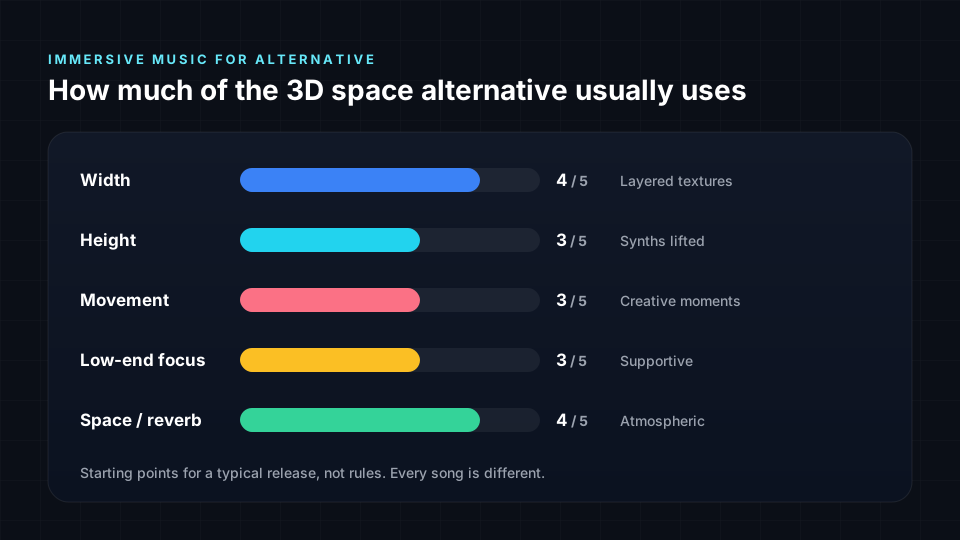
Alternative scores high on width and space and medium on movement. The style is flexible, so treat these as starting points and follow the song.
Tips for an immersive alternative mix
- Lock the core first. Place vocal, drums and bass before anything else.
- Give each texture a home. Layered guitars and synths each get their own direction.
- Use the back for mood. Doubles and reverbs behind the listener add depth.
- Move with purpose. Save movement for transitions and big moments.
- Check the emotion. If the 3D version distracts from the song, pull it back.
How to make immersive alternative music from stereo
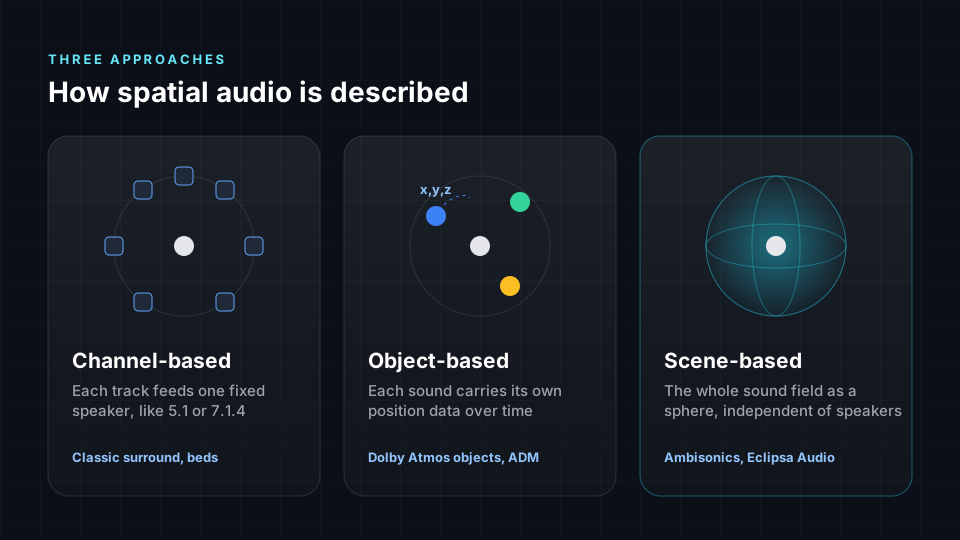
Spatial9 can create spatial audio from a stereo track in a few steps:
- Upload your stereo master or your stems.
- Spatial9's AI separates the layers and places each one in 3D.
- Preview it in binaural on headphones.
- Export Eclipsa Audio, ADM, binaural or Ambisonics.
- Publish a video. Create a YouTube-ready video with your immersive audio and publish it directly.
For related guides, read spatial audio for indie and spatial audio for rock. Every guide is listed in spatial audio and immersive music by genre.
Frequently asked questions
Can I make an alternative mix in Dolby Atmos or Eclipsa Audio?
Yes. The placements in this guide work for both. Spatial9 exports ADM, the standard file used by Dolby Atmos studios, as well as Eclipsa Audio for YouTube, so one immersive alternative mix covers both. You may also hear this called a 3D alternative mix or alternative in spatial audio. It is the same idea.
Is spatial audio good for alternative music?
Yes. Alternative music is full of layers and atmosphere, and spatial audio gives each one its own place.
How experimental can an immersive alternative mix be?
Very, as long as the vocal and rhythm stay clear in front. Use the rest of the sphere for creative ideas.
Should guitars be placed behind the listener?
Main guitars work best in front or to the sides. Ambient guitar layers can sit behind.
Can I release an immersive version alongside my stereo release?
Yes. Spatial9 creates an immersive version from your stereo master that you can release on streaming and YouTube.
Does immersive alternative music work on regular headphones?
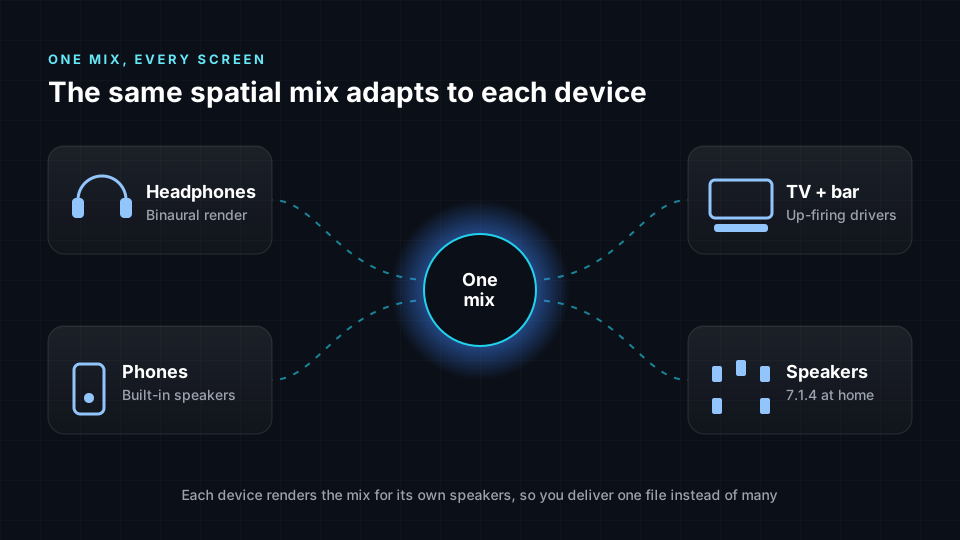
Yes. Devices render the mix binaurally, so the 3D effect works on any regular headphones.
Dolby and Dolby Atmos are trademarks of Dolby Laboratories. Spatial9 is not affiliated with or endorsed by Dolby Laboratories.
Sources
- Blauert, J. (1997). Spatial Hearing: The Psychophysics of Human Sound Localization, revised edition. MIT Press. Low-frequency, elevation, distance and motion cues.
- Mills, A. W. (1958). On the minimum audible angle. Journal of the Acoustical Society of America, 30(4), 237-246.
- Hebrank, J. and Wright, D. (1974). Spectral cues used in the localization of sound sources on the median plane. Journal of the Acoustical Society of America, 56(6), 1829-1834.
- Bronkhorst, A. W. (2000). The cocktail party phenomenon: a review of research on speech intelligibility in multiple-talker conditions. Acta Acustica united with Acustica, 86, 117-128.
- Litovsky, R. Y., Colburn, H. S., Yost, W. A. and Guzman, S. J. (1999). The precedence effect. Journal of the Acoustical Society of America, 106(4), 1633-1654.
- Barron, M. and Marshall, A. H. (1981). Spatial impression due to early lateral reflections in concert halls. Journal of Sound and Vibration, 77(2), 211-232.
- Neuhoff, J. G. (1998). Perceptual bias for rising tones. Nature, 395, 123-124.
- Bregman, A. S. (1990). Auditory Scene Analysis: The Perceptual Organization of Sound. MIT Press.
Experiment in 3D
Upload a track to Spatial9 and hear your textures open up around you in minutes. Then export it or publish it straight to YouTube.