Spatial Audio & Immersive Music for Electroacoustic Music: Musique Concrète, Acousmatic Music & Tape Music
Spatial9 Team · · 9 min read
Part of the series Spatial audio and immersive music by genre.
Key takeaways
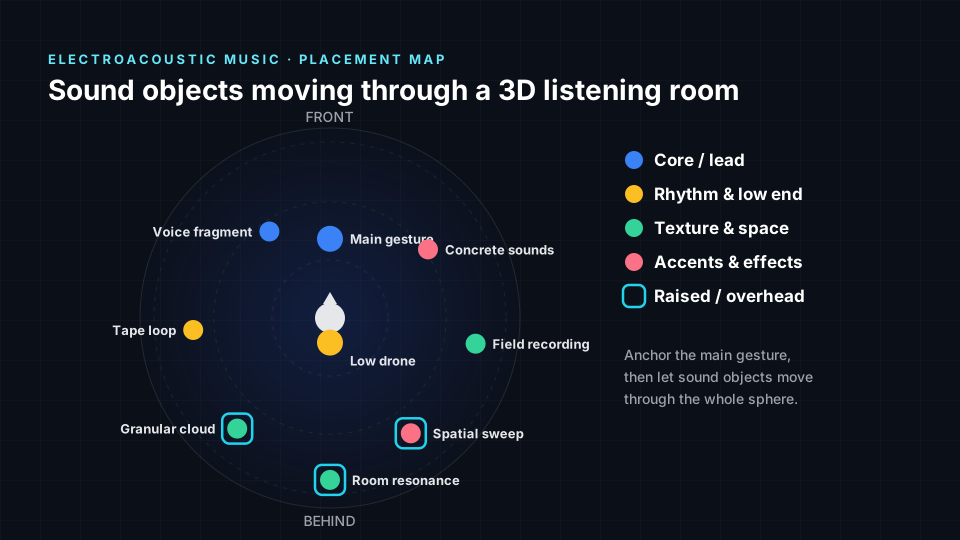
- In a spatial electroacoustic music mix the main gesture is anchored in front, while voice fragments, concrete sounds, tape loops, field recordings, granular clouds and spatial sweeps use the whole sphere.
- Bright, airy material reads best overhead in electroacoustic music, because the ear judges height from high-frequency spectral cues shaped by the outer ear.
- Electroacoustic music treats space as part of the composition, so movement should follow musical gestures rather than constant random panning.
- The electroacoustic music immersion profile scores width 5, height 5, movement 5, low-end focus 2 and space 5 out of 5.
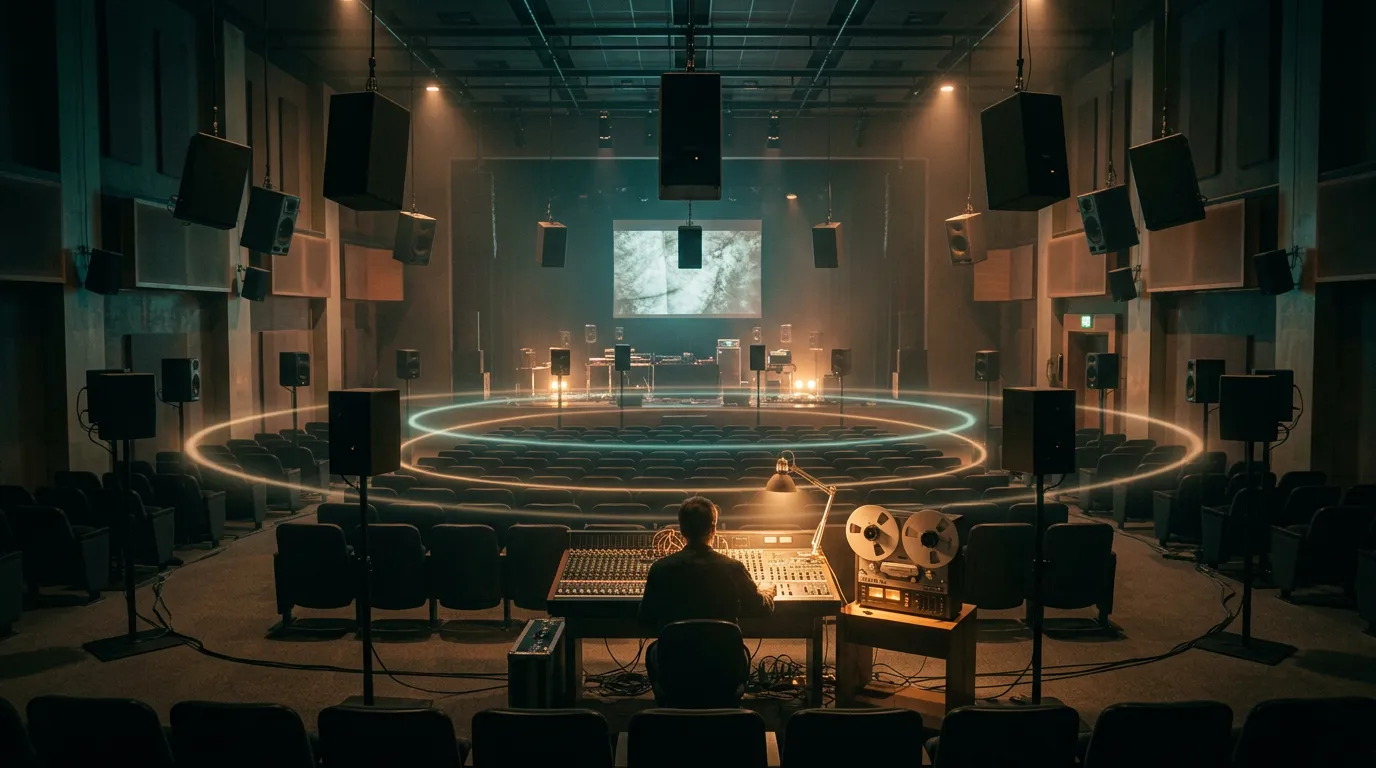
Electroacoustic music grew out of two post-war studio traditions. In Paris in the late 1940s, Pierre Schaeffer began composing with recorded sounds at French radio, which he called musique concrète. In the early 1950s, the studio of West German radio in Cologne developed electronic music made from synthetic tones. The two approaches soon merged into what we now call electroacoustic music. The sound is built from recorded and transformed material rather than notes on a page: trains, voices, objects, water, tape loops, filtered noise and synthesised tones, shaped by speed changes, splicing and later digital processing. Space has been central from the start. Karlheinz Stockhausen wrote for groups of loudspeakers around the audience, and Edgard Varèse's Poème électronique was played through hundreds of loudspeakers in a pavilion at the 1958 Brussels World's Fair. Spatial audio is the natural home for this music. This guide covers how spatial audio for electroacoustic music works, where to place each element and how to make an immersive electroacoustic music mix. For the basics, see what spatial audio is.
Why electroacoustic music belongs in spatial audio
In most genres space supports the music. In electroacoustic music, space often is the music: a sound approaching, passing and dissolving into the distance is a musical event in itself. Stereo can only hint at that movement between two speakers. An immersive mix lets sounds come from behind, rise overhead and recede far away, much as composers have long done with multi-speaker concerts.
The rule: one clear anchor, a fully open sphere. Keep the main gesture readable in front, then let every other sound object use the whole space.
Immersive music for electroacoustic music: what listeners hear
- Sounds with a real location. A voice, a door or a bell seems to sit at a point in the room.
- Movement as form. Gestures approach, pass and fade away as part of the piece.
- Sound above the head. Clouds of grains and sweeps drift overhead.
- Near and far. Some sounds feel close enough to touch, others far away.
Where to place each element in an electroacoustic music mix
| Element | Position | Height | Why it works |
|---|---|---|---|
| Main gesture | Front centre | Ear level | The clearest focus of attention |
| Low drone | Centre | Ear level | A stable floor under the piece |
| Voice fragment | Front left | Ear level | Close, intimate and readable |
| Concrete sounds | Front right, moving | Ear level | Real objects with a clear place |
| Tape loop | Left | Ear level | A repeating anchor at the side |
| Field recording | Right | Ear level | A real environment around you |
| Granular cloud | Behind left, moving | Raised | Texture that drifts overhead |
| Spatial sweep | Behind right, moving | Raised | Gestures that fly past |
| Room resonance | Behind | Raised | Depth and distance |
The psychoacoustics behind electroacoustic music placement
Every position in the table above follows how the ear and brain locate sound. Here is the reason behind the main choices for electroacoustic music.
- The main gesture sits in front. The smallest change in direction we can hear, the minimum audible angle, is about one degree straight ahead and much larger at the sides, as Mills showed. Detailed, fast-changing material is easiest to follow in front, so the main gesture belongs there.
- Bright material goes overhead. The ear judges height from spectral cues, small changes in the high frequencies shaped by the outer ear, as described by Hebrank and Wright. Granular clouds and airy sweeps rich in high frequencies read clearly as raised. Dull, low sounds do not.
- Rising gestures feel like they approach. Listeners hear rising pitch as rising and as coming closer, a bias shown by Neuhoff. Pairing a tape speed-up or upward sweep with movement towards or above the listener makes the gesture feel natural rather than arbitrary.
- Room resonance around the listener. Sound arriving from the sides soon after the direct sound is what makes a space feel enveloping. This comes from research on early lateral reflections by Barron and Marshall. Room tone and resonance placed around and behind the listener create a believable acoustic world.
The immersion profile for electroacoustic music
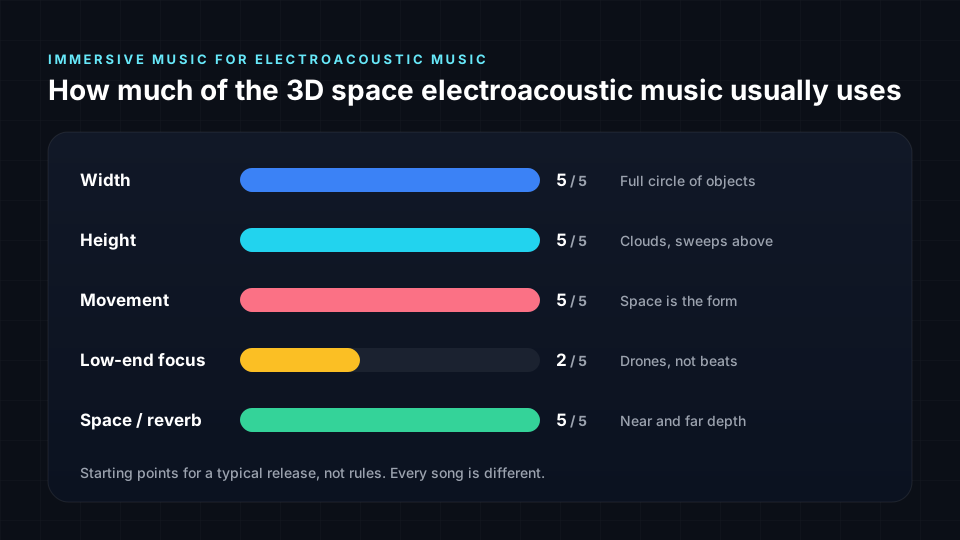
Width, height, movement and space are all at maximum because the genre treats space as a compositional material, and sound objects can come from anywhere. Low-end focus is low because there is usually no kick or bassline to anchor. Low drones and rumbles exist, but they support the piece rather than drive it.
Tips for an immersive electroacoustic music mix
- Keep one clear anchor. Too much movement at once makes the piece hard to follow.
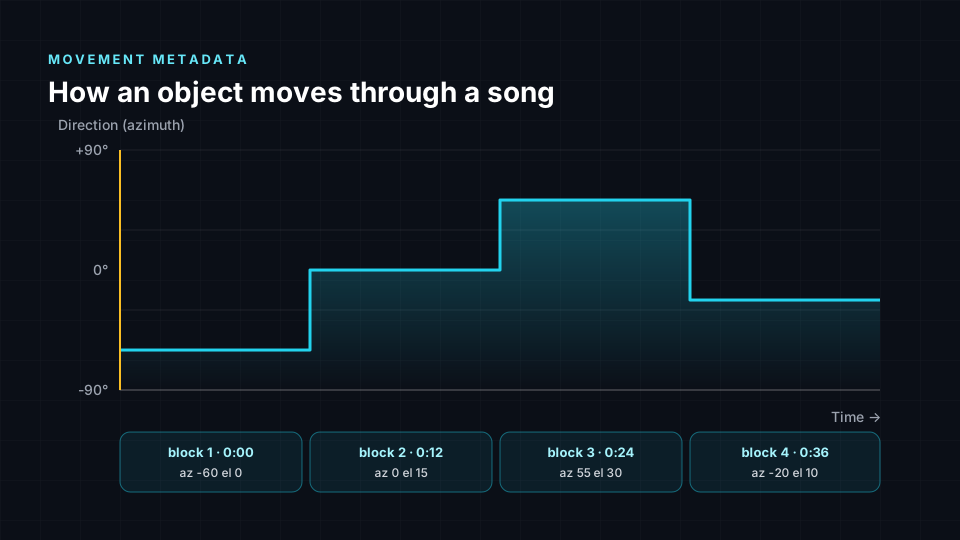
- Move with purpose. Tie each trajectory to a gesture in the sound, not random panning.
- Use distance, not only direction. Change level, reverb and brightness so sounds approach and recede.
- Let silence have a place. Empty space makes the next sound arrive with more impact.
- Respect the original diffusion. If the piece was made for many speakers, start from its stems.
Electroacoustic Music styles: musique concrète, acousmatic music and tape music
The core placement still applies to every electroacoustic style: one clear anchor in front, objects and textures around the listener, movement above. What changes is the source material and how literally space is used.
Musique Concrète
Musique concrète is the Paris tradition of composing with recorded sounds treated as sound objects: a train, a door, a piano lid, a voice. In a spatial mix each object can have its own point in space. Keep recognisable sounds at ear level, close and dry, so their real-world origin stays clear. Place transformed versions further away, raised or behind, so the listener hears the object turning into something abstract. Short, sudden objects work well at the sides.
Acousmatic Music
Acousmatic music is made for loudspeakers alone, with no visible source. In concerts it is often diffused live over a loudspeaker orchestra, such as the acousmonium developed at the Paris research group GRM. An immersive mix can capture that diffusion. Use depth heavily, with sounds moving from far behind to close in front, and open the full sphere at climaxes. Keep quiet passages narrow and close, then widen.
Tape Music
Tape music is the term often used in the US for works built by splicing, looping, reversing and changing the speed of magnetic tape, from New York studios in the 1950s to the San Francisco Tape Music Center in the 1960s. Loops make natural spatial anchors: place them at fixed points around the listener so the repetition becomes a sense of place. Let speed-up and slow-down gestures travel, rising or approaching as pitch rises. Hiss and room tone can sit behind.
Closely related practices such as live electronics, soundscape composition and sound art follow the same pattern, with a readable anchor and the rest of the sphere open.
How to make immersive electroacoustic music from stereo
Spatial9 can create spatial audio from a stereo track in a few steps:
- Upload your stereo master or your stems.
- Spatial9's AI separates and places each part, anchoring the main gesture in front and sending sound objects, textures and room resonance around and above you.
- Preview it in binaural on headphones.
- Export Eclipsa Audio, ADM, binaural or Ambisonics.
- Publish a video. Create a YouTube-ready video with your immersive audio and publish it directly.
For related guides, read spatial audio for experimental music and spatial audio for dark ambient. Every guide is listed in spatial audio and immersive music by genre.
Frequently asked questions
Does this guide cover musique concrète, acousmatic music and tape music?
Yes. Musique concrète gives each recorded sound object its own point in space, with transformed versions further away. Acousmatic music uses deep, diffusion-style movement from far to near and opens the full sphere at climaxes. Tape music places loops at fixed points and lets speed changes travel. All three keep one clear anchor in front.
Can I make an electroacoustic music mix in Dolby Atmos or Eclipsa Audio?
Yes. The placements in this guide work for both. Spatial9 exports ADM, the standard file used by Dolby Atmos studios, as well as Eclipsa Audio for YouTube, so one immersive electroacoustic music mix covers both. If you plan to release the Atmos version on Apple Music, build it from your original stems or multitracks, because Apple does not accept Atmos made from a finished stereo master. See where to publish spatial audio. You may also hear this called a 3D electroacoustic music mix or electroacoustic music in spatial audio.
Is spatial audio good for electroacoustic music?
Yes. Electroacoustic music has used multi-speaker playback for decades, and spatial audio brings that experience to headphones and home systems.
How is electroacoustic music different from experimental music in spatial audio?
Experimental music covers many approaches, including bands, noise and improvisation. Electroacoustic music is built from recorded and transformed sound, often fixed on tape or disk, so the spatial movement can be composed precisely, sound by sound.
Should sounds keep moving in immersive electroacoustic music?
No. Constant movement tires the ear and loses its meaning. Keep most sounds still, and save movement for gestures where travel through space is part of the idea.
Can I convert a finished electroacoustic music track to spatial audio?
Yes. Spatial9 uses AI to generate an immersive mix from a stereo master and exports it as Eclipsa Audio, ADM, binaural or Ambisonics. For dense or unusual sources, uploading stems gives the most control.
Does immersive electroacoustic music work on normal headphones?
Yes. The mix is rendered binaurally, so moving sound objects and distant textures work on any regular headphones.
Dolby and Dolby Atmos are trademarks of Dolby Laboratories. Spatial9 is not affiliated with or endorsed by Dolby Laboratories.
Sources
- Blauert, J. (1997). Spatial Hearing: The Psychophysics of Human Sound Localization, revised edition. MIT Press. Low-frequency, elevation, distance and motion cues.
- Mills, A. W. (1958). On the minimum audible angle. Journal of the Acoustical Society of America, 30(4), 237-246.
- Hebrank, J. and Wright, D. (1974). Spectral cues used in the localization of sound sources on the median plane. Journal of the Acoustical Society of America, 56(6), 1829-1834.
- Barron, M. and Marshall, A. H. (1981). Spatial impression due to early lateral reflections in concert halls. Journal of Sound and Vibration, 77(2), 211-232.
- Neuhoff, J. G. (1998). Perceptual bias for rising tones. Nature, 395, 123-124.
- Bregman, A. S. (1990). Auditory Scene Analysis: The Perceptual Organization of Sound. MIT Press.
Compose with the whole room
Upload a piece to Spatial9 and hear your sound objects move through a full 3D sphere in minutes. Then export it or publish it straight to YouTube.