Spatial Audio & Immersive Music for Sea Shanties: Work Songs, Forebitters & Maritime Folk
Spatial9 Team · · 10 min read
Part of the series Spatial audio and immersive music by genre.
Key takeaways
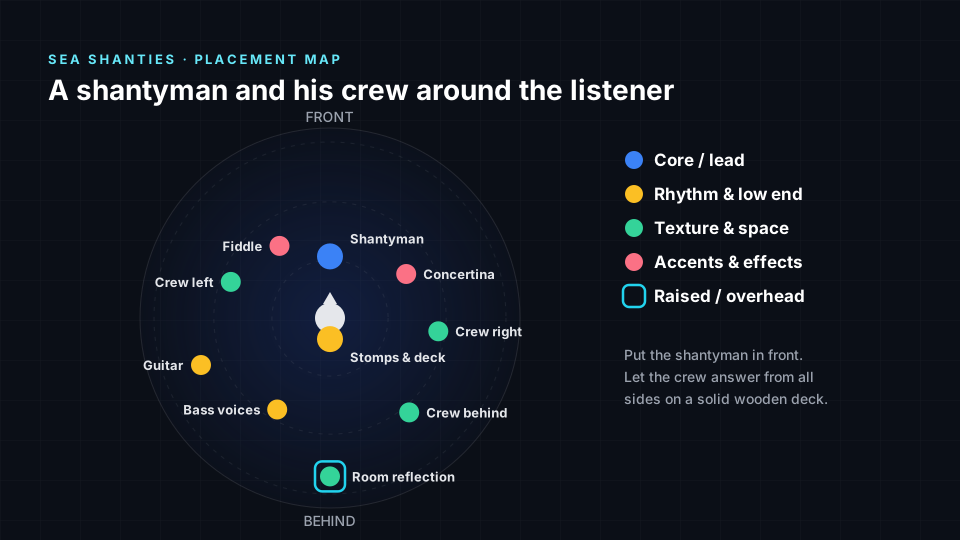
- In a spatial sea shanties mix the shantyman sits in front and centre while the crew chorus answers from the left, the right and behind, with foot stomps and the deck held in the middle.
- Keeping the leader in front and the crew around the sides lets the listener follow the solo verse through a loud chorus, an effect known as the cocktail party effect.
- Sea shanties are unaccompanied work songs sung on deck or in a tavern, so the room should stay modest and the singers still, with any concertina or fiddle close in front.
- The sea shanties immersion profile scores width 4, height 2, movement 1, low-end focus 2 and space 3 out of 5.
Sea shanties are the work songs of the merchant sailing ships of the late eighteenth and nineteenth centuries, when crews had to pull ropes, turn the capstan and work the pumps together by hand. The word is usually traced to the French "chanter", to sing, and is also spelled chanty or chantey. A shantyman sang a solo line and the crew roared back a chorus, timing each pull to the beat: short-drag shanties for single sharp pulls, halyard shanties for raising sail and capstan shanties with long choruses for steady walking work. The songs were unaccompanied, because every hand was on the work. Off duty, sailors sang forebitters, sometimes with a fiddle or concertina. As steam replaced sail around 1900 the shanty died out at sea, survived through collectors such as Cecil Sharp and the sailor Stan Hugill, and was revived on folk records from the 1950s onwards, mostly in mono and early stereo. Sea shanties suit spatial audio because they are built on call and response, a single voice and a crowd answering it, which stereo squeezes into one line. This guide covers how spatial audio for sea shanties works, where to place each element and how to make an immersive sea shanties mix. For the basics, see what spatial audio is.
Why sea shanties work in spatial audio
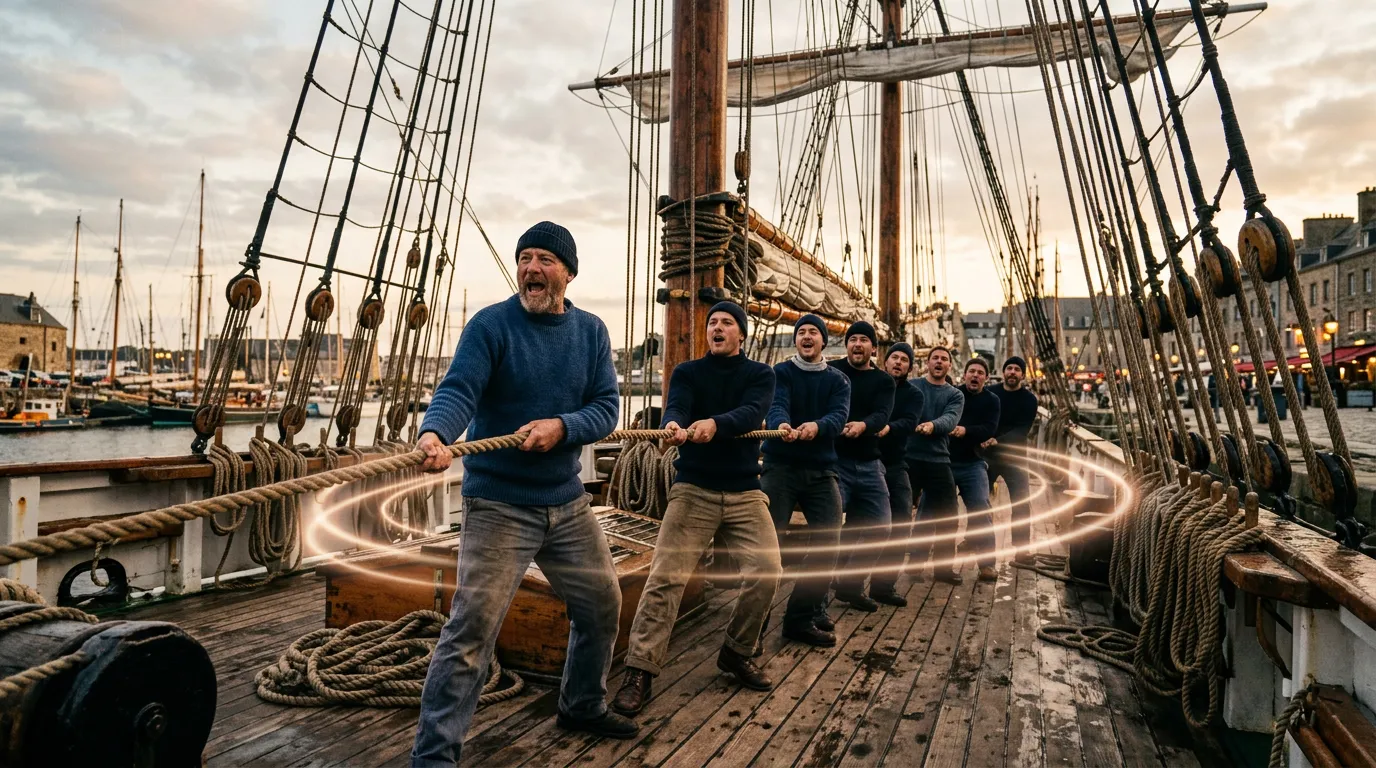
Sea shanties are a conversation between one voice and many. The shantyman sings the verse, often improvising, and the crew answers on the pull, with stamps on the deck keeping the beat. In stereo the chorus sits as one block behind the leader. In an immersive mix the shantyman stands in front and the crew surrounds the listener, so every chorus arrives from all sides, as it would for a sailor at the rope.
The rule: one voice in front, the whole crew around you. Keep the shantyman clear and central, spread the chorus around and hold the stomps in the middle, inside a modest room.
Immersive music for sea shanties: what listeners hear
- A shantyman right in front of you. The solo call is close and clear, so every improvised line comes through.
- A crew that answers from every side. The chorus lands to the left, right and behind, like standing at the rope.
- Stomps you can feel. Feet on the deck give a solid, central beat for every pull.
- A real room around the singers. A modest wooden space, a deck or a harbour tavern, holds the voices together.
Where to place each element in a sea shanties mix
| Element | Position | Height | Why it works |
|---|---|---|---|
| Shantyman | Front centre | Ear level | The solo call that leads every verse |
| Stomps & deck | Centre | Ear level | The steady beat that times each pull |
| Crew left | Left | Ear level | Half of the answering chorus |
| Crew right | Right | Ear level | The other half of the chorus, opposite |
| Crew behind | Behind right | Ear level | Puts the listener inside the crew |
| Bass voices | Behind left | Ear level | Low voices that give the chorus weight |
| Concertina | Front right | Ear level | Forebitter chords and tune, close by |
| Fiddle | Front left | Ear level | Forebitter melody and dance tunes |
| Guitar | Left, further back | Ear level | Modern maritime folk rhythm |
| Room reflection | Behind | Raised | A low wooden deck or tavern around the crew |
The psychoacoustics behind sea shanties placement
Every position in the table above follows how the ear and brain locate sound. Here is the reason behind the main choices for sea shanties.
- Stomps and deck stay centred. The ear finds almost no direction in frequencies below roughly 80 to 100 Hz, so the thud of boots on wood gains nothing from being spread and works best as one solid beat.
- The shantyman stands out from the crowd. The brain can follow one voice among many when it comes from its own direction. This is the cocktail party effect (Bronkhorst). A leader in front and the crew around keeps the verse clear.
- Call and response heard as two parts. The brain groups sounds into streams by pitch, timing and direction. This is auditory stream segregation (Bregman). With the solo in front and the chorus around, the ear hears a clear exchange rather than one line.
- A room that keeps the words clear. When a sound and its reflections arrive close together, the brain places it by the first arrival. This is the precedence effect. Short wooden reflections add body without blurring the verse.
The immersion profile for sea shanties
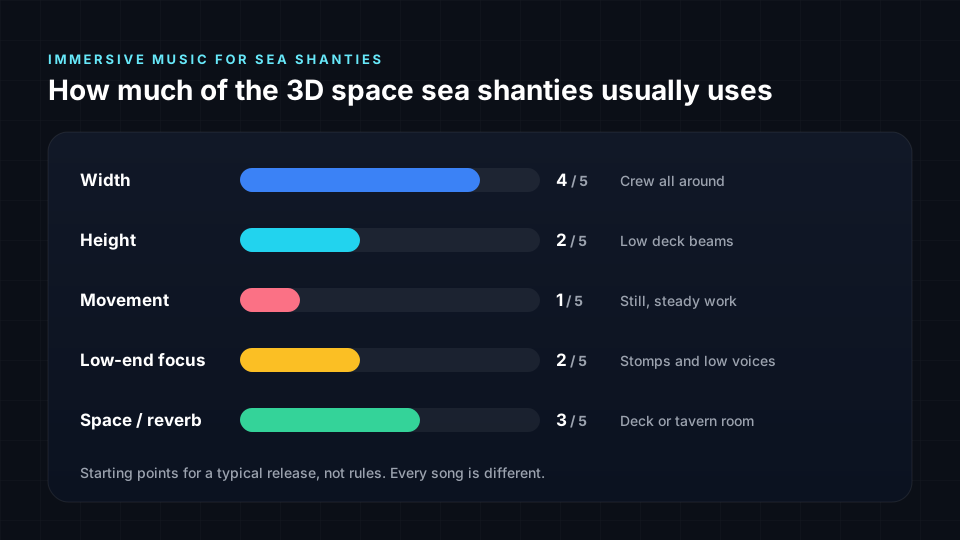
Width scores 4 because the chorus wraps around the listener. Height is low: the songs belong on a deck or under tavern beams, so only a light reflection sits overhead. Movement scores 1, because a crew at the rope stands still and the energy comes from the work rhythm. Low-end focus scores 2, carried by stomps and bass voices. Space scores 3: a modest room that binds the crew without washing out the words.
Tips for an immersive sea shanties mix
- Keep the shantyman front and centre. The leader's call drives the song, so never move or bury it.
- Split the crew around the listener. Spread the chorus left, right and behind, rather than stacking it in one place.
- Lock stomps in the middle. Boots on the deck are the beat of the work, so keep them solid and central.
- Keep the room modest. Too much reverb turns a crew into a cathedral choir and smears the verse.
- Keep instruments close and small. A concertina or fiddle should sit near the front, not compete with the chorus.
Sea shanties styles: work songs, forebitters and maritime folk
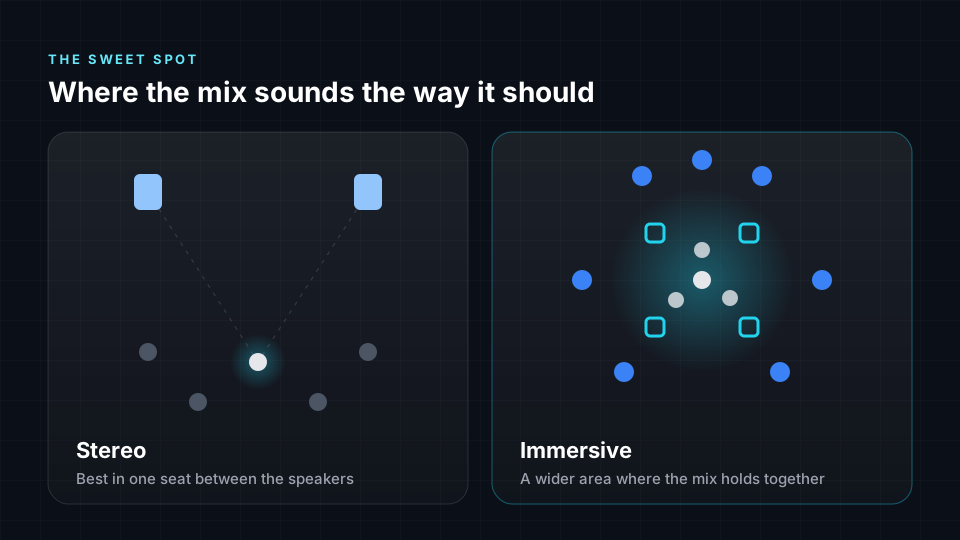
The core placement holds for every maritime style here: one leading voice in front, the group around the listener and a solid beat in the middle. What changes is the instruments and the size of the room.
Work Songs
Work songs are the shanties proper, sung while hauling halyards, heaving at the capstan or pumping, with a solo verse and a refrain that falls on the pull. Put the shantyman front and centre, close enough for every word to land. Split the crew evenly left and right, with a few voices behind so the chorus wraps around. Keep foot stomps and hand slaps on wood in the middle as a steady pulse. A short, wooden room with a light reflection overhead suits these songs.
Forebitters
Forebitters were the songs sailors sang for pleasure when off watch, gathered around the forebitts on the forecastle. Not tied to any job, they are longer and more melodic, telling stories of ports, sweethearts and shipwrecks, often to fiddle or concertina. Keep the singer centred and close, with the fiddle and concertina on either side at ear level. When the company joins the chorus, let it open out around the listener. A slightly warmer, quieter room suits forebitters, but keep it intimate.
Maritime Folk
Maritime folk is the modern revival and the newer songwriting that grew out of it, from the folk club recordings of the 1950s and 1960s to today's harbour festivals and online sing-alongs. Groups add guitar, bodhrán, bass or banjo, and writers compose new songs about fishing and whaling. Keep the lead singer centred and the chorus around the listener. Place guitar and banjo further back on the sides, with bass and drum near the middle. A small band sounds best in a cosy tavern space.
Related styles such as whaling songs, fishing songs and the shore-side songs of harbour towns follow the same idea: centre the leading voice, then surround the listener with the crew.
How to make immersive sea shanties from stereo
Spatial9 can create spatial audio from a stereo track in a few steps:
- Upload your stereo master or your stems.
- Spatial9's AI separates and places each part, pulling the shantyman, the chorus and the stomps apart even from old mono or early stereo folk recordings and setting the crew around the listener.
- Preview it in binaural on headphones.
- Export Eclipsa Audio, ADM, binaural or Ambisonics.
- Publish a video. Create a YouTube-ready video with your immersive audio and publish it directly.
For related guides, read spatial audio for a cappella and spatial audio for folk. Every guide is listed in spatial audio and immersive music by genre.
Frequently asked questions
Does this guide cover work songs, forebitters and maritime folk?
Yes. Work songs put the shantyman in front and the crew around the listener. Forebitters centre a singer with fiddle or concertina beside them. Maritime folk adds guitar and other instruments further back.
Can I make a sea shanties mix in Dolby Atmos or Eclipsa Audio?
Yes. The placements in this guide work for both. Spatial9 exports ADM, the standard file used by Dolby Atmos studios, as well as Eclipsa Audio for YouTube, so one immersive sea shanties mix covers both. If you plan to release the Atmos version on Apple Music, build it from your original stems or multitracks, because Apple does not accept Atmos made from a finished stereo master. See where to publish spatial audio. You may also hear this called a 3D sea shanties mix or sea shanties in spatial audio.
Is spatial audio good for sea shanties?
Yes. Sea shanties are call and response between one singer and a crowd. Spatial audio puts the leader in front and the crew around you, so you feel part of it.
What is the difference between a shanty and a forebitter in spatial audio?
A shanty is an unaccompanied work song, so it needs a central leader and a chorus all around. A forebitter is a leisure song, often with fiddle or concertina, so it needs a close singer, instruments beside them and a quieter room.
Where should the foot stomps go in an immersive sea shanties mix?
Keep them in the centre, solid and at ear level. Low thuds give the ear little sense of direction, so spreading them only weakens the pulse.
How much reverb should an immersive sea shanties mix have?
A modest amount. Short reflections from a wooden room bind the group, but a long church reverb blurs the verse.
Can I convert an old mono sea shanty recording to spatial audio?
Yes. Spatial9 uses AI to separate the leading voice, the chorus and the stomps from a mono or early stereo master. Separation is never perfect with old recordings, so keep the layout simple.
Dolby and Dolby Atmos are trademarks of Dolby Laboratories. Spatial9 is not affiliated with or endorsed by Dolby Laboratories.
Sources
- Blauert, J. (1997). Spatial Hearing: The Psychophysics of Human Sound Localization, revised edition. MIT Press. Low-frequency, elevation, distance and motion cues.
- Mills, A. W. (1958). On the minimum audible angle. Journal of the Acoustical Society of America, 30(4), 237-246.
- Hebrank, J. and Wright, D. (1974). Spectral cues used in the localization of sound sources on the median plane. Journal of the Acoustical Society of America, 56(6), 1829-1834.
- Bronkhorst, A. W. (2000). The cocktail party phenomenon: a review of research on speech intelligibility in multiple-talker conditions. Acta Acustica united with Acustica, 86, 117-128.
- Litovsky, R. Y., Colburn, H. S., Yost, W. A. and Guzman, S. J. (1999). The precedence effect. Journal of the Acoustical Society of America, 106(4), 1633-1654.
- Barron, M. and Marshall, A. H. (1981). Spatial impression due to early lateral reflections in concert halls. Journal of Sound and Vibration, 77(2), 211-232.
- Neuhoff, J. G. (1998). Perceptual bias for rising tones. Nature, 395, 123-124.
- Bregman, A. S. (1990). Auditory Scene Analysis: The Perceptual Organization of Sound. MIT Press.
- Hugill, S. (1961). Shanties from the Seven Seas. Routledge and Kegan Paul.
Join the crew
Upload a track to Spatial9 and hear the crew answer the shantyman from every side in minutes. Then export it or publish it straight to YouTube.