Spatial Audio & Immersive Music for Folk Pop: Complete Guide
Spatial9 Team · · Updated
Part of the series Spatial audio and immersive music by genre.
Folk pop takes the warmth of folk, with acoustic guitars, banjos, mandolins and honest storytelling, and pairs it with the catchy choruses and clean production of pop. Think of stomp-and-clap anthems, handclaps, kick drums, piano and big singalong "hey" and "oh" vocals. A folk mix is often sparse and natural. A pop mix is polished and layered. A folk pop mix needs both: the closeness of a few players in a room and a chorus that feels like everyone is singing along. This guide covers how spatial audio for folk pop works, where to place each element and how to make an immersive folk pop mix. For the basics, see what spatial audio is.
Why folk pop is perfect for spatial audio
Folk pop is built on intimacy and community. The verses feel like one person telling you a story, and the chorus feels like a room full of friends joining in. In stereo, both moments live between the same two speakers, so the singalong chorus often just gets louder. In spatial audio, the verse can stay close and personal while the chorus truly opens up around the listener, with voices coming from every side.
Acoustic instruments also have natural, gentle sounds that are easy to tell apart when they come from different directions. A banjo on one side and a piano on the other no longer fight for the same space.
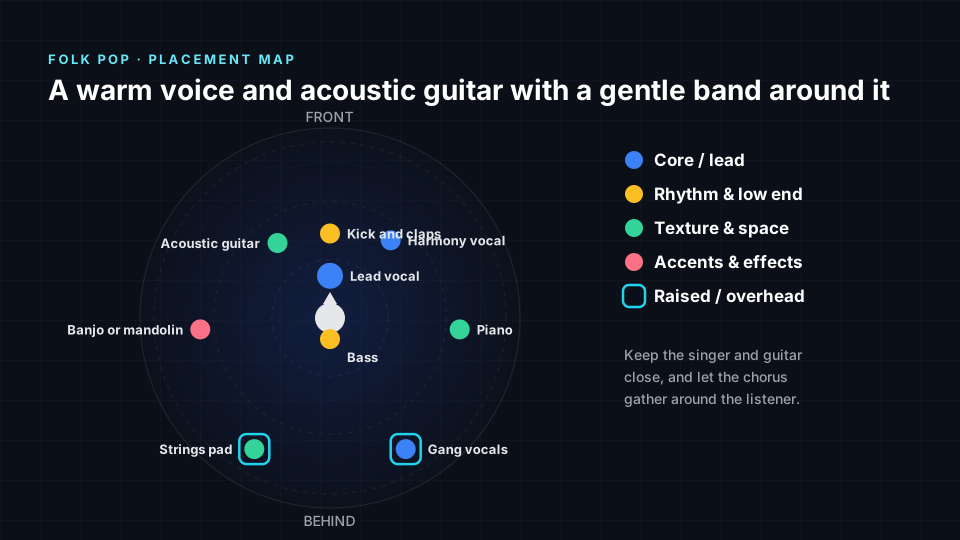
The rule: keep the storyteller close and in front, and let the chorus gather around the listener.
Immersive music for folk pop: what listeners hear
- A close, honest voice. The singer feels like they are sitting just in front of you.
- Guitar you can almost touch. The acoustic guitar is near and detailed, with every strum clear.
- A chorus that joins you. Gang vocals and handclaps arrive from around the room.
- Warmth, not loudness. The mix grows by getting wider, not by getting harsher.
Where to place each element in a folk pop mix
| Element | Position | Height | Why it works |
|---|---|---|---|
| Lead vocal | Front centre, close | Ear level | The story needs a clear, near voice |
| Acoustic guitar | Front left, close | Ear level | Sits next to the singer like a real player |
| Harmony vocal | Front right | Ear level | Balances the guitar and supports the lead |
| Kick and claps | Front centre, behind vocal | Ear level | Keeps the stomp steady without crowding the voice |
| Bass | Centre | Ear level | Low notes are hard to place, so centre is cleanest |
| Piano | Right side | Ear level | Gives the chords their own space |
| Banjo or mandolin | Left side | Ear level | Bright plucks stay clear away from the vocal |
| Gang vocals | Behind right | Slightly raised | Makes the chorus feel like a crowd singing along |
| String pad | Behind left | Raised | Adds warmth above the listener |
The psychoacoustics behind folk pop placement
- Grouping by location. The brain groups sounds that come from the same place. Keeping the vocal and guitar close together in front makes them feel like one performer (Bregman, 1990).
- Spatial release from masking. Sounds from different directions are easier to hear at once. Moving the banjo and piano to the sides keeps the vocal clear (Bronkhorst, 2000).
- Distance cues. A closer, drier sound feels nearer. Keeping the vocal dry and the gang vocals more distant creates depth (Zahorik et al., 2005).
- Envelopment. Sound arriving from the sides and behind gives the feeling of being surrounded, which is why the chorus feels bigger (Barron and Marshall, 1981).
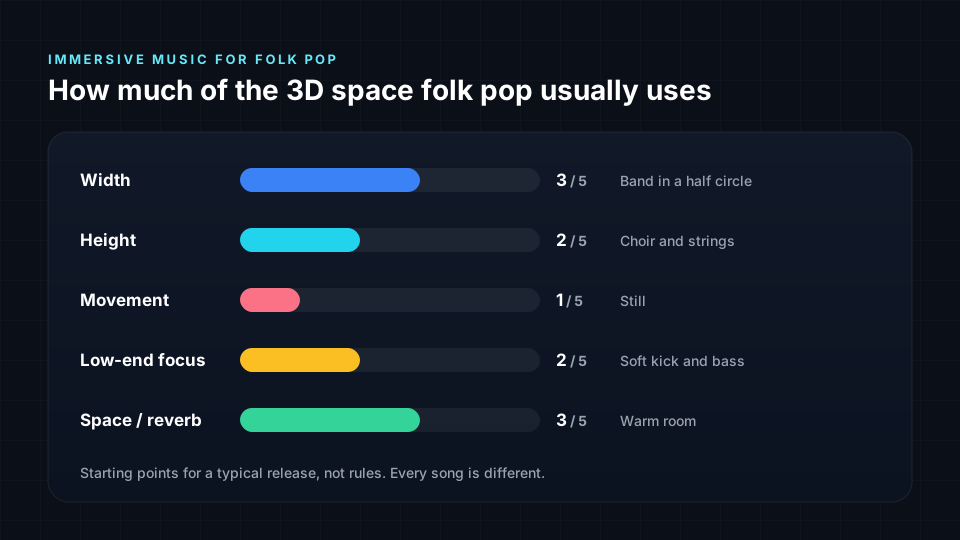
The immersion profile for folk pop
Tips for an immersive folk pop mix
- Keep the verse small. A narrow, close verse makes the chorus feel like a real arrival.
- Double the claps wide. Handclaps on both sides make the room feel full of people.
- Leave the vocal dry. A little room sound is enough. Too much reverb pushes the singer away.
- Put the gang vocals behind. A singalong from behind and around feels like the audience joining in.
- Avoid moving parts. Folk pop is about people in a room. Sounds flying around break the feeling.
How to make immersive folk pop from stereo
Spatial9 can create spatial audio from a stereo track in a few steps:
- Upload your stereo master or your stems.
- Spatial9's AI separates and places each part, from the vocal and acoustic guitar to the claps and piano.
- Preview it in binaural on headphones.
- Export Eclipsa Audio, ADM, binaural or Ambisonics.
- Publish a video. Create a YouTube-ready video with your immersive audio and publish it directly.
For related guides, read spatial audio for folk, spatial audio for pop and spatial audio for singer-songwriter music. Every guide is listed in spatial audio and immersive music by genre.
Frequently asked questions
Can I make a folk pop mix in Dolby Atmos or Eclipsa Audio?
Yes. The placements in this guide work for both. Spatial9 exports ADM, the standard file used by Dolby Atmos studios, as well as Eclipsa Audio for YouTube, so one immersive folk pop mix covers both. You may also hear this called a 3D folk pop mix or folk pop in spatial audio.
How is a folk pop mix different from a folk mix in spatial audio?
A folk mix is usually sparse and natural, like a few players in a room. A folk pop mix keeps that warmth but adds a bigger, layered chorus with claps, kick drum and singalong vocals that wrap around the listener.
Where should the acoustic guitar go?
Close and slightly to the front left of the singer, at ear level. It should feel like the guitarist is sitting right next to the vocalist.
Should the gang vocals surround the listener?
Partly. Placing them behind and to the sides, slightly raised, makes the chorus feel like a crowd. Keep the lead vocal in front so the song stays clear.
Can I convert a released folk pop song to spatial audio?
Yes. Spatial9 uses AI to separate a stereo master into its parts and export an immersive mix as Eclipsa Audio, ADM, binaural or Ambisonics.
Does immersive folk pop work on normal headphones?
Yes. The mix is rendered binaurally, so the singer sounds in front of you and the chorus gathers around you on any regular headphones.
Dolby and Dolby Atmos are trademarks of Dolby Laboratories. Spatial9 is not affiliated with or endorsed by Dolby Laboratories.
Sources
- Barron, M. and Marshall, A. H. (1981). Spatial impression due to early lateral reflections in concert halls. Journal of Sound and Vibration, 77(2), 211-232.
- Bregman, A. S. (1990). Auditory Scene Analysis: The Perceptual Organization of Sound. MIT Press.
- Bronkhorst, A. W. (2000). The cocktail party phenomenon: a review of research on speech intelligibility in multiple-talker conditions. Acta Acustica united with Acustica, 86, 117-128.
- Zahorik, P., Brungart, D. S. and Bronkhorst, A. W. (2005). Auditory distance perception in humans: a summary of past and present research. Acta Acustica united with Acustica, 91, 409-420.
- Blauert, J. (1997). Spatial Hearing: The Psychophysics of Human Sound Localization, revised edition. MIT Press.
Bring the whole room into your chorus
Upload a folk pop track to Spatial9 and hear the singalong gather around you in minutes. Then export it or publish it straight to YouTube.