Spatial Audio & Immersive Music for Mbaqanga & Maskandi: Township Jive, Maskandi & Marabi
Spatial9 Team · · 11 min read
Part of the series Spatial audio and immersive music by genre.
Key takeaways
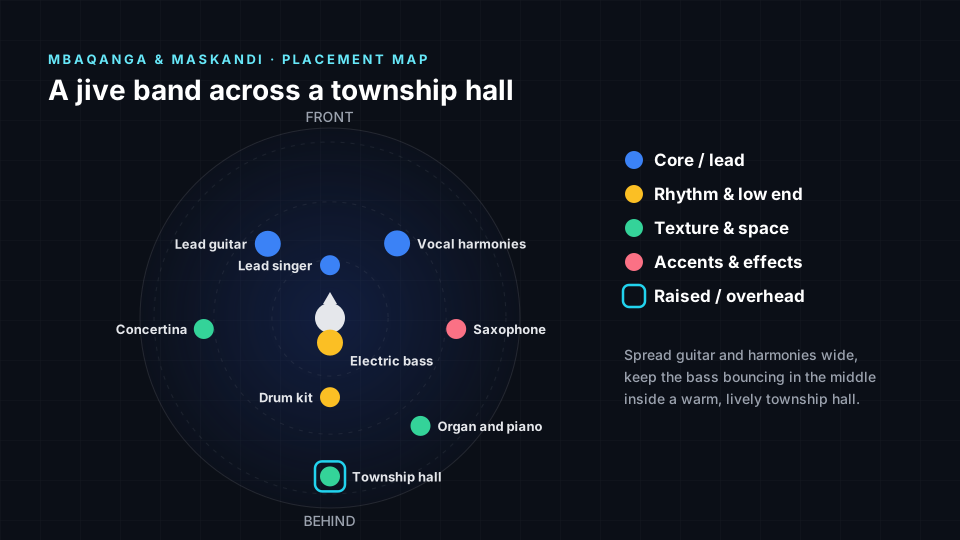
- In a spatial mbaqanga and maskandi mix the lead singer sits front centre over a centred bass, with the lead guitar front left, the women's harmonies front right and the concertina, saxophone and organ spread around the sides.
- Because the brain splits sounds into separate streams by direction, an effect known as auditory stream segregation, the interlocking guitar, bass and vocal lines stay distinct instead of blending into one busy groove.
- This is dance music from township halls, shebeens and recording studios, so the space should be a medium, warm room with clear side reflections and no long tail to blur the picking.
- The mbaqanga and maskandi immersion profile scores width 4, height 2, movement 2, low-end focus 3 and space 3 out of 5.
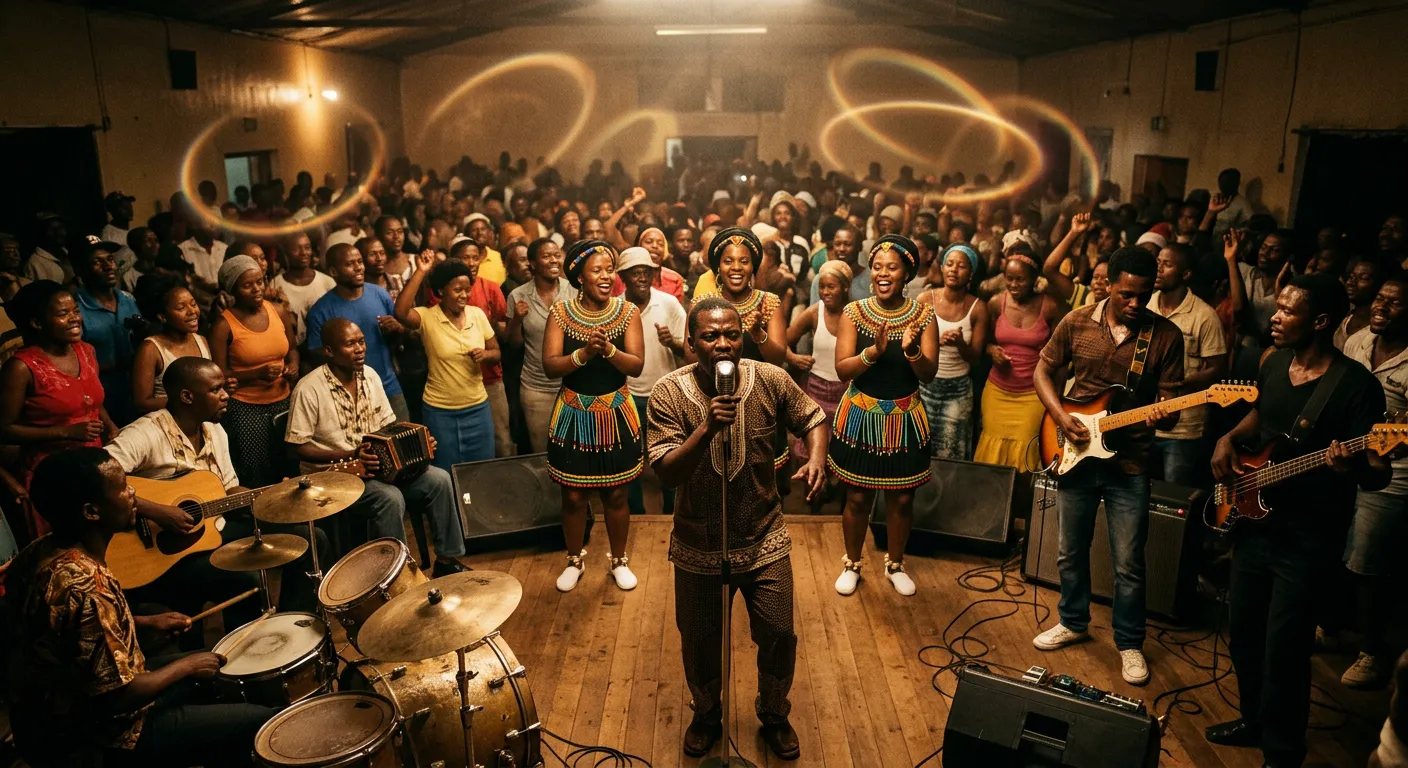
Mbaqanga and maskandi are among the defining popular sounds of black South Africa. Their roots go back to marabi, the keyboard music of the Johannesburg slumyards and shebeens in the 1920s and 1930s, played on pedal organs and pianos over a repeating cycle of chords. In the 1950s the pennywhistle led kwela of the townships added a lighter, street corner bounce. In the early 1960s these threads, along with Zulu and other traditional vocal styles, came together in mbaqanga, named after a kind of maize porridge, an everyday staple. At Gallo's Mavuthela studio the producer Rupert Bopape built a hit machine around the Makgona Tsohle Band, with Marks Mankwane on lead guitar, Joseph Makwela on bass and West Nkosi on saxophone, backing the deep, groaning lead voice of Simon Mahlathini Nkabinde and the close harmonies of the Mahotella Queens. Their vocal jive style became known as mgqashiyo. Maskandi grew alongside it from the music of Zulu migrant workers, who played guitar and concertina as they travelled between rural KwaZulu Natal and the cities. Its picking style, ukupika, and its fast spoken praise sections came into the studios from the 1960s. In 1986 the album Graceland brought South African guitarists, bassists and singers to a worldwide audience. Mbaqanga and maskandi suit spatial audio because they are built from interlocking parts, each with its own line, and the dance hall is part of the sound. This guide covers how spatial audio for mbaqanga and maskandi works, where to place each element and how to make an immersive mbaqanga and maskandi mix. For the basics, see what spatial audio is.
Why mbaqanga and maskandi works in spatial audio
This music is a web of separate lines. The lead guitar picks bright, repeating patterns high up the neck. The electric bass does not just hold the root, it bounces and sings a melody of its own. The drums keep a steady, driving shuffle, the singers trade lead and chorus, and a saxophone, concertina or organ answers in the gaps. In mono these lines lock into one tight, busy groove. In an immersive mix the guitar and the harmonies spread across the front, the bass anchors the centre and each answering voice gets its own place around the listener.
The rule: guitar and harmonies wide, the bass bouncing in the middle. Spread the main melodic parts across a broad front stage, keep the bass and lead vocal locked at the centre and set the band in a warm hall with room for the dancers.
Immersive music for mbaqanga and maskandi: what listeners hear
- A guitar that sparkles to one side. The bright, picked lead guitar rings from the front left, every repeating figure clear and separate.
- A bass you can follow. The melodic electric bass sits in the centre, so its bouncing lines carry the dance without muddying the guitar.
- Voices that answer each other. The lead singer calls from the centre and the women's harmonies reply from the right, close and warm.
- A hall full of dancers. A medium, lively room places you in a township hall or a shebeen, with the drums and keyboards just behind the band.
Where to place each element in a mbaqanga and maskandi mix
| Element | Position | Height | Why it works |
|---|---|---|---|
| Lead singer | Front centre | Ear level | The lead voice, from groaning bass to sung praise |
| Electric bass | Centre | Ear level | The melodic, bouncing line that drives the dance |
| Lead guitar | Front left | Ear level | Bright picked patterns and maskandi runs |
| Vocal harmonies | Front right | Ear level | Close mgqashiyo harmonies and chorus replies |
| Concertina | Left | Ear level | Reedy melody and fills in maskandi |
| Saxophone | Right | Ear level | Riffs and solos answering the singers |
| Drum kit | Behind | Ear level | A steady shuffle just behind the band |
| Organ and piano | Behind right | Ear level | Chord cycles carried over from marabi |
| Township hall | Behind | Raised | A warm, medium room around the band |
The psychoacoustics behind mbaqanga and maskandi placement
Every position in the table above follows how the ear and brain locate sound. Here is the reason behind the main choices for mbaqanga and maskandi.
- Electric bass stays centred. The ear finds almost no direction in frequencies below roughly 80 to 100 Hz, as spatial hearing research on low frequency cues (Blauert) shows. Keeping the bass in the middle makes its bouncing line solid without pulling the band to one side.
- Guitar and harmonies on opposite sides. The brain groups sounds into streams by pitch, timing and direction. This is auditory stream segregation (Bregman). Setting the lead guitar apart from the vocal harmonies lets the ear follow each interlocking line instead of one dense groove.
- Small moves read clearly at the front. The ear judges direction most precisely straight ahead and less precisely to the sides. This is the minimum audible angle (Mills). Placing the main melodic parts across the front lets even modest spreads sound clearly separate.
- A hall with side reflections. Early reflections arriving from the sides make a sound feel wider and more enveloping. This is spatial impression from early lateral reflections (Barron and Marshall). Clear side reflections give the band the feel of a live hall while keeping the picked guitar sharp.
The immersion profile for mbaqanga and maskandi
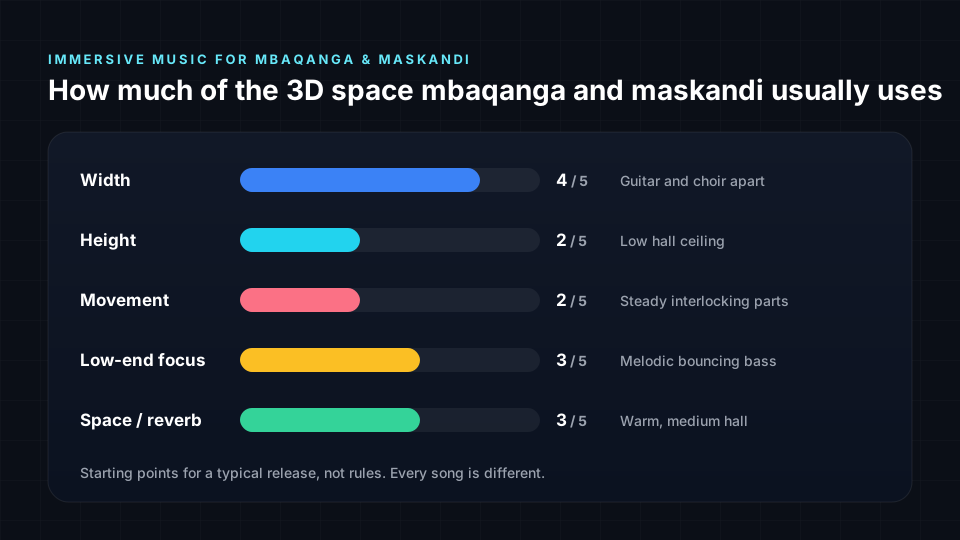
Width scores 4 because the music is made of separate melodic parts that benefit from a broad front stage, with guitar and harmonies on opposite sides. Space is 3: the bands played in halls and recorded in lively studios, so a medium, warm room suits them, but long reverb would blur the picking. Low-end focus is 3, since the electric bass is central and melodic but rarely deep sub bass. Movement is 2, because the parts interlock in steady patterns and the sense of motion comes from the groove rather than sounds travelling. Height is 2, from the reflection of a hall ceiling.
Tips for an immersive mbaqanga and maskandi mix
- Spread the guitar and harmonies. Put the lead guitar front left and the women's voices front right, so each line rings out on its own.
- Keep the bass centred and clear. The bass carries a melody, so give it room in the middle and keep the kick drum from masking it.
- Hold the parts in place. These lines lock together in repeating patterns. Leave them still and let the groove supply the movement.
- Give the answering voices a home. Set the concertina, saxophone or organ to the sides so their fills reply to the singer from a fixed spot.
- Use a warm, medium room. A lively hall suits the music, but keep the tail short enough that fast guitar picking stays crisp.
Mbaqanga and maskandi styles: township jive, maskandi and marabi
The core placement holds for every style here: lead voices and melodic parts at the front, the bass anchored in the middle. What changes is the size of the band, the lead instrument and how much room the style needs.
Township Jive
Township jive is the name often used abroad for mbaqanga and its relatives, especially the electric band sound of the 1960s to the 1980s. Its core is a bright lead guitar, a busy melodic electric bass, a driving drum kit and often a saxophone, with a male lead singer and a female vocal group trading lines. The Makgona Tsohle Band and Mahlathini and the Mahotella Queens defined the style, and later groups such as the Soul Brothers added organ and a softer, soul inflected sound. Seat the lead guitar front left, the harmonies front right, the bass centred with the lead voice just in front, the saxophone right and the organ behind right. A warm, lively hall suits the style.
Maskandi
Maskandi, also spelled maskanda, is Zulu guitar music that grew among migrant workers in KwaZulu Natal and the cities they travelled to. A typical song opens with izihlabo, a fast guitar flourish that shows off the player's tuning and skill, then settles into ukupika picking under the vocals. Many songs include ukubonga, a rapid spoken praise or commentary section. John Bhengu, known as Phuzushukela, helped bring the electric band form to records, and later artists such as Phuzekhemisi made it hugely popular. Modern maskandi bands add bass, drums, concertina and sometimes violin. Place the guitar front left or close to the centre if it carries the song, the lead voice front centre, the backing singers front right, the concertina or violin left and the bass and drums centred. A medium room suits it, slightly drier than township jive.
Marabi
Marabi is the earlier keyboard music of the Johannesburg slumyards in the 1920s and 1930s, played at all night parties in shebeens on pedal organs and pianos, often with simple percussion. It was built on a repeating cycle of three or four chords, a pattern that shaped South African jazz and later mbaqanga. Dance bands such as the Jazz Maniacs took marabi into larger halls with brass and reeds. Recordings are scarce, so marabi is often heard through later bands that drew on it. Place the organ or piano front centre or slightly left, any horns front right, the percussion behind and a small, warm room around them, like a crowded shebeen.
Related styles such as kwela, simanje manje and South African jazz follow the same idea: keep the melodic voices across the front, the bass in the middle and the dance hall around the listener.
How to make immersive mbaqanga and maskandi from stereo
Spatial9 can create spatial audio from a stereo track in a few steps:
- Upload your stereo master or your stems.
- Spatial9's AI separates and places each part, pulling the lead guitar, bass, drums, saxophone, concertina, lead singer and harmonies apart even from older recordings, and setting the guitar and voices across a wide stage with the bass in the centre.
- Preview it in binaural on headphones.
- Export Eclipsa Audio, ADM, binaural or Ambisonics.
- Publish a video. Create a YouTube-ready video with your immersive audio and publish it directly.
For related guides, read spatial audio for soukous and Congolese rumba and spatial audio for highlife. Every guide is listed in spatial audio and immersive music by genre.
Frequently asked questions
Does this guide cover township jive, maskandi and marabi?
Yes. Township jive spreads the lead guitar and vocal harmonies across a wide stage with the bass in the centre. Maskandi keeps the guitar and voice close to the front in a slightly drier room. Marabi uses a small shebeen layout built around the organ or piano.
Can I make a mbaqanga and maskandi mix in Dolby Atmos or Eclipsa Audio?
Yes. The placements in this guide work for both. Spatial9 exports ADM, the standard file used by Dolby Atmos studios, as well as Eclipsa Audio for YouTube, so one immersive mbaqanga and maskandi mix covers both. If you plan to release the Atmos version on Apple Music, build it from your original stems or multitracks, because Apple does not accept Atmos made from a finished stereo master. See where to publish spatial audio. You may also hear this called a 3D mbaqanga mix, 3D maskandi or township jive in spatial audio.
Is spatial audio good for mbaqanga and maskandi?
Yes. The music is built from interlocking guitar, bass and vocal lines, each with its own part. Spatial audio gives each line a place, so the listener can follow the guitar, the bass and the harmonies at the same time.
What is the difference between mbaqanga and maskandi?
Mbaqanga is an urban band music from the Johannesburg townships, led by electric guitar, bass, drums, saxophone and vocal groups. Maskandi is rooted in Zulu guitar traditions and the songs of migrant workers, with the guitarist and singer at its heart, fast picking and spoken praise. They often share studios, players and a love of a bouncing bass.
Where should the bass go in a spatial mbaqanga mix?
Keep the electric bass in the centre at ear level. In mbaqanga the bass plays a melody, so it should be clear and forward, but spreading it would weaken the low end and pull the groove apart.
How is mbaqanga different from soukous in spatial audio?
Both are guitar led African dance music with interlocking parts. Soukous often uses several guitars weaving high lines, so it suits a wider guitar layout across both sides. Mbaqanga usually centres on one lead guitar, a melodic bass and a vocal group, so it suits a front stage with guitar and harmonies on opposite sides.
Can I convert a 1960s mbaqanga recording to spatial audio?
Yes. Spatial9 uses AI to separate the guitar, bass, drums, saxophone and voices from a mono or early stereo master. Separation is never perfect with older recordings, so keep the layout simple and the room moderate.
Dolby and Dolby Atmos are trademarks of Dolby Laboratories. Spatial9 is not affiliated with or endorsed by Dolby Laboratories.
Sources
- Blauert, J. (1997). Spatial Hearing: The Psychophysics of Human Sound Localization, revised edition. MIT Press. Low-frequency, elevation, distance and motion cues.
- Mills, A. W. (1958). On the minimum audible angle. Journal of the Acoustical Society of America, 30(4), 237-246.
- Bronkhorst, A. W. (2000). The cocktail party phenomenon: a review of research on speech intelligibility in multiple-talker conditions. Acta Acustica united with Acustica, 86, 117-128.
- Barron, M. and Marshall, A. H. (1981). Spatial impression due to early lateral reflections in concert halls. Journal of Sound and Vibration, 77(2), 211-232.
- Bregman, A. S. (1990). Auditory Scene Analysis: The Perceptual Organization of Sound. MIT Press.
- Coplan, D. B. (1985). In Township Tonight! South Africa's Black City Music and Theatre. Longman.
- Ballantine, C. (1993). Marabi Nights: Early South African Jazz and Vaudeville. Ravan Press.
Feel the township groove
Upload a track to Spatial9 and hear the guitar, the bass and the harmonies fill the hall around you in minutes. Then export it or publish it straight to YouTube.