
Spatial Audio & Immersive Music for Kuduro: Angolan Kuduro, Lisbon Batida & Afro-Kuduro
Spatial9 Team · · 11 min read
Part of the series Spatial audio and immersive music by genre.
Key takeaways
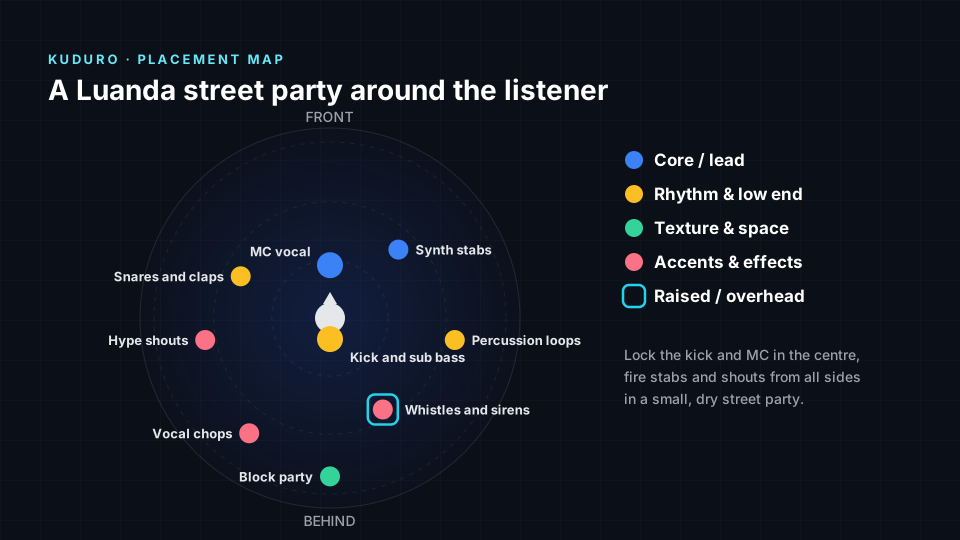
- In a spatial kuduro mix the kick and sub bass sit locked in the centre and the MC at front centre, while snares, synth stabs, percussion loops and hype shouts fire from all around the listener.
- Because the brain sorts sounds into separate streams by direction, an effect called auditory stream segregation, spreading the busy percussion and stabs around the room keeps a dense kuduro beat clear instead of crushed.
- Kuduro is loud, fast street party music, so the space should stay small and dry, with the energy coming from punch, width and movement rather than reverb.
- The kuduro immersion profile scores width 5, height 3, movement 4, low-end focus 5 and space 2 out of 5.
Kuduro is the electronic dance music of Luanda, the capital of Angola. It took shape in the late 1980s and 1990s in the city's musseques, the crowded informal neighbourhoods, while the country was still at war. Young producers built tracks on cheap home computers, mixing the rhythms of local styles such as semba and kazukuta carnival music with house, techno and Caribbean dance music that reached Angola on cassettes and through the radio. The name means "hard bottom" in Portuguese, and the dancer and singer Tony Amado is widely credited with creating the stiff, jerky dance that gave the music its name in the mid 1990s. The sound is fast, usually somewhere around 130 to 140 beats per minute, with a heavy kick, rattling snares, short synth stabs and an MC who shouts, chants and calls the dance steps. In the 2000s artists such as Sebem and Os Lambas made kuduro a national craze, and Angolan migrants carried it to Lisbon, where it fed new scenes in the city's suburbs. Kuduro suits spatial audio because the beat is a dense pile of small, sharp sounds and the music was built to be felt on a loud sound system. This guide covers how spatial audio for kuduro works, where to place each element and how to make an immersive kuduro mix. For the basics, see what spatial audio is.
Why kuduro works in spatial audio
Kuduro is built on density. A kick pounds on every beat while snares, claps and rolls fill the gaps between. Short synth stabs and sampled sounds hit on the off beats. The MC shouts over the top, and other voices answer with chants, whistles and calls. In stereo all of this fights for the same small space between two speakers, and producers often end up crushing it with compression. In an immersive mix the kick and MC hold the centre, while the percussion, stabs and shouts spread out around the listener so every hit stays sharp.
The rule: the kick and the MC in the centre, everything else firing from the sides. Keep the low end solid and focused, throw the busy rhythm and effects wide and around, and keep the room small and dry so nothing smears.
Immersive music for kuduro: what listeners hear
- A kick you feel in your chest. The kick and sub bass sit dead centre and stay tight, so the pulse drives straight through the body.
- An MC right in front of you. The lead voice is close and clear, calling the dance as if standing on the speaker stack.
- A beat that comes from everywhere. Snares on one side, percussion loops on the other and stabs at the front turn a busy rhythm into a ring of sound.
- Shouts and sirens flying past. Hype calls, whistles and vocal chops move around and above, like a crowd shouting back at the MC.
Where to place each element in a kuduro mix
| Element | Position | Height | Why it works |
|---|---|---|---|
| MC vocal | Front centre | Ear level | The lead voice calling the dance |
| Kick and sub bass | Centre | Ear level | The four on the floor pulse and the low end |
| Snares and claps | Front left | Ear level | Rolls and off beat hits beside the kick |
| Synth stabs | Front right | Ear level | Short, bright riffs answering the snares |
| Hype shouts | Left | Ear level | Crowd calls answering the MC |
| Percussion loops | Right | Ear level | Drum patterns drawn from semba and carnival |
| Whistles and sirens | Behind right | Overhead | Party effects rising above the beat |
| Vocal chops | Behind left | Ear level | Cut up samples that move around the room |
| Block party | Behind | Ear level | A small, dry street space around the crowd |
The psychoacoustics behind kuduro placement
Every position in the table above follows how the ear and brain locate sound. Here is the reason behind the main choices for kuduro.
- Kick and sub bass stay centred. The ear finds almost no direction in frequencies below roughly 80 to 100 Hz, so a heavy sub gains nothing from being spread and stays strongest when it is focused in one place (Blauert).
- Snares, stabs and percussion on different sides. The brain groups sounds into streams by pitch, timing and direction. This is auditory stream segregation (Bregman). Giving each layer its own direction lets the ear follow every pattern instead of hearing one noisy blur.
- Whistles and sirens above the beat. The outer ear shapes high frequencies differently depending on the height of a sound, and the brain reads these spectral cues as elevation. This is the role of pinna spectral cues on the median plane (Hebrank and Wright). Bright, high sounds such as whistles and sirens carry these cues well, so they lift convincingly overhead.
- Builds that rush toward you. Listeners hear sounds that grow louder as moving closer, and they overestimate how near a rising sound has come. This is the looming effect for rising intensity (Neuhoff). Snare rolls and risers before a drop already carry this sense of approach.
The immersion profile for kuduro
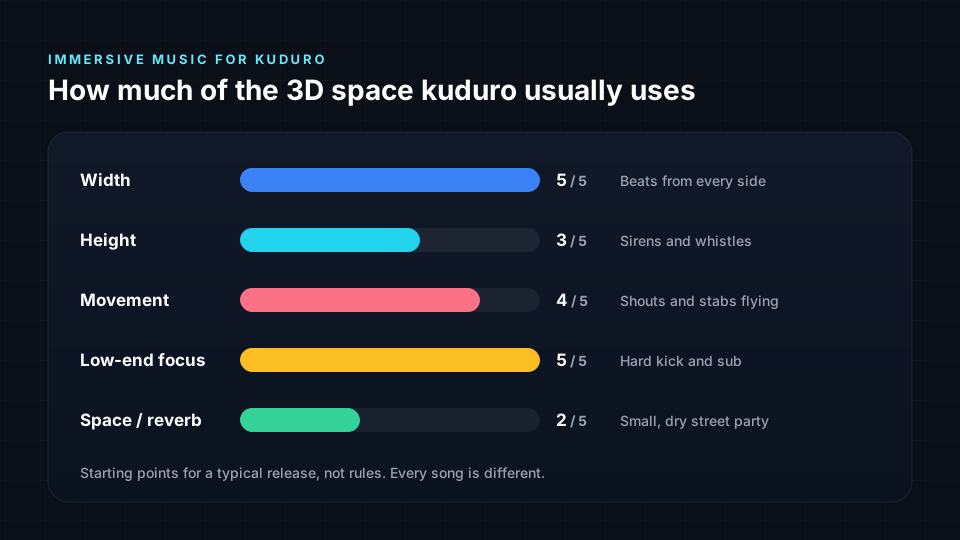
Width scores 5 because the many layers of a kuduro beat can be spread all the way around the listener. Low-end focus is also 5: the kick and sub bass are the engine of the music and must hit hard and tight. Movement is 4, from shouts, vocal chops and sirens that can swing around the room and from rolls that build toward a drop. Height is 3, since whistles, sirens and bright effects lift naturally above the beat. Space is 2, because kuduro comes from loud street parties and small clubs, and a big reverb would blur its sharp, fast rhythm.
Tips for an immersive kuduro mix
- Lock the kick and sub in the centre. Keep them mono and tight so the pulse is the same wherever the listener turns.
- Give each rhythm layer its own direction. Put snares, percussion loops and stabs in different places so the busy beat stays readable.
- Keep the MC close and dry. The lead voice should feel in front of the listener, clear over the beat and never lost in reverb.
- Let the shouts and effects move. Hype calls, sirens and chops can travel around the room, but keep the moves short and in time.
- Use a small, dry space. A short room sound adds a sense of place, but keep long reverbs off the kick and snares so the rhythm stays sharp.
Kuduro styles: Angolan kuduro, Lisbon batida and Afro-kuduro
The core placement holds for every style here: the kick and voice in the centre, the busy rhythm spread around. What changes is the tempo, the amount of vocal and how dark or bright the sound is.
Angolan Kuduro
Angolan kuduro is the original sound of Luanda, made in home studios and spread through street parties, candongueiro minibuses and local television. It is raw and fast, with a hard kick, synth stabs, chopped samples and an MC who shouts slogans, tells stories and calls new dance moves. Later Angolan producers made the beats heavier and more complex, while dancers kept inventing new steps. Place the MC at front centre, the kick and sub in the centre, snares front left and stabs front right, with hype shouts and percussion on the sides. Keep the room small and dry, like a crowded yard.
Lisbon Batida
Lisbon batida grew in the 2000s and 2010s in the suburbs of Lisbon, where young producers with roots in Angola, Cape Verde, Guinea-Bissau and São Tomé blended kuduro with tarraxinha, funaná and house. The style is mostly instrumental and often darker and more hypnotic, with dense polyrhythmic percussion and deep bass. The Lisbon label Príncipe, founded in 2011, brought producers such as DJ Marfox and DJ Nigga Fox to clubs around the world, and the group Buraka Som Sistema, formed in Amadora in 2006, had already taken a kuduro inspired sound to festivals. With fewer vocals, this style can take a wider, more circular layout: kick and sub in the centre, percussion patterns spread right around the listener and sparse synths placed high or behind.
Afro-Kuduro
Afro-kuduro here means kuduro blended with wider African and global pop, including Afro house, Afrobeats and Latin dance music. In 2010 Lucenzo's Vem Dançar Kuduro, and a remix with Don Omar called Danza Kuduro, carried the name to a worldwide audience, although that song is closer to Latin pop than to Luanda street kuduro. Modern Angolan and diaspora producers also mix kuduro rhythms with sung hooks, smoother synths and Afro house grooves. Keep the singer at front centre and the kick and bass in the centre, then spread pads and chords a little wider and give hooks a touch more space than in raw kuduro.
Related styles such as tarraxo, Afro house, gqom and Brazilian funk follow the same idea: keep the kick and voice anchored in the middle and let the rhythm and effects surround the listener.
How to make immersive kuduro from stereo
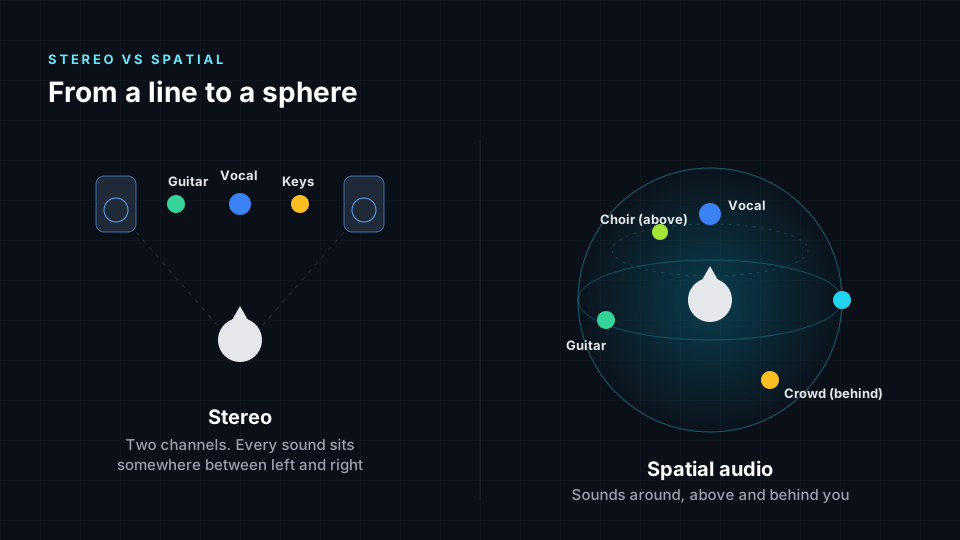
Spatial9 can create spatial audio from a stereo track in a few steps:
- Upload your stereo master or your stems.
- Spatial9's AI separates and places each part, pulling the kick, snares, synth stabs, percussion and MC apart even from loud, heavily compressed home studio masters, and spreading the rhythm around a centred low end.
- Preview it in binaural on headphones.
- Export Eclipsa Audio, ADM, binaural or Ambisonics.
- Publish a video. Create a YouTube-ready video with your immersive audio and publish it directly.
For related guides, read spatial audio for kizomba and semba and spatial audio for gqom. Every guide is listed in spatial audio and immersive music by genre.
Frequently asked questions
Does this guide cover Angolan kuduro, Lisbon batida and Afro-kuduro?
Yes. Angolan kuduro puts a shouting MC and a hard kick in the centre with the rhythm spread around a small, dry space. Lisbon batida uses a wider, more circular layout for its dense percussion. Afro-kuduro keeps the same centre but gives sung hooks and pads a little more room.
Can I make a kuduro mix in Dolby Atmos or Eclipsa Audio?
Yes. The placements in this guide work for both. Spatial9 exports ADM, the standard file used by Dolby Atmos studios, as well as Eclipsa Audio for YouTube, so one immersive kuduro mix covers both. If you plan to release the Atmos version on Apple Music, build it from your original stems or multitracks, because Apple does not accept Atmos made from a finished stereo master. See where to publish spatial audio. You may also hear this called a 3D kuduro mix or kuduro in spatial audio.
Is spatial audio good for kuduro?
Yes. Kuduro packs many short, sharp sounds into a fast beat, and in stereo they compete for space. Spatial audio gives each layer its own direction while the kick and MC stay solid in the centre, so the music sounds bigger and clearer at the same time.
Where should the kick go in an immersive kuduro mix?
Keep the kick and sub bass in the centre and at ear level. Low frequencies carry little sense of direction, and a centred kick keeps the pulse steady for dancers whichever way they turn.
Should the MC be dry or full of effects?
Mostly dry. The MC drives the dance, so keep the main voice close at front centre with only a short room. Put echoes, chops and answering shouts on separate layers around the sides and back instead of washing the lead in reverb.
How is kuduro different from gqom in spatial audio?
Kuduro is fast, bright and busy, with an MC, synth stabs and dense percussion that can be spread all around the listener. Gqom from Durban is slower, darker and more minimal, built on heavy, broken kicks and space, so it suits fewer elements and longer, darker echoes.
Can I convert an old kuduro track to spatial audio?
Yes. Spatial9 uses AI to separate the kick, percussion, synths and voices from a stereo master. Early kuduro was often made on basic software and mastered very loud, so separation is never perfect. Keep the layout simple and the kick firmly centred.
Dolby and Dolby Atmos are trademarks of Dolby Laboratories. Spatial9 is not affiliated with or endorsed by Dolby Laboratories.
Sources
- Blauert, J. (1997). Spatial Hearing: The Psychophysics of Human Sound Localization, revised edition. MIT Press. Low-frequency, elevation, distance and motion cues.
- Mills, A. W. (1958). On the minimum audible angle. Journal of the Acoustical Society of America, 30(4), 237-246.
- Hebrank, J. and Wright, D. (1974). Spectral cues used in the localization of sound sources on the median plane. Journal of the Acoustical Society of America, 56(6), 1829-1834.
- Litovsky, R. Y., Colburn, H. S., Yost, W. A. and Guzman, S. J. (1999). The precedence effect. Journal of the Acoustical Society of America, 106(4), 1633-1654.
- Neuhoff, J. G. (1998). Perceptual bias for rising tones. Nature, 395, 123-124.
- Bregman, A. S. (1990). Auditory Scene Analysis: The Perceptual Organization of Sound. MIT Press.
- Moorman, M. J. (2008). Intonations: A Social History of Music and Nation in Luanda, Angola, from 1945 to Recent Times. Ohio University Press.
Jump into the party
Upload a track to Spatial9 and hear the kick, the MC and every shout of a kuduro beat surround you in minutes. Then export it or publish it straight to YouTube.