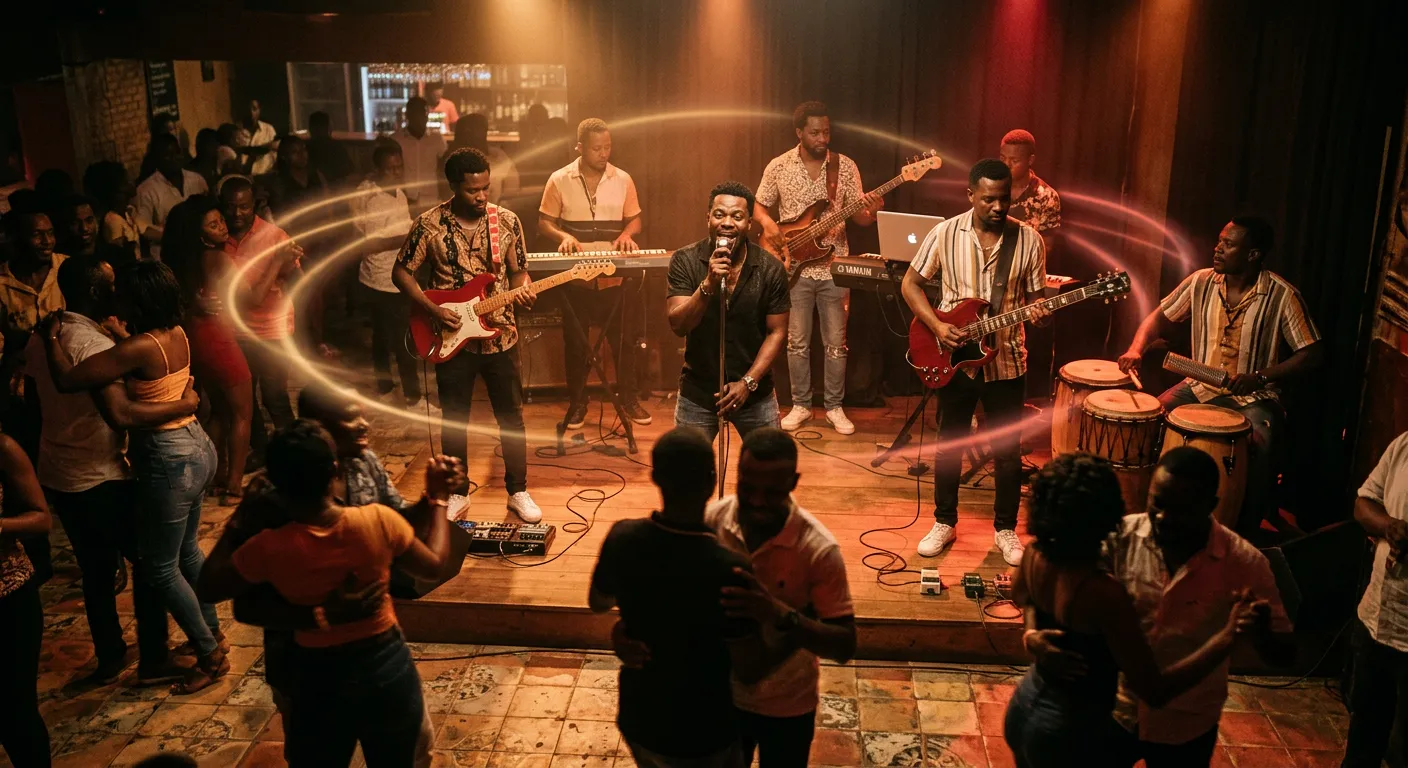
Spatial Audio & Immersive Music for Kizomba & Semba: Semba, Urban Kiz & Tarraxinha
Spatial9 Team · · 11 min read
Part of the series Spatial audio and immersive music by genre.
Key takeaways
- In a spatial kizomba and semba mix the singer sits close at front centre and the bass and kick stay centred, with guitars and keys at the front sides, percussion on the sides and a warm dance hall around the couples.
- Because the ear locates a sound by its first arrival, an effect known as the precedence effect, a close singer keeps a clear, fixed position even inside a warm room reverb.
- Kizomba and semba are music for couples dancing close, so the mix should stay steady and intimate, with almost no panning and a deep, smooth low end that carries the slow pulse.
- The kizomba and semba immersion profile scores width 3, height 2, movement 1, low-end focus 4 and space 3 out of 5.
Semba and kizomba are the great dance musics of Angola, and both grew up in Luanda. Semba took shape in the city's musseques, the poor neighbourhoods around the colonial centre, in the 1940s and 1950s. Musicians sang in Kimbundu over acoustic and later electric guitars, a bass, ngoma hand drums and the dikanza, a ridged bamboo scraper. The group N'gola Ritmos, led by Liceu Vieira Dias from the late 1940s, gave the style its shape and tied it to the growing call for independence. In the 1960s and 1970s semba became the sound of the city, played by bands such as Os Kiezos and singers such as Elias dia Kimuezo, while Bonga's album Angola 72, recorded in exile in the Netherlands, carried it abroad. Kizomba followed in the 1980s, after independence in 1975. Angolan musicians took the slower pulse of semba and the sound of zouk from the French Antilles, which was hugely popular in Angola at the time, and rebuilt it with drum machines, synthesisers and electric bass. Eduardo Paim is often named among its pioneers. The word kizomba means party in Kimbundu. The music spread through Portugal, Cape Verde and the wider Portuguese speaking world, and in the 2000s it became a partner dance taught in schools across Europe. Kizomba and semba suit spatial audio because they are intimate music for couples, with a warm voice, a deep pulse and a room full of dancers. This guide covers how spatial audio for kizomba and semba works, where to place each element and how to make an immersive kizomba and semba mix. For the basics, see what spatial audio is.
Why kizomba and semba works in spatial audio
Kizomba and semba are built on closeness. In semba, a singer tells a story while a lead guitar plays bright, looping lines and a rhythm guitar, bass and percussion keep a light, rolling groove. In kizomba the tempo drops, the drum machine lays down a slow, steady beat and the bass grows deeper and rounder, while keys and pads fill the space around the voice. In stereo these parts sit in a narrow strip, and the voice can feel distant behind the band. In an immersive mix the singer comes close, the bass holds the floor and the guitars, keys and percussion spread gently around the front and sides.
The rule: a close voice and a deep, steady bass, with the band wrapped gently around them. Keep the singer and the low end anchored in the centre, give the guitars, keys and percussion modest width and set it all in a warm dance hall with very little movement.
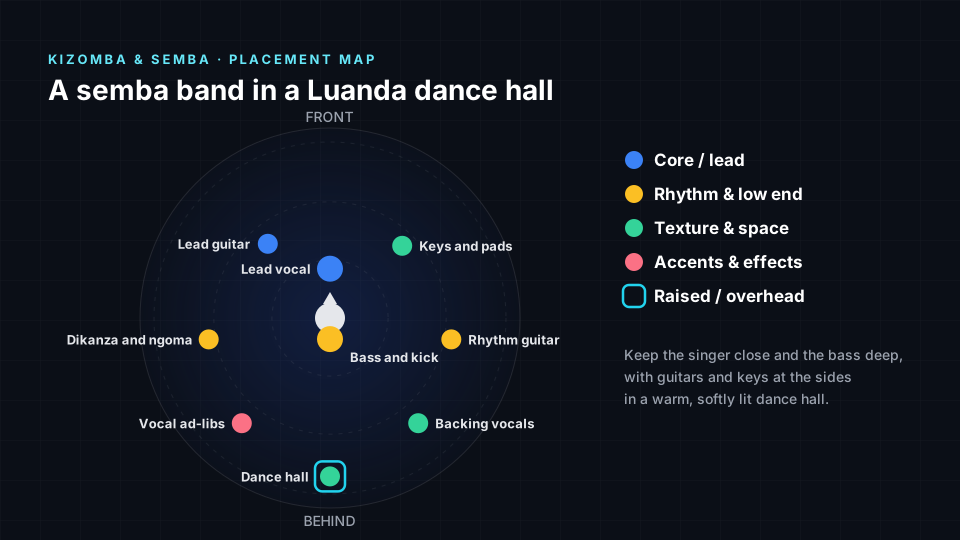
Immersive music for kizomba and semba: what listeners hear
- A voice that feels close. The singer sits just in front of the listener, warm and clear, as if singing to one couple on the floor.
- A bass you can sway to. The deep, slow bass and soft kick hold the centre and guide every step.
- A band spread around the front. The lead guitar sparkles on one side, keys and pads glow on the other and the percussion rolls along the sides.
- A warm room full of dancers. A medium dance hall sound surrounds the band without washing out the groove.
Where to place each element in a kizomba and semba mix
| Element | Position | Height | Why it works |
|---|---|---|---|
| Lead vocal | Front centre | Ear level | The storyteller singing close to the dancers |
| Bass and kick | Centre | Ear level | The slow, deep pulse that leads the dance |
| Lead guitar | Front left | Ear level | Bright looping lines in semba |
| Keys and pads | Front right | Ear level | Chords and soft synth colour in kizomba |
| Dikanza and ngoma | Left | Ear level | The scraper and hand drums of the semba groove |
| Rhythm guitar | Right | Ear level | Strummed and picked patterns under the lead |
| Backing vocals | Behind right | Ear level | Answering chorus lines around the singer |
| Vocal ad-libs | Behind left | Ear level | Short calls and whispers that drift past |
| Dance hall | Behind | Raised | A warm room around the band and the couples |
The psychoacoustics behind kizomba and semba placement
Every position in the table above follows how the ear and brain locate sound. Here is the reason behind the main choices for kizomba and semba.
- Bass and kick stay centred. The ear finds almost no direction in frequencies below roughly 80 to 100 Hz, so the deep kizomba bass gains nothing from being spread and stays fullest and steadiest in the middle (Blauert).
- Lead guitar and keys on opposite sides. The brain groups sounds into streams by pitch, timing and direction. This is auditory stream segregation (Bregman). Setting the guitar lines and the keys apart keeps them from blurring into the voice.
- A close singer inside a warm room. The ear locates a sound by the first wavefront that arrives and largely ignores the later reflections. This is the precedence effect (Litovsky and colleagues). A dry, close voice keeps a fixed, intimate position even when the room around it is warm and full.
- A dance hall with side reflections. Early reflections arriving from the sides make a sound feel wider and more enveloping. This is spatial impression from early lateral reflections (Barron and Marshall). Gentle side reflections wrap the band around the couples without adding distance.
The immersion profile for kizomba and semba
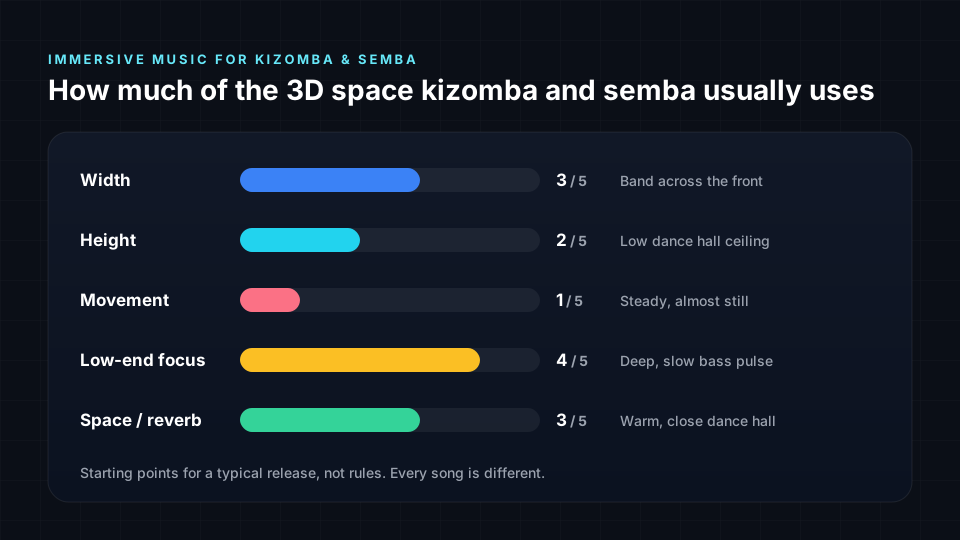
Width scores 3 because the band spreads across the front and sides, but the music stays intimate rather than surrounding. Low-end focus is 4: the bass carries the slow pulse that dancers follow, especially in kizomba and tarraxinha. Space is 3, a warm, medium dance hall that adds atmosphere without distance. Height is 2, from the soft reflection of a dance hall ceiling. Movement is 1, because couples need a steady, predictable groove and elements flying around would break the mood.
Tips for an immersive kizomba and semba mix
- Bring the singer close. Keep the lead vocal at front centre, warm and mostly dry, so it feels like it is sung to the listener.
- Keep the bass deep and centred. Hold the bass and kick in the middle and keep them smooth, so the slow pulse is always easy to follow.
- Spread the band gently. Place the lead guitar and keys at the front sides and the percussion and rhythm guitar a little wider, but avoid putting the core band behind the listener.
- Keep everything still. Let the groove and the voice carry the feeling. Use movement only for small ad-libs and effects.
- Use a warm, medium room. A soft dance hall reverb suits the music, but keep it off the bass and kick so the low end stays clean.
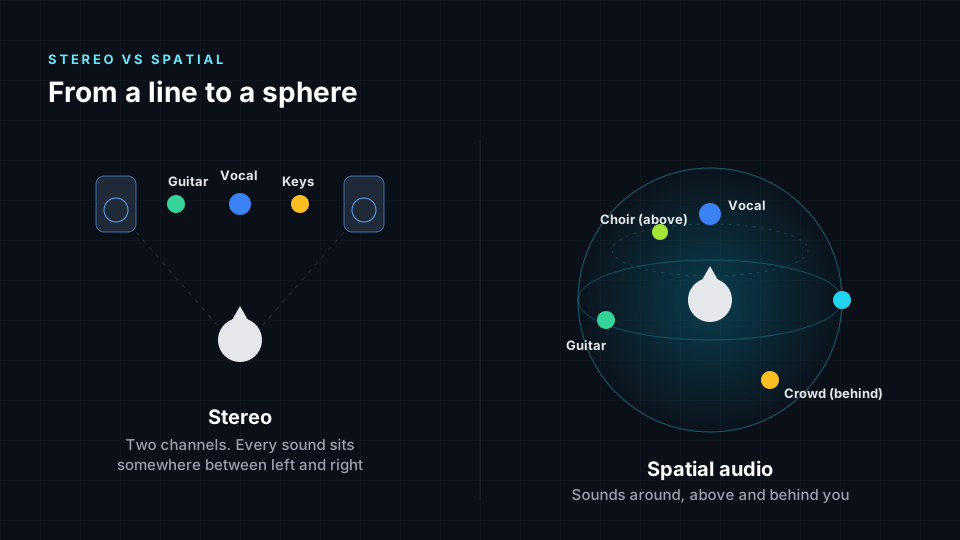
Kizomba and semba styles: semba, urban kiz and tarraxinha
The core placement holds for every style here: the voice close at the front and the bass anchored in the centre. What changes is how much live band or electronic sound there is, how slow the beat is and how much room the style needs.
Semba
Semba is the older, faster and more lively style, played by a live band with guitars, bass, percussion and voice, and danced with quick, playful steps. The lead guitar often plays bright, interlocking lines over a rolling groove from the dikanza and ngoma, and singers tell stories of city life, love and history. Seat the singer at front centre, the lead guitar front left, the rhythm guitar right and the percussion left, with the bass centred. A warm, lively dance hall suits the style, with a little more room than kizomba.
Urban Kiz
Urban kiz is a newer, dance led style that grew up in the 2010s, mainly in France, among dancers who took kizomba in a more modern, urban direction. Its music is usually slow, electronic and minimal, drawing on ghetto zouk, R&B and remixes of pop songs, with crisp drum machine beats, deep bass and plenty of space for sharp breaks and pauses in the dance. Keep the voice close and the kick and bass firmly centred, then spread pads and effects a little wider and higher. A clean, slightly darker room suits the style better than a lively live hall.
Tarraxinha
Tarraxinha is a slow, sensual Angolan style that grew out of kizomba, built on very slow drum machine beats, heavy bass and sparse synths, and often mostly instrumental. It is danced very close, with small, slow movements, and the bass carries almost the whole track. Put the bass and kick in the centre and let them be deep and full, keep any voice close and soft, and set sparse synths around the front and sides. Use a small, warm room and almost no movement.
Related styles such as Cape Verdean coladeira and funaná, Antillean zouk and Congolese rumba follow the same idea: keep the voice close, the bass grounded in the middle and the band wrapped around the dancers.
How to make immersive kizomba and semba from stereo
Spatial9 can create spatial audio from a stereo track in a few steps:
- Upload your stereo master or your stems.
- Spatial9's AI separates and places each part, pulling the singer, guitars, keys, percussion and bass apart even from older semba recordings, and setting the band gently around a close voice and a centred low end.
- Preview it in binaural on headphones.
- Export Eclipsa Audio, ADM, binaural or Ambisonics.
- Publish a video. Create a YouTube-ready video with your immersive audio and publish it directly.
For related guides, read spatial audio for kompa and zouk and spatial audio for kuduro. Every guide is listed in spatial audio and immersive music by genre.
Frequently asked questions
Does this guide cover semba, urban kiz and tarraxinha?
Yes. Semba seats a live band of guitars, bass and percussion around a close singer in a lively dance hall. Urban kiz keeps the voice and bass centred and spreads electronic pads and effects a little wider. Tarraxinha uses a small, warm room with a deep, centred bass and very few elements.
Can I make a kizomba and semba mix in Dolby Atmos or Eclipsa Audio?
Yes. The placements in this guide work for both. Spatial9 exports ADM, the standard file used by Dolby Atmos studios, as well as Eclipsa Audio for YouTube, so one immersive kizomba and semba mix covers both. If you plan to release the Atmos version on Apple Music, build it from your original stems or multitracks, because Apple does not accept Atmos made from a finished stereo master. See where to publish spatial audio. You may also hear this called a 3D kizomba mix or kizomba in spatial audio.
Is spatial audio good for kizomba and semba?
Yes. Both styles are intimate music for couples, built on a warm voice and a steady bass. Spatial audio brings the singer closer and wraps the band around the dancers, which suits the mood of the music well.
What is the difference between kizomba and semba?
Semba is the older style, from the 1950s onwards, played by live bands with guitars and percussion at a livelier tempo. Kizomba grew from semba and zouk in the 1980s and is slower and smoother, built on drum machines, synths and a deep bass. In a mix, semba needs more room for the guitars and percussion, while kizomba focuses on the voice and the bass.
Should the dance hall be part of the mix?
Yes, but gently. Both styles were made for dancing, and a warm room adds atmosphere. Keep it behind and slightly raised, and keep long reverb off the bass so the slow pulse stays clear for dancers.
How is kizomba different from zouk in spatial audio?
Zouk from the French Antilles is usually faster and brighter, with busier keyboards, horns and percussion that can spread wider around the listener. Kizomba is slower and more intimate, so it suits a narrower band, a closer voice and a heavier focus on the bass in the centre.
Can I convert an old semba recording to spatial audio?
Yes. Spatial9 uses AI to separate the voice, guitars, bass and percussion from a stereo or mono master. Separation is never perfect with older recordings, so keep the layout simple and the room moderate.
Dolby and Dolby Atmos are trademarks of Dolby Laboratories. Spatial9 is not affiliated with or endorsed by Dolby Laboratories.
Sources
- Blauert, J. (1997). Spatial Hearing: The Psychophysics of Human Sound Localization, revised edition. MIT Press. Low-frequency, elevation, distance and motion cues.
- Mills, A. W. (1958). On the minimum audible angle. Journal of the Acoustical Society of America, 30(4), 237-246.
- Litovsky, R. Y., Colburn, H. S., Yost, W. A. and Guzman, S. J. (1999). The precedence effect. Journal of the Acoustical Society of America, 106(4), 1633-1654.
- Barron, M. and Marshall, A. H. (1981). Spatial impression due to early lateral reflections in concert halls. Journal of Sound and Vibration, 77(2), 211-232.
- Bregman, A. S. (1990). Auditory Scene Analysis: The Perceptual Organization of Sound. MIT Press.
- Moorman, M. J. (2008). Intonations: A Social History of Music and Nation in Luanda, Angola, from 1945 to Recent Times. Ohio University Press.
Hold the dance close
Upload a track to Spatial9 and hear the singer step close and the bass wrap around you in minutes. Then export it or publish it straight to YouTube.