Spatial Audio & Immersive Music for EDM: Complete Guide
Spatial9 Team · · Updated
Part of the series Spatial audio and immersive music by genre.
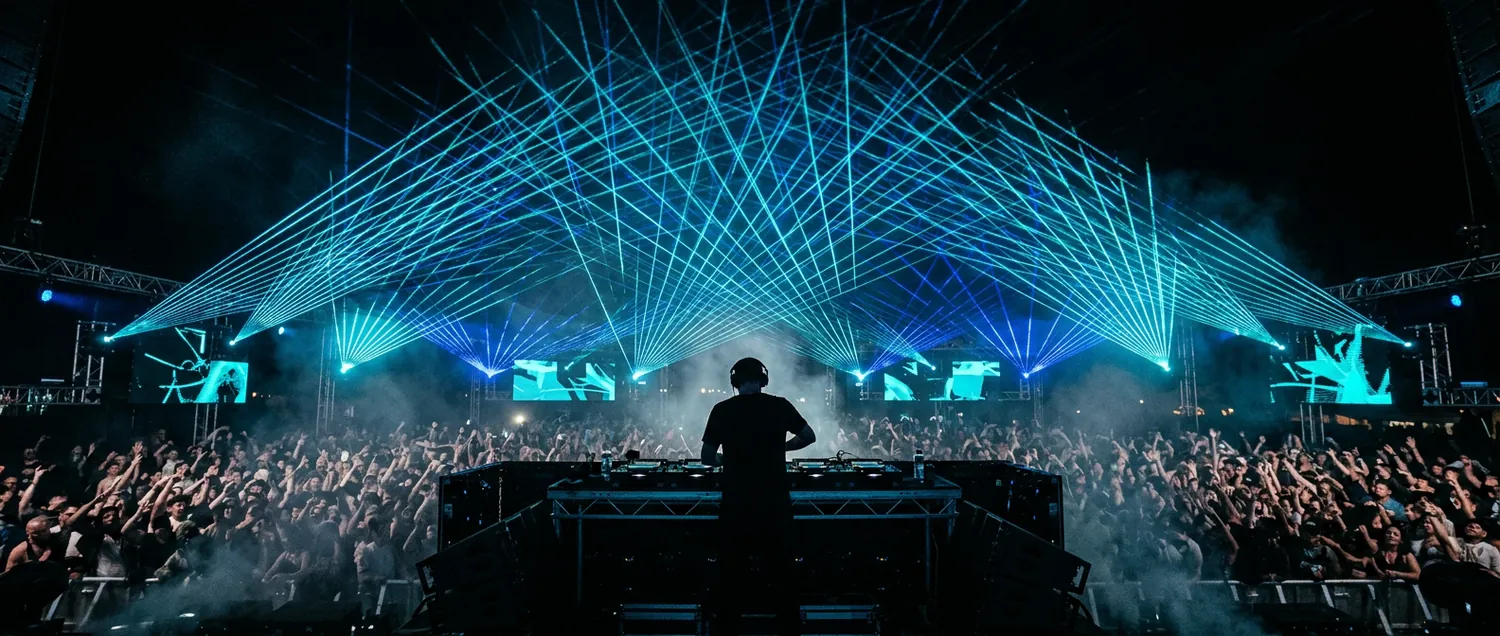
Electronic dance music was always meant to be felt in a big space: a club, a warehouse, a festival field. Stereo shrinks all of that into a pair of headphones. Spatial audio brings the size back. This guide covers how spatial audio for EDM works, where to place each element, and how to create immersive EDM from a stereo track. For the fundamentals, see what spatial audio is.
Why EDM is made for spatial audio
Unlike acoustic genres, EDM does not have to copy a real room. Every sound is synthetic, so you are free to put it anywhere and move it however you like. That makes EDM the genre that can use the most of the 3D space: width, height and movement all score high.
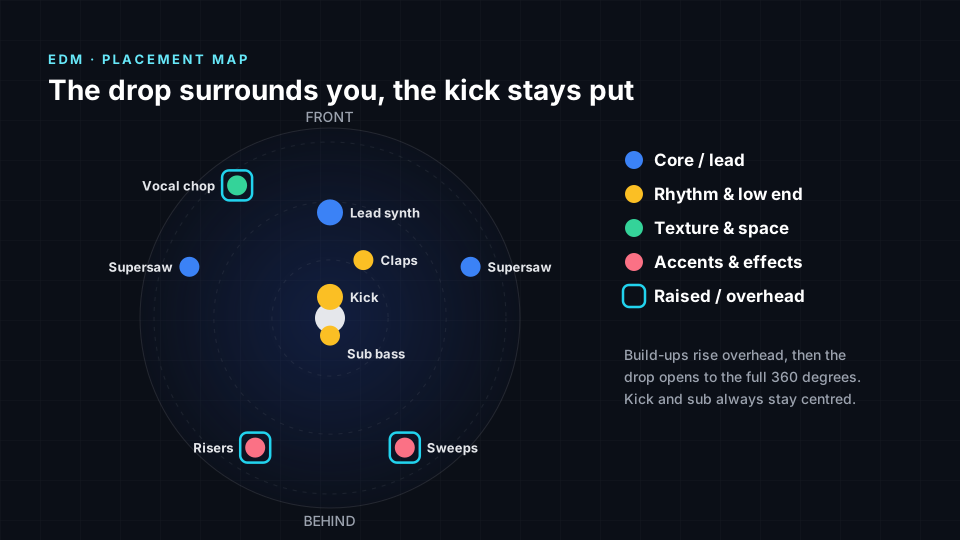
There is one firm rule. The kick and sub bass never move. Everything else is fair game.
Immersive music for EDM: what listeners hear
- A build-up that climbs. Risers and white noise sweep upwards and overhead, so tension builds physically, not just in volume.
- A drop that explodes outward. The moment the drop hits, the supersaws and chords open up all around you.
- Motion you can follow. Filters, arps and effects travel around the listener, turning automation into choreography.
Where to place each element in an EDM mix
| Element | Position | Height | Why it works |
|---|---|---|---|
| Kick | Centre | Ear level | The anchor of the whole track |
| Sub bass | Centre | Ear level | Moving sub energy weakens the drop |
| Lead synth | Front | Ear level | Keeps the main hook in focus |
| Supersaws and chords | Wide left and right, wrapping behind on the drop | Ear level to raised | Creates the wall of sound |
| Risers and sweeps | Behind, travelling overhead | Raised | Turns the build-up into a physical lift |
| Vocal chops | Front left, wide | Raised | Adds hooks without clashing with the lead |
| Claps and percussion | Close to centre | Ear level | Keeps the groove tight |
The psychoacoustics behind EDM placement
Every position in the table above follows how the ear and brain locate sound. Here is the reason behind the main choices for EDM.
- Kick and sub centred. Deep bass is the hardest sound for the ear to locate. Its wavelengths are several metres long, far larger than your head, so both ears receive almost the same level and only a tiny timing difference. The drop depends on a low end that never shifts.
- Supersaws wide, wrapping behind on the drop. Concert hall research shows that reflections from the sides, not from the front, create the sense of width and of being surrounded (Barron and Marshall, 1981). Opening the chords out to the sides and behind is what makes the drop feel like it surrounds you.
- Risers and sweeps travelling overhead. Sounds that grow louder or rise in pitch are heard as approaching, and listeners tend to overestimate that change (Neuhoff, 1998). That bias is why rising sounds build tension so well. Height and growing intensity together make a build-up feel unstoppable.
- Lead synth in front. The ear's directional resolution is finest in front of the face and much coarser to the sides and behind, so the part you must follow belongs in front. The hook is what people sing back, so it stays where hearing is sharpest.
The immersion profile for EDM
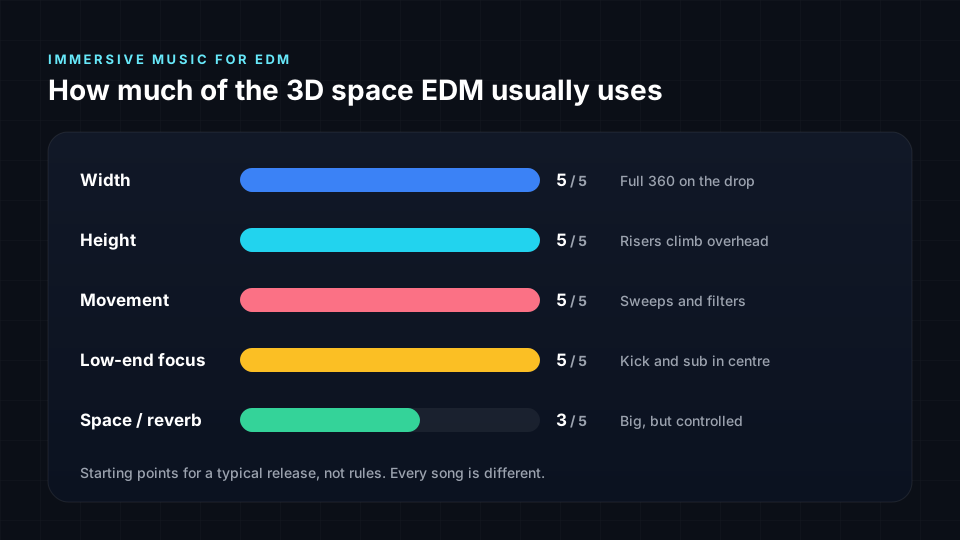
EDM uses nearly the whole 3D space. The one area to hold back is reverb. Huge washes in every direction blur the drop, so keep the big spaces for breakdowns and keep the drop tight.
Using arrangement and space together
In EDM, the space itself should follow the structure of the track:
- Intro: fairly narrow and in front, with a hint of what is coming.
- Build-up: elements close in and rise overhead as tension increases.
- Drop: everything opens to the full 360 degrees at once.
- Breakdown: pads float overhead and around you, with the drums pulled back.
Tips for an immersive EDM mix
- Keep the kick and sub centred. A drop that feels weak in 3D almost always has bass that has drifted.
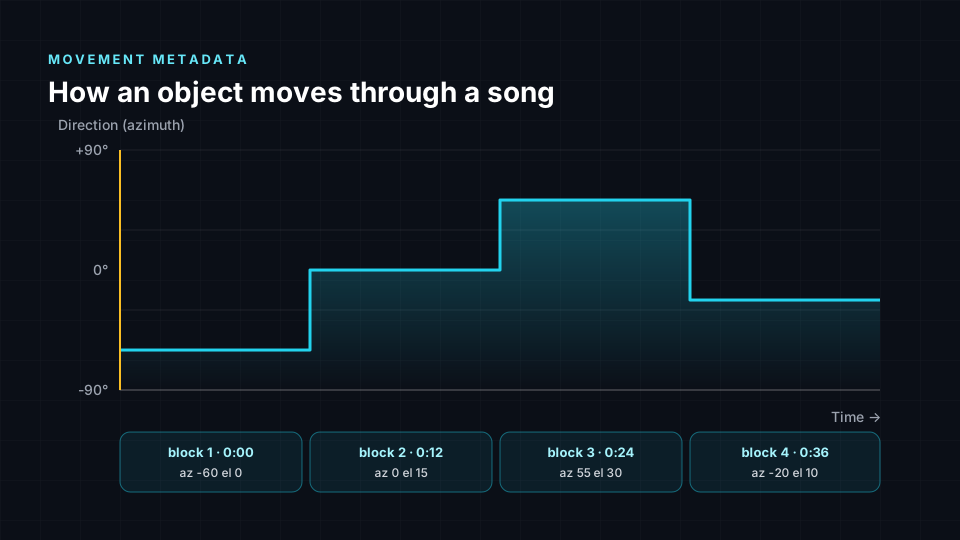
- Sync movement to tempo. Sweeps that travel in bars or beats feel musical. Random motion feels like a demo.
- Save full width for the drop. If everything is wide all the time, the drop has nowhere to go.
- Use height for tension. Overhead positions are perfect for risers, snare rolls and filter sweeps.
- Check on headphones. Most fans will hear your track on earbuds, through binaural rendering.
How to make immersive EDM from a stereo track
Spatial9 can create spatial audio from your stereo track in a few steps:
- Upload your stereo master or your stems.
- Spatial9's AI separates and places each part in 3D, with motion that follows the music.
- Preview it in binaural on headphones.
- Export Eclipsa Audio, ADM, binaural or Ambisonics.
- Publish a visualiser. Create a YouTube-ready video with your immersive audio and publish it directly.
For the slower, floating side of electronic music, read spatial audio for ambient. For more crossover tracks, see spatial audio for pop. Every guide is listed in spatial audio and immersive music by genre.
Frequently asked questions
Can I make an EDM mix in Dolby Atmos or Eclipsa Audio?
Yes. The placements in this guide work for both. Spatial9 exports ADM, the standard file used by Dolby Atmos studios, as well as Eclipsa Audio for YouTube, so one immersive EDM mix covers both. You may also hear this called a 3D EDM mix or EDM in spatial audio. It is the same idea.
Is spatial audio good for EDM?
Yes. EDM is one of the best genres for spatial audio, because synthetic sounds can be placed and moved anywhere. Drops can surround the listener and build-ups can rise overhead.
Should bass move in an immersive EDM mix?
No. Keep the kick and sub bass centred and steady. Movement belongs to synths, risers, sweeps and effects.
How do I make a drop feel bigger in spatial audio?
Keep the build-up narrower and closer, then open everything to the full 360 degrees at the drop. The contrast in space makes the drop feel huge.
Can I convert a finished EDM track to spatial audio?
Yes. Spatial9 uses AI to generate an immersive mix from a stereo master and exports it as Eclipsa Audio, ADM, binaural or Ambisonics.
Does immersive EDM work on regular headphones?
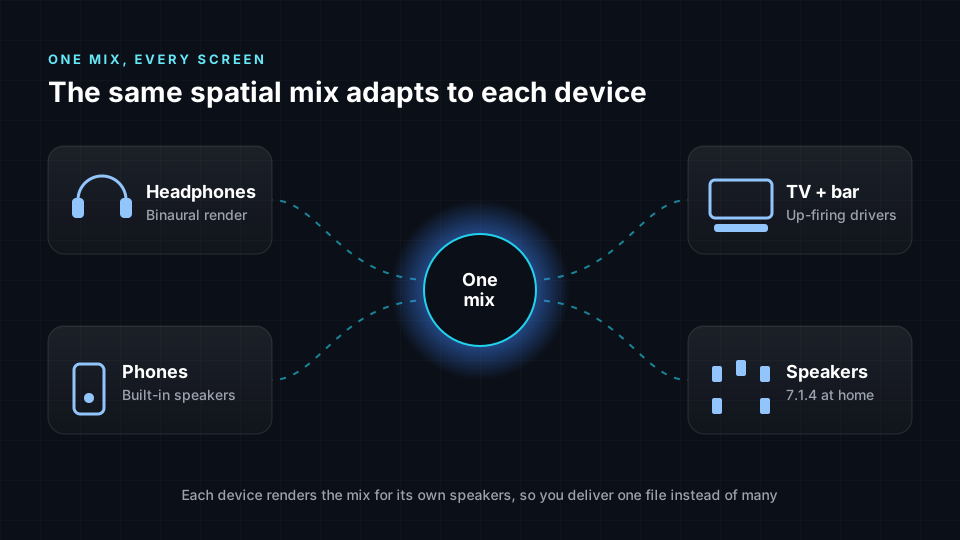
Yes. Devices render the immersive mix binaurally, so listeners hear the 3D effect on any regular headphones.
Dolby and Dolby Atmos are trademarks of Dolby Laboratories. Spatial9 is not affiliated with or endorsed by Dolby Laboratories.
Sources
- Blauert, J. (1997). Spatial Hearing: The Psychophysics of Human Sound Localization, revised edition. MIT Press. Low-frequency, elevation, distance and motion cues.
- Mills, A. W. (1958). On the minimum audible angle. Journal of the Acoustical Society of America, 30(4), 237-246.
- Hebrank, J. and Wright, D. (1974). Spectral cues used in the localization of sound sources on the median plane. Journal of the Acoustical Society of America, 56(6), 1829-1834.
- Bronkhorst, A. W. (2000). The cocktail party phenomenon: a review of research on speech intelligibility in multiple-talker conditions. Acta Acustica united with Acustica, 86, 117-128.
- Litovsky, R. Y., Colburn, H. S., Yost, W. A. and Guzman, S. J. (1999). The precedence effect. Journal of the Acoustical Society of America, 106(4), 1633-1654.
- Barron, M. and Marshall, A. H. (1981). Spatial impression due to early lateral reflections in concert halls. Journal of Sound and Vibration, 77(2), 211-232.
- Neuhoff, J. G. (1998). Perceptual bias for rising tones. Nature, 395, 123-124.
- Bregman, A. S. (1990). Auditory Scene Analysis: The Perceptual Organization of Sound. MIT Press.
Hear your drop in 3D
Upload a track to Spatial9 and hear your drop surround you in minutes. Then export it or publish it straight to YouTube.