
Spatial Audio & Immersive Music for Future Bass: Kawaii & Melodic Future Bass
Spatial9 Team · · 8 min read
Part of the series Spatial audio and immersive music by genre.
Key takeaways
- In a spatial future bass mix the kick, snare, 808 sub and lead vocal stay centred, while pumping supersaw chords spread wide and raised on both sides and vocal chops, hats and risers surround the listener.
- Future bass chords work best split hard left and right and lifted above ear level, because strong sound arriving from the sides is what the ear reads as width and spaciousness.
- Risers placed above and behind the listener feel more dramatic because the ear is biased to hear rising tones as approaching sounds.
- The future bass immersion profile scores width 5, height 4, movement 4, low-end focus 4 and space 4 out of 5.
Future bass grew out of the online beat scene of the early 2010s, shaped by labels such as Glasgow's LuckyMe and Australia's Future Classic and spread through SoundCloud. Its defining sound is the chord drop: detuned supersaw chords that swell and pump with heavy sidechain compression, often wobbled with LFOs on volume or pitch. Underneath sit half-time, trap-influenced drums, a long 808 sub, crisp hat rolls, pitched vocal chops and big white noise risers. The result is emotional, bright and huge, and it depends on a sense of size that stereo can only hint at. This guide covers how spatial audio for future bass works, where to place each element and how to make an immersive future bass mix. For the basics, see what spatial audio is.
Why future bass is ideal for spatial audio
The chords are the star of future bass, and they are built to feel enormous. In stereo, producers stack voices and widen them until the mix risks collapsing in mono. In an immersive mix the chords no longer need tricks: they can simply come from the sides and from above, leaving the centre free for the vocal, the snare and the 808.
The rule: a solid core, a blooming sky. The drums and vocal stay locked in front while the chords swell around and over the listener.
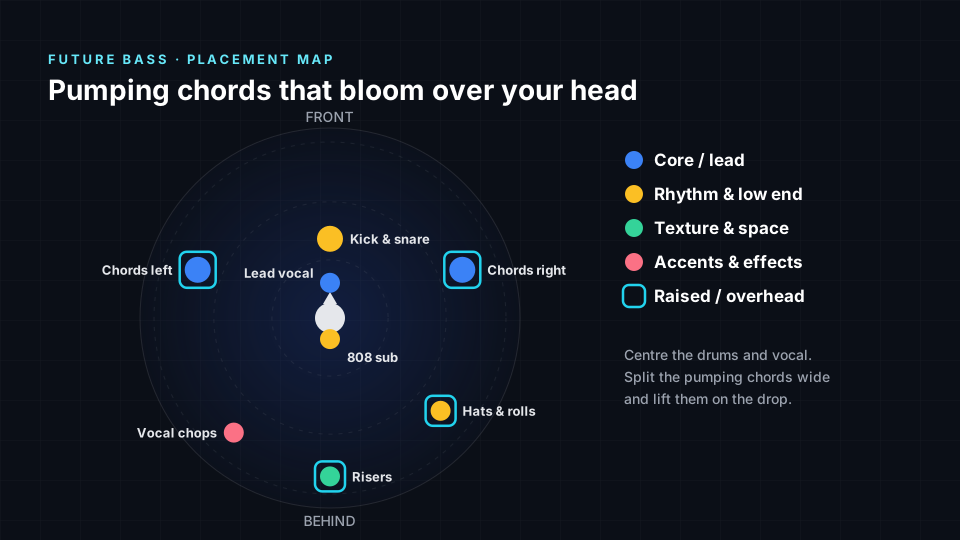
Immersive music for future bass: what listeners hear
- Chords that bloom above you. Each sidechain pump opens a wall of sound on both sides.
- A vocal that stays close. The lead floats in the middle, clear of the chord stack.
- Chops that dance behind. Pitched vocal fragments flick from side to side at the rear.
- Risers that lift you up. Noise sweeps climb overhead before every drop.
Where to place each element in a future bass mix
| Element | Position | Height | Why it works |
|---|---|---|---|
| Kick & snare | Front centre | Ear level | Half-time punch that anchors the drop |
| 808 sub | Centre | Ear level | Deep, steady weight |
| Lead vocal | Front centre | Ear level | Emotional focus |
| Chords left | Left | Raised | One half of the supersaw wall |
| Chords right | Right | Raised | The other half of the wall |
| Vocal chops | Behind left, moving | Ear level | Playful melodic answers |
| Hats & rolls | Behind right | Raised | Bright trap-style detail |
| Risers | Behind, moving | Raised | Tension that climbs into the drop |
The psychoacoustics behind Future Bass placement
Every position in the table above follows how the ear and brain locate sound. Here is the reason behind the main choices for Future Bass.
- 808 sub in the centre. Below roughly 80 to 100 Hz, the ear has almost nothing to work out direction from, so the long 808 tail gains nothing by being placed off centre. Keeping it centred keeps the low end solid on every system, from a club rig to headphones.
- Chords wide on both sides. Research on concert halls shows that strong sound arriving from the sides early is what creates a sense of width and envelopment. Supersaw chords coming from left and right, rather than from the front, give the drop that feeling of being surrounded.
- Vocal chops behind, lead in front. The brain sorts a mix into separate streams using pitch, timbre and location. Chops share the lead's timbre, so moving them behind lets the ear hear them as a separate playful line rather than as clutter on top of the singer.
- Risers and hats raised. The outer ear shapes treble above roughly 4 kHz differently for each elevation, so bright noise sweeps and hat rolls are the parts that convincingly rise. Listeners are also biased to hear rising tones as approaching, which makes a riser climbing overhead feel even more urgent.
The immersion profile for future bass
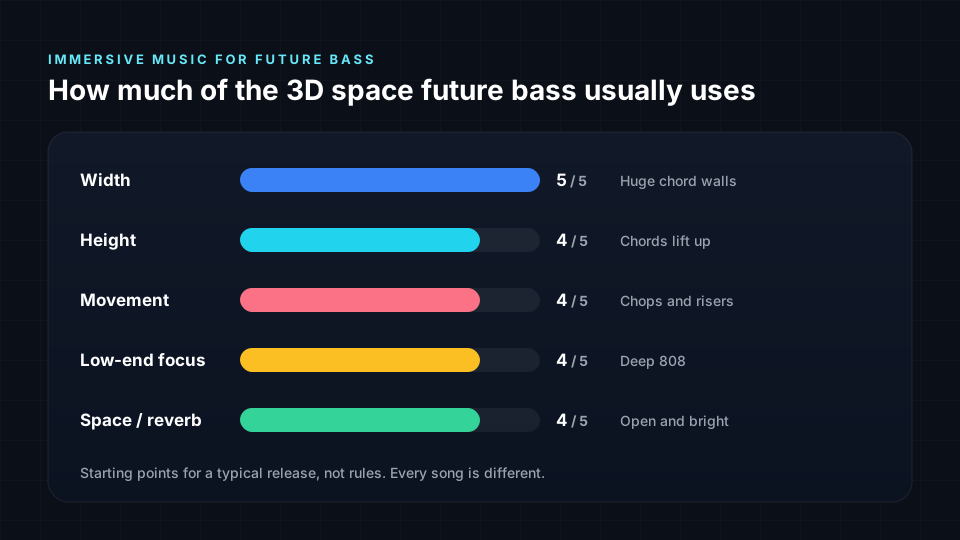
Width is at maximum because the chords are meant to fill the room. Height and movement are high: chords lift on the drop, chops dance and risers climb. The low end is deep but simple, and the space is open and bright rather than dark or cavernous.
Tips for an immersive future bass mix
- Split the chord stack. Send the supersaw layers left and right instead of piling them in front.
- Keep the sidechain pump. The pumping is part of the sound, so let the whole chord wall breathe with the kick.
- Lift the chords on the drop. Keep them lower in the verse and raise them when the drop hits.
- Move the chops, not the vocal. The lead stays centred while the fragments play around it.
- Point the risers upward. A sweep that climbs overhead sets up the drop better than one that only gets louder.
Future bass styles: kawaii and melodic future bass
The core placement from this guide still applies to both styles: kick, snare, 808 sub and lead vocal stay centred while the pumping supersaw chords spread wide and raised on either side. What changes is which bright details surround the listener and how much emotional space and reverb you build around the chords and the voice.
Kawaii future bass
Kawaii future bass is the cute, playful side of the genre, with bright, pitched-up vocal chops, bells, music box and toy-like sounds, game-style bleeps and sugary chord progressions. In a spatial mix the vocal chops move more, hopping between behind left and the sides in quick, bouncy steps. Bells and sparkles can sit raised and close, while the chord wall stays a little narrower and drier so the small details shine. Keep the 808 sub, kick and snare firmly centred and dry.
Melodic future bass
Melodic future bass is the emotional, cinematic side: lush, slow-moving chord progressions, huge supersaws, piano, soaring vocals and long, expressive build-ups. Here the chords are the star, so spread them as wide as possible and lift them higher than in the main guide, with generous reverb. Keep the lead vocal close at front centre, let the risers climb slowly behind into the drop and move vocal chops less, so the space feels open, deep and calm while the drop still hits.
How to make immersive future bass from stereo
Spatial9 can create spatial audio from a stereo track in a few steps:
- Upload your stereo master or your stems.
- Spatial9's AI separates and places each part, centring the vocal and 808 and spreading the chords wide and high.
- Preview it in binaural on headphones.
- Export Eclipsa Audio, ADM, binaural or Ambisonics.
- Publish a video. Create a YouTube-ready video with your immersive audio and publish it directly.
For related guides, read spatial audio for future pop and spatial audio for dubstep. Every guide is listed in spatial audio and immersive music by genre.
Frequently asked questions
Does this guide cover kawaii and melodic future bass?
Yes. Both styles keep the kick, snare, 808 sub and lead vocal centred with supersaw chords wide and raised. Kawaii future bass moves its bright, pitched-up vocal chops more and places bells and sparkles raised and close, with a slightly narrower, drier chord wall. Melodic future bass spreads the chords as wide and high as possible with generous reverb and slow risers behind.
Can I make a future bass mix in Dolby Atmos or Eclipsa Audio?
Yes. The placements in this guide work for both. Spatial9 exports ADM, the standard file used by Dolby Atmos studios, as well as Eclipsa Audio for YouTube, so one immersive future bass mix covers both. If you plan to release the Atmos version on Apple Music, build it from your original stems or multitracks, because Apple does not accept Atmos made from a finished stereo master. See where to publish spatial audio. You may also hear this called a 3D future bass mix or future bass in spatial audio.
Is spatial audio good for future bass?
Yes. Future bass is built around huge, wide chords, and an immersive mix lets them surround the listener without crowding the vocal or the drums.
Where should the supersaw chords go in an immersive future bass mix?
Split them to the left and right and lift them above ear level, especially on the drop. Keep the front centre free for the vocal and snare.
Should the 808 move with the chords?
No. The 808 carries the weight of the track and its low notes give little sense of direction. Keep it centred and let the chords and chops provide the motion.
Can I convert a finished future bass track to spatial audio?
Yes. Spatial9 uses AI to generate an immersive mix from a stereo master and exports it as Eclipsa Audio, ADM, binaural or Ambisonics.
Does immersive future bass work on normal headphones?
Yes. The mix is rendered binaurally, so the chord wall and rising sweeps work on any regular headphones.
Dolby and Dolby Atmos are trademarks of Dolby Laboratories. Spatial9 is not affiliated with or endorsed by Dolby Laboratories.
Sources
- Blauert, J. (1997). Spatial Hearing: The Psychophysics of Human Sound Localization, revised edition. MIT Press. Low-frequency, elevation, distance and motion cues.
- Mills, A. W. (1958). On the minimum audible angle. Journal of the Acoustical Society of America, 30(4), 237-246.
- Hebrank, J. and Wright, D. (1974). Spectral cues used in the localization of sound sources on the median plane. Journal of the Acoustical Society of America, 56(6), 1829-1834.
- Bronkhorst, A. W. (2000). The cocktail party phenomenon: a review of research on speech intelligibility in multiple-talker conditions. Acta Acustica united with Acustica, 86, 117-128.
- Litovsky, R. Y., Colburn, H. S., Yost, W. A. and Guzman, S. J. (1999). The precedence effect. Journal of the Acoustical Society of America, 106(4), 1633-1654.
- Barron, M. and Marshall, A. H. (1981). Spatial impression due to early lateral reflections in concert halls. Journal of Sound and Vibration, 77(2), 211-232.
- Neuhoff, J. G. (1998). Perceptual bias for rising tones. Nature, 395, 123-124.
- Bregman, A. S. (1990). Auditory Scene Analysis: The Perceptual Organization of Sound. MIT Press.
Let your chords bloom around the room
Upload a track to Spatial9 and hear your future bass drop open up around you in minutes. Then export it or publish it straight to YouTube.