Spatial Audio & Immersive Music for Reggae: Complete Guide
Spatial9 Team · · Updated
Part of the series Spatial audio and immersive music by genre.
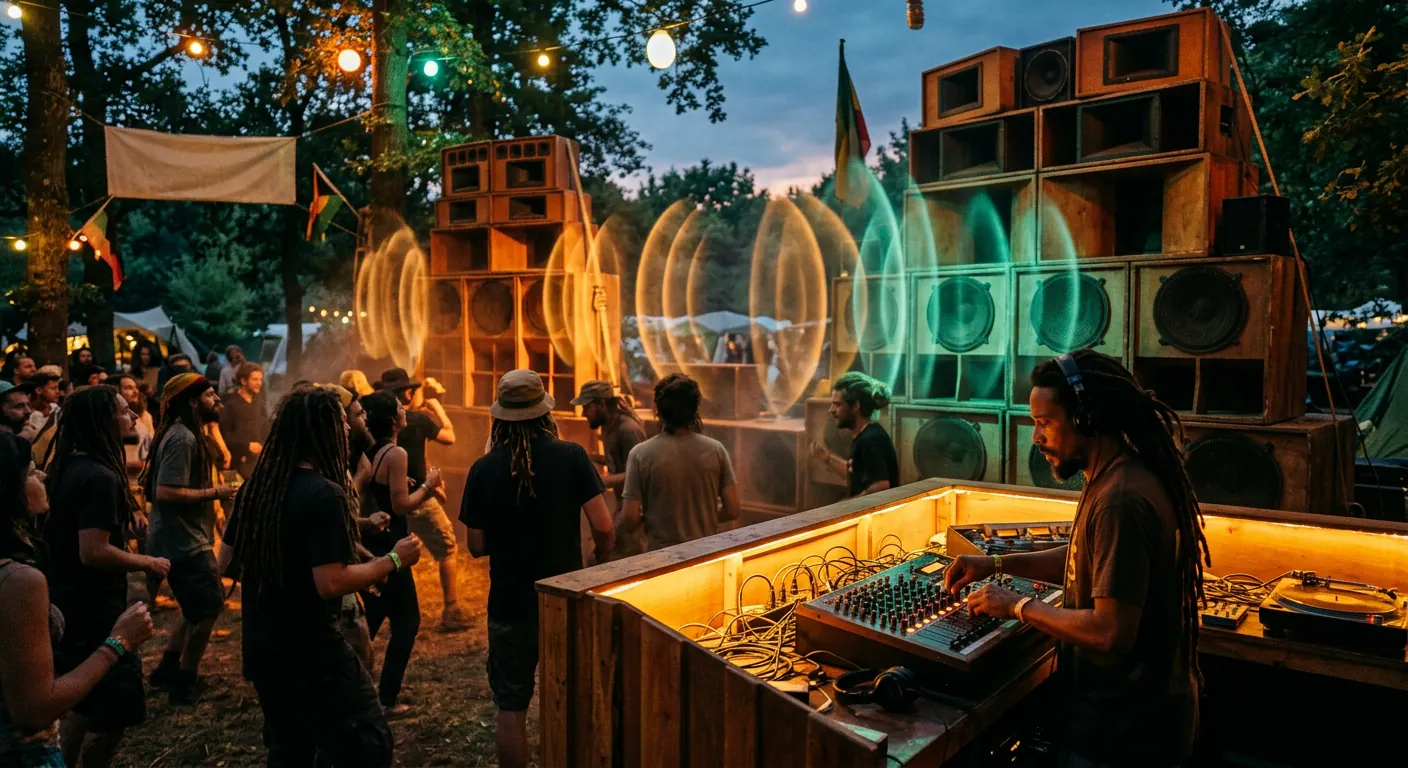
Reggae and dub have been experimenting with space since the 1970s. Dub engineers used delays, spring reverbs and mutes to make the mixing desk an instrument. Spatial audio is the natural next step: echoes that used to bounce left and right can now travel all around and above the listener. This guide covers how spatial audio for reggae works, where to place each element and how to make immersive reggae music from a stereo track. For the basics, see what spatial audio is.
Why reggae and dub are made for spatial audio
Dub is already a spatial art form. Its signature effects, long delays, spring reverb and sounds that drop in and out, are all about space. In 3D, those effects become even more dramatic, while the riddim stays solid in the centre.
The rule: bass rules the centre. Reggae bass is the lead instrument. Keep it deep, steady and centred, and let the echoes do the travelling.
Immersive music for reggae: what listeners hear
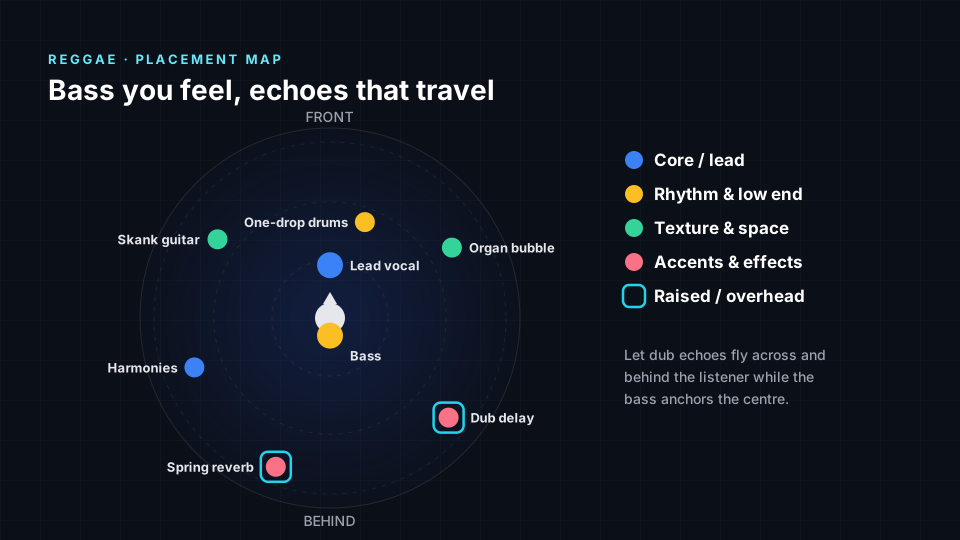
- Bass you feel. Deep, round and centred, just like a sound system.
- A riddim with space. One-drop drums in front, skank guitar and organ bubble on opposite sides.
- Echoes that fly. Dub delays travel across and behind the listener.
- Reverb above you. Spring reverb and snare echoes rise overhead.
Where to place each element in a reggae mix
| Element | Position | Height | Why it works |
|---|---|---|---|
| Lead vocal | Front centre | Ear level | Clear message and melody |
| Bass | Centre | Ear level | The lead instrument of reggae |
| One-drop drums | Front centre | Ear level | The heartbeat of the riddim |
| Skank guitar | Left side | Ear level | Classic offbeat chop |
| Organ bubble | Right side | Ear level | Answers the skank |
| Harmonies | Behind left | Ear level | Warm and wide |
| Dub delay | Behind, travelling | Raised | Echoes that fly past |
| Spring reverb | Behind | Raised | Classic dub space |
The psychoacoustics behind reggae placement
Every position in the table above follows how the ear and brain locate sound. Here is the reason behind the main choices for reggae.
- Bass and one-drop drums centred. Deep bass is the hardest sound for the ear to locate. Its wavelengths are several metres long, far larger than your head, so both ears receive almost the same level and only a tiny timing difference. Reggae is built on the bass, and it must stay heavy and stable.
- Skank guitar left, organ bubble right. Sounds that overlap in pitch mask each other less when they arrive from different directions, so spreading them keeps every part clear without extra EQ. Both play on the off-beat, so splitting them keeps the rhythm crisp.
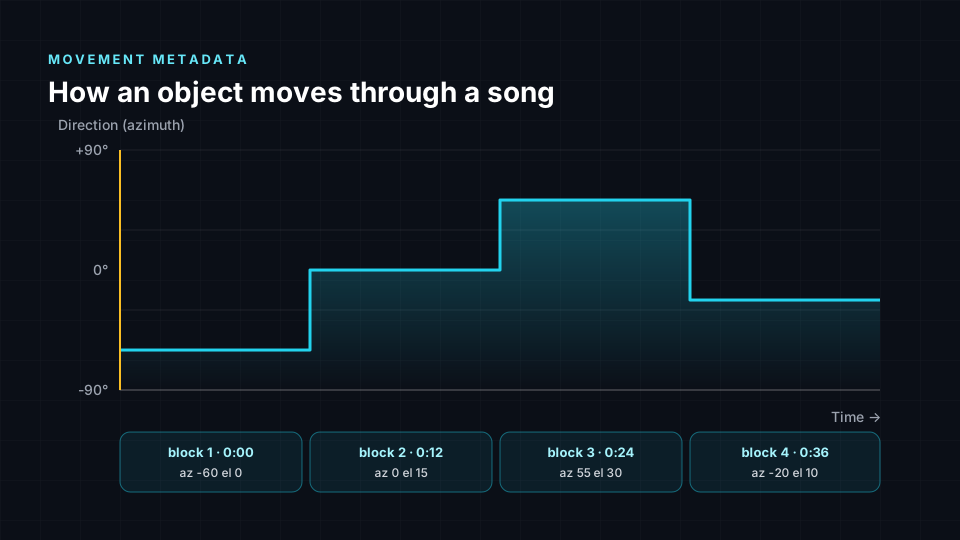
- Dub delay travelling behind. The ear needs a larger angle to notice movement than to notice position, so slow, wide moves are followed easily while fast ones blur into a wash. Echoes that move slowly behind the listener recreate the classic dub experience.
- Spring reverb behind. Thanks to the precedence effect, early reflections from a room do not pull a source sideways. They are heard as size and space around it. Reverb behind adds space without pulling the band away from the front.
The immersion profile for reggae
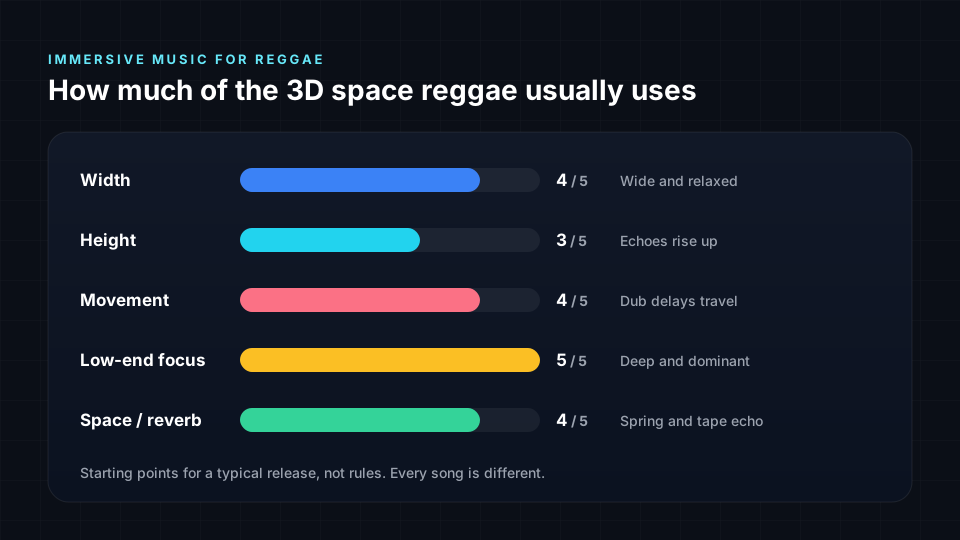
Reggae scores top marks on low-end focus and high on movement and space, mostly thanks to dub effects. The riddim itself stays still.
Tips for an immersive reggae mix
- Centre the bass. The bassline must stay locked and deep for the whole track.
- Separate the skank and bubble. Put them on opposite sides so the offbeat feels wide.
- Let delays travel. A dub echo that moves from front to back is one of the most exciting sounds in 3D.
- Use height for reverb. Spring reverb and snare echoes overhead feel huge without clouding the bass.
- Use drops for drama. When parts drop out in dub sections, the space around the listener opens up.
How to make immersive reggae from stereo
Spatial9 can create spatial audio from a stereo track in a few steps:
- Upload your stereo master or your stems.
- Spatial9's AI separates and places each part, keeping the bass solid.
- Preview it in binaural on headphones.
- Export Eclipsa Audio, ADM, binaural or Ambisonics.
- Publish a video. Create a YouTube-ready video with your immersive audio and publish it directly.
For related guides, read spatial audio for Afrobeats and spatial audio for Latin and reggaeton. Every guide is listed in spatial audio and immersive music by genre.
Frequently asked questions
Can I make a reggae mix in Dolby Atmos or Eclipsa Audio?
Yes. The placements in this guide work for both. Spatial9 exports ADM, the standard file used by Dolby Atmos studios, as well as Eclipsa Audio for YouTube, so one immersive reggae mix covers both. You may also hear this called a 3D reggae mix or reggae in spatial audio. It is the same idea.
Is spatial audio good for reggae?
Yes. Reggae and dub have always played with space, and spatial audio lets echoes and reverb travel all around the listener.
Should the bass move in an immersive reggae mix?
No. The bass is the lead instrument in reggae. Keep it deep, steady and centred.
How does dub work in spatial audio?
Dub delays and spring reverb can move around and above the listener, making classic dub effects even more dramatic.
Can I convert a finished reggae track to spatial audio?
Yes. Spatial9 uses AI to generate an immersive mix from a stereo master and exports it as Eclipsa Audio, ADM, binaural or Ambisonics.
Does immersive reggae work on regular headphones?
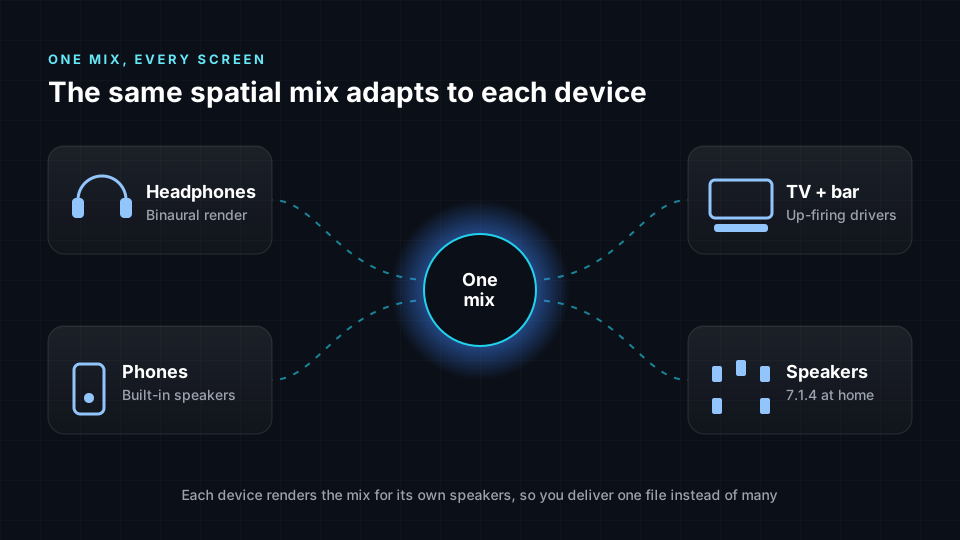
Yes. Devices render the mix binaurally, so the 3D effect works on any regular headphones.
Dolby and Dolby Atmos are trademarks of Dolby Laboratories. Spatial9 is not affiliated with or endorsed by Dolby Laboratories.
Sources
- Blauert, J. (1997). Spatial Hearing: The Psychophysics of Human Sound Localization, revised edition. MIT Press. Low-frequency, elevation, distance and motion cues.
- Mills, A. W. (1958). On the minimum audible angle. Journal of the Acoustical Society of America, 30(4), 237-246.
- Hebrank, J. and Wright, D. (1974). Spectral cues used in the localization of sound sources on the median plane. Journal of the Acoustical Society of America, 56(6), 1829-1834.
- Bronkhorst, A. W. (2000). The cocktail party phenomenon: a review of research on speech intelligibility in multiple-talker conditions. Acta Acustica united with Acustica, 86, 117-128.
- Litovsky, R. Y., Colburn, H. S., Yost, W. A. and Guzman, S. J. (1999). The precedence effect. Journal of the Acoustical Society of America, 106(4), 1633-1654.
- Barron, M. and Marshall, A. H. (1981). Spatial impression due to early lateral reflections in concert halls. Journal of Sound and Vibration, 77(2), 211-232.
- Neuhoff, J. G. (1998). Perceptual bias for rising tones. Nature, 395, 123-124.
- Bregman, A. S. (1990). Auditory Scene Analysis: The Perceptual Organization of Sound. MIT Press.
Let your echoes travel
Upload a track to Spatial9 and hear your riddim in 3D in minutes. Then export it or publish it straight to YouTube.