Spatial Audio & Immersive Music for Chiptune: Complete Guide
Spatial9 Team · · Updated
Part of the series Spatial audio and immersive music by genre.
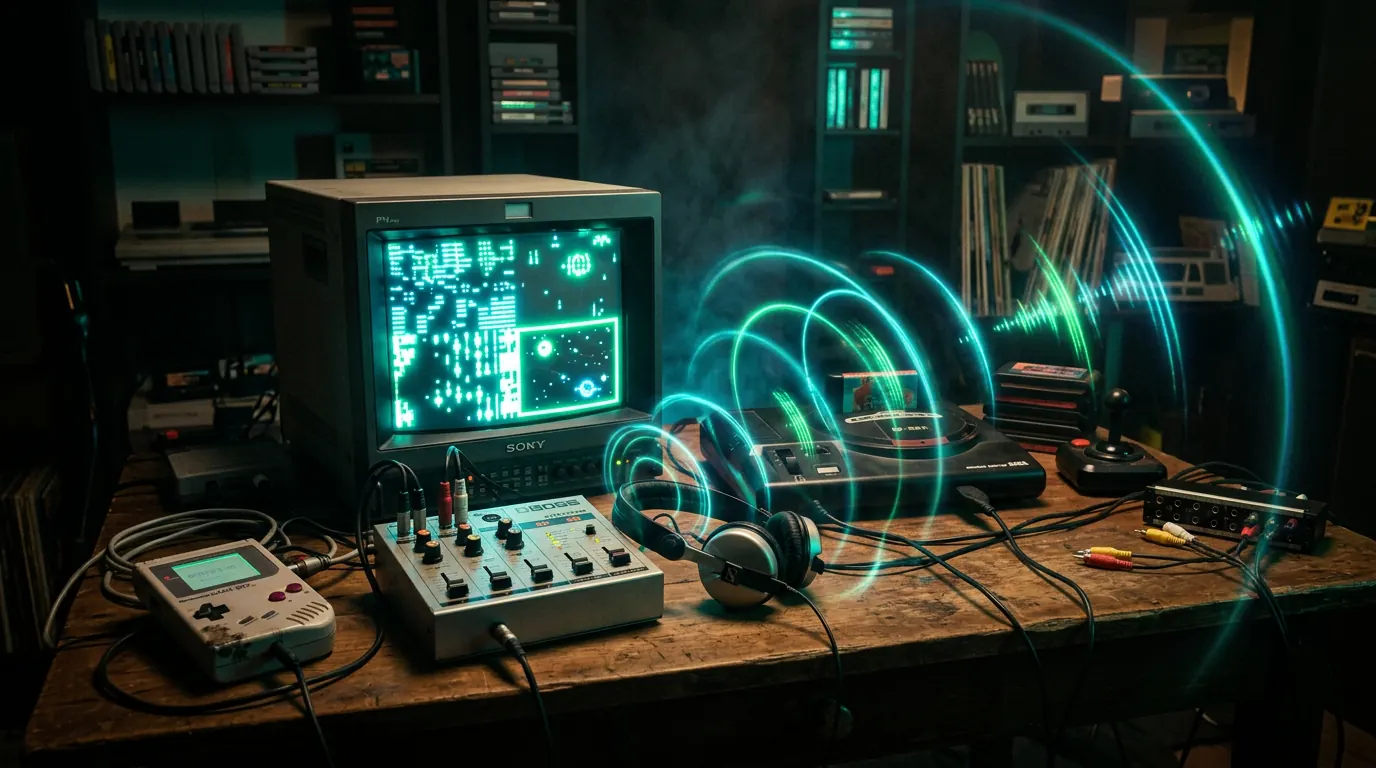
Chiptune is music made with the sound chips of classic game consoles and home computers, or with software that copies them. Think of bright square-wave melodies, buzzy pulse waves, a soft triangle bass, crunchy noise drums and super-fast arpeggios that fake chords one note at a time. The original chips could only play a few voices at once, so every sound had a clear job. That simplicity makes chiptune surprisingly well suited to an immersive mix. This guide covers how spatial audio for chiptune works, where to place each element and how to make an immersive chiptune mix. For the basics, see what spatial audio is.
Why chiptune is perfect for spatial audio
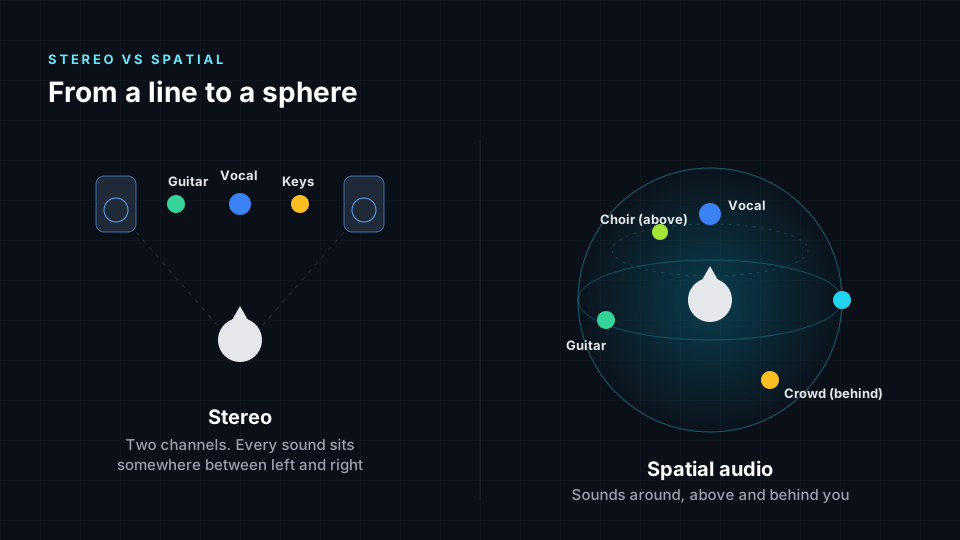
Chiptune is built from a few very simple, very bright sounds. Many classic chips played everything in mono, or hard left and right. In stereo, the lead, harmony and arpeggios often overlap in the middle and can sound harsh. In spatial audio, each chip voice can take its own direction, so the mix stays clear and much easier on the ears.
Chiptune also loves playful effects: coin pickups, jumps, lasers and power-ups. In an immersive mix those little sounds can bounce around the listener like they do in a game.
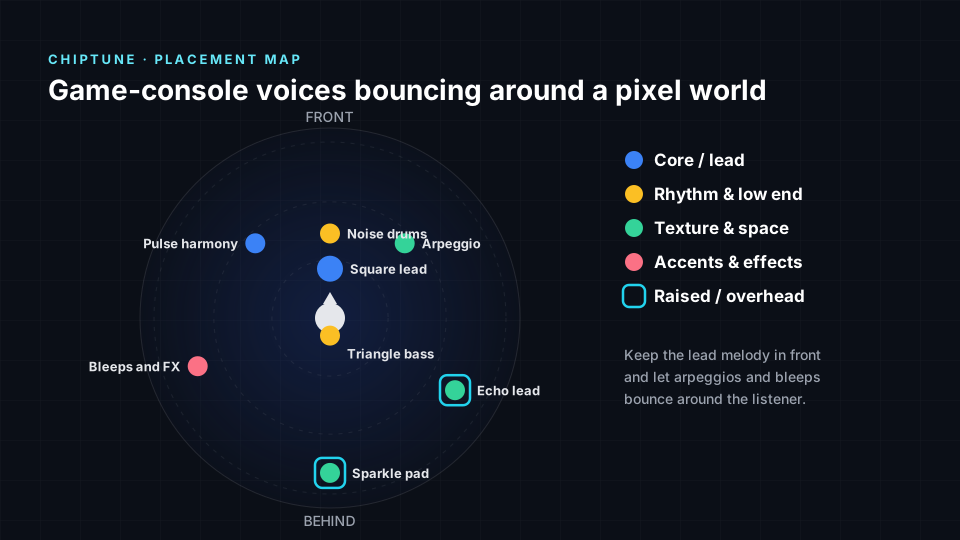
The rule: keep the lead melody in front and let arpeggios and bleeps bounce around the listener.
Immersive music for chiptune: what listeners hear
- A melody you can follow. The square-wave lead stays clear in front.
- Arpeggios with room. Fast note patterns no longer blur into the lead.
- Effects that move. Bleeps and bloops pop up around the listener.
- A softer, wider sound. Bright waves spread out, so the mix feels less harsh.
Where to place each element in a chiptune mix
| Element | Position | Height | Why it works |
|---|---|---|---|
| Square lead | Front centre | Ear level | The tune is the star of every chiptune track |
| Pulse harmony | Front left | Ear level | Supports the lead without masking it |
| Arpeggio | Front right, moving | Ear level | Gentle motion keeps fast patterns lively |
| Noise drums | Front centre, behind lead | Ear level | Keeps the beat tight and focused |
| Triangle bass | Centre | Ear level | Low notes are hard to place, so centre is cleanest |
| Bleeps and FX | Left side, moving | Ear level | Game-style sounds feel like they happen around you |
| Echo lead | Right side | Raised | A delayed copy adds depth above the melody |
| Sparkle pad | Behind | Raised | Fills the space without crowding the front |
The psychoacoustics behind chiptune placement
- Spatial release from masking. Bright, similar waveforms are easier to tell apart when they come from different directions (Bronkhorst, 2000).
- Grouping by location. Keeping each chip voice in its own spot helps the brain hear it as a separate line (Bregman, 1990).
- Minimum audible angle. We notice small direction changes best in front of us, so moving arpeggios across the front is easy to follow (Mills, 1958).
- Sub-bass is non-directional. Below roughly 80 to 100 Hz we cannot tell where sound comes from, so the bass belongs in the centre (Blauert, 1997).
The immersion profile for chiptune
Tips for an immersive chiptune mix
- Give each chip voice its own place. Treat every channel like a separate player.
- Move the arpeggios, not the lead. Motion on the fast patterns adds life, while the tune stays steady.
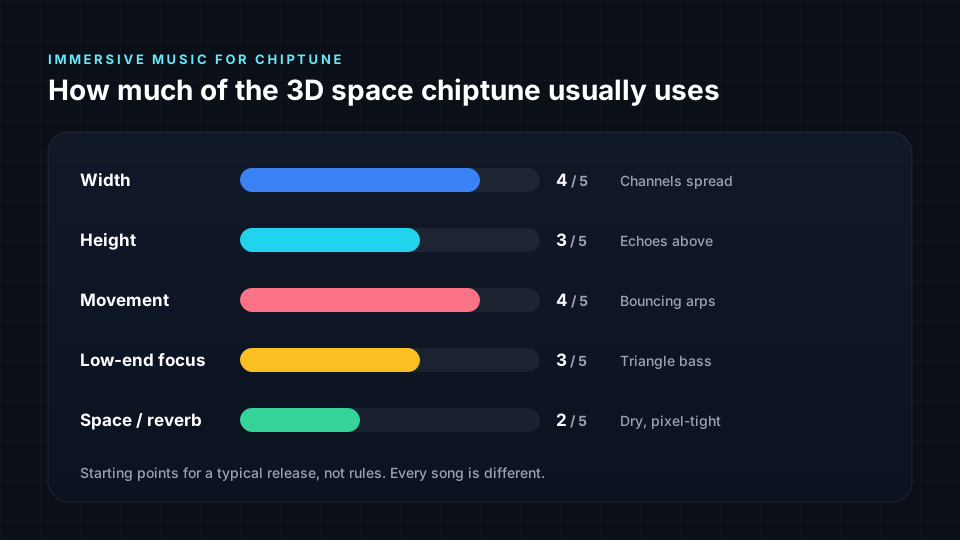
- Keep it dry. Heavy reverb blurs the crisp, digital character of chiptune.
- Use effects as events. Let a coin or laser sound fly past once, then disappear.
- Tame the brightness with space. Spreading the square waves out sounds better than turning them down.
How to make immersive chiptune from stereo
Spatial9 can create spatial audio from a stereo track in a few steps:
- Upload your stereo master or your stems.
- Spatial9's AI separates and places each part, from the lead and arpeggios to the drums and bass.
- Preview it in binaural on headphones.
- Export Eclipsa Audio, ADM, binaural or Ambisonics.
- Publish a video. Create a YouTube-ready video with your immersive audio and publish it directly.
For related guides, read spatial audio for synthwave, spatial audio for film and game scores and spatial audio for EDM. Every guide is listed in spatial audio and immersive music by genre.
Frequently asked questions
Can I make a chiptune mix in Dolby Atmos or Eclipsa Audio?
Yes. The placements in this guide work for both. Spatial9 exports ADM, the standard file used by Dolby Atmos studios, as well as Eclipsa Audio for YouTube, so one immersive chiptune mix covers both. You may also hear this called a 3D chiptune mix or 8-bit music in spatial audio.
Does spatial audio ruin the retro sound of chiptune?
No. The sounds themselves stay exactly the same. Spatial audio only changes where they come from, which often makes the original parts clearer.
Where should the arpeggios go?
To the front right, with a small, slow movement. This keeps them lively without pulling attention from the lead.
Should the sound effects surround the listener?
Yes, in short moments. Bleeps and game sounds work well around the sides, as long as they do not play all the time.
Can I convert a released chiptune track to spatial audio?
Yes. Spatial9 uses AI to separate a stereo master into its parts and export an immersive mix as Eclipsa Audio, ADM, binaural or Ambisonics.
Does immersive chiptune work on normal headphones?
Yes. The mix is rendered binaurally, so the lead sounds in front of you and the effects bounce around you on any regular headphones.
Dolby and Dolby Atmos are trademarks of Dolby Laboratories. Spatial9 is not affiliated with or endorsed by Dolby Laboratories.
Sources
- Blauert, J. (1997). Spatial Hearing: The Psychophysics of Human Sound Localization, revised edition. MIT Press.
- Bregman, A. S. (1990). Auditory Scene Analysis: The Perceptual Organization of Sound. MIT Press.
- Bronkhorst, A. W. (2000). The cocktail party phenomenon: a review of research on speech intelligibility in multiple-talker conditions. Acta Acustica united with Acustica, 86, 117-128.
- Mills, A. W. (1958). On the minimum audible angle. Journal of the Acoustical Society of America, 30(4), 237-246.
- Neuhoff, J. G. (1998). Perceptual bias for rising tones. Nature, 395, 123-124.
Press start on your immersive mix
Upload a chiptune track to Spatial9 and hear every chip voice find its place in minutes. Then export it or publish it straight to YouTube.