Spatial Audio & Immersive Music for Electropop: Complete Guide
Spatial9 Team · · Updated
Part of the series Spatial audio and immersive music by genre.
Electropop is pop music built mostly from synthesizers and drum machines. Think of shiny synth hooks, punchy electronic drums, big sidechained basslines, layered vocal harmonies and dramatic risers leading into a catchy chorus. It sits between the songwriting of pop and the sound design of electronic dance music. A pop mix may still include live instruments. An electropop mix is almost entirely electronic, so every sound is designed and can be placed with precision. This guide covers how spatial audio for electropop works, where to place each element and how to make an immersive electropop mix. For the basics, see what spatial audio is.
Why electropop is perfect for spatial audio
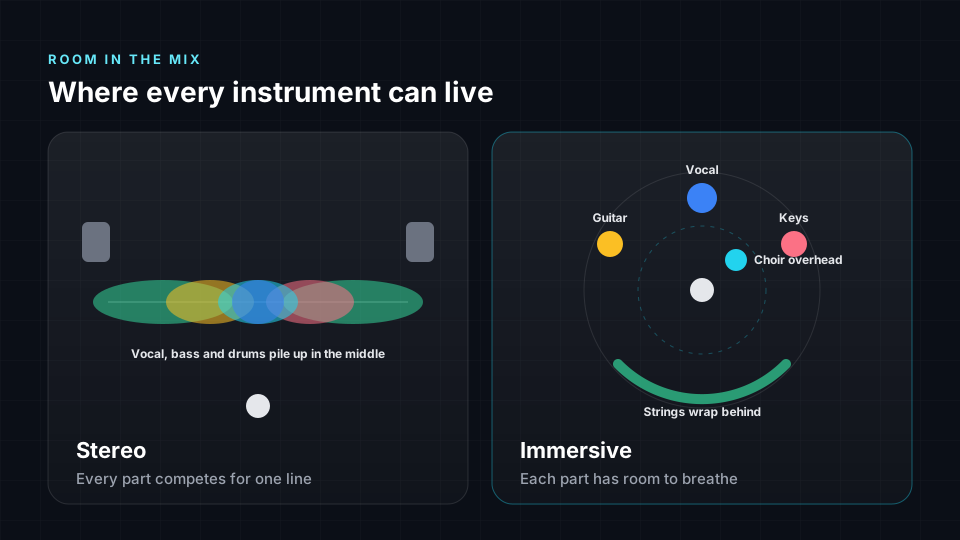
Electropop choruses are crowded. A single chorus can stack a lead vocal, several harmonies, two or three synth layers, a heavy bass, drums and effects. In stereo, all of that is pushed into two speakers and compressed to stay loud, and the vocal can get lost. In spatial audio, the synths and harmonies can move out to the sides and above, so the chorus gets bigger while the vocal stays clear.
Electropop also relies on builds and drops. Risers and sweeps that move around the listener make those moments feel dramatic in a way stereo cannot.
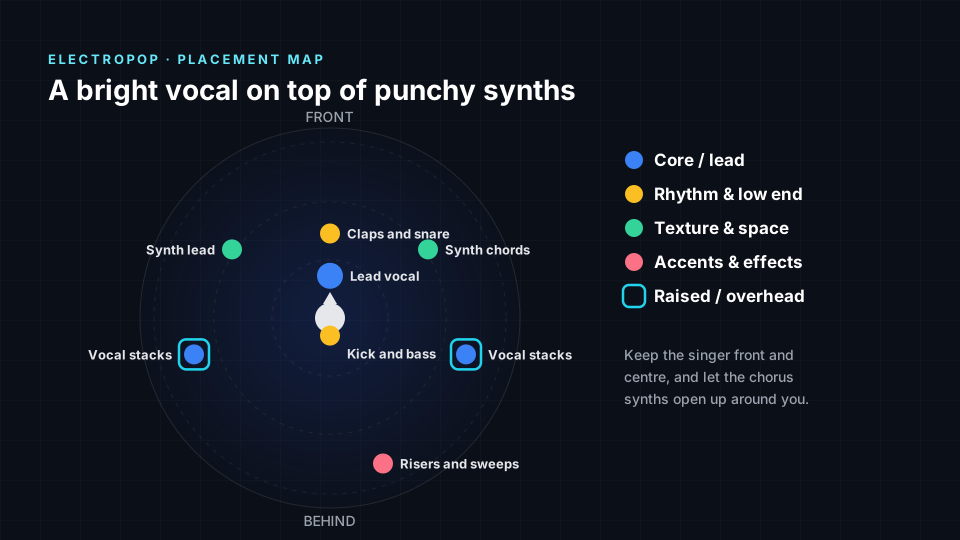
The rule: keep the singer front and centre, and let the chorus synths open up around the listener.
Immersive music for electropop: what listeners hear
- A clear, polished vocal. The singer stays in focus even in the loudest chorus.
- Synths with space. Hooks and chords each have their own side.
- A chorus that blooms. Vocal stacks open up around and above you.
- Bigger drops. Risers sweep around the room before the beat lands.
Where to place each element in an electropop mix
| Element | Position | Height | Why it works |
|---|---|---|---|
| Lead vocal | Front centre | Ear level | The song and hook lead the mix |
| Synth lead | Front left | Ear level | The main hook gets its own space |
| Synth chords | Front right | Ear level | Balances the lead synth |
| Claps and snare | Front centre, behind vocal | Ear level | Keeps the beat punchy and focused |
| Kick and bass | Centre | Ear level | Low notes are hard to place, so centre is cleanest |
| Vocal stacks | Left and right sides | Slightly raised | Make the chorus wider without masking the lead |
| Risers and sweeps | Behind, moving | Ear level to raised | Build tension before each drop |
The psychoacoustics behind electropop placement
- Spatial release from masking. Harmonies and synths are easier to hear alongside the vocal when they come from other directions (Bronkhorst, 2000).
- Sub-bass is non-directional. Below roughly 80 to 100 Hz we cannot tell where sound comes from, so the bass belongs in the centre (Blauert, 1997).
- Looming sounds grab attention. Rising and approaching sounds feel more intense, which is why moving risers make drops hit harder (Neuhoff, 1998).
- Envelopment. Sound from the sides and above makes a chorus feel larger (Barron and Marshall, 1981).
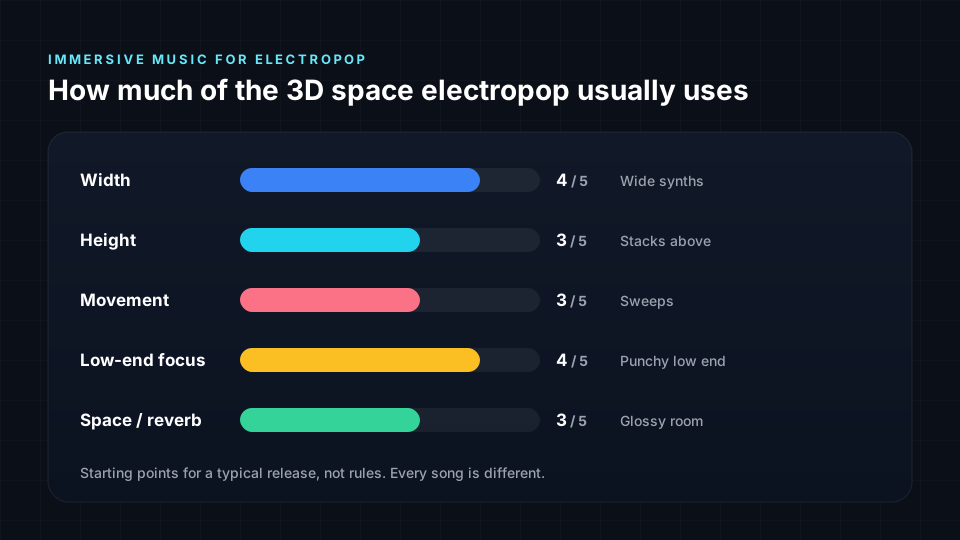
The immersion profile for electropop
Tips for an immersive electropop mix
- Keep the verse tight. Save the width for the chorus so it feels like a lift.
- Split the synths. Put the lead synth and chords on opposite sides.
- Raise the harmonies, not the lead. The singer stays at ear level in front.
- Move the risers. A sweep that travels from behind to the front makes every drop bigger.
- Keep the low end solid. Kick and bass stay centred and steady under everything.
How to make immersive electropop from stereo
Spatial9 can create spatial audio from a stereo track in a few steps:
- Upload your stereo master or your stems.
- Spatial9's AI separates and places each part, from the vocal and synths to the drums and bass.
- Preview it in binaural on headphones.
- Export Eclipsa Audio, ADM, binaural or Ambisonics.
- Publish a video. Create a YouTube-ready video with your immersive audio and publish it directly.
For related guides, read spatial audio for pop, spatial audio for synthwave and spatial audio for K-pop. Every guide is listed in spatial audio and immersive music by genre.
Frequently asked questions
Can I make an electropop mix in Dolby Atmos or Eclipsa Audio?
Yes. The placements in this guide work for both. Spatial9 exports ADM, the standard file used by Dolby Atmos studios, as well as Eclipsa Audio for YouTube, so one immersive electropop mix covers both. You may also hear this called a 3D electropop mix or synth-pop in spatial audio.
How is an electropop mix different from a pop mix in spatial audio?
A pop mix may include guitars, piano and live drums. An electropop mix is almost all synthesizers, so it uses more movement and sound design, especially in builds and drops.
Where should the synth lead go?
To the front left, at ear level. This keeps the hook clear and leaves the centre for the vocal.
Should the risers surround the listener?
Yes, briefly. A riser that moves from behind towards the front before the drop adds excitement. Keep the rest of the mix steady.
Can I convert a released electropop song to spatial audio?
Yes. Spatial9 uses AI to separate a stereo master into its parts and export an immersive mix as Eclipsa Audio, ADM, binaural or Ambisonics.
Does immersive electropop work on normal headphones?
Yes. The mix is rendered binaurally, so the singer sounds in front of you and the chorus opens up around you on any regular headphones.
Dolby and Dolby Atmos are trademarks of Dolby Laboratories. Spatial9 is not affiliated with or endorsed by Dolby Laboratories.
Sources
- Barron, M. and Marshall, A. H. (1981). Spatial impression due to early lateral reflections in concert halls. Journal of Sound and Vibration, 77(2), 211-232.
- Blauert, J. (1997). Spatial Hearing: The Psychophysics of Human Sound Localization, revised edition. MIT Press.
- Bronkhorst, A. W. (2000). The cocktail party phenomenon: a review of research on speech intelligibility in multiple-talker conditions. Acta Acustica united with Acustica, 86, 117-128.
- Neuhoff, J. G. (1998). Perceptual bias for rising tones. Nature, 395, 123-124.
- Bregman, A. S. (1990). Auditory Scene Analysis: The Perceptual Organization of Sound. MIT Press.
Make your chorus shine in every direction
Upload an electropop track to Spatial9 and hear the synths and harmonies open up around you in minutes. Then export it or publish it straight to YouTube.