Spatial Audio & Immersive Music for Brass Band: Complete Guide
Spatial9 Team · · Updated
Part of the series Spatial audio and immersive music by genre.
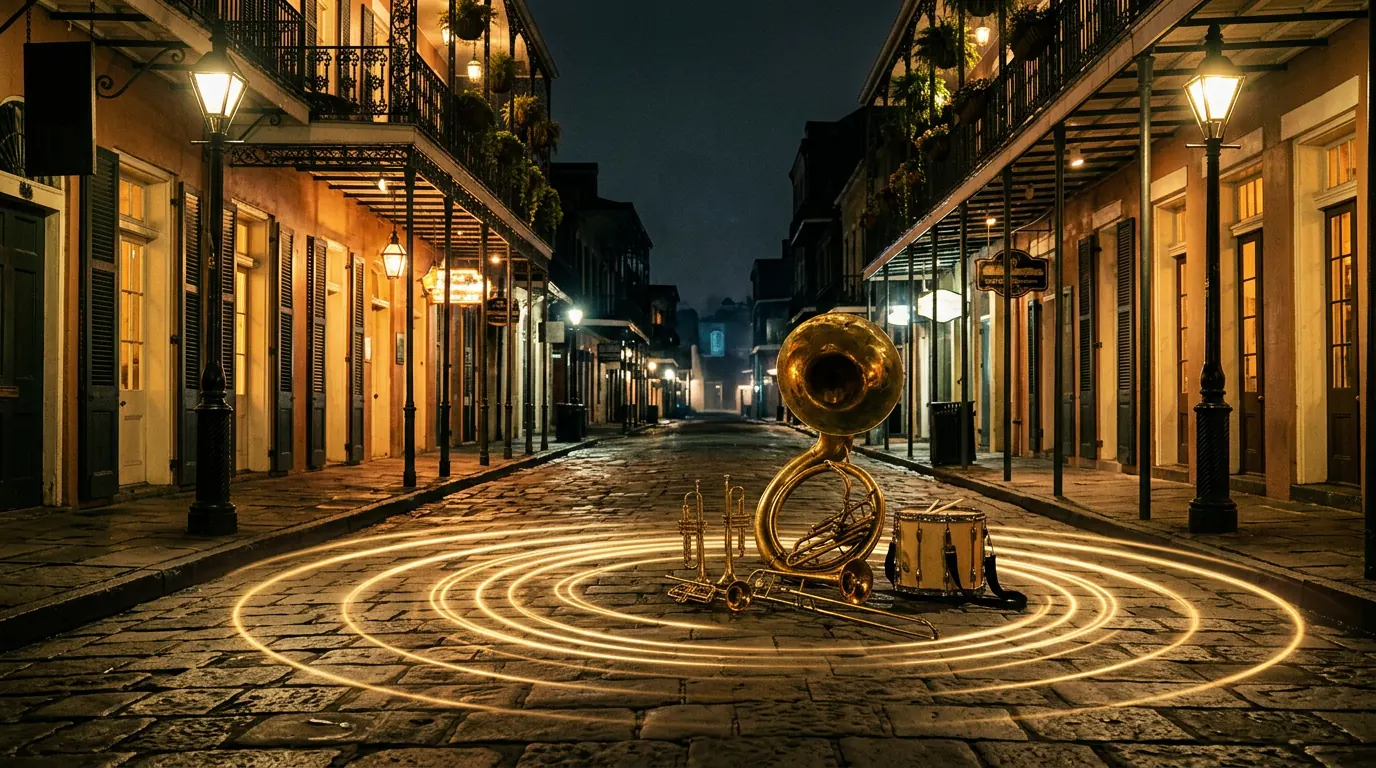
Brass band music covers street and marching bands built around horns and drums. Think of New Orleans second-line bands, funk and hip-hop brass bands, Balkan brass, Mexican banda and festival marching bands. Trumpets carry the melody, trombones slide and punch, a sousaphone or tuba plays the bassline, saxophones add color, and snare and bass drums drive the groove. The music is loud, joyful and often played outdoors while moving through a crowd. This guide covers how spatial audio for brass band music works, where to place each element and how to make an immersive brass band mix. For the basics, see what spatial audio is.
Why brass band music is perfect for spatial audio
Brass bands are made of sections that talk to each other. The trumpets call, the trombones answer, the saxophones fill in and the drums push everything forward. In stereo, all those horns share the same two speakers, and the loud, bright sounds can blur into one block of brass. In spatial audio, each section gets its own direction, so the call and response becomes easy to hear.
Brass bands also play in the open, surrounded by people. An immersive mix can bring that street atmosphere, with the crowd and echoes around the listener.
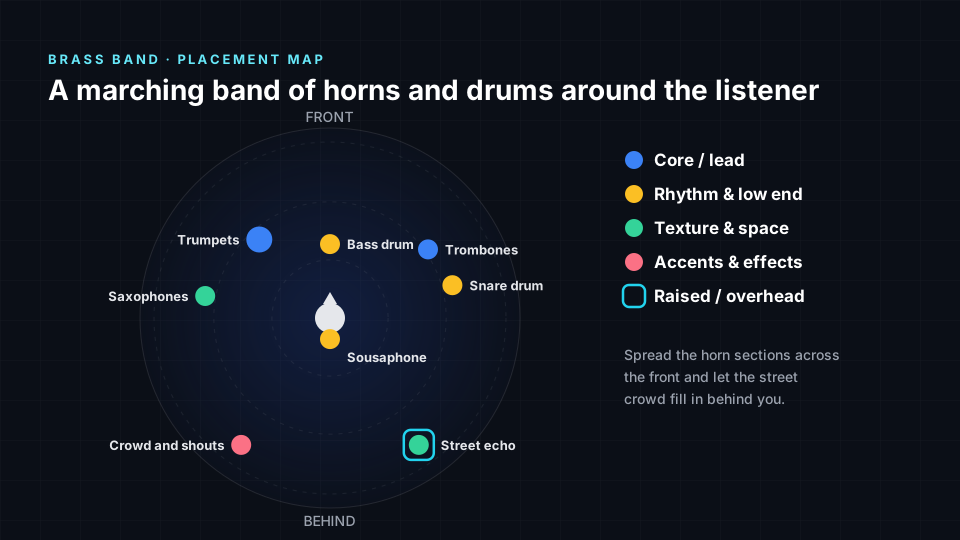
The rule: spread the horn sections across the front and let the street crowd fill in behind the listener.
Immersive music for brass band: what listeners hear
- Horns with their own place. Trumpets, trombones and saxes each come from a clear direction.
- Call and response. The conversation between sections is easy to follow.
- A big, bouncing low end. The sousaphone holds the groove in the centre.
- The street around you. Crowd and echoes make it feel like a parade.
Where to place each element in a brass band mix
| Element | Position | Height | Why it works |
|---|---|---|---|
| Trumpets | Front left | Ear level | The melody section leads from the front |
| Trombones | Front right | Ear level | Answers the trumpets from the other side |
| Bass drum | Front centre | Ear level | Drives the march from the middle |
| Sousaphone | Centre | Ear level | Low notes are hard to place, so centre is cleanest |
| Saxophones | Left side | Ear level | Fills and solos sit beside the trumpets |
| Snare drum | Right side | Ear level | A crisp backbeat from the side |
| Crowd and shouts | Behind left | Ear level | Puts the listener inside the parade |
| Street echo | Behind right | Raised | Reflections from buildings add a sense of place |
The psychoacoustics behind brass band placement
- Grouping by location. Keeping each horn section in one place helps the brain hear it as one group (Bregman, 1990).
- Spatial release from masking. Loud, bright horns are easier to tell apart when they come from different directions (Bronkhorst, 2000).
- The precedence effect. The first sound to arrive sets the direction, so street echoes add space without moving the band (Litovsky et al., 1999).
- Sub-bass is non-directional. The lowest sousaphone notes cannot be placed easily, so they belong in the centre (Blauert, 1997).
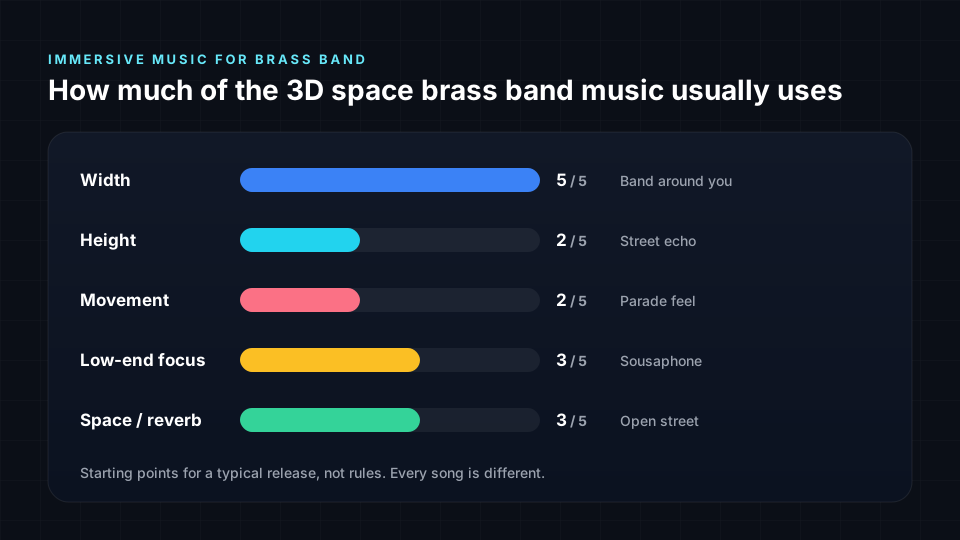
The immersion profile for brass band
Tips for an immersive brass band mix
- Split the sections. Trumpets and trombones on opposite sides make the call and response clear.
- Keep the sousaphone centred. It is the heartbeat of the band.
- Separate the drums. Bass drum in front and snare to the side keeps the groove clear.
- Use the crowd for energy. A little crowd sound behind you makes it feel like a real parade.
- Do not over-brighten. With horns spread out, you need less treble to hear them clearly.
How to make immersive brass band music from stereo
Spatial9 can create spatial audio from a stereo track in a few steps:
- Upload your stereo master or your stems.
- Spatial9's AI separates and places each part, from the trumpets and trombones to the drums and sousaphone.
- Preview it in binaural on headphones.
- Export Eclipsa Audio, ADM, binaural or Ambisonics.
- Publish a video. Create a YouTube-ready video with your immersive audio and publish it directly.
For related guides, read spatial audio for jazz, spatial audio for funk and spatial audio for regional Mexican music. Every guide is listed in spatial audio and immersive music by genre.
Frequently asked questions
Can I make a brass band mix in Dolby Atmos or Eclipsa Audio?
Yes. The placements in this guide work for both. Spatial9 exports ADM, the standard file used by Dolby Atmos studios, as well as Eclipsa Audio for YouTube, so one immersive brass band mix covers both. You may also hear this called a 3D brass band mix or marching band in spatial audio.
How is a brass band mix different from a jazz mix in spatial audio?
A jazz mix usually recreates a small group on a club stage. A brass band mix is louder and more outdoor, with sections spread wide and the crowd around the listener.
Where should the sousaphone go?
In the centre, at ear level. Its low notes hold the groove and are hard to locate anyway.
Should the band surround the listener?
Partly. The horn sections sit across the front and sides, while the crowd and street sound fill in behind. This feels like standing in the middle of a parade.
Can I convert a released brass band track to spatial audio?
Yes. Spatial9 uses AI to separate a stereo master into its parts and export an immersive mix as Eclipsa Audio, ADM, binaural or Ambisonics.
Does immersive brass band music work on normal headphones?
Yes. The mix is rendered binaurally, so the horns and drums play around you on any regular headphones.
Dolby and Dolby Atmos are trademarks of Dolby Laboratories. Spatial9 is not affiliated with or endorsed by Dolby Laboratories.
Sources
- Blauert, J. (1997). Spatial Hearing: The Psychophysics of Human Sound Localization, revised edition. MIT Press.
- Bregman, A. S. (1990). Auditory Scene Analysis: The Perceptual Organization of Sound. MIT Press.
- Bronkhorst, A. W. (2000). The cocktail party phenomenon: a review of research on speech intelligibility in multiple-talker conditions. Acta Acustica united with Acustica, 86, 117-128.
- Litovsky, R. Y., Colburn, H. S., Yost, W. A. and Guzman, S. J. (1999). The precedence effect. Journal of the Acoustical Society of America, 106(4), 1633-1654.
- Mills, A. W. (1958). On the minimum audible angle. Journal of the Acoustical Society of America, 30(4), 237-246.
Bring the parade to your listeners
Upload a brass band track to Spatial9 and hear every section march around you in minutes. Then export it or publish it straight to YouTube.