Spatial Audio & Immersive Music for Blues: Complete Guide
Spatial9 Team · · Updated
Part of the series Spatial audio and immersive music by genre.
Blues is a music of feeling. A bent guitar note, a cracked vocal, a harmonica wail answering the singer. In stereo, those moments can get squeezed together between two speakers. In spatial audio, the band can sit around you the way it would in a small club, so every call and response is clear. This guide covers how spatial audio for blues works, where to place each element and how to make immersive blues music from a stereo track. For the basics, see what spatial audio is.
Why blues benefits from spatial audio
Blues was born in small rooms: juke joints, porches, smoky bars. The sound of those rooms is part of the music. Spatial audio can bring that room back, with the band close in front and the walls around you, instead of a flat picture between two speakers.
The rule: keep it close and natural. The band plays in front of you, and the room does the rest.
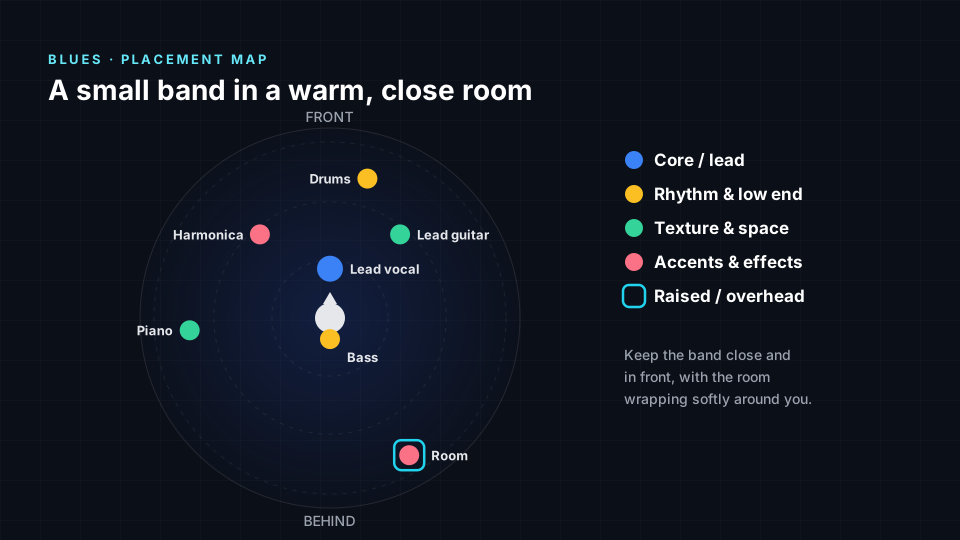
Immersive music for blues: what listeners hear
- A voice right in front of you. The vocal is close and present, like the singer is a few steps away.
- Call and response you can follow. Guitar and harmonica answer each other from opposite sides.
- A steady rhythm section. Drums and bass stay anchored and never wander.
- The room around you. Gentle reflections from the sides and behind make it feel live.
Where to place each element in a blues mix
| Element | Position | Height | Why it works |
|---|---|---|---|
| Lead vocal | Front centre, close | Ear level | Intimate and present |
| Lead guitar | Front right | Ear level | Answers the vocal |
| Harmonica | Front left | Ear level | Mirrors the guitar |
| Drums | Front centre, further back | Ear level | Steady shuffle |
| Bass | Centre | Ear level | Warm foundation |
| Piano | Left side | Ear level | Fills the gaps |
| Room sound | Sides and behind | Slightly raised | Makes it feel live |
The psychoacoustics behind blues placement
Every position in the table above follows how the ear and brain locate sound. Here is the reason behind the main choices for blues.
- Lead vocal front and centre. The ear's directional resolution is finest in front of the face and much coarser to the sides and behind, so the part you must follow belongs in front. The story is in the voice, so it gets the clearest position.
- Harmonica left, lead guitar right. When two sounds share a frequency range, separating them in direction makes each one easier to hear. Researchers call this spatial release from masking, the same effect that lets you follow one voice at a busy party. The harmonica and guitar answer each other in the same range, and direction keeps the conversation clear.
- Drums further back. Distance is heard through level, high-frequency detail and how much room sound surrounds a source, so less reverb brings a part closer and more reverb sets it back. A little more room sound on the kit recreates a band on a small stage behind the singer.
- Room sound on the sides and behind. Sound arriving from the sides, slightly different at each ear, creates the feeling of being inside the music. Acousticians call this envelopment. Side reflections put the listener inside the club rather than in front of it.
The immersion profile for blues
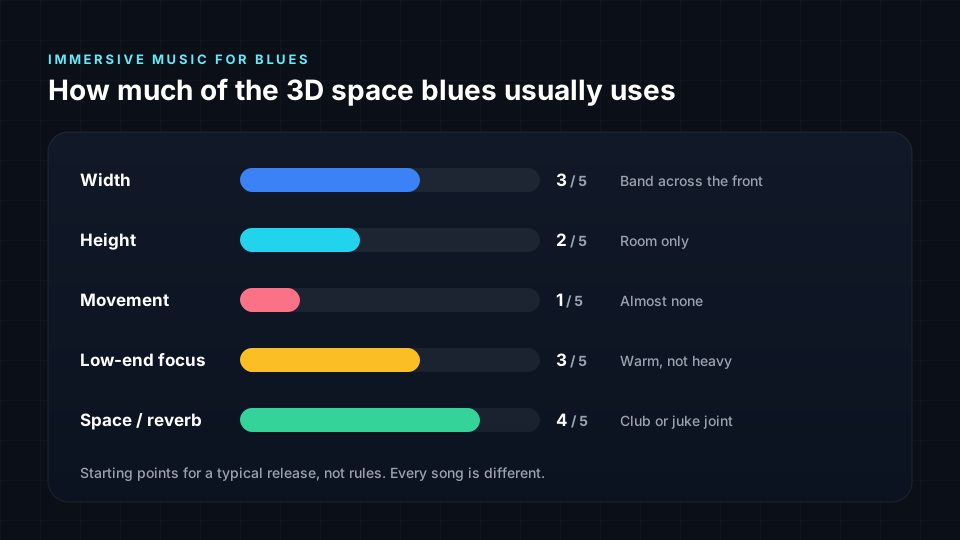
Blues scores high on space and low on movement. The room is part of the sound, but instruments stay where real players would stand. Nothing flies around.
Tips for an immersive blues mix
- Start with the room. Choose a warm, short room sound that wraps around the listener.
- Keep the vocal close. Blues is personal. Do not push the singer back.
- Separate call and response. Put guitar and harmonica on opposite sides so each answer is clear.
- Do not over-widen. A small band should sound like a small band.
- Avoid movement. Players stand still on stage, so the mix should too.
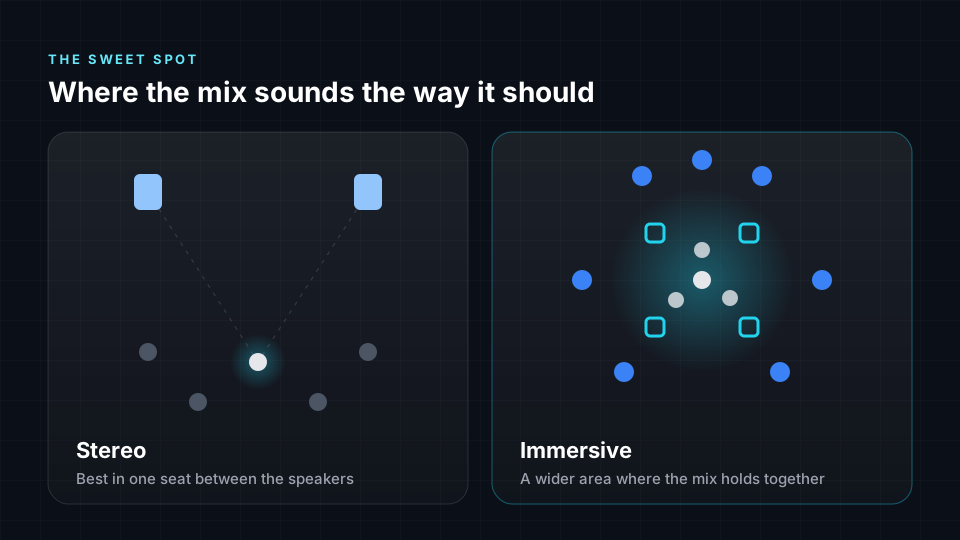
How to make immersive blues music from stereo
Spatial9 can create spatial audio from a stereo track in a few steps:
- Upload your stereo master or your stems.
- Spatial9's AI separates and places each part, keeping the band natural and close.
- Preview it in binaural on headphones.
- Export Eclipsa Audio, ADM, binaural or Ambisonics.
- Publish a video. Create a YouTube-ready video with your immersive audio and publish it directly.
For related guides, read spatial audio for soul and spatial audio for jazz. Every guide is listed in spatial audio and immersive music by genre.
Frequently asked questions
Can I make a blues mix in Dolby Atmos or Eclipsa Audio?
Yes. The placements in this guide work for both. Spatial9 exports ADM, the standard file used by Dolby Atmos studios, as well as Eclipsa Audio for YouTube, so one immersive blues mix covers both. You may also hear this called a 3D blues mix or blues in spatial audio. It is the same idea.
Is spatial audio good for blues?
Yes. Blues is rooted in small, live rooms, and spatial audio recreates that feeling of standing close to the band.
Where should the harmonica go in an immersive blues mix?
Put it front left, opposite the lead guitar, so the two can trade lines clearly.
Should old blues recordings be converted to spatial audio?
They can be. Spatial9 separates the parts of a stereo or even mono-sounding recording and places them naturally, without changing the performance.
How much reverb should a blues mix use in 3D?
Use a warm, short room. Long halls make blues sound distant and lose its intimacy.
Does immersive blues work on regular headphones?
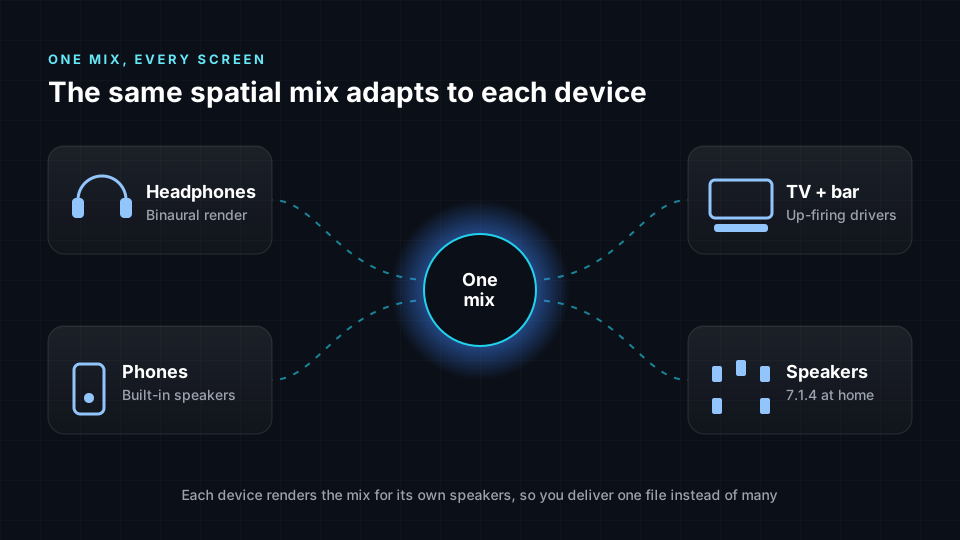
Yes. Devices render the mix binaurally, so the 3D effect works on any regular headphones.
Dolby and Dolby Atmos are trademarks of Dolby Laboratories. Spatial9 is not affiliated with or endorsed by Dolby Laboratories.
Sources
- Blauert, J. (1997). Spatial Hearing: The Psychophysics of Human Sound Localization, revised edition. MIT Press. Low-frequency, elevation, distance and motion cues.
- Mills, A. W. (1958). On the minimum audible angle. Journal of the Acoustical Society of America, 30(4), 237-246.
- Hebrank, J. and Wright, D. (1974). Spectral cues used in the localization of sound sources on the median plane. Journal of the Acoustical Society of America, 56(6), 1829-1834.
- Bronkhorst, A. W. (2000). The cocktail party phenomenon: a review of research on speech intelligibility in multiple-talker conditions. Acta Acustica united with Acustica, 86, 117-128.
- Litovsky, R. Y., Colburn, H. S., Yost, W. A. and Guzman, S. J. (1999). The precedence effect. Journal of the Acoustical Society of America, 106(4), 1633-1654.
- Barron, M. and Marshall, A. H. (1981). Spatial impression due to early lateral reflections in concert halls. Journal of Sound and Vibration, 77(2), 211-232.
- Neuhoff, J. G. (1998). Perceptual bias for rising tones. Nature, 395, 123-124.
- Bregman, A. S. (1990). Auditory Scene Analysis: The Perceptual Organization of Sound. MIT Press.
Bring your blues into the room
Upload a track to Spatial9 and hear your band come alive around you in minutes. Then export it or publish it straight to YouTube.