Your Place in the Future of Immersive Audio: Roles, Skills and a Capstone Project
Spatial9 Team ·
Lesson 14 of 14 in Spatial9 Academy, module 4: The open future.
You started this course by learning how two ears locate a sound in space. Since then, you have studied formats, followed a mix through an AI pipeline, trained your critical listening, made your first immersive mix, explored sound for picture and looked ahead to research that is still taking shape.
That is a real foundation. Now it is time to turn it into a direction.
Immersive audio is still young. Formats are opening up, platforms are adopting them and AI is changing how work gets done. That means the roles of the next decade are still being defined, and people who start now can help define them. This final lesson is about finding your place in that future, and building the proof that you belong there.
What you will learn
- Ten roles where immersive audio skills can take you, and what each one focuses on.
- The skills compass: ears, craft, technology, storytelling and collaboration.
- How to position yourself with a portfolio, open formats, AI collaboration and a T-shaped profile.
- A practical 12-month roadmap, broken into quarters.
- The capstone project, step by step, from creative brief to published case study.
Roles in immersive audio
Immersive audio does not belong to a single job title. It runs through music, film, games, research, accessibility and education. Some of the roles below are well established. Others are emerging as AI tools and open formats change the work. Use them as a map of possibilities, not a fixed list.
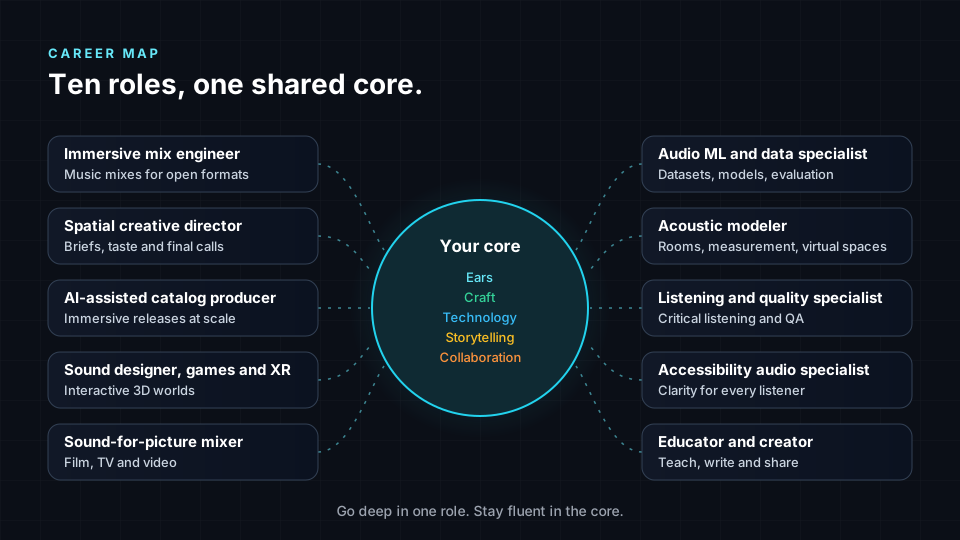
| Role | What you focus on |
|---|---|
| Immersive mix engineer | Creating and refining immersive music mixes and delivering them in formats such as ADM, Eclipsa Audio (IAMF), Ambisonics and binaural. |
| Spatial creative director | Writing creative briefs, setting the spatial vision for an artist or project and making final calls on taste. |
| AI-assisted catalog producer | Managing immersive versions of many songs at once, using batch workflows and reviewing drafts for quality. |
| Immersive sound designer for games and XR | Designing interactive three-dimensional soundscapes that respond to a player or viewer. |
| Sound-for-picture immersive mixer | Mixing dialogue, score and effects so sound follows the picture in film, TV and online video. |
| Audio ML and data specialist | Preparing datasets, evaluating models and bridging audio expertise with machine learning. |
| Acoustic modeler | Measuring and modeling real spaces, working with impulse responses and virtual acoustics. |
| Listening and quality specialist | Running structured critical listening, catching artifacts and approving deliveries. |
| Accessibility audio specialist | Making audio clearer and more inclusive, for example by protecting dialogue intelligibility. |
| Educator and creator | Teaching, writing tutorials and building learning resources that help others enter the field. |
Notice how many of these roles sit where creativity meets technology. That is exactly the space this course has trained you for. For a wider look at how audio engineering is evolving, read The future of spatial and immersive audio engineering.
The skills compass
Every role on the map draws on the same five skills. We call this the skills compass. You do not need to be equally strong in all five. You do need to know where you stand and which direction you want to grow.
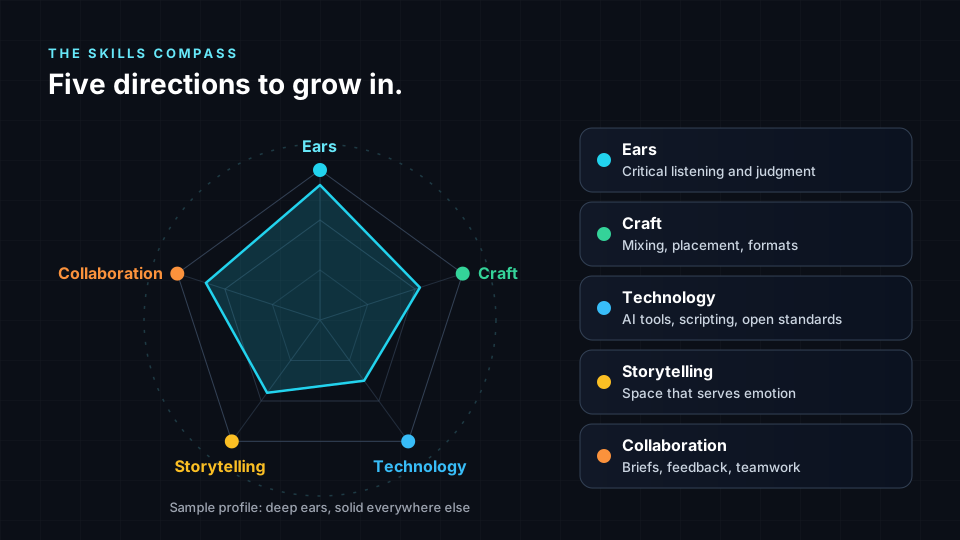
- Ears. Critical listening and judgment. Can you hear image stability, timbre changes, masking and artifacts? Can you explain what you hear? This is the most durable skill you have, because every AI tool still needs a trained listener.
- Craft. Mixing, placement and formats. Do you know how to anchor a vocal, build envelopment, use height and deliver correctly to ADM, Eclipsa Audio, Ambisonics and binaural?
- Technology. AI tools, scripting and open standards. Can you work confidently with AI-assisted workflows, automate small tasks and read a specification?
- Storytelling. Space that serves emotion. Can you explain why a sound belongs where it is, and how that placement supports the song or the scene?
- Collaboration. Briefs, feedback and teamwork. Can you write a clear brief, take notes from an artist without getting defensive, and give feedback that helps others improve?
Try this now. Give yourself a score from one to five on each direction. Be honest. Then circle the one you most want to improve over the next three months.
How to position yourself
Skills only open doors when other people can see them. Here are four ways to make your strengths visible.
Build a portfolio that explains decisions
A folder of finished mixes is good. A portfolio that explains why you made each decision is far better. For every piece, include the creative brief, a short description of your spatial choices, what you changed after critical listening and what you would do differently next time. Supervisors and collaborators want to know how you think, not just what you can operate.
Deliver in open formats
As you learned in Open Formats and the Open Source Mindset, open formats keep your work portable and playable. Include a binaural version of every immersive piece so anyone can hear it on headphones. Where you can, add an Eclipsa Audio (IAMF) or ADM version and say so in your portfolio. It shows you understand delivery, not just mixing.
Show that you can collaborate with AI
AI is part of the modern audio workflow. The valuable skill is not pressing a button. It is writing a strong brief, judging the result honestly and refining it until it serves the music. Document that loop. Show the AI draft, your notes and your final version side by side. That is the human role we have talked about throughout this course: brief, judge, listen, decide and approve.
Go deep, and stay broad
A T-shaped profile means one deep specialty supported by broad knowledge across the field. Pick a specialty that excites you, such as sound for picture, acoustic modeling or listening and quality. Then keep your core skills fluent so you can work with people in neighboring roles.
A 12-month roadmap
Here is a simple plan you can adapt to your own studies. Each quarter has a focus, a few actions and a visible result.
| Quarter | Focus | Actions | Result |
|---|---|---|---|
| Months 1 to 3 | Ears and foundations | Complete the capstone below. Practice critical listening weekly on headphones. Re-read the format lessons. | One documented immersive case study. |
| Months 4 to 6 | Craft and formats | Mix two more pieces in contrasting genres or for picture. Deliver binaural plus one open format for each. | Three portfolio pieces with explained decisions. |
| Months 7 to 9 | Technology and specialty | Choose your specialty. Learn basic scripting or impulse response capture, depending on your path. Make one open source contribution. | A specialty project and a public contribution. |
| Months 10 to 12 | Storytelling and collaboration | Collaborate with an artist, filmmaker or game team. Write a tutorial or give a short talk about what you learned. | A collaborative project and a public piece of teaching. |
Review your skills compass at the end of each quarter. Your scores should change. If they do not, adjust the plan rather than abandoning it.
The capstone project
The capstone brings the entire course together. You will take one song you have the rights to use through the full Spatial9 approach and publish a case study about it.
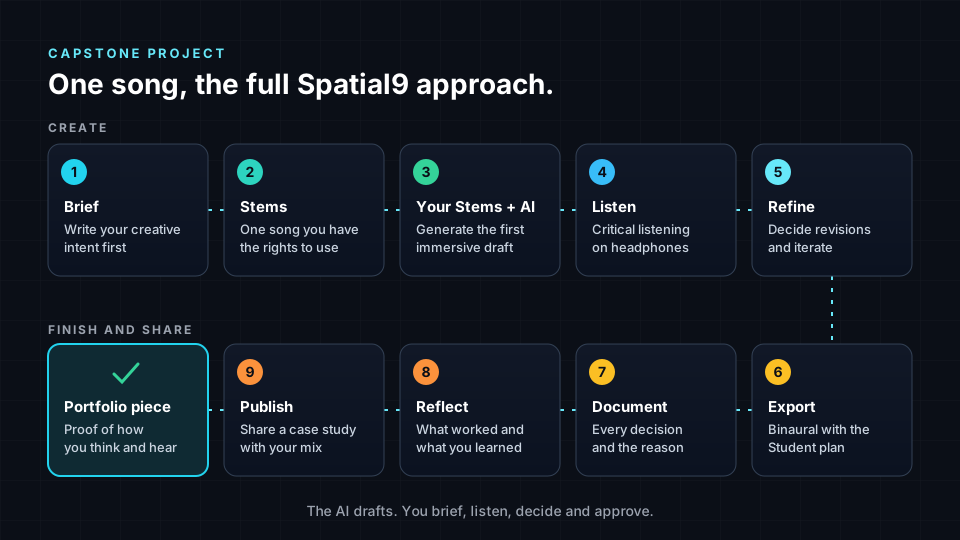
- Write the brief. Describe the emotional intent, the listener experience and any must-keep elements, such as a vocal anchored in front. Revisit The Spatial9 Approach if you need a model.
- Gather your stems. Choose one song you have the rights to use. Supply stems if you have them. If you only have a stereo master, note that source separation will be part of the workflow, and judge the source quality before you begin.
- Generate a draft with Your Stems + AI. Let GravityLLM propose the spatial arrangement as you practiced in Lab: Your First Immersive Mix.
- Listen critically. Use the listening method from Lab: Critical Listening. Take timestamped notes on placement, clarity, envelopment, height and any artifacts.
- Refine. Decide which changes matter most. Revise, then listen again. Keep every version so you can compare.
- Export binaural. Export your final binaural version with the Student plan, which costs $9 and includes demo environment access and binaural exports. You can sign up at app.spatial9.ai.
- Document your decisions. Write down what you changed, why you changed it and what you chose to leave alone.
- Reflect. Answer three questions. What worked? What surprised you? What would you do differently?
- Publish a case study. Share your brief, your before and after audio, your notes and your reflection on a personal site, portfolio page or project blog.
Try it in the demo
Return to the demo hub one last time and look at it through a career lens. Each demo connects to roles on the map.
- Open /demo. Notice the three groups: "01 / Experience it", "02 / How we do it" and "03 / What comes next".
- Open /demo/music. Switch between "Spatial Sphere" and "Immersive Mix (ADM)" with "Spatial Audio" on. This is the daily world of the immersive mix engineer and the spatial creative director.
- Open /demo/video, which is marked Early access. Watch the tracking and toggle "Spatial". This maps to the sound-for-picture immersive mixer and the accessibility audio specialist, who both care about dialogue clarity.
- Open /demo/architecture and /demo/training. These connect to the audio ML and data specialist and the AI-assisted catalog producer.
- Open /demo/inference. Think about the listening and quality specialist, who judges what a model produces.
- Open /demo/mcp and /demo/adt, both marked Coming soon. These previews point toward future workflow roles and toward the acoustic modeler and the games and XR sound designer.
- Write one sentence for each demo naming the role it connects to and one skill from the compass that role needs most.
Key terms
| Term | Meaning |
|---|---|
| Skills compass | A five-part self-assessment covering ears, craft, technology, storytelling and collaboration. |
| T-shaped profile | One deep specialty supported by broad knowledge across the field. |
| Case study | A published write-up of a project that explains the brief, decisions, results and lessons learned. |
| Creative brief | A short written statement of intent that guides a mix or a project. |
| Capstone project | A final project that brings together everything learned in a course. |
| Portfolio | A curated collection of your work, ideally with explanations of your decisions. |
Check your understanding
- Name the five directions of the skills compass.
- What makes a portfolio more convincing than a folder of finished mixes?
- What does a T-shaped profile mean?
- Why should every immersive portfolio piece include a binaural version?
- What are the nine steps of the capstone project?
Answers
- Ears, craft, technology, storytelling and collaboration.
- It explains decisions: the brief, the spatial choices, the changes made after listening and the lessons learned.
- One deep specialty supported by broad, fluent knowledge across the rest of the field.
- Because anyone can hear binaural on ordinary headphones, so your work is accessible to every reviewer.
- Write the brief, gather stems, generate a draft with Your Stems + AI, listen critically, refine, export binaural, document decisions, reflect and publish a case study.
Assignment
Complete the capstone project and publish it. Your deliverable is a public case study containing your creative brief, the AI draft and your final binaural version, your timestamped listening notes, a list of the decisions you made and why, a short reflection, and your current skills compass scores with one goal for the next quarter. Add your 12-month roadmap as an appendix. Share the link with a classmate or tutor and ask for one piece of feedback on your decisions, not just your sound.
Frequently asked questions
Do I need professional speakers to do the capstone?
No, because the capstone is designed around binaural delivery, so good headphones are enough to create, judge and share your work.
Which role should I choose first?
Start with the role that matches the work you enjoy most today, use the skills compass to see what it needs, and remember that a T-shaped profile lets you change direction later without starting over.
What does the Student plan include?
The Student plan costs $9 and includes demo environment access and binaural exports, and you can sign up at app.spatial9.ai.
Can I use a song I did not write for the capstone?
Only if you have the rights to use it, so the safest choice is your own music or a track where the artist has given you clear permission.
Next step
Congratulations on reaching the end of Spatial9 Academy. You now have the knowledge, the vocabulary and a plan. The next move is yours: start the capstone this week, publish your case study, and keep growing one direction of your compass at a time. Sign up for the Student plan at app.spatial9.ai to export your binaural mix, and return to the Spatial9 Academy course home whenever you want to revisit a lesson. We cannot wait to hear what you create.