Spatial9 and the Future of Spatial and Immersive Audio Engineering: New Roles in Music and Video
Spatial9 Team ·
When an immersive mix can be generated from a finished song or a video soundtrack, what happens to the professionals who have spent years learning how to create one?
The answer reaches beyond faster production. It changes where expertise enters the process, what clients pay for, and how many creators can access immersive sound.
At Spatial9, our vision is to make immersive production accessible to independent musicians, video creators, labels, distributors, and production teams. That means automating work that previously demanded substantial time and specialist knowledge.
It also means being honest about the transition: some services will face price pressure. Some projects will become self-service. Engineers will need to demonstrate their value through creative direction, critical listening, problem-solving, and the quality of the finished experience.
The opportunity is to take greater ownership of what the listener feels, and to bring that expertise to more projects.
What Spatial9 automates, and what it does not
Spatial9 brings an entire production workflow together. Starting with a stereo recording or supplied stems, the platform uses source separation where needed, GravityLLM to generate spatial arrangements, and agents to coordinate processing and rendering. Available deliverables include ADM, Eclipsa Audio using IAMF, binaural audio, and Ambisonics, depending on the workflow and plan.
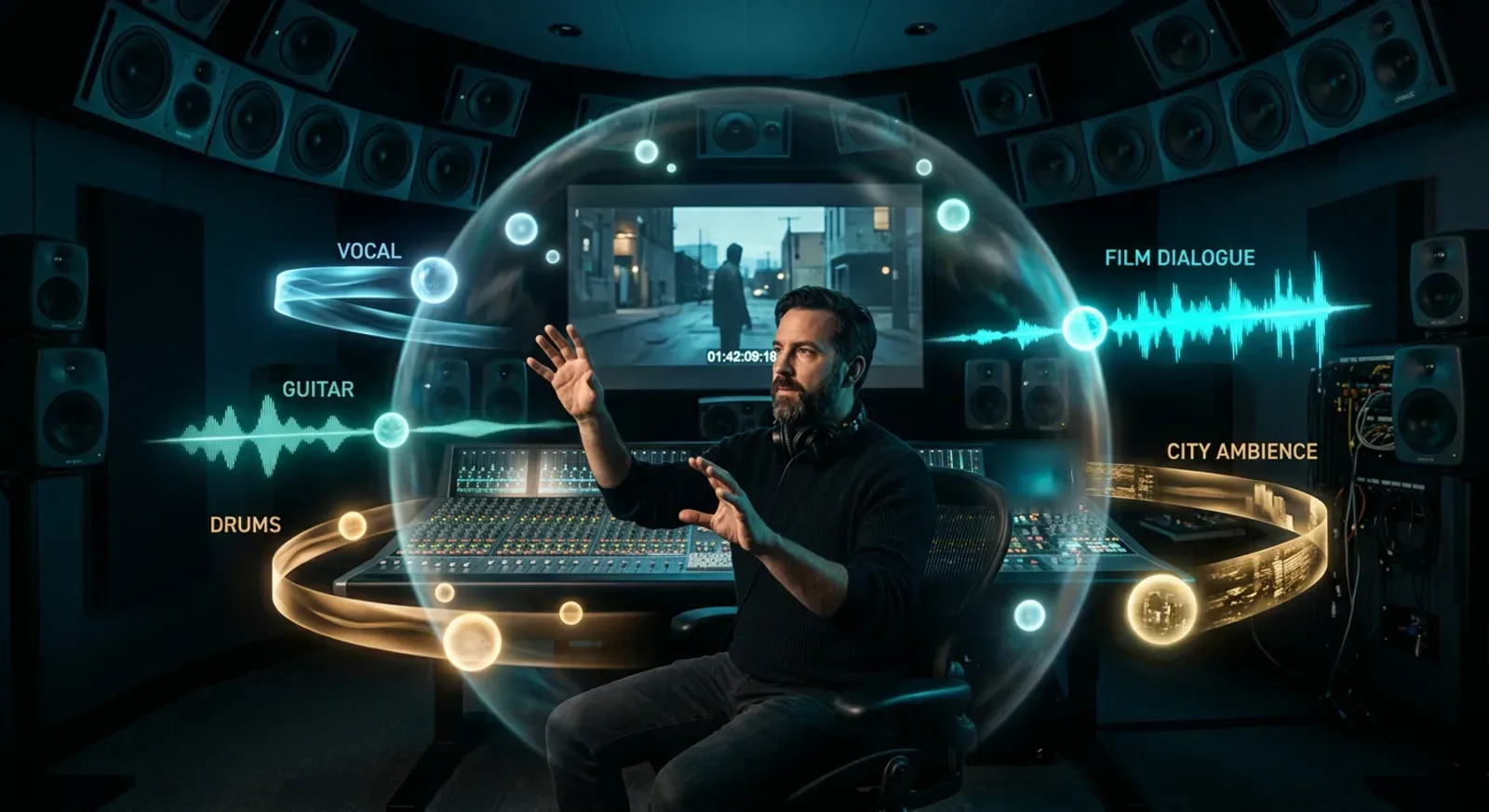
The generated element is the spatial arrangement: how individual sources occupy space, relate to one another, and move around the listener.
That distinction matters. A vocal, a guitar, and a percussion part can each have their own spatial role. The creative possibilities extend to distance, elevation, movement, intimacy, and the relationship between the listener and the performance.
Listen to the before and after examples (video and music, best on headphones).
Source separation also requires judgment. Extracted stems are estimates; dense recordings can produce leakage or artifacts. Original stems, when available, give the engineer a stronger starting point. A convincing result still depends on the material and how carefully the output is evaluated. Our guide to creating spatial audio from a stereo master or stems covers that choice in detail.
This creates a different starting point for professional work. Engineers can begin with a generated interpretation, assess what it achieves, and concentrate their attention where it needs improvement.
Where expertise enters the workflow
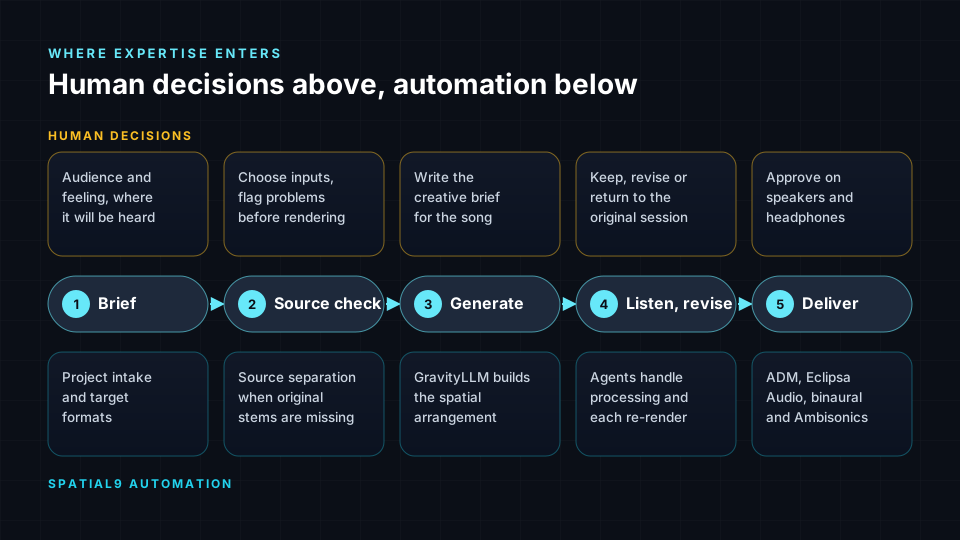
For a professional adopting this model, the workflow starts earlier than the first render.
- The listening brief. Who is the audience, what should the experience communicate, and where will it be heard?
- Source assessment. The engineer evaluates the available recording, chooses suitable inputs, and identifies problems that spatial processing might expose.
- Generation. Spatial9 provides an initial spatial arrangement.
- Listening and revision. Critical listening determines what to retain, what to revise, and when to return to the original session for deeper corrections.
- Delivery. The engineer checks the intended deliverables and playback experiences. Headphones and loudspeakers can reveal different weaknesses, so a careful immersive engineer checks both before approving a mix.
Music: one song, three emotional spaces
Consider an independent artist preparing an immersive version of a song.
The artist wants the verse to feel personal, the chorus to open up, and the final refrain to feel emotionally overwhelming. Those intentions can become a practical creative brief:
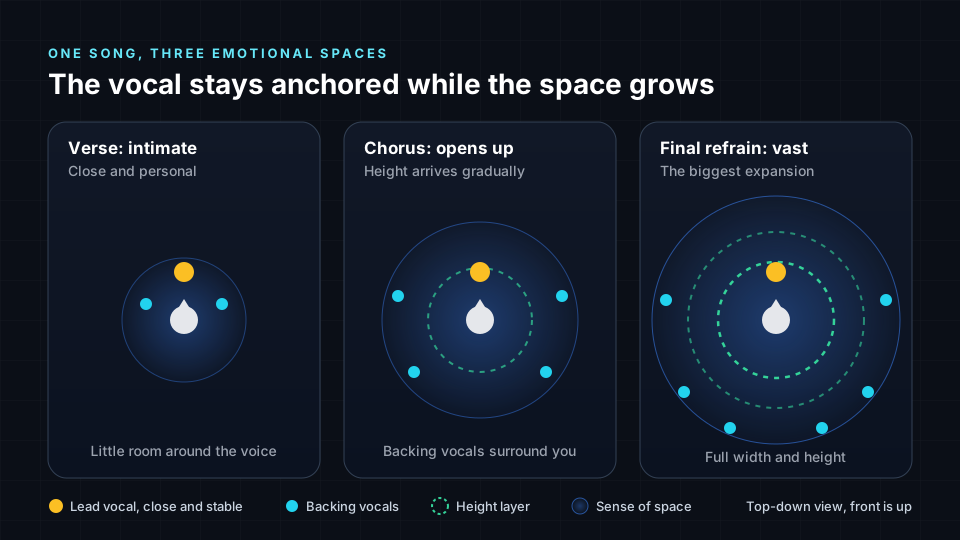
Automation can help construct the arrangement. The engineer evaluates whether it serves the song.
Perhaps the backing vocals now distract from the lyric. Perhaps the percussion feels disconnected from the groove. Perhaps the chorus has become wider but lost its impact.
Those are consequential mixing decisions. They require someone to understand the composition, hear the trade-offs, and decide what deserves attention.
The engineer's contribution becomes especially clear when restraint improves the result. An intimate recording may benefit from a subtle sense of space. A dance track may invite more dramatic movement. An orchestral performance may depend on a coherent stage and believable acoustic environment. Our guide to spatial audio by genre shows how those choices change from style to style.
The professional's signature becomes the quality of those choices.
Video: sound that follows the story
For video, the same transition introduces another responsibility: deciding how sound should relate to the picture.
Spatial9's video offering is currently in invite-only early access, with a workflow designed to use visual context when arranging dialogue, score, and effects around the viewer.
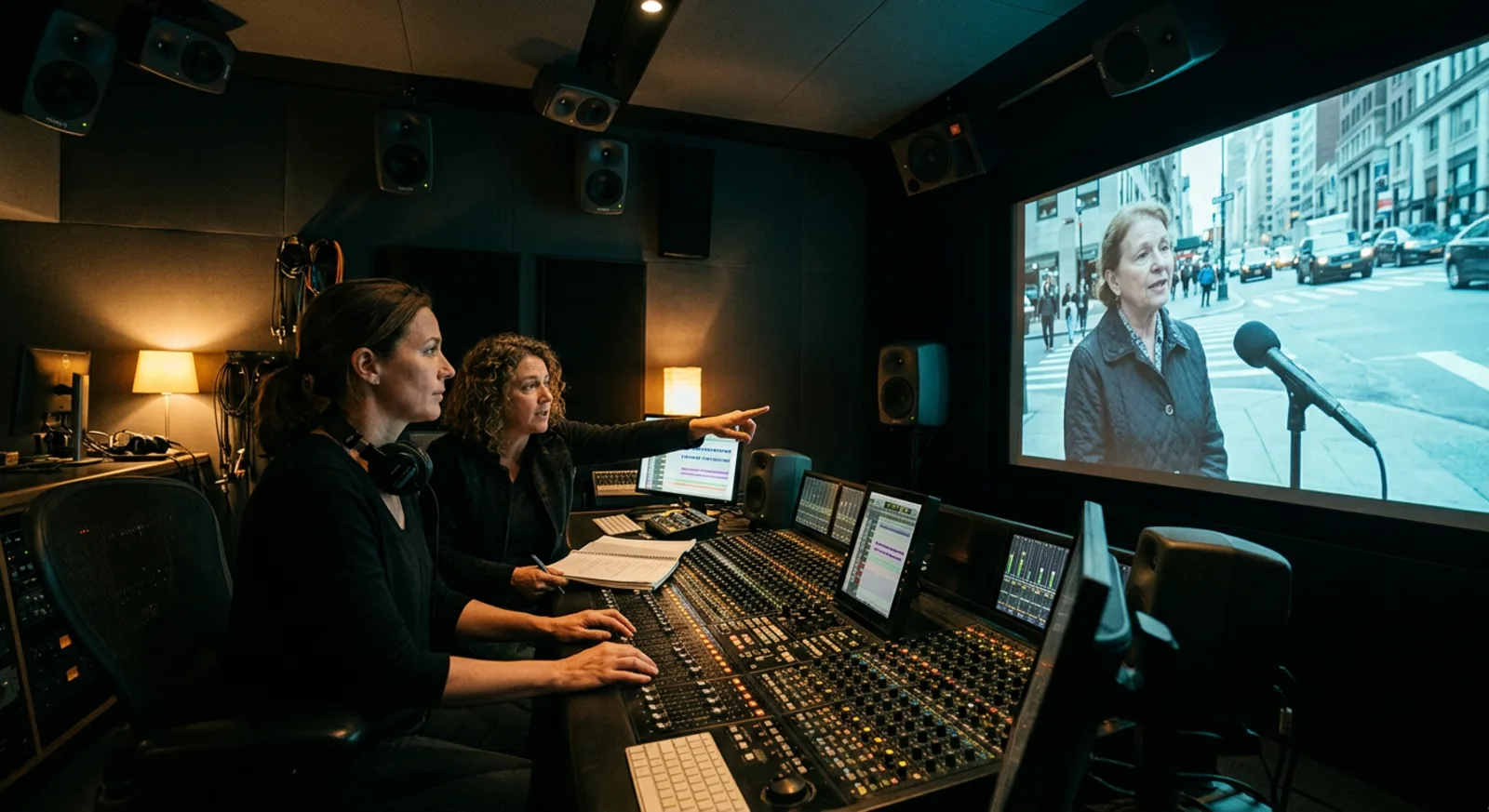
Consider a documentary scene in which a person speaks beside a busy street.
The dialogue needs to remain intelligible. Traffic can establish the environment. A passing vehicle might deserve a clear trajectory. The score should support the emotional tone without competing with the speaker.
Then the camera cuts to a close-up.
Should the sound become more intimate? Should the street remain expansive? Should a passing vehicle still attract attention?
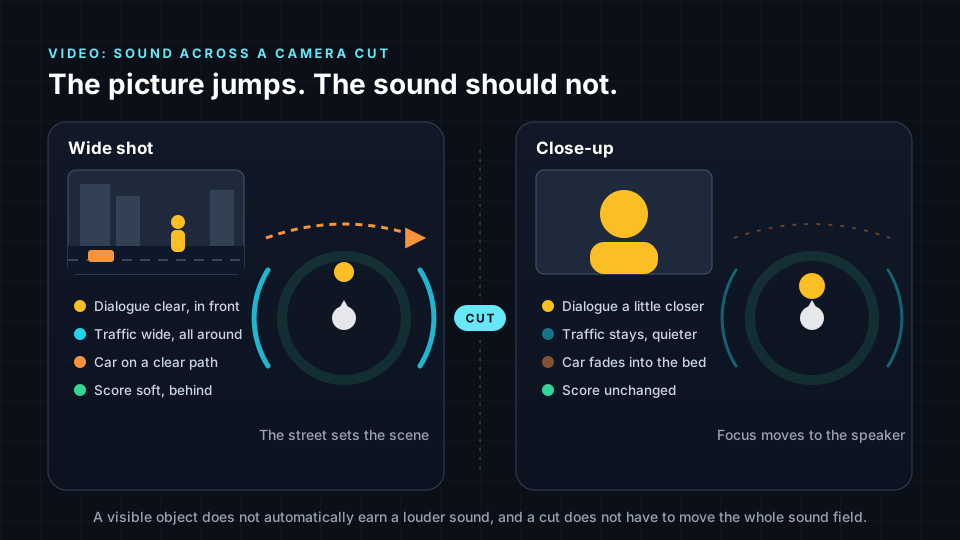
A visible object does not automatically deserve an equally prominent sound. A camera cut does not automatically require the entire sound field to move. The mix must preserve continuity and guide attention.
For a music video, the relationship becomes even more nuanced. The song has its own structure, while the edit introduces a second rhythm. The engineer must decide when the immersive soundtrack should follow the performance, the visual action, or the emotional arc of the music.
That creates an opportunity for experienced re-recording mixers and sound designers to shape the spatial language of a production from the beginning. For creators, our guide on how to make YouTube videos sound cinematic puts these ideas into practice.
New roles for audio professionals
As these workflows develop, existing audio roles can expand in several directions. These are responsibilities professionals can offer, even when their job titles stay the same.
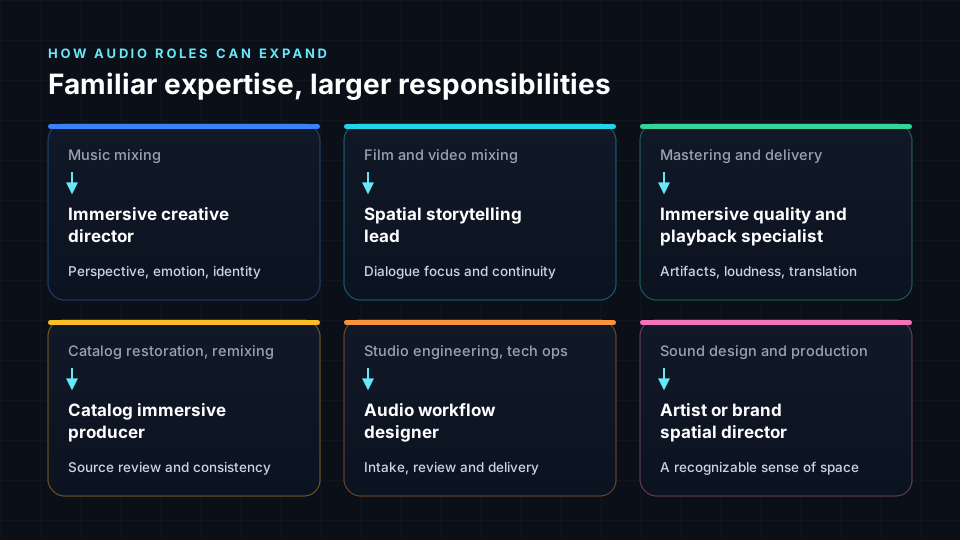
| Existing expertise | Expanding role | What the professional contributes |
|---|---|---|
| Music mixing | Immersive creative director | Defines the listener's perspective, emotional progression, and spatial identity of a song or album. |
| Film and video mixing | Spatial storytelling lead | Shapes dialogue focus, acoustic perspective, movement, and continuity across scenes. |
| Mastering and delivery | Immersive quality and playback specialist | Evaluates balance, artifacts, loudness, deliverables, and how the experience translates across listening systems. |
| Catalog restoration and remixing | Catalog immersive producer | Establishes the artistic approach for reissues, reviews source quality, and supervises consistent treatment across releases. |
| Studio engineering and technical operations | Audio workflow designer | Connects intake, automated processing, review, revision, and delivery for creators or larger organizations. |
| Sound design and production | Artist or brand spatial director | Develops a recognizable approach to space across an artist's releases, a series, or a brand's content. |
Catalogs: judgment at scale
A catalog project illustrates how these responsibilities work together.
A label may have recordings from different decades, made with different production techniques and preserved in different conditions. Applying one spatial treatment to every track could erase the characteristics that make those recordings distinctive.
An experienced engineer can establish the approach: which recordings should feel like a performance in front of the listener, which can support a more expansive interpretation, and which need additional restoration or manual attention.
Spatial9's catalog workflow supports batch submission and integration through APIs and webhooks. That provides a foundation for processing larger collections, while professionals establish the creative standards and review process around them.
The engineer can then organize work around complexity. Straightforward material may need a focused approval pass. Difficult recordings may require detailed intervention. Flagship releases may justify extensive individual treatment.
The value lies in making those distinctions well.
What Anthropic's research says about the future of work
Spatial9's approach of generating first and then refining with human judgment matches what Anthropic, the company behind the Claude AI models, has found about how AI is actually used at work.
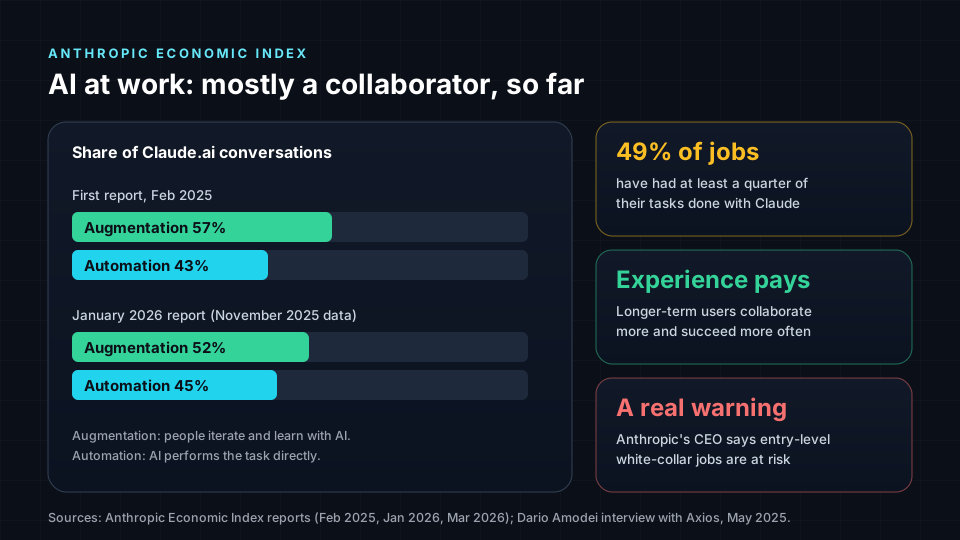
- Collaboration has led so far. In its first Economic Index report in February 2025, Anthropic found that 57% of Claude conversations showed augmentation, where AI collaborates with and enhances human capabilities, compared with 43% automation, where AI performs the task directly. In the same report, about 36% of occupations used AI for at least a quarter of their tasks, while only about 4% used it across three-quarters of their tasks.
- The balance moves, but collaboration still leads. The January 2026 report, based on November 2025 data, put augmentation at 52% and automation at about 45%.
- AI is reaching more jobs. The March 2026 report found that about 49% of jobs have now had at least a quarter of their tasks done with Claude.
- Experience compounds. The same report found that "more experienced users tend to use Claude more collaboratively, for more work-related reasons, in more complex tasks, and with more success", which it describes as consistent with learning by doing.
- Some work is moving to full automation. Anthropic notes that coding tasks are shifting toward more automated workflows built on its API, and it warns that early adopters may be both the most exposed to AI-driven disruption and the most helped by AI.
Anthropic's leadership has also been blunt about the risk. In a May 2025 interview with Axios, CEO Dario Amodei warned that AI could eliminate half of entry-level white-collar jobs and push unemployment to 10 to 20% within one to five years, and urged the industry to stop "sugar-coating" it. The company has since launched an Economic Futures Program to fund research and policy work on AI's economic effects.
What does that mean for audio? The pattern in Anthropic's data fits Spatial9's model closely. The repetitive, well-defined parts of the job, such as separation, first-pass placement, rendering and format conversion, are the most likely to be automated. The parts that remain most valuable are the ones where people iterate with the tool: setting intent, judging the result and taking responsibility for what gets released. And the professionals who learn these workflows early, and use them collaboratively, are the ones Anthropic's research suggests will benefit most.
It would be dishonest to promise that every current role survives unchanged. Entry-level tasks such as routine stem prep and simple format deliveries are exactly the kind of work automation absorbs first. That makes it more important, not less, for newer engineers to build skills in listening, direction and workflow design.
A new commercial conversation
This changes the commercial conversation as well.
An engineer can offer an immersive release package, an album-wide creative direction service, ongoing production for a video channel, or supervision of a catalog conversion program.
Clients gain a clearer understanding of what they are buying: a defined result, a level of creative involvement, and confidence in the delivery.
For some projects, the creator will be comfortable generating and approving the result independently. For others, professional involvement will be essential to achieving the desired standard.
Lower production friction creates the possibility of reaching clients who previously could not justify an immersive budget: smaller artists, independent filmmakers, educational channels, niche labels, and frequent video publishers.
That is the broader change Spatial9 is pursuing. When the effort required to produce an immersive version falls, the potential market can extend well beyond the projects that already pay for specialist studio sessions.
More accessible production does not guarantee more jobs or higher fees. Professionals will need to develop services that clients value. But it creates room to test offerings that were previously difficult to deliver economically.
Skills that matter next
For established engineers, years of experience remain directly relevant.
Knowing when a vocal feels detached, when a room sounds implausible, when a transient has lost its force, or when movement becomes distracting is valuable in an automated workflow. So is understanding how to discuss those problems with an artist or director.
AI changes how a result is produced. The professional still needs to evaluate the actual result and take responsibility for the decisions they approve.
For engineers entering the field, this suggests a broader education. Alongside signal flow, acoustics, and mixing, they should develop skills in:
- Spatial listening on both headphones and loudspeakers
- Audiovisual storytelling
- Source evaluation and artifact detection
- Automated production workflows, batch review and delivery
A useful portfolio will explain decisions as well as demonstrate sound. Show why a chorus expands. Explain how a scene preserves dialogue focus. Demonstrate how a restrained arrangement protects the character of an older recording.
Those examples make expertise visible.
Over time, we expect more engineers to help define reusable creative approaches for artists, channels, and catalogs. A professional might establish how an artist's vocals occupy space, how a documentary series handles environmental sound, or how a label approaches immersive reissues.
Automation can apply those approaches more broadly. Engineers can refine them through listening, exceptions, and feedback.
Our ambition at Spatial9 is to make immersive production available wherever music and video are created.
That opens a wider field for audio professionals: directing experiences, supervising quality, shaping creative identities, and building services around audiences who previously had little access to immersive production.
The next chapter of audio engineering will be shaped by professionals who can connect these new production capabilities with a clear artistic purpose, and make the finished work worth listening to.
Frequently asked questions
Will AI replace audio engineers?
Some tasks will be automated, and some services will face price pressure. But an immersive mix still needs someone to set the creative intent, judge the source, listen critically and approve the result. Anthropic's research suggests most people use AI to collaborate rather than to hand work off completely.
What does Spatial9 generate, and what does the engineer decide?
Spatial9 generates the spatial arrangement: where each source sits, how far away it feels and how it moves. The engineer decides whether that arrangement serves the song or scene, what to revise and when the result is ready to release.
Does Spatial9 work for video as well as music?
Yes. The video workflow is currently in invite-only early access. It uses visual context when arranging dialogue, score and effects around the viewer.
What should new audio engineers learn now?
Alongside mixing and acoustics, learn spatial listening on headphones and speakers, audiovisual storytelling, source evaluation and automated production workflows. Build a portfolio that explains your decisions, not just your sound.
Can engineers use Spatial9 for large catalog projects?
Yes. Spatial9 supports batch submission and integration through APIs and webhooks, so engineers can set the creative standard and review process while larger collections are processed.
Which formats can I deliver?
Depending on the workflow and plan, Spatial9 exports ADM, Eclipsa Audio (IAMF), binaural audio and Ambisonics. See where to publish spatial audio for which platforms accept which formats.
Dolby and Dolby Atmos are trademarks of Dolby Laboratories. Spatial9 is not affiliated with or endorsed by Dolby Laboratories.
Sources
- The Anthropic Economic Index, Anthropic, February 2025. Augmentation 57% and automation 43%; share of occupations using AI across their tasks.
- Anthropic Economic Index: January 2026 report, Anthropic, January 2026. Augmentation 52% and automation about 45%, based on November 2025 data.
- Anthropic Economic Index: Learning curves, Anthropic, March 2026. Job coverage, experienced users and early-adopter exposure.
- Behind the Curtain: A white-collar bloodbath, Axios, May 2025. Dario Amodei on entry-level jobs and unemployment.
- Introducing the Anthropic Economic Futures Program, Anthropic, June 2025.
- Introducing Eclipsa Audio: immersive audio for everyone, Google Open Source Blog, January 2025.
- Spatial9 product details, including GravityLLM, video early access, export formats and catalog APIs, are provided by Spatial9.
Shape what the listener feels
Bring your ears, your judgment and your taste, and let Spatial9 handle the heavy lifting. Explore Spatial9 for engineers and imagine what you could create when immersive production becomes part of your everyday workflow.