Spatial Audio & Immersive Music for Dembow: Dominican Dembow, Rap Dominicano & Mambo de Calle
Spatial9 Team · · 10 min read
Part of the series Spatial audio and immersive music by genre.
Key takeaways
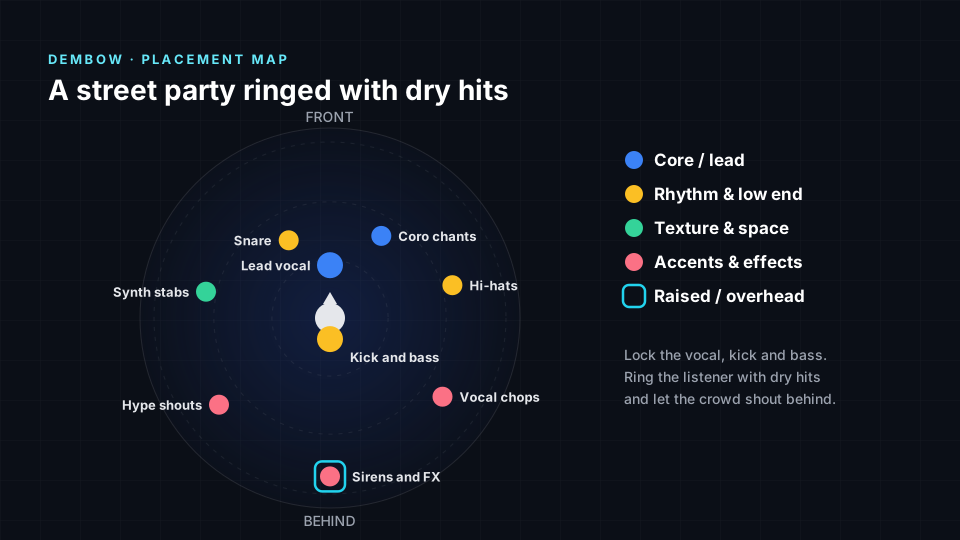
- In a spatial dembow mix the lead vocal, kick and bass stay locked in the centre, while the snare, hi-hats, synth stabs, vocal chops and hype shouts sit in a tight ring around the listener.
- Because the ear fuses a sound with reflections that arrive just after it, an effect known as the precedence effect, a short, dry room keeps every fast snare and stab sharp and exactly placed.
- Dembow is a loud Dominican street and club music built on a stripped-back dancehall drum pattern, so the room should stay small and dry, with height saved for sirens and risers.
- The dembow immersion profile scores width 4, height 3, movement 4, low-end focus 5 and space 2 out of 5.
Dembow is the street music of the Dominican Republic, a fast, repetitive club sound that grew up in the barrios of Santo Domingo in the 2000s. Its name comes from "Dem Bow", a 1990 song by the Jamaican dancehall artist Shabba Ranks. The drum pattern from that era of dancehall travelled to Panama, where artists such as El General used it for reggae en español, and then to Puerto Rico, where it became the backbone of reggaeton. Dominican producers stripped the pattern down, sped it up and made it harder: a pounding kick, a snare on the off-beats, rattling hi-hats, short synth stabs and a constant stream of shouted ad-libs. Artists such as El Alfa, Shelow Shaq, Bulova, Chimbala, Rochy RD and Tokischa took the sound from street corners and colmados to international charts. Dembow suits spatial audio because so much of the track is percussion and short vocal hits that can each be given their own direction. This guide covers how spatial audio for dembow works, where to place each element and how to make an immersive dembow mix. For the basics, see what spatial audio is.
Why dembow works in spatial audio
Dembow is a rhythm machine with a voice on top. Kick, bass, snare and hats drive the body while the rapper shouts over it, answered by chants, vocal chops and sirens. In stereo all of this is pushed loud into two speakers, and the percussion and the shouts fight for the same space. In an immersive mix the voice and the low end stay solid in the centre, while each percussion part and each shout gets its own spot around the listener.
The rule: a heavy, centred core with dry hits all around. Keep the vocal, kick and bass in the middle, set the snare, hats, stabs and chops in fixed points on a tight circle, and keep the room small and dry so every hit lands hard.
Immersive music for dembow: what listeners hear
- A voice right in your face. The lead rapper sits front and centre, close and loud, the way dembow vocals are meant to hit.
- A kick you feel in the chest. The kick and bass stay centred and heavy, with nothing spreading them thin.
- Shouts from every side. Hype calls, crew chants and vocal chops come from around and behind you, like a crowd joining in.
- Sirens that fly past. Risers, horns and siren effects sweep overhead and behind, building the energy before each drop.
Where to place each element in a dembow mix
| Element | Position | Height | Why it works |
|---|---|---|---|
| Lead vocal | Front centre | Ear level | The rapper's flow and the hook drive the track |
| Kick and bass | Centre | Ear level | The pounding pulse every dancer follows |
| Snare | Front left of centre | Ear level | The off-beat snap of the dembow pattern |
| Coro chants | Front right of centre | Ear level | Crew answers and the shouted chorus |
| Hi-hats | Right, with a small pulse | Ear level | Fast rattling hats that fill every gap |
| Synth stabs | Left | Ear level | Short keyboard and horn hits that mark the riff |
| Vocal chops | Behind right, moving slightly | Ear level | Pitched and chopped vocal samples as a hook |
| Hype shouts | Behind left | Ear level | Ad-libs and tags that hype the crowd |
| Sirens and FX | Behind, sweeping | Raised | Risers, air horns and sirens before drops |
The psychoacoustics behind dembow placement
Every position in the table above follows how the ear and brain locate sound. Here is the reason behind the main choices for dembow.
- Kick and bass stay centred. The ear finds almost no direction in frequencies below roughly 80 to 100 Hz, so spreading the bass only weakens its punch.
- Dry hits with no echoes. When a sound and its reflections arrive close together, the ear fuses them and locates the sound from the first arrival. This is the precedence effect (Litovsky). Keeping the room short lets each snare and stab sound sharp and exactly placed, instead of blurring into its own echo at a fast tempo.
- Lead vocal clear of the shouts. The brain can follow one voice among many when the voices come from different directions. This is the cocktail party effect (Bronkhorst). Putting the hype shouts and chants to the sides and behind keeps the rapper's words clear even when everyone is yelling.
- Sirens that rise and fly in. The brain treats rising and approaching sounds as more urgent and hears them as closer than they are. This is the perceptual bias for rising tones and looming sounds (Neuhoff). A riser or siren that sweeps up and forward makes each drop land harder.
The immersion profile for dembow
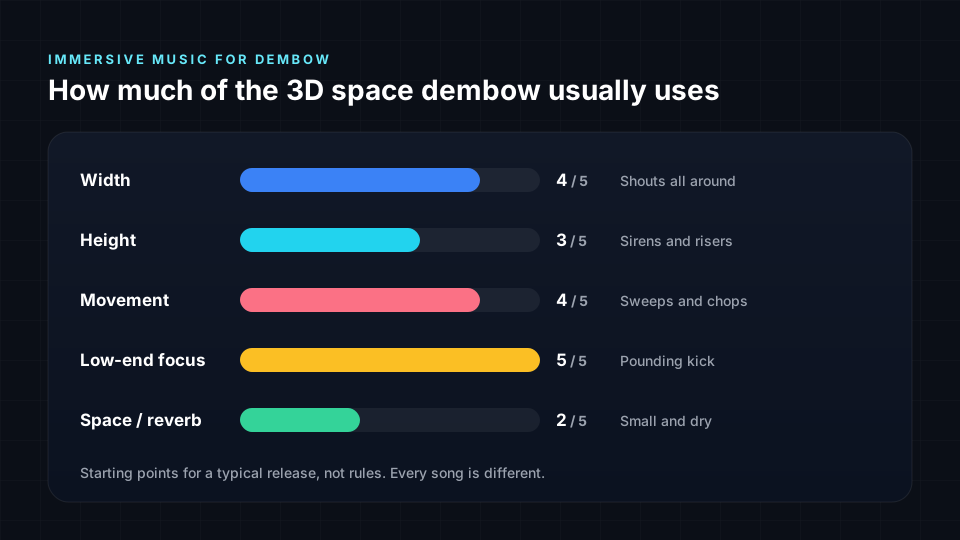
Low-end focus scores 5, because the kick and bass are the whole point of the music. Width scores 4: the percussion, stabs and shouts can wrap well around the listener. Movement also scores 4, coming from sweeping sirens, pulsing hats and vocal chops that shift position. Height is 3, used mainly for risers and effects. Space scores only 2, since dembow is a dry, in-your-face sound and long reverb would soften the hits.
Tips for an immersive dembow mix
- Lock the vocal, kick and bass in the centre. These three carry the track and must hit hard on every system.
- Give each percussion part its own fixed spot. Snare, hats and extra percussion should sit apart so the pattern sounds clear, not crowded.
- Put the crowd around the listener. Send the hype shouts, ad-libs and coro chants to the sides and behind, as if the crew is standing around you.
- Save movement for effects. Let sirens, risers and vocal chops move, but keep the drums still so the groove stays steady.
- Keep the room small and dry. A short, tight space suits dembow; a long hall would wash out the snap of the snare.
Dembow styles: Dominican dembow, rap dominicano and mambo de calle
The core placement holds for every style here: voice, kick and bass in the middle, dry percussion and shouts around the listener. What changes is how much the beat leads, how much the words lead and how fast the music runs.
Dominican Dembow
Dominican dembow is the main club and street sound: a short, looping beat, a hard kick, off-beat snare and a rapper shouting catchy phrases that often become slang across the country. Use the full layout here: a strong centred core, the percussion in a tight ring, the hype shouts and chants behind and sirens sweeping overhead before each drop. Keep it dry and loud.
Rap Dominicano
Rap dominicano is Dominican hip-hop, with longer verses and a stronger focus on lyrics. Artists such as Lápiz Conciente helped build the scene from the 1990s, and later rappers such as Vakero, Melymel and Rochy RD moved between rap and dembow. The vocal matters most here, so keep it centred, close and clean, with fewer shouts around it. Darker, slower beats can take slightly wider pads and a touch more space.
Mambo de Calle
Mambo de calle, also called merengue de calle or mambo urbano, is a fast street style that took the rhythm of merengue and mambo típico and mixed it with urban production. Omega "El Fuerte" is the best-known name of the style. The beat often uses a looped tambora and güira pattern, keyboard or horn riffs and shouted vocals at high tempos. Place the güira on one side and the tambora pattern near the centre with the kick, and set the riffs opposite the güira. Keep it bright, dry and full of energy.
Related styles such as Dominican drill and the dembow beats used in Latin pop follow the same idea: keep the voice and the low end centred, then put the percussion and the crowd around the listener.
How to make immersive dembow from stereo
Spatial9 can create spatial audio from a stereo track in a few steps:
- Upload your stereo master or your stems.
- Spatial9's AI separates and places each part, pulling the vocal, kick, bass, snare, hats, stabs and shouts apart and setting the core in the centre with the percussion and the crowd in a tight ring around you.
- Preview it in binaural on headphones.
- Export Eclipsa Audio, ADM, binaural or Ambisonics.
- Publish a video. Create a YouTube-ready video with your immersive audio and publish it directly.
For related guides, read spatial audio for Latin music and spatial audio for dancehall. Every guide is listed in spatial audio and immersive music by genre.
Frequently asked questions
Does this guide cover Dominican dembow, rap dominicano and mambo de calle?
Yes. Dominican dembow uses the full layout with a heavy centre, a ring of dry percussion and shouts behind. Rap dominicano keeps the vocal closer and cleaner with a little more space. Mambo de calle adds a fast güira and tambora pattern with bright riffs.
Can I make a dembow mix in Dolby Atmos or Eclipsa Audio?
Yes. The placements in this guide work for both. Spatial9 exports ADM, the standard file used by Dolby Atmos studios, as well as Eclipsa Audio for YouTube, so one immersive dembow mix covers both. If you plan to release the Atmos version on Apple Music, build it from your original stems or multitracks, because Apple does not accept Atmos made from a finished stereo master. See where to publish spatial audio. You may also hear this called a 3D dembow mix or dembow in spatial audio.
Is spatial audio good for dembow?
Yes. Dembow packs a pounding kick, busy percussion and constant shouts into a short, loud track. Spatial audio keeps the core heavy in the centre and gives every hit and every shout its own direction, so the track sounds bigger without losing its punch.
Where should the hype shouts go in an immersive dembow mix?
Put them behind and to the sides at ear level, away from the lead vocal. That way they sound like a crowd answering the rapper and never cover the words.
How is dembow different from reggaeton in spatial audio?
Both grew from the same dancehall drum pattern, but dembow is faster, drier and more stripped back. Reggaeton often has more melody, pads and sung hooks, so it can take more width and space. Dembow needs a tighter room and a harder, centred low end.
Will an immersive dembow mix still hit hard in the car?
Yes, if the kick, bass and vocal stay in the centre. Those parts fold down cleanly to stereo and to car speakers, while the shouts and effects add width on headphones and immersive systems.
Can I convert an older dembow track to spatial audio?
Yes. Spatial9 uses AI to separate the vocal, drums, bass, stabs and effects from a stereo master. Older tracks are often heavily compressed, so separation is never perfect; keep the layout simple.
Dolby and Dolby Atmos are trademarks of Dolby Laboratories. Spatial9 is not affiliated with or endorsed by Dolby Laboratories.
Sources
- Blauert, J. (1997). Spatial Hearing: The Psychophysics of Human Sound Localization, revised edition. MIT Press. Low-frequency, elevation, distance and motion cues.
- Mills, A. W. (1958). On the minimum audible angle. Journal of the Acoustical Society of America, 30(4), 237-246.
- Hebrank, J. and Wright, D. (1974). Spectral cues used in the localization of sound sources on the median plane. Journal of the Acoustical Society of America, 56(6), 1829-1834.
- Bronkhorst, A. W. (2000). The cocktail party phenomenon: a review of research on speech intelligibility in multiple-talker conditions. Acta Acustica united with Acustica, 86, 117-128.
- Litovsky, R. Y., Colburn, H. S., Yost, W. A. and Guzman, S. J. (1999). The precedence effect. Journal of the Acoustical Society of America, 106(4), 1633-1654.
- Barron, M. and Marshall, A. H. (1981). Spatial impression due to early lateral reflections in concert halls. Journal of Sound and Vibration, 77(2), 211-232.
- Neuhoff, J. G. (1998). Perceptual bias for rising tones. Nature, 395, 123-124.
- Bregman, A. S. (1990). Auditory Scene Analysis: The Perceptual Organization of Sound. MIT Press.
- Rivera, R. Z., Marshall, W. and Pacini Hernandez, D. (eds.) (2009). Reggaeton. Duke University Press.
Turn up the street party
Upload a track to Spatial9 and hear the shouts, sirens and percussion surround you in minutes. Then export it or publish it straight to YouTube.