Spatial Audio, Binaural Beats and Health: What the Science Says, and What the CIA Star Gate Files Really Show
Spatial9 Team · · 15 min read
Key takeaways
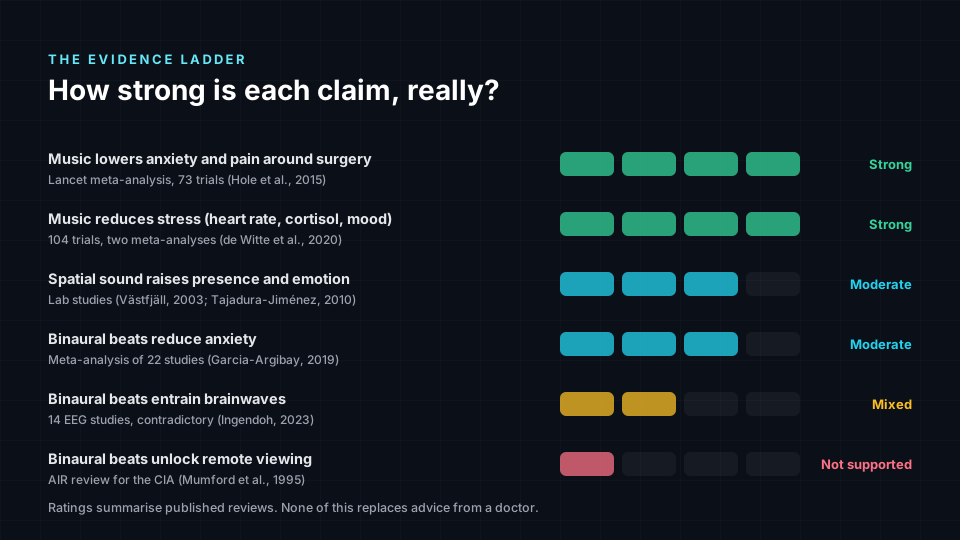
- Music is one of the best-evidenced non-drug wellbeing tools: a Lancet meta-analysis of 73 trials found it lowers pain, anxiety and painkiller use around surgery, and a 104-trial review found it reduces stress.
- Spatial and immersive sound adds measurable presence and emotional intensity compared with stereo or mono, because it matches the 3D way human hearing evolved to work.
- Binaural beats show a small-to-moderate effect on anxiety in meta-analyses, but the claim that they reliably entrain brainwaves is still unproven, and results vary widely between studies.
- The declassified CIA files are real: the Army studied the Monroe Institute Gateway Process (1983) and the Star Gate program ran until 1995, but the independent review concluded remote viewing never produced usable intelligence.
Short answer: music and immersive sound are among the best-supported natural wellbeing tools we have. Large reviews in journals such as The Lancet show that music lowers anxiety, pain and stress, and lab studies show that spatial audio (sound that surrounds you, including from above) makes listening feel more present and more emotional than stereo. Binaural beats have a smaller, less consistent effect: they may ease anxiety, but the popular claim that they reliably "tune" your brainwaves is still unproven. The declassified CIA Gateway and Star Gate files are genuine and fascinating, yet the official 1995 review found that remote viewing never produced intelligence anyone could act on.
This guide walks through all of it with sources you can check: how 3D hearing evolved, what the health research actually measures, what the Army and CIA tested with binaural audio between 1972 and 1995, and how to listen safely. Every claim is linked to a study or to the original document in the CIA reading room.
Why 3D sound matters to the human body
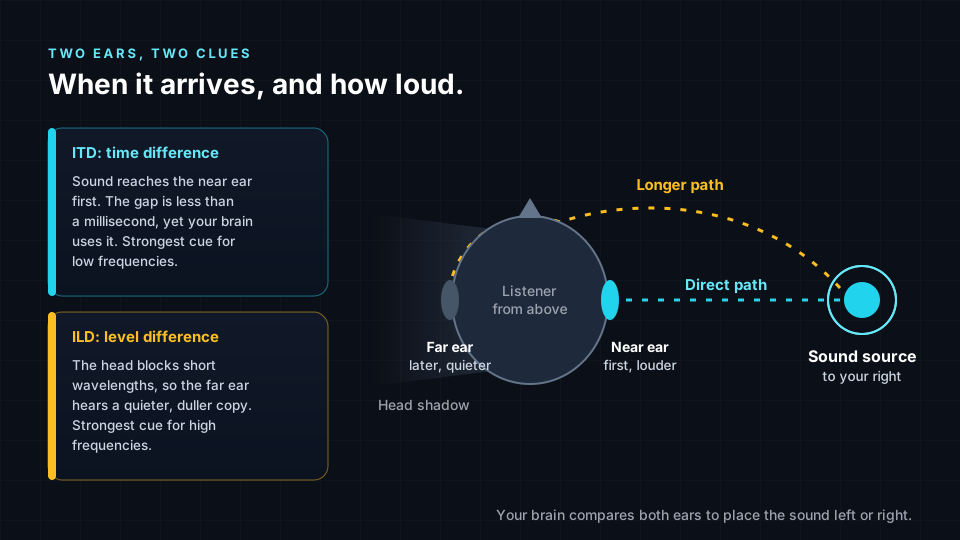
Long before music, hearing was an alarm system. Our ancestors needed to know not just that a branch snapped, but where: left or right, near or far, above or behind. Mammals evolved two clever cues to do this. Sound reaches the nearer ear a fraction of a millisecond earlier (the interaural time difference), and it is slightly louder there because the head casts an acoustic shadow (the interaural level difference). The folds of the outer ear add a third cue that tells us whether a sound is high or low. Reviews of mammalian hearing describe these circuits in the brainstem as some of the fastest and most precise in the nervous system.

That history matters for health because the brain treats spatial information as meaningful. A sound that seems to come from a real place in the room is processed as part of your environment, not as a flat signal between the ears. Stereo music, by contrast, collapses everything onto a thin line between two speakers. Immersive formats such as Dolby Atmos, Eclipsa Audio and binaural headphone renders put sound back where human hearing expects it: all around, including overhead. If you want the mechanics in detail, our lesson on how we hear in 3D explains each cue with diagrams.
What the research says about music and health
Music is not a cure, but the evidence for it as a supportive therapy is unusually strong for a non-drug intervention. The key findings come from systematic reviews, which pool many randomised controlled trials and are the highest level of evidence in medicine.
Music before, during and after surgery
In 2015, Hole and colleagues published a meta-analysis of 73 randomised trials in The Lancet. Patients who listened to music around surgery reported less pain and less anxiety, used fewer painkillers, and were more satisfied with their care. The effect was largest when music was played before the operation. Remarkably, the benefit appeared even when patients were under general anaesthesia. Music did not shorten hospital stays, which is a useful reminder that it supports recovery rather than replacing medical care.

Music and everyday stress
A 2020 review by de Witte and colleagues in Health Psychology Review pooled 104 trials and found that music interventions reduced both physical stress markers (heart rate, blood pressure and stress hormones) and how stressed people felt. Effects were moderate for the body and somewhat larger for the mind. Cochrane reviews of people living with cancer reach a similar conclusion: music can reduce anxiety and improve mood and quality of life.
Why music feels so good
Brain imaging explains part of the effect. Blood and Zatorre (2001) showed that the "chills" people feel during favourite music activate the same reward circuits as food and other pleasures. Salimpoor and colleagues (2011) went further and measured dopamine release in the striatum, both while people anticipated a peak moment and when it arrived. Natural sounds help too: a 2021 study in PNAS synthesised research on natural soundscapes and found consistent links to lower stress and annoyance, better mood and improved performance on mental tasks.
Rhythm, movement and the brain
Sound also guides movement. In rhythmic auditory stimulation, a steady beat helps people with Parkinson's disease walk with longer, more regular steps; Thaut and colleagues reported improved walking speed and stride after just three weeks of beat-guided training. Over a lifetime, musical training sharpens how the brain processes sound and speech, which Kraus and Chandrasekaran described in Nature Reviews Neuroscience as a lasting change in the auditory system. This is the honest version of "compounding": regular, attentive listening and playing reshape the hearing brain within one lifetime.
Does spatial audio add anything beyond stereo?
Here the research is younger but encouraging. In a 2003 study, Västfjäll played the same material in mono, stereo and six-channel surround. Listeners rated the six-channel version as giving a stronger sense of presence (the feeling of "being there") and reported stronger emotional reactions. Hendrix and Barfield (1996) found that spatialised sound increased presence in virtual environments, and Tajadura-Jiménez and colleagues (2010) showed that the size of a sound's acoustic space changes how emotionally intense it feels.
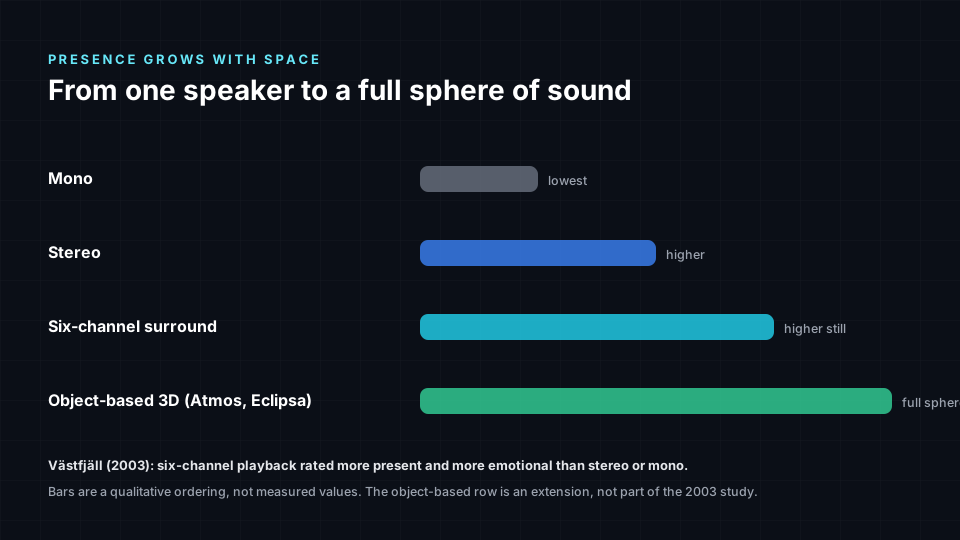
Why would that matter for health? Presence and emotional engagement are exactly what make relaxation audio, guided meditation and music therapy work: the more fully a listener is absorbed, the less attention is left for worry or pain. No large clinical trial has yet compared stereo with immersive music for a medical outcome, so we will not claim one. What we can say is that immersive sound strengthens the very ingredients that the music-and-health trials rely on. If you are making music for calm or sleep, our guide to spatial audio for meditation and sleep covers placement and pacing in detail.
Binaural beats: the honest science
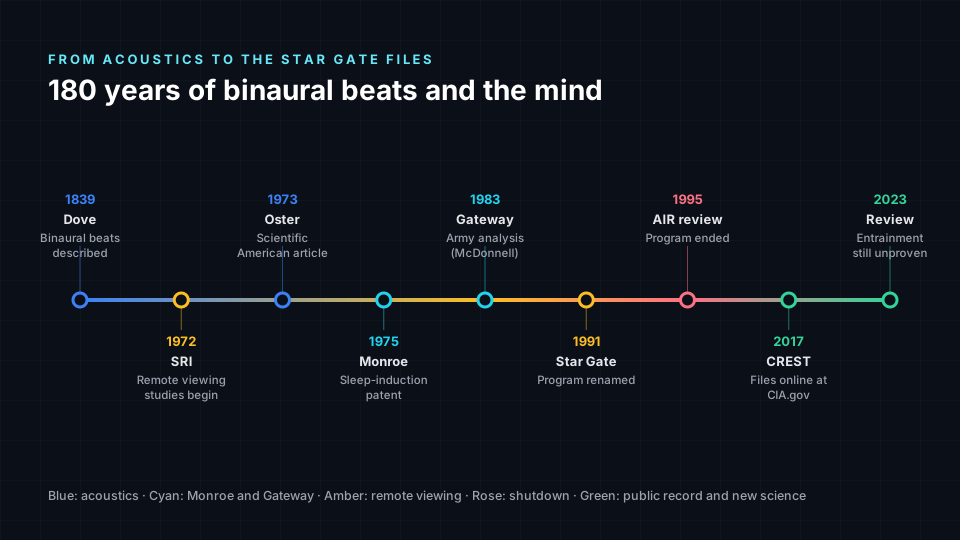
A binaural beat happens when each ear hears a pure tone at a slightly different pitch, for example 200 Hz on the left and 210 Hz on the right. Nothing in the air vibrates at 10 Hz, yet you hear a soft pulsing at that rate. The beat is created by the brainstem, in a structure called the superior olive, which compares the timing of sound at both ears. The effect was described by the physicist Heinrich Wilhelm Dove in 1839 and popularised by the biophysicist Gerald Oster in Scientific American in 1973.
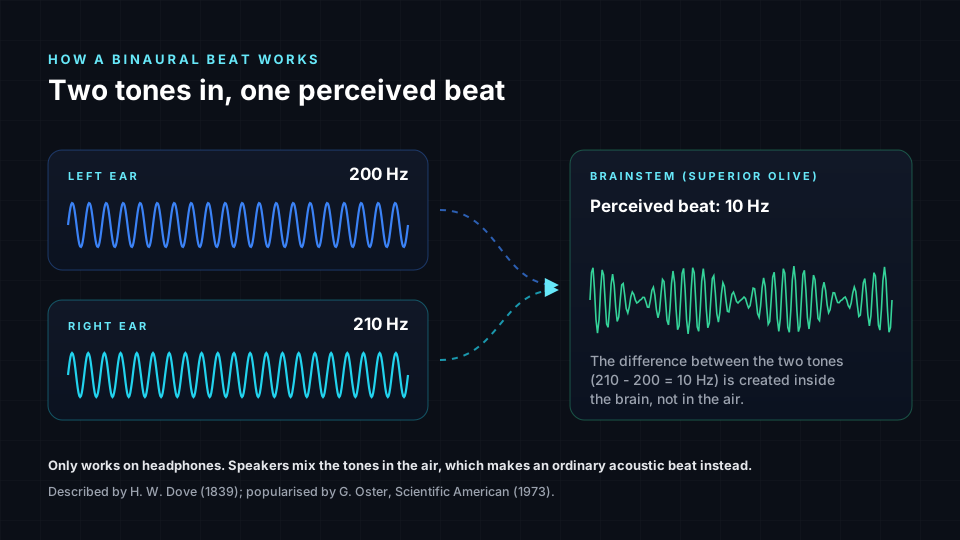
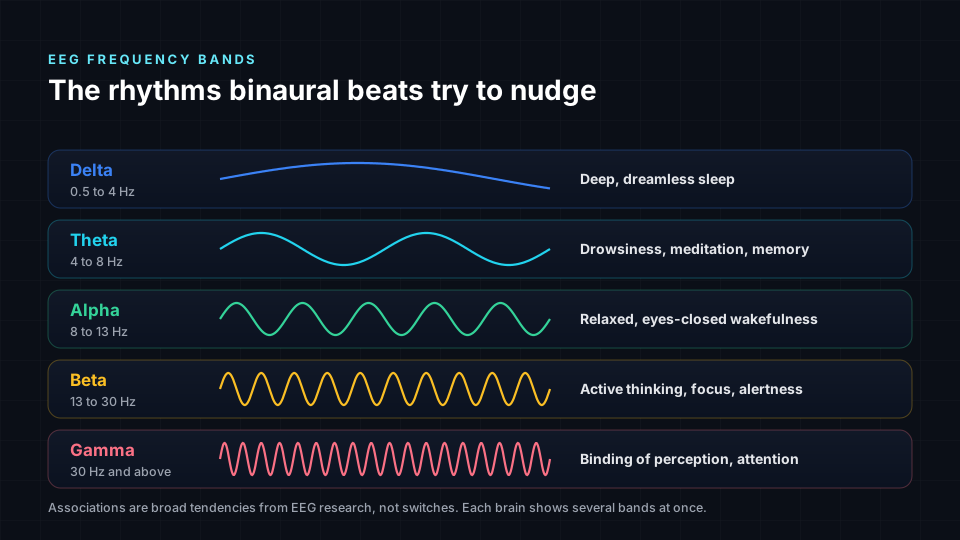
The appealing idea is that a 10 Hz beat might nudge the brain toward the 10 Hz alpha rhythm of relaxed wakefulness, a 6 Hz beat toward drowsy theta, and so on. This is called brainwave entrainment.
What the trials found
- Anxiety: a 2019 meta-analysis by Garcia-Argibay, Santed and Reales pooled 22 studies and found that binaural beats had a small-to-moderate effect on reducing anxiety, and also on memory, attention and pain perception. Effects were larger when people listened before a task rather than during it.
- Before surgery: in a randomised trial in Anaesthesia (2005), patients who listened to binaural beat audio before day surgery had a larger drop in anxiety than patients who listened to plain audio or nothing.
- Mood and body: a small pilot study by Wahbeh and colleagues (2007) reported less anxiety and some changes in mood after weeks of daily delta-beat listening, alongside physical measures that were inconsistent.
- Brainwave entrainment: this is where the evidence breaks down. A 2023 systematic review in PLOS ONE by Ingendoh, Posny and Heine examined 14 EEG studies and found contradictory results: some reported entrainment, others found none, and some found the opposite. A carefully designed 2017 study by López-Caballero and Escera found no increase in EEG power and no change in emotional arousal.
The fair summary: binaural beats are a low-risk tool that may help some people relax, probably through a mix of attention, expectation and calming sound. The idea that they reliably switch your brain into a target state is not supported. Chaieb and colleagues reached the same view in their 2015 review in Frontiers in Psychiatry, noting promising but inconsistent effects on cognition and mood.
Gateway, Hemi-Sync and the CIA Star Gate files
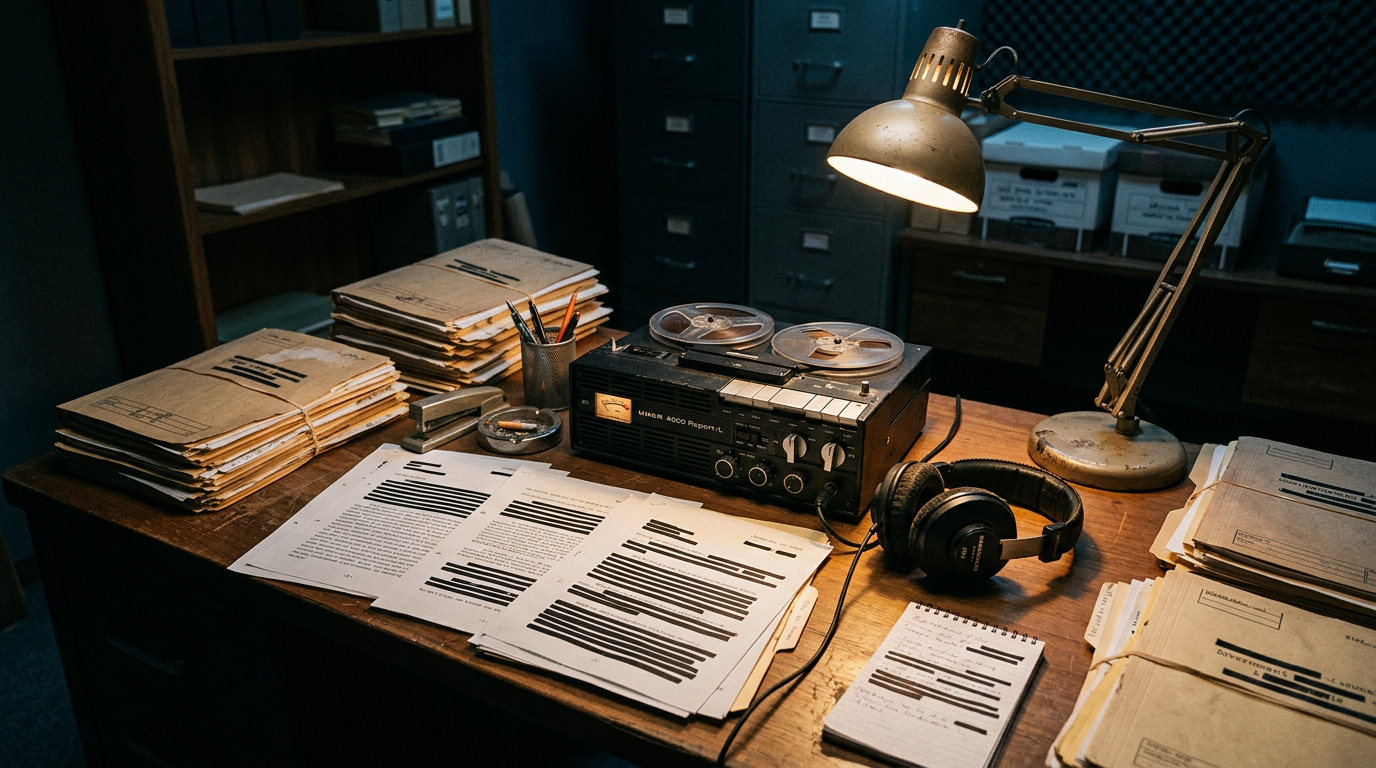
This is where the story turns from medicine to Cold War history. Between 1972 and 1995, US intelligence agencies funded research into psychic phenomena, mainly remote viewing: the claim that a person can describe a distant place or object using only the mind. Thousands of pages from this work were declassified and, since January 2017, have been searchable in the CIA's online reading room under the collection name STARGATE.
Where remote viewing came from
Remote viewing did not begin with binaural beats. It began in 1972 at the Stanford Research Institute (SRI), where the physicists Harold Puthoff and Russell Targ ran CIA-funded experiments with the artist Ingo Swann and others. They published results in the Proceedings of the IEEE in 1976. Critics quickly found flaws: in Nature (1978), Marks and Kammann showed that cues in the transcripts could explain the matches. Under a series of code names (Gondola Wish, Grill Flame, Center Lane, Sun Streak), the work moved to the Army and the Defense Intelligence Agency, and in 1991 it was renamed Star Gate.
Where binaural audio enters the story
Separately, the radio executive Robert Monroe had founded what became the Monroe Institute in Virginia. Monroe patented an audio method for inducing sleep in 1975 and later marketed Hemi-Sync, recordings that play different tones in each ear, often combined with guided instructions. His Gateway Experience course used these recordings to lead listeners through numbered "Focus" levels of deep relaxation.
In the early 1980s, the Army's intelligence command sent personnel to the Monroe Institute, and in 1983 Lieutenant Colonel Wayne M. McDonnell wrote "Analysis and Assessment of Gateway Process". The report was approved for release in 2003 and is document CIA-RDP96-00788R001700210016-5. It tries to explain the Gateway method in physical terms: Hemi-Sync audio, McDonnell argues, brings the two halves of the brain into step, producing a calm but focused state; from there the report draws on holographic models of the universe to argue that consciousness might travel outside the body.
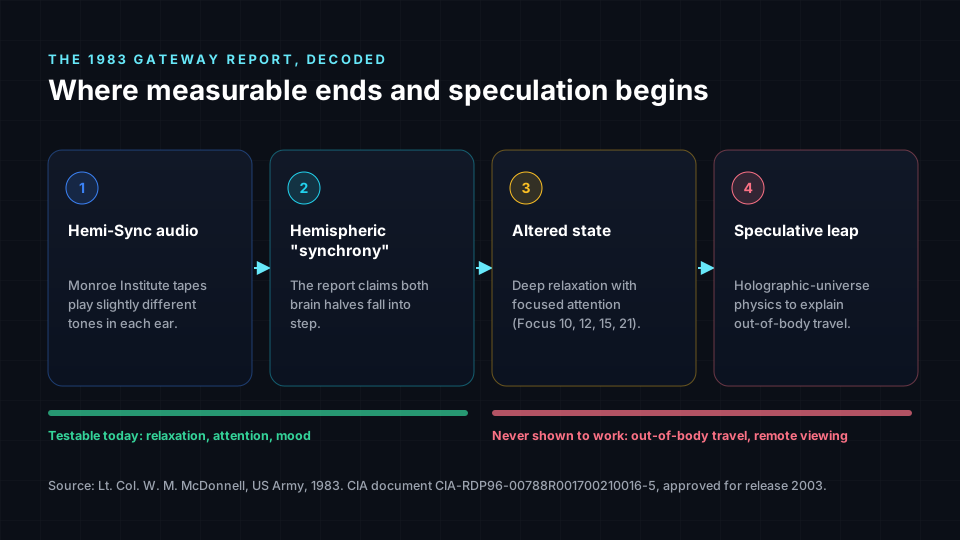
Read with care, the report is two documents in one. The early part describes something modern research can study and partly supports: structured sound and guided instructions can produce deep relaxation with focused attention. The later part is theory that no experiment has confirmed. The 1983 report itself was an assessment, not a test result; it did not show that Gateway training improved remote viewing.
How the program ended
In 1995 the CIA asked the American Institutes for Research (AIR) to evaluate two decades of work. Two experts reviewed the lab data. The statistician Jessica Utts argued that the lab results were statistically above chance; the psychologist Ray Hyman argued that the flaws and lack of independent replication meant no psychic effect had been shown. Both agreed on the practical point, and so did the final AIR report by Mumford, Rose and Goslin: remote viewing had never provided intelligence that was actionable. Reports were vague, often wrong, and viewers rarely agreed with each other. The program was closed that year.
What the files really tell us about sound and the mind
The Star Gate files are not proof of psychic powers, and binaural beats were not the spark behind remote viewing. What they do show is that serious institutions recognised, decades ago, that carefully designed sound can change how relaxed and focused a person feels. That part has held up. The modern evidence on music, presence and anxiety is the grown-up, testable version of the Gateway hunch, minus the out-of-body claims.
Sound and the long arc of human evolution
It is tempting to say that immersive listening pushes humans forward on an evolutionary path. The evidence does not support that, and evolution does not work over a single lifetime. A better and still exciting claim is this: our ears and brain evolved for a three-dimensional world, and most recorded music since the 1950s has asked them to work in two. Immersive audio gives the hearing system the kind of signal it was built for.
Within one life, the benefits do compound. Musical training changes how the brain encodes sound, a regular listening ritual can lower stress over weeks, and attention trained by focused listening carries over into speech and everyday hearing. None of this needs mystical explanations, which is precisely why it is worth taking seriously.
How to use spatial audio and binaural beats safely
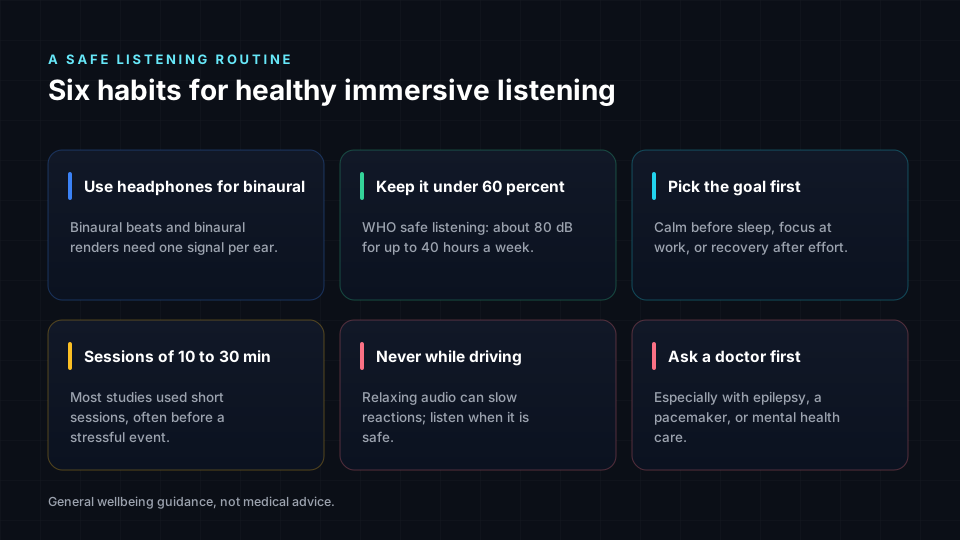
- Use headphones for binaural content. Binaural beats and binaural 3D renders need one signal per ear; speakers mix the two and the effect disappears.
- Keep the volume moderate. The WHO and ITU safe-listening standard suggests staying around 80 dB for no more than 40 hours a week; on most phones that is roughly 60 percent volume.
- Choose one goal. Slow ambient textures before sleep, steady rhythmic music for focus, or nature soundscapes after a stressful day.
- Keep sessions short. Most studies used 10 to 30 minutes, often right before a stressful event such as surgery or an exam.
- Never listen to relaxation audio while driving or operating machinery.
- Talk to a doctor first if you have epilepsy, a heart condition, or are in mental health care, and never use audio as a replacement for treatment.
Make immersive music for wellbeing with Spatial9
If you produce music for calm, sleep, meditation or therapy, an immersive version gives your listeners the presence that research links to deeper engagement. Upload a stereo mix or stems to Spatial9 and our AI places each sound in a 3D room around the listener, then exports a binaural headphone version, Eclipsa Audio for YouTube and Dolby Atmos-ready ADM files. Educators and therapists can explore free lessons in the Spatial9 Academy.
Frequently asked questions
Is spatial audio good for your health?
Spatial audio is not a medical treatment, but it can support wellbeing. Music already has strong evidence for lowering stress, anxiety and pain, and studies show that surround and 3D sound increase presence and emotional engagement compared with stereo, which are the same ingredients that make relaxing music effective.
Do binaural beats actually work?
Meta-analyses find a small-to-moderate effect on anxiety and some effects on memory and attention. However, a 2023 systematic review found that evidence that binaural beats reliably entrain brainwaves is contradictory, so the effect may come from relaxation and attention rather than brainwave control.
Did the CIA use binaural beats for remote viewing?
The Army studied the Monroe Institute's Gateway Process, which uses Hemi-Sync binaural audio, and a 1983 assessment is now public in the CIA reading room. Remote viewing itself began at SRI in 1972 without binaural beats, and the 1995 AIR review concluded it never produced actionable intelligence.
What is the Gateway Process?
The Gateway Process is a guided relaxation course from the Monroe Institute that combines Hemi-Sync audio, with different tones in each ear, and spoken instructions. A 1983 US Army report by Lt. Col. Wayne McDonnell tried to explain it with physics; it was declassified in 2003.
Is it safe to listen to binaural beats?
For most healthy adults, binaural beats at moderate volume are low risk. Do not listen while driving, keep the volume around 60 percent, and speak to a doctor first if you have epilepsy, a heart condition or a mental health diagnosis.
What is the difference between binaural audio and binaural beats?
Binaural audio is a 3D mix for headphones that places sounds around your head, like a virtual room. Binaural beats are two slightly different tones, one in each ear, that the brain hears as a pulsing beat. Spatial9 creates binaural audio from your music.
Sources
- Hole, Hirsch, Ball and Meads, Music as an aid for postoperative recovery in adults: a systematic review and meta-analysis, The Lancet (2015)60169-6)
- de Witte et al., Effects of music interventions on stress-related outcomes: a systematic review and two meta-analyses, Health Psychology Review (2020)
- Bradt et al., Music interventions for improving psychological and physical outcomes in people with cancer, Cochrane Database of Systematic Reviews (2016)
- Blood and Zatorre, Intensely pleasurable responses to music correlate with activity in brain regions implicated in reward and emotion, PNAS (2001)
- Salimpoor et al., Anatomically distinct dopamine release during anticipation and experience of peak emotion to music, Nature Neuroscience (2011)
- Buxton et al., A synthesis of health benefits of natural sounds and their distribution in national parks, PNAS (2021)
- Thaut et al., Rhythmic auditory stimulation in gait training for Parkinson's disease patients, Movement Disorders (1996)
- Kraus and Chandrasekaran, Music training for the development of auditory skills, Nature Reviews Neuroscience (2010)
- Grothe, Pecka and McAlpine, Mechanisms of sound localization in mammals, Physiological Reviews (2010)
- Västfjäll, The subjective sense of presence, emotion recognition, and experienced emotions in auditory virtual environments, CyberPsychology and Behavior (2003)
- Hendrix and Barfield, The sense of presence within auditory virtual environments, Presence (1996)
- Tajadura-Jiménez et al., When room size matters: acoustic influences on emotional responses to sounds, Emotion (2010)
- Oster, Auditory beats in the brain, Scientific American (1973)
- Garcia-Argibay, Santed and Reales, Efficacy of binaural auditory beats in cognition, anxiety, and pain perception: a meta-analysis, Psychological Research (2019)
- Padmanabhan, Hildreth and Laws, Binaural beat audio and pre-operative anxiety in day case surgery, Anaesthesia (2005)
- Wahbeh, Calabrese and Zwickey, Binaural beat technology in humans: a pilot study, Journal of Alternative and Complementary Medicine (2007)
- Chaieb et al., Auditory beat stimulation and its effects on cognition and mood states, Frontiers in Psychiatry (2015)
- López-Caballero and Escera, Binaural beat: a failure to enhance EEG power and emotional arousal, Frontiers in Human Neuroscience (2017)
- Ingendoh, Posny and Heine, Binaural beats to entrain the brain? A systematic review, PLOS ONE (2023)
- McDonnell, Analysis and Assessment of Gateway Process, US Army (1983), CIA-RDP96-00788R001700210016-5
- An Evaluation of the Remote Viewing Program: Research and Operational Applications, American Institutes for Research (1995), CIA-RDP96-00791R000200180005-5
- Unclassified Star Gate and related documents available for review by the AIR committee (1995), CIA-RDP96-00791R000100030058-2
- CIA FOIA Electronic Reading Room, STARGATE collection
- Puthoff and Targ, A perceptual channel for information transfer over kilometer distances, Proceedings of the IEEE (1976)
- Marks and Kammann, Information transmission in remote viewing experiments, Nature (1978)
- World Health Organization and ITU, Safe listening devices and systems standard (2019)